Florida Families of Medically Fragile Children Sound Alarm as Justice Department Backs Away From ADA Case
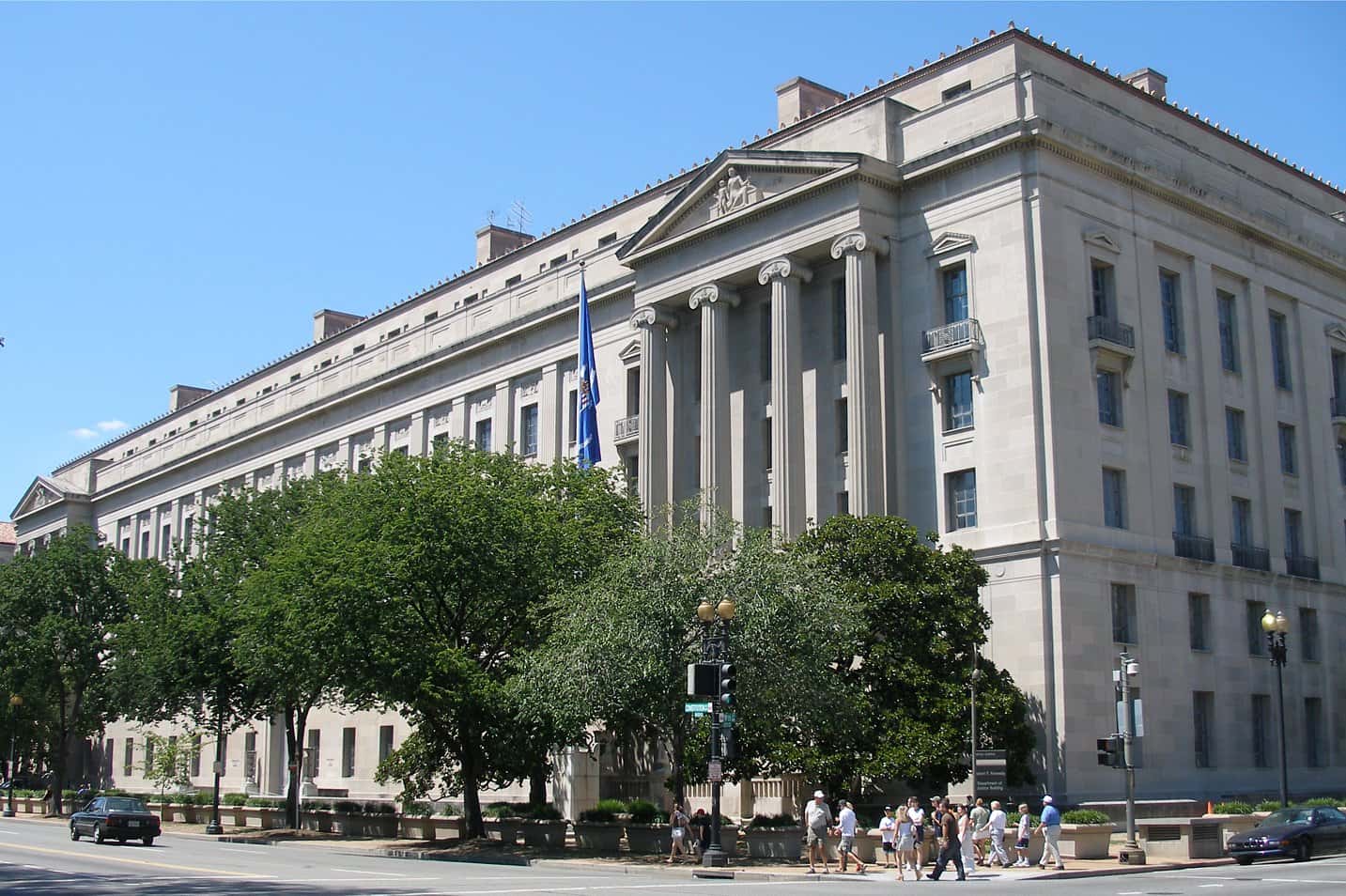
Florida parents who care for medically fragile children at home are warning that a 13-year federal civil rights case meant to protect those children is unraveling, after the U.S. Justice Department asked a federal appeals court to wipe out a ruling it won against the state earlier this year. The department's reversal in United States v. Florida, a lawsuit it filed in 2013 over children with complex medical needs living in nursing facilities, could loosen court-ordered requirements that Florida's Medicaid program deliver the in-home nursing these children are approved to receive.
Families told WKMG News 6 in Orlando, in a report published Oct. 5, that they are already short on the private duty nursing hours the state authorizes, and some have written to the court asking that the injunction stay in place. Disability rights attorney Matthew Dietz, who has worked on the litigation for 13 years, told the station the change affects more than 3,000 Florida families. As of that reporting, the 11th U.S. Circuit Court of Appeals had not ruled on the government's request.
What the Justice Department is asking for
On Aug. 13, the Justice Department filed an unopposed motion asking the Atlanta-based 11th Circuit to vacate its March 31, 2026, decision in the case and send it back to the district court in South Florida, according to reports on the filing. Coverage of the motion says the department intends, once the case is back before the trial court, to seek to end or modify the injunction.
The move follows a broader shift in how the department reads the Americans with Disabilities Act. In June, its Office of Legal Counsel issued an opinion concluding that neither Title II of the ADA nor Section 504 of the Rehabilitation Act imposes an integration mandate on states, and that states are not required to provide home and community care. In July, according to News 6, the department said its guidance on Olmstead v. L.C., the 1999 U.S. Supreme Court decision holding that unjustified isolation of people with disabilities in institutions is discrimination, has no force of law and that it would no longer rely on it to enforce Title II. The Supreme Court precedent itself remains on the books.
Reagan Rush, a former Justice Department attorney who worked on Olmstead enforcement from 2010 to 2025, told The 19th, in a report republished by WLRN and WUSF, that federal enforcement has been the primary way those rights are protected. "If you have a right, it means nothing if it's not enforced," she said.
A case that spans more than a decade
The litigation began after a 2012 Justice Department investigation found Florida was unnecessarily placing children with disabilities in nursing homes. Dietz filed a class action on behalf of families that year, and the federal government brought its own enforcement suit in 2013 on behalf of hundreds of children. The key milestones:
| Date | Event |
|---|---|
| 2012 | Justice Department investigation finds Florida unnecessarily institutionalizing children with disabilities; families file class action |
| 2013 | Justice Department sues Florida under Title II of the ADA |
| September 2019 | 11th Circuit rules the U.S. attorney general has authority to sue Florida under Title II |
| October 2022 | U.S. Supreme Court declines to hear Florida's challenge to that ruling |
| July 14, 2023 | U.S. District Judge Donald Middlebrooks rules Florida violates the ADA and issues a permanent injunction |
| March 31, 2026 | Split 11th Circuit panel largely upholds Middlebrooks' ruling and injunction |
| June 2026 | Justice Department legal opinion rejects an integration mandate under the ADA |
| July 2026 | Department says its Olmstead guidance has no force of law |
| Aug. 13, 2026 | Department asks the 11th Circuit to vacate its March decision |
After a two-week trial, Middlebrooks found that Florida's failure to provide adequate services to medically complex children violated the ADA. His injunction requires the state, among other things, to improve care coordination and ensure each child receives at least 90% of the private duty nursing hours for which the child qualifies, to collect and report data on nurse availability and to help families of children in nursing facilities plan transitions home. About 140 children were living in nursing homes when Florida appealed in 2023, WUSF reported at the time.
What the appeals court decided in March
In a 115-page opinion written by Judge Adalberto Jordan and joined by Judge Nancy Abudu, the 11th Circuit held that the United States can sue Florida for system-wide relief that is not limited to children who individually filed complaints. The majority found that the district court generally did not err in concluding that the government proved an Olmstead violation, that the violations were widespread and that a statewide injunction was warranted. The panel affirmed most of the injunction but vacated one section and parts of two others, along with part of the order appointing a court monitor. Judge Andrew Brasher dissented.
That ruling is now the one the Justice Department wants erased. Reports on the motion say Florida had already sought further review of the March decision in May.
Florida's position
Florida has fought the case from the start. In its 2023 appeal, the state argued the injunction "is overbroad and offends federalism," called the number of children admitted to nursing homes over the previous decade because of inadequate in-home nursing "vanishingly small" and said the order subjected the state to "federal micromanagement." The state's Agency for Health Care Administration, which runs Florida Medicaid, has maintained that placing children in nursing homes is a last resort.
Neither the Justice Department nor AHCA responded to News 6's requests for comment for its Oct. 5 report. The Justice Department also did not respond to The 19th.
What families describe
Dietz estimates 7,000 to 10,000 medically complex children live in Florida. "Very few of them get 100% of the care that they need," he told News 6, adding that many receive between 50% and 80% of the hours they are granted.
Kayla Webb of Winter Haven told The 19th her son needs round-the-clock care for a heart condition and other diagnoses, but his covered nursing was cut last year to less than half of that. She described having to choose between sending him to school, where a medical professional must accompany him, and staying up to monitor his overnight tube feeding. "How does a parent make that choice?" she said. She told News 6 the family is "probably short 20 hours a week."
Yasmina Halim of Port Richey cares full time for her 13-year-old daughter, who has Tay-Sachs disease, and is paid $15 an hour for 40 hours a week through the state's self-directed care program, though she works far more, The 19th reported. "There really isn't a facility that could take such a young child and meet all her medical demands," she said.
News 6 also profiled Tricia Rafeedie, who said she is leaving Florida to find better care for her adopted 6-year-old son, who has about 20 diagnoses and uses a feeding tube, after her requests for private duty nursing, a home health aide and paid parent caregiving were denied. One mother wrote to the court, "Parental devotion should not be used as evidence that professional services are unnecessary," the station reported.
Dietz told The 19th that without federal enforcement, the burden falls back on the states. "If the United States is not going to enforce the requirements of Olmstead, it's going to go back to the states," he said. He said he does not believe Florida is meeting that responsibility.
What's next
The 11th Circuit must decide whether to grant the vacatur request. If it does, the case returns to Middlebrooks' court in the Southern District of Florida, where the Justice Department has signaled it will seek to end or scale back the injunction. If the court declines, the March ruling stands and the injunction's nursing-hour requirements remain in force, although the federal government, as the plaintiff, would no longer be pressing to enforce them. The parallel family class action brought by Dietz offers families another route, and advocates have urged the department to withdraw its motion. Families can follow the docket in case No. 23-12331 at the 11th Circuit.
Spotted an issue with this article?
Have something to say about this story?
Write us a letterComments
No comments yet. Be the first to weigh in.
Related Coverage
Cilia Flores, Wife of Ousted Venezuelan Leader Maduro, Asks Judge for Release as Torture Charges Loom
2h ago
Tampa Bay Members of Congress Press for Answers on Sick Pinellas Plant Nuclear Workers
18h ago

NORAD Says Fighter Jets Have Intercepted More Than 60 Planes Near Mar-a-Lago Since 2025
20h ago

New customs rule on Oct. 22 could cut off mailed prescriptions from Canada for Florida seniors
21h ago