Florida Home Sales and Prices Rose in June as Condo Inventory Piles Up
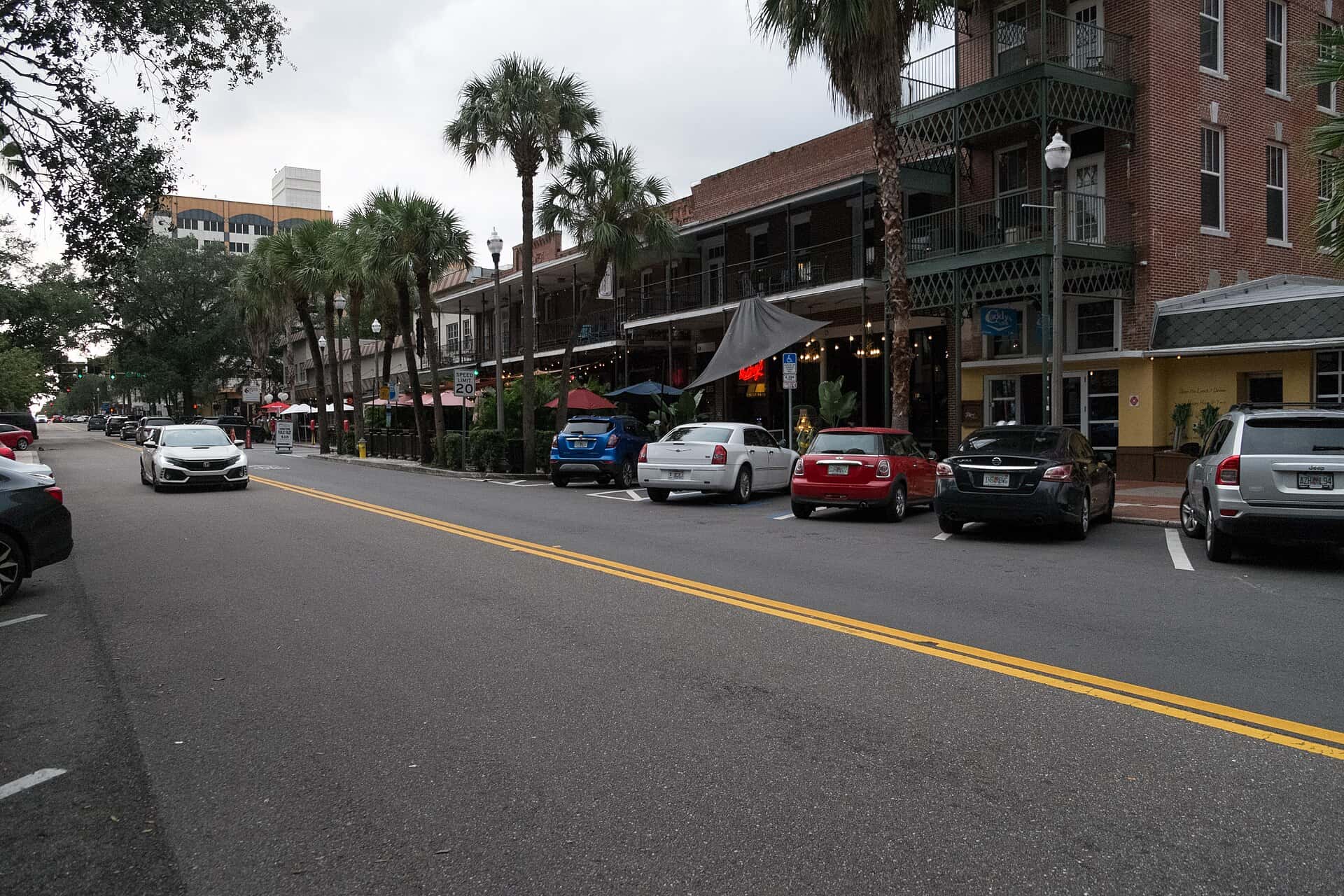
Florida's housing market posted higher closed sales, more new pending sales, and higher median prices in June and the second quarter of 2026 compared with a year earlier, according to data released by Florida Realtors. The figures point to a market that has regained transaction volume after a slow stretch, even as a widening gap between the single-family and condominium segments complicates any simple read on the state's housing health.
What the numbers show
Closed sales of existing single-family homes statewide totaled 26,036 in June, an increase of 9.3 percent from June 2025. Existing condo and townhouse sales totaled 8,900 for the month, up 14 percent year over year. Pending inventory rose year over year for both June and the second quarter, which suggests the sales gains were not a one-month anomaly.
On price, Florida Realtors reported a statewide single-family median sales price of $425,000 for the second quarter, up 2.4 percent from the same quarter a year earlier. Separate market trackers put the June single-family median closer to $432,000, reflecting the difference between a monthly reading and a quarterly average. Either figure describes the same basic condition: prices are grinding upward at low single-digit rates rather than surging or falling.
That is a meaningfully different picture from the pandemic-era market, when Florida recorded double-digit annual price appreciation across most metropolitan areas. A market rising at roughly 2 to 5 percent a year is closer to a historical norm, though it does little to reverse the affordability gap that opened during the years of rapid appreciation.
The condo problem
The most striking figure in the release is the divergence in inventory. Single-family existing homes stood at a 4.5-months supply in June and for the second quarter. Condo and townhouse properties stood at an 8.1-months supply for both periods.
Housing economists generally treat roughly five to six months of supply as a balanced market, with lower readings favoring sellers and higher readings favoring buyers. By that standard, Florida's single-family market remains modestly tilted toward sellers while the condo market has moved well into buyer territory.
The condo overhang has been building for several years and traces to a specific set of Florida pressures. Structural inspection requirements and reserve funding rules enacted after the Surfside collapse have pushed association assessments higher in many older buildings. Insurance costs for multifamily structures have risen alongside those special assessments. The combined monthly carrying cost of an older Florida condo has climbed in ways that list prices alone do not capture, and buyers have responded by demanding discounts or walking away.
The result is a two-speed market. Buyers looking at single-family homes still face competition in desirable areas. Buyers willing to consider condos, particularly in older buildings, have more negotiating leverage than at any point in recent years, provided they understand what they are taking on in assessments and reserves.
Regional differences
Statewide averages obscure substantial regional variation. In South Florida, active inventory continued to decline, down 18 percent year over year according to data from the Miami Association of Realtors, which has supported firmer price gains in that market than the statewide numbers suggest. The same association reported a surge in million-dollar sales year over year, indicating continued strength at the upper end of the South Florida market.
That pattern, tightening inventory and strength in luxury segments, does not hold everywhere. Markets along the Southwest Florida coast and portions of the Tampa Bay region have carried heavier inventory, particularly in condominium and coastal segments where insurance and assessment costs weigh most heavily.
Central Florida sits between those poles, supported by continued in-migration and employment growth around the Orlando metropolitan area. Northeast Florida around Jacksonville has generally tracked closer to statewide norms.
What it means for Floridians
For sellers, the data argue against assuming the pricing power of three or four years ago. Homes are selling, and volume is up, but the market is rewarding realistic pricing rather than aspirational listings. Time on market and price reduction rates have become better indicators of local conditions than headline median prices.
For buyers, the calculus depends heavily on segment. Single-family buyers face a market with limited but not scarce supply, and rising prices that erode any benefit from waiting. Condo buyers face a market with genuine leverage, but the diligence burden is higher than it used to be. Reviewing an association's reserve study, recent structural inspection reports, and any pending special assessments has become an essential step rather than a formality.
For current owners not planning to move, the price data matter mainly through property tax assessments and insurance replacement cost calculations. Rising market values eventually flow into assessed values for properties without homestead protection, and Florida's Save Our Homes cap limits annual assessment increases for homesteaded properties but does not apply to second homes or investment properties.
The financing backdrop
Mortgage costs remain the dominant variable in Florida affordability. The Federal Reserve held its benchmark rate steady at its July meeting in a range of 3.5 to 3.75 percent, the fifth consecutive meeting without a change. Mortgage rates are not set directly by the Fed and track longer-term Treasury yields more closely, but the central bank's posture shapes the broader rate environment in which lenders price loans.
For a Florida buyer, the interaction between mortgage rates, insurance premiums, and association fees determines what is actually affordable. A modest decline in the mortgage rate can be entirely offset by an insurance increase or a special assessment, which is why headline affordability measures based on price and interest rate alone tend to overstate purchasing power in this state.
Property insurance costs, at least, have moved in a more favorable direction. Citizens Property Insurance Corporation implemented rate reductions for personal lines policyholders in 2026, its first average decrease in roughly a decade, and the number of policies it carries has fallen sharply from its 2023 peak as private carriers have re-entered the market.
How Florida got here
The current market is best understood as the settling phase after an extraordinary disruption. Between 2020 and 2022, Florida absorbed one of the largest in-migration waves in its modern history, driven by remote work flexibility, tax considerations, and pandemic-era relocation from denser metropolitan areas in the Northeast and Midwest.
That demand collided with limited inventory and produced price appreciation that ran well into double digits annually across most Florida metros. Homes sold above asking price with regularity, inspection contingencies were waived, and cash offers displaced financed buyers throughout the market.
The correction that followed was not a crash. Prices did not retrace to pre-2020 levels in most markets. Instead, the rate of appreciation collapsed toward flat while the underlying price level held, which economists sometimes describe as a plateau rather than a decline. Transaction volume fell substantially as buyers priced out of the market withdrew and sellers unwilling to accept lower offers stayed put.
What the June data show is volume returning. Sales up 9.3 percent for single-family homes and 14 percent for condos indicates that the standoff between buyer expectations and seller expectations is resolving, with both sides adjusting toward a clearing price.
The insurance and assessment overhang
Any analysis of Florida housing that stops at price and mortgage rate misses the components that have done the most to change affordability in this state.
Property insurance premiums rose dramatically through the early 2020s as carriers exited the Florida market, litigation costs mounted, and reinsurance became more expensive. For many households, the annual insurance premium became a line item comparable to property taxes, and in some coastal locations it exceeded them.
The direction has improved. Citizens implemented average rate reductions for personal lines policyholders in 2026, the first such decrease in roughly a decade, and its policy count has fallen roughly 76 percent from its October 2023 peak of about 1.41 million as private carriers returned. Roughly 17 new insurers have entered the Florida market following the legal reforms of 2022 and 2023.
Condominium associations face a separate cost structure. Milestone structural inspection requirements and mandatory reserve funding, both enacted after the Surfside collapse, forced associations that had deferred maintenance and underfunded reserves to confront the full cost at once. The result has been special assessments running into tens of thousands of dollars per unit in some buildings.
That is the mechanism behind the 8.1-months condo supply. Buyers are not avoiding condos because they dislike them. They are avoiding buildings whose true carrying cost is uncertain.
What buyers should actually examine
The diligence required to buy in Florida now exceeds what most out-of-state buyers expect, and the areas that matter most are not the ones a standard home inspection covers.
For any condominium purchase, the essential documents are the association's reserve study, its most recent milestone inspection report if the building is old enough to require one, the current budget, minutes from recent board meetings, and any disclosure of pending or contemplated special assessments. A building that appears inexpensive on a per-square-foot basis may carry an assessment liability that dwarfs the discount.
For single-family purchases, the roof age drives insurability more than almost any other factor. Many Florida carriers will not write a policy on a roof beyond a certain age regardless of condition, which means a home that appears fully functional may be effectively uninsurable without immediate replacement.
Buyers should obtain an insurance quote during the inspection period rather than after closing. A binding quote on the specific property, rather than a general estimate, is the only reliable way to know the actual monthly obligation.
Flood risk deserves separate attention. Standard homeowners policies exclude flood, coverage through the National Flood Insurance Program or private carriers is a separate purchase, and the 30-day waiting period means it cannot be arranged at the last moment.
What's next
Florida Realtors publishes monthly market data, so the July figures will provide the next read on whether June's sales gains carried into the second half of the year. The stretch from August through October is typically a slower season in Florida real estate, and the hurricane season adds a variable that does not exist in most other state markets.
The condo inventory figure is the number most worth watching. If the 8.1-months supply continues climbing, it would signal that assessment and insurance pressures are still outrunning price adjustments in that segment. If it stabilizes or falls, it would suggest the market has largely finished repricing older condominium stock to reflect the true cost of ownership.
For most Floridians, the practical takeaway is that this is a normalizing market rather than a booming or collapsing one, with the important caveat that the condominium segment is following its own trajectory driven by costs specific to Florida law and the state's insurance market.
Spotted an issue with this article?
Have something to say about this story?
Write us a letterComments
No comments yet. Be the first to weigh in.
Related Coverage

Chris Sorensen, Firehouse Subs Co-Founder and Former Jacksonville Firefighter, Dies at 65
6h ago

Alabama Jack's, the Card Sound Road Landmark, Is for Sale at $4.9 Million, Conch Fritter Recipe Included
7h ago

Mosaic to idle South Fort Meade phosphate operation Dec. 8, laying off 199 workers over sulfur shortage
1d ago

Florida unemployment rate falls to 4.4% in September, fourth straight monthly decline
1d ago