Florida Private HBCUs Post Their Best Enrollment Numbers in Years
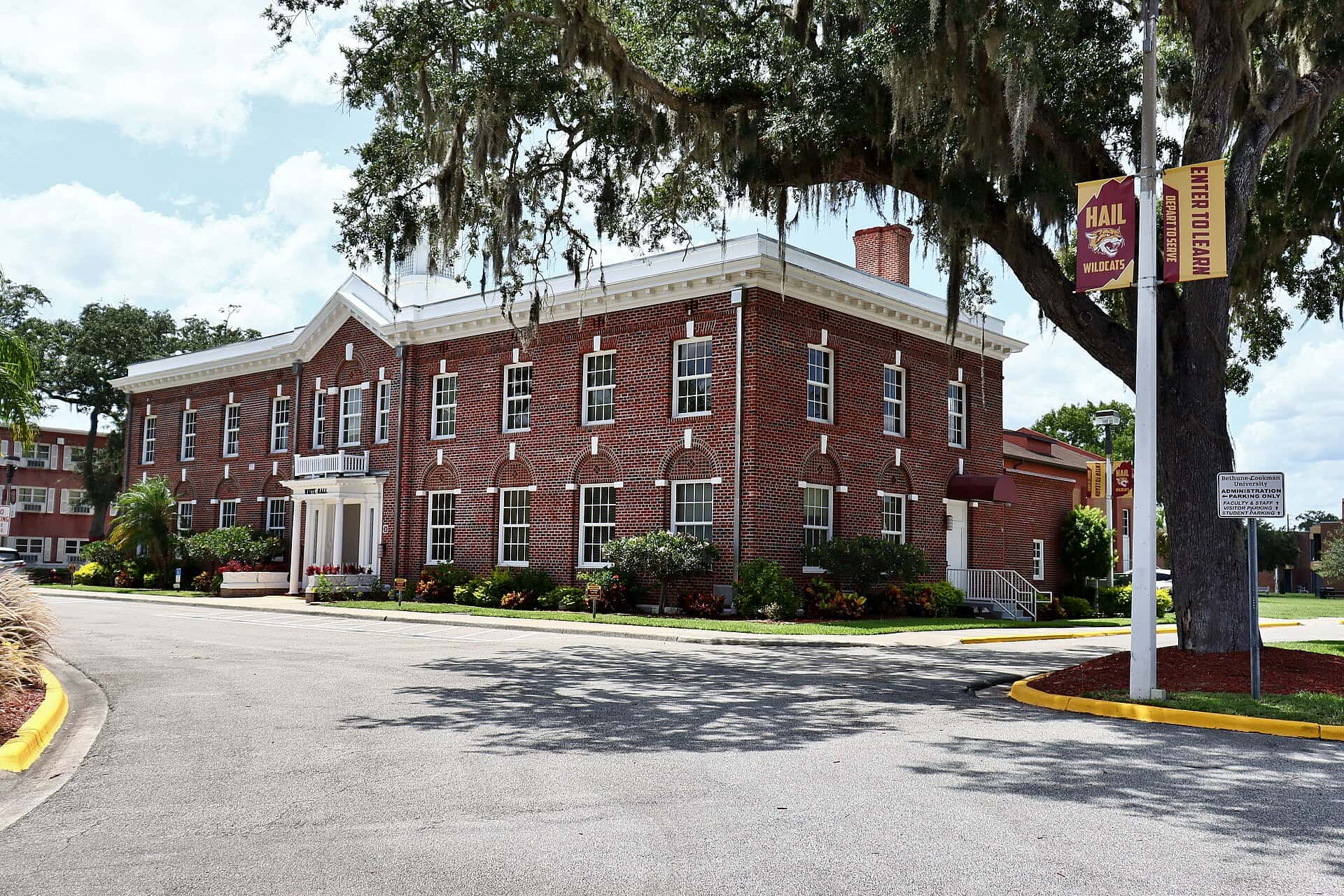
Two of Florida's private historically Black colleges and universities have posted their strongest enrollment numbers in years. Edward Waters University in Jacksonville, Florida's first HBCU, welcomed 1,281 students for the fall 2026 term, its highest fall enrollment in more than two decades. Florida Memorial University in Miami Gardens reached a record 2,556 students.
The growth comes as Florida's public higher education system moves in a very different direction on enrollment policy, with the State University System Board of Governors voting unanimously this month to bar students unlawfully present in the United States from enrolling at any of the state's 12 public universities beginning in the 2027-2028 academic year.
Private institutions in Florida are not bound by Board of Governors regulation and set their own admissions policies. That distinction has taken on new practical weight as the state's public system narrows eligibility.
Edward Waters and its history
Edward Waters University traces its founding to 1866, making it Florida's first institution of higher learning established for Black students and one of the oldest HBCUs in the country. It was founded by the African Methodist Episcopal Church in the years immediately following emancipation, at a time when Black Floridians were excluded from every other institution of higher education in the state.
The institution spent much of its history operating on a small scale with limited resources, a pattern common among private HBCUs that were founded without the land-grant endowments that supported public institutions. Edward Waters achieved university status relatively recently, reflecting an expansion of graduate offerings and institutional capacity.
Reaching 1,281 students for the fall term, the highest fall enrollment in more than 20 years, represents meaningful growth for an institution of that size. Percentage growth at small institutions translates differently than at large ones, and a few hundred additional students changes the financial and academic picture substantially.
Jacksonville's Black population and the surrounding Northeast Florida region provide the institution's traditional enrollment base, and Edward Waters has been expanding academic programs and athletics as part of its growth strategy.
Florida Memorial's record year
Florida Memorial University in Miami Gardens has reached a record 2,556 students, its largest enrollment on record, achieved while the institution has been working through accreditation probation and facility problems including mold remediation.
That combination is unusual. Enrollment typically falls when an institution faces accreditation scrutiny, because prospective students and families read probation as a risk signal. Growing to a record while under probation suggests either strong demand from the institution's core constituency or effective recruitment that outpaced the reputational headwind.
Accreditation probation is a serious status. It signals that an accrediting body has identified compliance concerns that must be resolved, and loss of accreditation would end an institution's eligibility for federal financial aid, which for most institutions is existential. Probation is not termination, and institutions frequently resolve the underlying issues and return to good standing.
Florida Memorial serves South Florida, one of the largest and most diverse metropolitan areas in the country, and its location in Miami Gardens places it in a region with substantial Black and Caribbean-American populations.
Where Florida's HBCUs fit
Florida has four HBCUs. Florida A and M University in Tallahassee is the only public one and by far the largest, a land-grant institution within the State University System with well over 9,000 students and nationally recognized programs in pharmacy, business, journalism, and engineering through a joint college with Florida State University.
Bethune-Cookman University in Daytona Beach, founded by Mary McLeod Bethune, is private and has worked through its own financial and accreditation challenges in recent years. Edward Waters and Florida Memorial round out the group.
The three private institutions operate under fundamentally different economics than Florida A and M. They lack state appropriations, carry smaller endowments, and depend heavily on tuition revenue, which makes enrollment the single most important variable in institutional stability. A strong enrollment year is not a marginal improvement for institutions in that position. It is the difference between comfortable operations and difficult decisions.
Nationally, HBCUs enroll a disproportionate share of Black students who go on to earn doctorates and to enter medicine, law, and engineering, an outcome that has drawn renewed attention to their role in the past several years.
Why enrollment is rising
Several factors plausibly contribute. National HBCU enrollment has grown over the past several years, a trend that observers have linked to a combination of cultural visibility, targeted philanthropy following 2020, and student preferences shaped by the campus climate debates at predominantly white institutions.
Florida-specific factors may also be at work. The state's public universities have been the subject of sustained policy attention, including changes to curriculum requirements, diversity program restrictions, and governance. Some students and families evaluate that environment when choosing where to enroll, and private institutions offer a different one.
Cost remains a barrier. Private institution tuition exceeds Florida's public university tuition, which is among the lowest in the country, and Florida Bright Futures scholarships apply differently to private institutions. Students choosing a private HBCU over a public university are typically paying more, which makes the enrollment growth more notable.
Athletics matters at institutions of this size more than it does at large universities. Athletic programs recruit students who bring tuition revenue and who build the campus community that drives retention.
What it means for Florida
For students in Jacksonville and Miami Gardens, growing enrollment at their local HBCU generally means expanded academic offerings, better facilities, and stronger student services, because those investments follow revenue.
For the surrounding communities, both institutions are significant local employers and economic anchors in their neighborhoods. Edward Waters sits in a historically Black neighborhood on Jacksonville's north side, and Florida Memorial anchors part of Miami Gardens.
For Florida's workforce, HBCUs contribute graduates in fields where the state has persistent shortages, particularly education and healthcare. Teacher preparation programs at HBCUs have historically produced a substantial share of Black educators, a group underrepresented in Florida classrooms relative to the student population.
For the broader higher education picture, the enrollment growth at private HBCUs alongside tightening eligibility rules at public universities describes a state where the private and public sectors are moving on divergent paths.
The challenges that remain
Enrollment growth does not resolve the structural pressures private HBCUs face. Endowments at Florida's private HBCUs are small relative to comparable non-HBCU private institutions, a gap rooted in the historical exclusion of Black Americans from wealth accumulation.
Deferred maintenance is a persistent problem, and the mold remediation reported at Florida Memorial is one visible instance of a broader pattern across institutions that have operated on thin margins for decades.
Accreditation compliance requires administrative capacity that small institutions struggle to fund, and the federal financial aid on which most students depend is contingent on maintaining it.
Retention is the metric that matters most over time. Enrolling a large class matters less than graduating it, and completion rates at institutions serving high proportions of first-generation and Pell-eligible students require significant student support infrastructure.
The financing gap that shapes everything
The structural challenge facing private HBCUs is easiest to see in endowment figures. Endowments generate annual income that institutions use for scholarships, faculty salaries, and facilities without touching principal, and the size of an endowment determines how much an institution can do beyond what tuition pays for.
Private HBCU endowments are, as a group, a fraction of those held by comparable private institutions of similar size and age. That gap traces directly to the wealth accumulation history of the communities from which each institution draws alumni donors, and it compounds across generations because endowment growth is a function of prior endowment size.
The practical consequence is dependence on tuition. An institution funding operations primarily from tuition revenue must maintain enrollment to maintain operations, which makes a bad admissions year an immediate crisis rather than a manageable dip. It also constrains the ability to offer institutional financial aid, which is the primary tool wealthier institutions use to recruit.
Philanthropic attention to HBCUs increased substantially beginning in 2020, with large gifts from individual donors and corporate commitments. Those gifts have been meaningful but have been concentrated at a relatively small number of institutions, and they do not close a gap built over a century and a half.
Federal support flows through Title III of the Higher Education Act, which provides funding specifically for institutions serving high proportions of low-income students, along with capital financing programs.
What enrollment growth has to become
The measure that matters over time is not how many students enroll but how many graduate. Institutions serving high proportions of first-generation and Pell-eligible students face retention challenges that have less to do with academic preparation than with the financial and logistical fragility of their students' circumstances.
A student who leaves after a semester because a car repair made tuition impossible has not failed academically. Institutions that succeed with this population typically do so through emergency aid funds, intensive advising, and structures that catch problems before a student disappears.
Those supports cost money, which returns to the endowment question. Additional tuition revenue from a larger entering class can fund them, which is the path by which enrollment growth becomes completion growth, but only if the institution invests it there rather than in facilities or athletics.
The fall-to-fall persistence rate for this year's entering classes will be the first meaningful signal, available a year from now. National HBCU graduation rates vary widely by institution, and the strongest performers demonstrate that the outcomes are achievable with the right support structures.
For Florida specifically, HBCU graduates enter a state workforce with persistent shortages in teaching and healthcare, which means completion at these institutions has effects well beyond the campuses themselves.
What's next
Both institutions will need to convert enrollment growth into retention and completion. The fall-to-fall persistence rate for this year's entering classes will be the first meaningful indicator, available a year from now.
For Florida Memorial, resolving the accreditation probation is the priority that supersedes everything else. Institutions typically work through a defined remediation timeline with their accrediting body.
For Edward Waters, sustaining the growth is the question. A single strong year can reflect a favorable admissions cycle. A sustained trend requires the academic programs, facilities, and student services to support a larger student body, which is where the additional tuition revenue would need to go.
Spotted an issue with this article?
Have something to say about this story?
Write us a letterComments
No comments yet. Be the first to weigh in.
Related Coverage

OCPS Rejects Special Magistrate's Plan as School Board Takes Up Teacher Contract Impasse
20h ago
Judge Recommends Reprimand, Not Suspension, for Gainesville High Teacher Targeted by State Officials Over 'Dictator' Superlative
23h ago

Appeals Court Rules Escambia School Board Members Can Be Deposed Over Library Book Removals
1d ago
Orange County Public Schools Lost About 8,000 Students in a Year, and Roughly 5,000 Were Immigrants, District Data Show
1d ago