Florida Public Hospitals Face a $323 Million Hit if Amendment 3 Passes
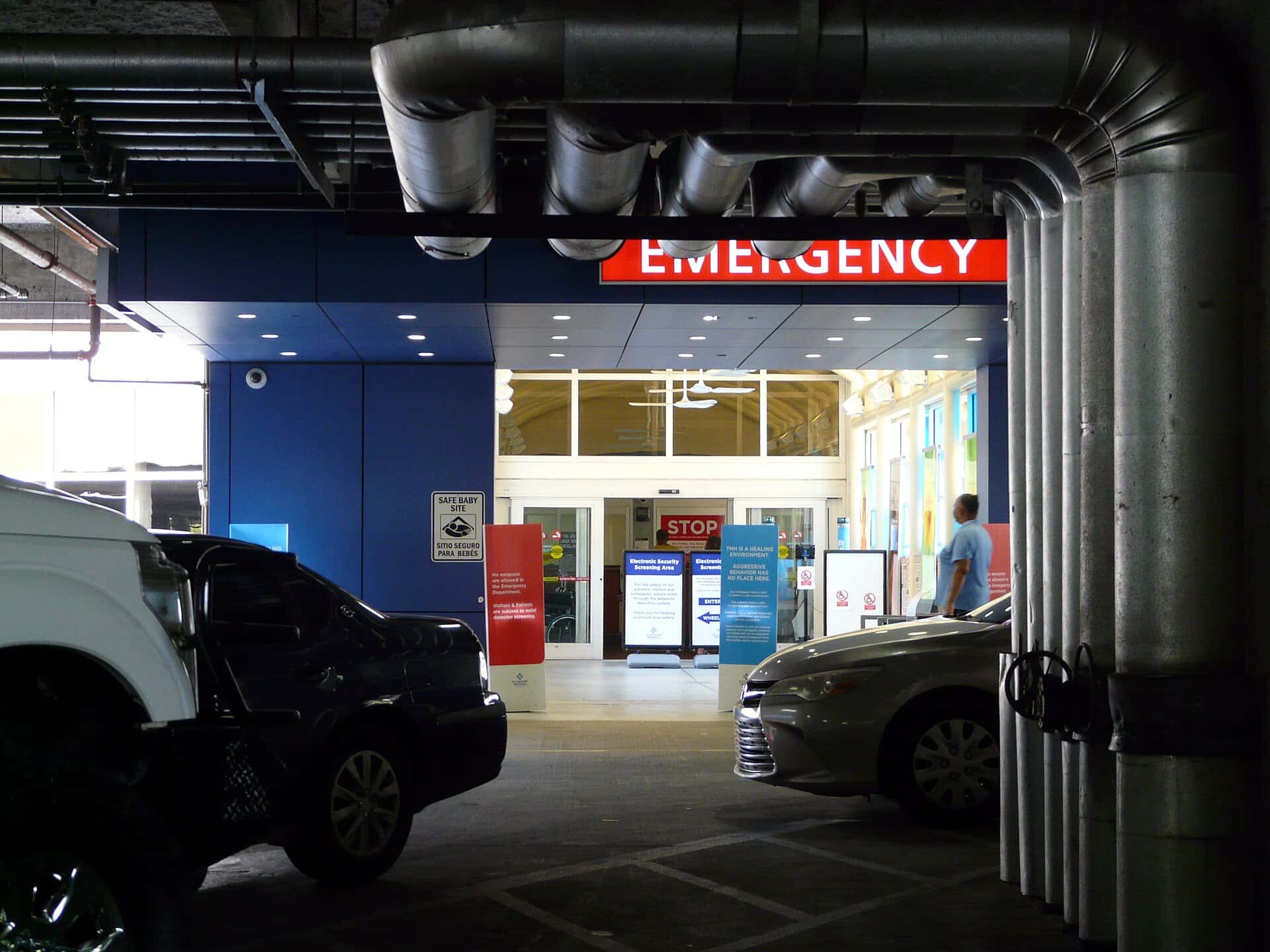
Florida's public hospitals and health care districts could lose $323 million over three years if voters approve Amendment 3 on the Nov. 3 ballot, a figure that has moved the property tax measure from a general fiscal debate into a direct question about who pays for trauma centers, emergency departments and care for uninsured Floridians. Health care taxing districts occupy an unusual position in Florida's fiscal structure: they depend on ad valorem revenue, they serve populations that generate limited paying volume, and they have almost no alternative funding sources. A constitutional amendment that shrinks the property tax base hits them harder than it hits most local governments.
How Florida's hospital taxing districts work
Florida has a network of independent special districts and public hospital authorities that levy property taxes within defined boundaries to fund health care. They were created over decades by the Legislature and by local referendum, and their structures vary considerably, but the underlying model is consistent: local property owners fund a hospital or a health system that serves the community, including patients who cannot pay.
Some of these districts own and operate hospitals directly. Others contract with private operators and use their tax revenue to purchase care for indigent residents. Jackson Health System in Miami-Dade, funded through the Public Health Trust and a dedicated sales tax along with other sources, is the largest and most visible example of a publicly supported safety net system in the state.
The common feature is dependence on a revenue stream tied to assessed property values within district boundaries. That revenue does not fluctuate with patient volume, which is precisely why it works as safety net funding: it stays stable when uncompensated care rises, such as during economic downturns when more residents lose insurance.
Why Amendment 3 hits them
Amendment 3 would raise Florida's homestead exemption for non-school property taxes to $150,000 in 2027 and $250,000 in 2028. The Legislature carved out the school district portion of tax bills, protecting education funding. It did not carve out hospital and health care districts.
That means the full weight of the exemption increase falls on the non-school levies, and hospital districts are among them. In districts where a high proportion of parcels are homesteaded and assessed below the new exemption thresholds, the taxable base available to the district could shrink dramatically, with the $323 million three-year estimate reflecting the aggregate statewide effect.
Hospital districts also have limited capacity to offset the loss by raising millage. Many operate under statutory or charter millage caps set when the district was created, and raising the cap requires legislative action or local referendum. A district already at or near its cap has no lever to pull.
What the money currently pays for
The most visible use of hospital district funding is trauma care. Trauma centers are expensive to maintain because they require surgical subspecialists on call around the clock, dedicated operating capacity and imaging availability, all of which must be staffed whether or not a patient arrives. Trauma centers generally lose money on the service line and are cross-subsidized.
Indigent and charity care is the second major category. Florida did not expand Medicaid under the Affordable Care Act, which leaves a coverage gap: residents who earn too much to qualify for traditional Medicaid but too little to receive meaningful subsidies on the individual market. Those patients, when they need care, receive it in emergency departments, and the cost falls on the facility and its funding sources.
The third category is capacity that rural and semi-rural areas cannot otherwise support. In parts of Florida where population density does not sustain a commercially viable hospital, district tax support is what keeps an emergency department, obstetric services or a rural health clinic open. When that funding contracts, the services most likely to close are the ones with the worst payer mix, which frequently means labor and delivery.
The arguments on each side
Supporters of Amendment 3 make a straightforward case: Florida homeowners have absorbed steep increases in property taxes, insurance and cost of living, and the amendment returns money to households that need it. They argue that hospital districts, like other local government entities, have grown revenue substantially as property values rose and can absorb a reduction through efficiency.
They also point out that the $323 million figure is a projection resting on assumptions about assessed values, homestead ratios and district responses, all of which carry uncertainty. Property values in Florida have continued rising in most counties even as sales activity slowed, which partially offsets the exemption increase over time.
Opponents counter that safety net health care is not a discretionary service that can be trimmed at the margin. An emergency department either operates or it does not. A trauma center either maintains its designation with the required staffing or it loses it. The cost structure is largely fixed, which means revenue reductions translate into service eliminations rather than proportional scaling.
They also raise a cost-shifting argument: uncompensated care does not disappear when a funding source contracts, it migrates. Patients who lose access to a district-supported clinic present later and sicker at emergency departments elsewhere, and those costs flow into commercial insurance premiums paid by employers and households across the region.
What it means for Floridians
For residents in counties with hospital taxing districts, the practical question is what services exist within a reasonable drive. Trauma care is time-sensitive in a way that most medical care is not, and the loss of a trauma designation in a region measurably changes survival outcomes for serious injuries.
For uninsured Floridians, the districts are frequently the entity of last resort, and a contraction in their funding narrows an already limited set of options. Florida's uninsured rate has consistently run above the national average, which makes safety net capacity more consequential here than in states that expanded Medicaid.
For insured Floridians and their employers, the connection runs through cost shifting. Hospitals recover uncompensated care costs partly through the rates they negotiate with commercial insurers, which flow into premiums. A reduction in public funding for indigent care tends to show up eventually in commercial rates, though the mechanism is indirect and the timing diffuse.
The broader fiscal picture
Hospital districts are one line item in a larger reallocation. Amendment 3 affects counties, cities, fire districts, library districts, water control districts and every other non-school taxing authority in Florida. The hospital number is prominent because health care is a service voters recognize immediately, but the aggregate effect on local government revenue is substantially larger.
The Legislature passed an implementing bill, Senate Bill 4-F, signed by Governor Ron DeSantis, which strengthens safeguards against local property tax increases. That measure limits the most obvious response available to local governments facing a revenue reduction, which is raising millage rates to compensate.
Taken together, the amendment and its implementing legislation move fiscal authority toward the state and away from local taxing bodies. For hospital districts, which were created precisely to give communities a local mechanism for funding local health care needs, that shift raises a structural question about whether the model remains viable.
Florida's coverage gap
The reason hospital district funding carries such weight in Florida traces to a policy decision made more than a decade ago. Florida did not expand Medicaid under the Affordable Care Act, one of a shrinking group of states that declined.
The consequence is a coverage gap: adults earning too much for Florida's restrictive traditional Medicaid eligibility but too little to qualify for meaningful marketplace subsidies. Florida's traditional Medicaid program covers very low-income parents, children, pregnant women, seniors and people with disabilities, but generally not childless adults regardless of how little they earn.
Those residents are not uninsured by choice and they do not stop needing medical care. They receive it in emergency departments, where federal law requires screening and stabilization regardless of ability to pay, and the cost lands on hospitals. Public hospitals and taxing districts absorb a disproportionate share, which is why their funding is more consequential in Florida than the same institutions would be in an expansion state.
Rural hospitals and access
The sharpest effects of any funding contraction fall outside the major metropolitan areas. Rural hospitals across the country have closed at a significant rate over the past 15 years, and Florida has not been immune. The economics are difficult: low patient volume, a payer mix weighted toward Medicare, Medicaid and self-pay, and fixed costs that do not scale down.
Obstetric services are typically the first to go. Labor and delivery requires 24-hour coverage by obstetricians, anesthesia and nursing staff regardless of how many deliveries occur, and a rural hospital delivering a few hundred babies a year cannot cover that cost. Florida counties without a hospital offering obstetric care require expectant mothers to travel substantial distances, and the association between travel distance and adverse outcomes is well documented.
Emergency and trauma access follows the same logic. Florida's trauma system is organized into regions with designated centers at different levels, and the system depends on each center remaining viable. When one closes or downgrades, the transport times for the surrounding area increase, and in trauma care the interval between injury and definitive treatment is directly tied to survival.
What's next
The amendment requires 60 percent voter approval to be ratified, a threshold that has defeated Florida measures with clear majority support. The ballot title and summary were rewritten this summer after a Leon County judge ruled the original language biased and misleading, and the revised text is what voters will see.
Hospital districts and the Florida Hospital Association are expected to be active in the campaign, along with associations representing counties, cities and public employees. Their message is likely to focus on emergency and trauma capacity rather than on abstract revenue figures, because that framing tests better with voters.
If the amendment passes, districts will spend 2027 planning for a two-step reduction that deepens in 2028, and the Legislature will face pressure to address safety net funding through some other mechanism. If it fails, the underlying pressure on Florida homeowners does not go away, and a revised property tax proposal is likely to return in a future session.
Spotted an issue with this article?
Have something to say about this story?
Write us a letterComments
No comments yet. Be the first to weigh in.
Related Coverage

Florida AG Uthmeier subpoenas Performance Food Group as potassium bromate probe widens
4h ago

Manatee Mosquito Control Pilot Killed After Helicopter Strikes Unlit Radio Tower in Myakka City
1d ago
BayCare Opens $33 Million Proton Therapy Center at St. Joseph's Hospital in Tampa
1d ago
Moffitt trial tests personalized immunotherapy as a replacement for chemotherapy in early HER2-positive breast cancer
1d ago