Florida Settles a Second Free Speech Lawsuit Over Firings Tied to Charlie Kirk Social Media Posts
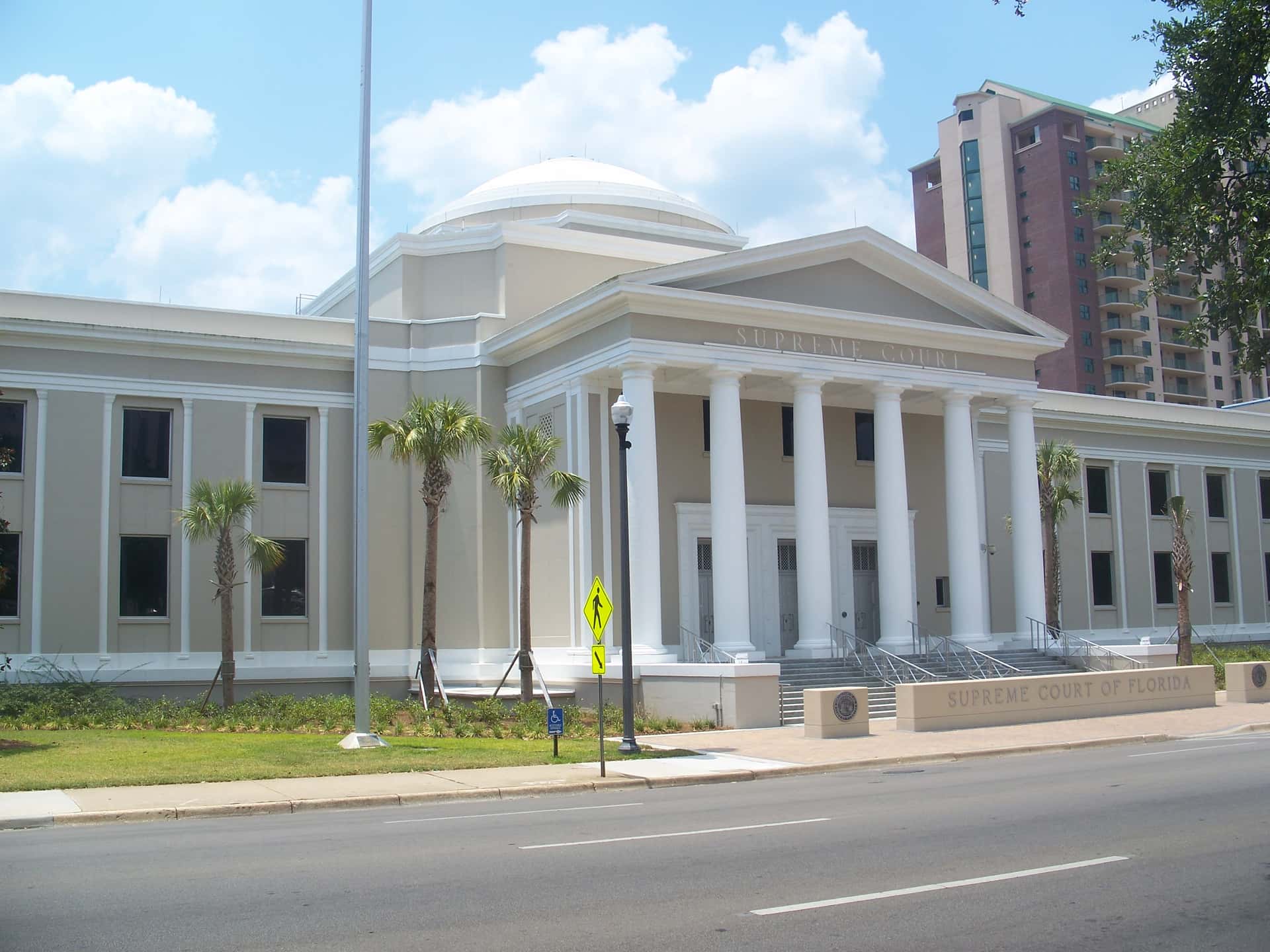
Florida has settled a second First Amendment lawsuit brought by a former state employee who was fired over a personal social media post about the death of conservative commentator Charlie Kirk. Haley Massung, who worked for the Florida Fish and Wildlife Conservation Commission, was awarded $65,000 to resolve her claim against the agency.
The settlement follows a substantially larger payout earlier this year in a related case. Brittney Brown, an FWC employee with more than seven years at the agency, received a settlement totaling $485,000, comprising $275,000 paid by the commission and $210,000 in attorney fees and costs. The FWC portion of that award included roughly $40,000 in back wages and $235,000 in compensatory damages.
Both cases arose from the same period in September, when a wave of terminations swept across public and private employers nationally after Kirk's death. Both former employees argued that their posts were made on personal accounts, outside work hours, on matters of public concern, and were therefore protected speech that a government employer could not punish.
What the cases alleged
According to the Massung lawsuit, she posted a short comment on a Facebook page announcing Kirk's death. She was fired the following month. The Brown case involved a post shared to a private Instagram story while she was on vacation, days after Kirk's death on September 10.
The legal theory in both cases rests on a line of United States Supreme Court decisions governing the speech rights of public employees. Under that framework, a government employer may discipline an employee for speech made pursuant to official duties, but speech made as a private citizen on a matter of public concern receives constitutional protection. Courts then weigh the employee's interest in speaking against the employer's interest in efficient operation.
The balancing test asks whether the speech actually disrupted the workplace, undermined working relationships, or impaired the employee's ability to perform. Where a post is made on a personal account, off duty, and reaches an audience that does not include the public the agency serves, the employer's disruption argument becomes harder to sustain.
A judge allowed at least one of the FWC cases to move forward past the state's initial challenge, a procedural ruling that signaled the claims were legally viable rather than subject to early dismissal. Settlements followed rather than trials, and settlement agreements in Florida public employment cases customarily resolve the claims without any admission of liability by the agency.
The Florida context
Public employee speech cases have a particular resonance in Florida, where the Legislature and the executive branch have made expression on campuses and in workplaces a recurring policy subject over the past several years. The state has adopted measures addressing speech in higher education and instruction in public schools, and litigation over the boundaries of those measures has been steady.
The FWC settlements cut in a direction that complicates simple framing. Here it is the state that paid, and private political expression by employees that was vindicated in dollar terms. The outcomes suggest that whatever the political valence of a given post, the constitutional analysis for a government employer turns on the same criteria.
Florida employs a large public workforce across state agencies, the state university system, county school districts and local governments. Every one of those employers is a state actor for First Amendment purposes, which means the same framework applies to a county sheriff's office, a school district and a state agency alike.
Private employers are in a different position. The First Amendment restrains government, not private companies, so a private employer in Florida generally may terminate an at will employee for a social media post without facing a constitutional claim. That asymmetry explains why the litigation from the September wave of terminations has concentrated on public employees.
What the settlements cost
Settlements paid by Florida agencies come from agency operating funds or from the state risk management trust fund, depending on the nature of the claim and how it is processed. Either way, the money is public. The combined disclosed value of the two FWC settlements exceeds half a million dollars, with the bulk of that total attributable to the Brown case.
Attorney fees are a significant component. Federal civil rights statutes allow a prevailing plaintiff to recover reasonable attorney fees, which is why the Brown settlement included $210,000 in fees and costs on top of the damages paid to the plaintiff herself. That fee shifting provision is a deliberate feature of civil rights law, designed to make representation available in cases where damages alone would not support the cost of litigation.
Agencies typically weigh the likely cost of continued litigation against settlement value. Once a court has declined to dismiss a claim, the expected cost of defending through discovery, summary judgment and trial rises sharply, and the fee exposure grows with it.
What it means for Floridians
For the roughly one million people employed by state and local government in Florida, the settlements offer a practical data point about where the line sits. Speech on a personal account, off duty, about a national news event is the paradigm case of citizen speech on a matter of public concern. That does not make every such post immune from consequence, but it places the burden on the employer to show real operational harm.
The analysis changes when speech is tied to the job. A post that discloses confidential agency information, that appears to speak for the agency, that targets coworkers or members of the public the employee serves, or that undermines the employee's ability to perform a specific role can support discipline even if it also touches a matter of public concern.
Employees in law enforcement and other positions requiring public trust face a narrower zone of protection, because courts have recognized that agencies in those roles have a stronger interest in public confidence. That distinction is well established and applies across jurisdictions.
Local impact across the state
The FWC operates statewide, with regional offices, research facilities and law enforcement personnel from the Panhandle to the Keys. Its workforce includes biologists, researchers, conservation officers and administrative staff, and the agency manages fisheries, wildlife, boating safety and conservation lands.
County and municipal employers across Florida face the same legal exposure. School districts, which collectively employ hundreds of thousands of people, have been a frequent locus of disputes over employee speech. City and county governments, sheriff's offices and public hospital districts operate under the same constitutional constraints.
Human resources departments in Florida public agencies have generally responded to this litigation environment by revising social media policies to distinguish clearly between speech made in an official capacity and speech made privately, and by routing potential terminations tied to off duty speech through legal review before action is taken.
The legal framework in more detail
The controlling framework comes from a line of Supreme Court decisions beginning with Pickering v. Board of Education, which established that a public employee does not surrender First Amendment protection by accepting government employment, and requires courts to balance the employee's interest in speaking against the government's interest as an employer.
Connick v. Myers narrowed the analysis by holding that the protection applies only when speech addresses a matter of public concern rather than a personal grievance. Garcetti v. Ceballos added a further limitation, holding that speech made pursuant to official duties receives no First Amendment protection at all.
Applying that framework to a personal social media post about a national news event produces a relatively clear analysis on the first two questions. The speech is not made pursuant to official duties, and a widely covered national event is a matter of public concern. The contested question is the balancing, and that is where the employer must show actual disruption.
What agencies typically argue
Government employers defending these terminations generally advance one of a few arguments. The most common is that the speech damaged public trust in the agency, particularly where the employee's role involves public interaction.
A second argument is internal disruption: that coworkers were unable to work with the employee afterward, or that the post created conflict within the workplace. Courts examine whether that disruption actually occurred or is merely predicted.
A third is that the employee's speech was attributable to the agency because their employment was identifiable from their account. That argument is weaker where the account is personal and carries no agency branding, and courts have generally required more than the theoretical possibility that someone could connect the employee to their employer.
How Florida agencies are responding
Public employers in Florida have generally reviewed their social media policies following this litigation. The revisions most commonly distinguish between speech made in an official capacity, which an agency may regulate broadly, and personal speech, which receives constitutional protection.
Agencies have also adjusted internal processes, routing proposed terminations tied to off duty speech through legal review before action is taken. That step is inexpensive relative to the cost of defending a First Amendment claim and settling it.
For employees, the practical guidance from these outcomes is that personal accounts should remain personal: no agency branding, no representation that the employee speaks for the employer, and no disclosure of information obtained through the job. Those boundaries are where the legal analysis turns.
What is next
Both FWC matters are resolved as to the individual plaintiffs. Settlement agreements ordinarily include a release of claims, which ends the litigation without any judicial ruling on the merits and without precedent that binds future cases.
Because these matters settled rather than proceeded to judgment, they do not produce controlling appellate law. Any binding precedent on the specific question of off duty social media speech by Florida public employees will have to come from a case that is litigated to a decision, either in the state courts or in the federal district courts and the Eleventh Circuit.
Whether additional claims follow from the same September period is not publicly known. Employees terminated during that window would be subject to the statute of limitations applicable to their claims, and any further filings would surface on public court dockets. The two settled matters establish, at minimum, that the state has been willing to resolve these claims rather than defend them through trial.
Spotted an issue with this article?
Have something to say about this story?
Write a letter to the editorComments
No comments yet. Be the first to weigh in.
Related Coverage
Orange County's $9 Billion Budget Takes Effect With $1.1 Billion for Public Safety and a Bigger Sheriff's Budget
5h ago

Miami-Dade Commission Sets Oct. 6 Hearing on Plan to Eliminate 12 Metrobus Routes
7h ago

Jacksonville's $2 Billion Budget Takes Effect With Record Public Safety Spending and Restored Housing Fund
9h ago
Florida's Voter Registration Deadline Is Monday as Democrats Edge GOP in September Sign-Ups
11h ago