Florida Teachers Union Files Lawsuit Calling School Choice Vouchers Unconstitutional
Union Files Constitutional Challenge in Leon County
The Florida Education Association, the state's largest teachers union, filed a lawsuit on May 5, 2026, in state trial court in Leon County, challenging the constitutionality of Florida's school choice voucher and charter school funding system. The 39-page filing argues that the current framework for directing public education dollars to private schools through voucher programs violates the Florida Constitution's requirement that the state provide a uniform, efficient, safe, secure, and high-quality system of free public schools.
FEA President Andrew Spar announced the lawsuit during teacher appreciation week at a press event held in front of the Florida Historic Capitol in Tallahassee. The setting was deliberate, placing the announcement in direct view of the building that has served as the symbol of Florida governance since the 19th century and that now functions as a museum adjacent to the modern Capitol complex where the legislature convenes. Spar framed the lawsuit as a defense of the constitutional promise made to Florida's public school students and their families.
The lawsuit was filed in the same court system that has handled previous major constitutional challenges to Florida education policy, including earlier rounds of litigation over school voucher programs in the early 2000s. Florida's history with school choice litigation is extensive, and legal observers noted that the new filing draws on both that history and more recent constitutional language to mount what FEA attorneys describe as a comprehensive challenge to the current scope of the program.
What the 39-Page Filing Argues
The core of the FEA's legal argument rests on Article IX, Section 1 of the Florida Constitution, which directs the legislature to make adequate provision for a uniform, efficient, safe, secure, and high-quality system of free public schools. The union's attorneys argue that the voucher and charter school system, as currently structured, fails to satisfy that constitutional mandate in two distinct ways.
First, the filing argues that the diversion of public education dollars to private schools that do not meet the state's uniformity and safety requirements directly undermines the legislature's constitutional obligation to fund the uniform public system. Public schools in Florida are subject to extensive state regulation covering curriculum standards, teacher certification, facility safety inspections, student assessment, financial reporting, and a range of other requirements that private schools receiving voucher dollars do not face in the same form or to the same degree.
Second, the filing argues that the scale of the current program has created what the complaint describes as a separate private system running parallel to and in competition with the free public schools. The union contends that this parallel system drains resources from the public system in ways that prevent it from fulfilling its constitutional purpose. As more students and funding flow to the private system, the FEA argues, the public schools left behind face per-pupil funding reductions that compromise their ability to provide the quality of education the constitution demands.
The Relief the FEA Is Seeking
The Florida Education Association is asking the court to issue an injunction preventing the continued diversion of public education funds to schools that do not meet the state's uniformity and safety requirements as defined by the Florida Constitution. The union is not seeking to eliminate private education or to prevent parents from choosing private schools. Rather, the legal theory targets the use of public funds, specifically the taxpayer dollars that the legislature appropriates to support education, to subsidize attendance at institutions that operate outside the constitutional framework that governs public schools.
If granted, such an injunction would have immediate and significant consequences for the more than 500,000 students currently using state-funded vouchers to attend private schools across Florida. Those families would face the loss of the financial assistance that in many cases makes private school attendance possible. The FEA has acknowledged that the lawsuit will be controversial and that many families have built their educational arrangements around the availability of voucher funding, but union officials have argued that the constitutional question must be addressed regardless of those practical consequences.
The union also contends that the constitutional deficiency cannot be cured simply by imposing additional regulatory requirements on voucher-receiving private schools. The FEA's position is that the structure of the program, using public funds to support a competing private system, is itself the constitutional problem, not merely the absence of adequate oversight. That framing, if accepted by the courts, would make it difficult for the legislature to save the program through incremental regulatory reform without more fundamental restructuring.
Florida's School Choice Program: Scale and Growth
The scale of Florida's school choice program is central to understanding why the FEA has chosen this moment to bring a constitutional challenge. More than 500,000 Florida students are now using state-funded vouchers to attend private schools, a figure that represents a dramatic expansion from the program's origins in the late 1990s. Florida has become one of the leading school choice states in the country, both in the absolute number of voucher students and in the breadth of eligibility criteria that allow families across the income spectrum to participate.
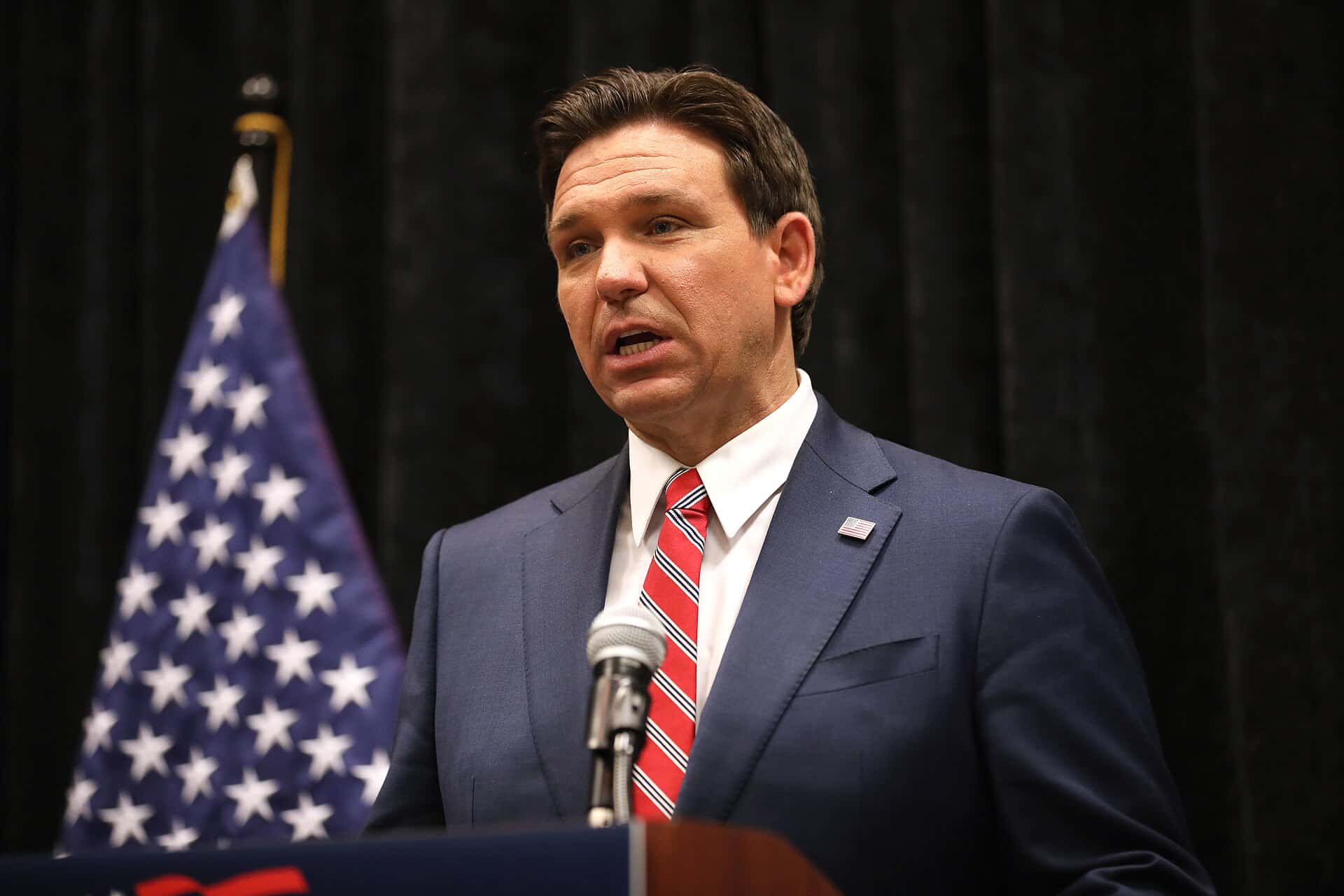
Governor Ron DeSantis signed legislation in early May 2026 expanding school choice programs and enacting reforms to teacher union accountability measures. Those actions signaled that the governor and the Republican-controlled legislature view school choice expansion as an ongoing priority rather than a completed project. The expansion of eligibility has been a deliberate legislative strategy to move Florida from a targeted voucher system aimed at specific populations toward something closer to a universal choice program available to any family that wants to use it.
The program's growth has been accompanied by parallel investment in charter schools, which are publicly funded but independently operated. Charter schools in Florida educate hundreds of thousands of additional students beyond those in the private school voucher program. The FEA's lawsuit addresses both the voucher component and the broader structural question of how public education funds are directed to schools operating outside the direct management of local school districts.
Voucher Supporters Push Back in St. Petersburg
Critics of the FEA lawsuit organized a counter-response quickly. On May 27, 2026, just three weeks after the lawsuit was filed, voucher supporters held a press conference in St. Petersburg to push back against the legal challenge. Speakers at the event argued that the lawsuit is an attack on parent choice and family freedom, framing the FEA's legal action as an effort by the union to protect its institutional interests at the expense of children who benefit from access to alternative educational settings.
Advocates for school choice contend that the competitive pressure created by the voucher program has actually improved public school performance by forcing traditional schools to respond to parental demand. They argue that funding follows students in any educational model and that there is nothing constitutionally problematic about allowing parents to direct their children's share of education funding to the school that best meets their family's needs, whether public, charter, or private.
Several parents of current voucher recipients spoke at the St. Petersburg event, sharing accounts of how the program had allowed their children to access specialized instruction, religious education, or smaller class sizes that the local public school was not providing. Those personal narratives are expected to be a significant feature of the public debate surrounding the lawsuit as it proceeds through the courts, providing a human dimension to what might otherwise be a technical constitutional argument.
Historical Context: Florida's Long School Choice Legal Battle
Florida's legal battles over school vouchers date back more than two decades. The Florida Supreme Court struck down the state's first major school voucher program, the Opportunity Scholarship Program, in 2006, ruling in Bush v. Holmes that the program violated the uniform system provision of the Florida Constitution. That decision established a significant precedent that the FEA's current lawsuit explicitly draws upon, arguing that the constitutional principles articulated in Bush v. Holmes apply with even greater force to the vastly larger program now in operation.
Following the Bush v. Holmes ruling, the legislature restructured Florida's school choice programs to route voucher funds through scholarship funding organizations, private nonprofits that receive donations eligible for state tax credits and distribute those funds as scholarships to students. That structure was designed to insulate the program from direct constitutional challenge by arguing that the money flowing to private schools was not appropriated state dollars but rather private charitable contributions. The current FEA lawsuit challenges whether that structural design adequately addresses the constitutional concerns identified by the Supreme Court in 2006.
More recently, the legislature enacted legislation dramatically broadening voucher eligibility and creating new funding pathways that move closer to direct state appropriations. The FEA argues that those recent program structures are more directly vulnerable to constitutional challenge than the tax-credit scholarship model was, because they involve a more straightforward transfer of state education funds to private educational providers.
Governor DeSantis and the Legislative Response
Governor DeSantis has been the most prominent advocate for Florida's school choice expansion. His administration has consistently framed school choice as a core element of parental rights and educational freedom, themes that have resonated strongly with the Republican base and that DeSantis has elevated as signature policy achievements. The governor's office characterized the FEA lawsuit as an effort by union interests to limit the educational options available to Florida families, and officials signaled that the administration would mount a vigorous defense of the program in court.
The legislature is expected to consider additional measures to strengthen the legal foundation of the school choice program in response to the lawsuit, potentially including efforts to place school choice protections in the Florida Constitution in ways that would be difficult for courts to override. Such a constitutional amendment approach would require 60 percent support in both chambers to reach the ballot and 60 percent of voters to pass, the same thresholds that apply to the property tax amendment announced by DeSantis later in May. Legislative leaders have not yet announced a formal legislative response to the lawsuit, but the FEA filing is expected to be a significant subject of discussion when the legislature convenes for any future special sessions or the 2027 regular session.
What Happens Next in the Courts
The lawsuit filed by the Florida Education Association will proceed through the Leon County Circuit Court, which has jurisdiction over challenges to state law. The state, as the defendant defending the constitutionality of its school choice statutes, will be represented by the Florida Attorney General's office. The attorney general's office has been active in defending the state's education policy choices in prior litigation and is expected to contest both the standing of the FEA to bring the lawsuit and the merits of the constitutional arguments presented in the 39-page complaint.
The procedural path through the trial court, including any preliminary injunction proceedings, will likely take many months. An injunction preventing diversion of funds while the case is decided on the merits would require the FEA to show that it is likely to succeed on the merits of its constitutional argument and that the balance of hardships favors immediate relief. Given the scale of the program and the number of families depending on it, courts may be reluctant to issue an injunction without extensive briefing and hearings.
Ultimately, the constitutional questions raised by the FEA lawsuit are likely to reach the Florida Supreme Court, regardless of how the trial court rules. The issues are significant enough, and the interests on both sides substantial enough, that both parties are expected to pursue appellate review through the First District Court of Appeal and ultimately the Florida Supreme Court. The current composition of the Florida Supreme Court, which has shifted in a more conservative direction through appointments made in recent years, will be a factor that legal analysts closely examine as the case progresses through the appellate process.
Spotted an issue with this article?
Have something to say about this story?
Write us a letterComments
No comments yet. Be the first to weigh in.
Related Coverage
Lt. Gov. Jay Collins Says Florida Will Cover School Funding Lost as Immigration Crackdown Shrinks Enrollment
1d ago

Broward School Board Weighs Next Round of Closures as Empty Seats Reach 61,000
1d ago

Boy dies after 120-pound display board falls on him at Palm Bay's Riviera Elementary
2d ago
Pinellas pulls Sexton Elementary from closure list as six schools face Oct. 13 vote
2d ago