Miami's World Cup Summer: What Hosting Brings South Florida
Miami's Turn on Soccer's Biggest Stage
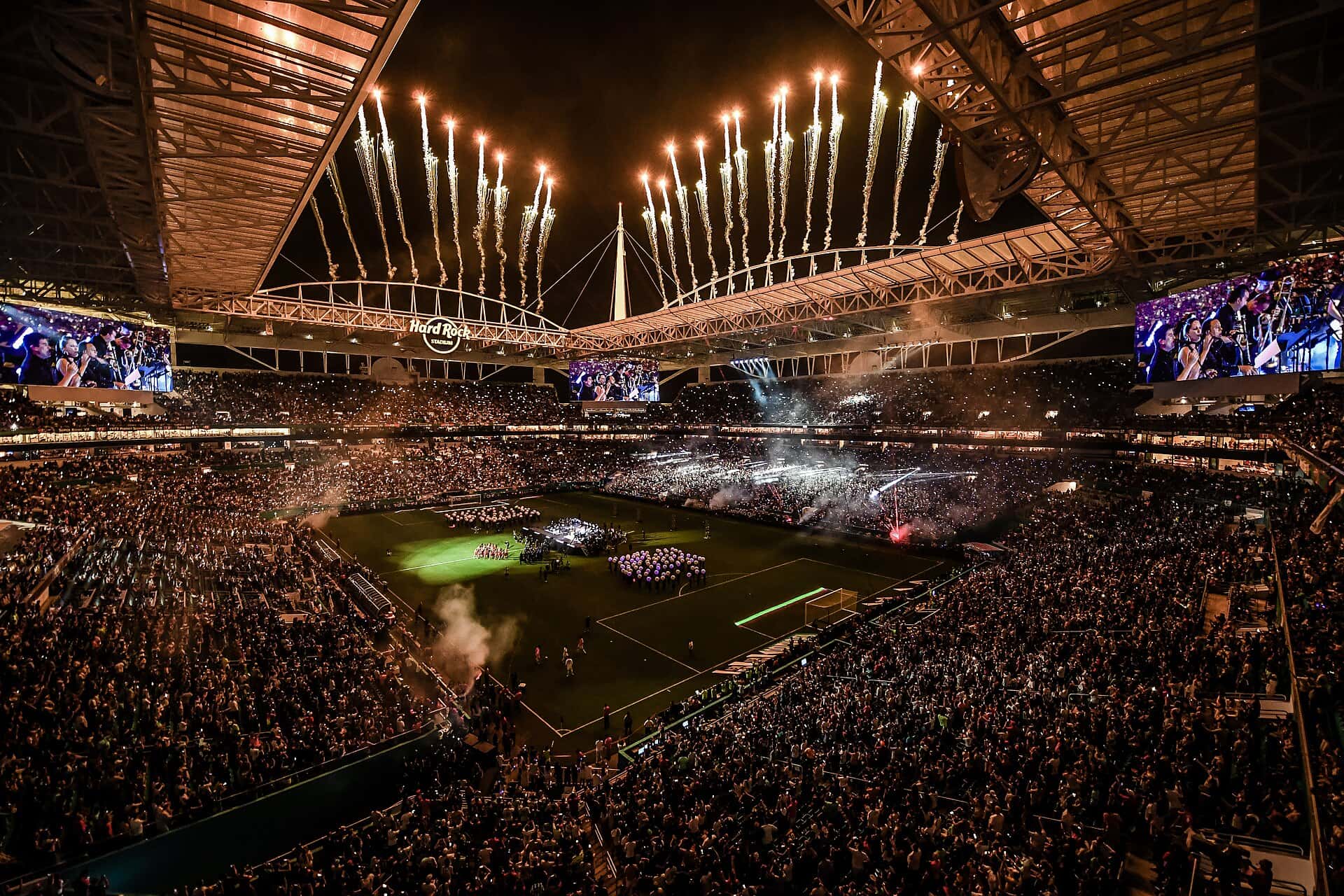
South Florida spent the summer of 2026 at the center of the sporting world, and the payoff has been measured far beyond the field. Hard Rock Stadium in Miami Gardens served as one of the busiest venues of the 2026 FIFA World Cup, staging seven matches that pulled hundreds of thousands of international visitors into Miami-Dade County. The tournament's final act at the stadium, the third-place match on July 18, closed a run that reshaped the region's hotels, restaurants, transportation networks and public-safety agencies for weeks at a time.
For the local economy, the World Cup arrived as a rare, concentrated surge of spending. Fans traveling to see Argentina, England and the other nations that passed through Miami booked rooms, filled restaurants, hired rides and packed viewing sites well beyond the stadium gates. Tourism officials and event organizers projected a significant boost to the South Florida economy, with the biggest gains flowing to the hospitality and small-business sectors that define the region's visitor economy.
The stakes for Miami were not only financial. Hosting a marquee international event placed the region under a global spotlight and required a security operation spanning federal, state and local agencies. The tournament tested whether South Florida could deliver the experience organizers promised while keeping enormous crowds safe across a metropolitan area already accustomed to large events but rarely on this scale.
Hard Rock Stadium's schedule stretched from the group stage into the knockout rounds. Four group-stage matches on June 15, 21, 24 and 27 opened the run, followed by a Round of 32 match on July 3 and a quarterfinal on July 11. The third-place game on July 18 gave the venue a meaningful finale rather than a low-stakes send-off, ensuring the region held global attention until nearly the end of the tournament.
The Hotel and Hospitality Windfall
Hotel demand across Miami-Dade and neighboring Broward County climbed sharply during match weeks, as visitors from South America, Europe and beyond converged on the region. Properties from Miami Beach to the neighborhoods near the stadium reported heavy bookings tied to the tournament calendar, with the largest spikes clustered around game days and the knockout rounds that carried higher stakes and drew committed traveling fans.
The influx rewarded a hospitality sector that anchors the South Florida economy. Restaurants, bars and entertainment venues benefited from visitors who stayed for days rather than hours, spreading spending across the region even on nights without matches. Fan gatherings, watch parties and cultural events built around the tournament extended the economic footprint far beyond ticket holders, reaching residents and tourists who came for the atmosphere as much as the soccer.
Small businesses stood among the clearest beneficiaries. Independent restaurants, rideshare drivers, souvenir sellers, tour operators and neighborhood shops absorbed a wave of demand that larger chains could not fully capture. For many operators, the World Cup functioned as a compressed high season, delivering weeks of elevated revenue in a summer stretch that is often quieter than the winter tourist peak.
Tourism promoters framed the tournament as more than a one-time revenue event. Officials argued that exposure to millions of international viewers and visitors could pay dividends for years, seeding future trips and reinforcing Miami's standing as a global destination. Whether that long-term promise materializes will take time to assess, but the immediate boost to occupancy and spending was evident throughout the tournament.
Moving the Crowds: Transportation and Logistics
Getting hundreds of thousands of fans to Miami Gardens and back tested the region's transportation systems. Hard Rock Stadium sits north of downtown Miami in a car-dependent area, and match days required careful coordination of highway traffic, parking, shuttle services and public transit to move large crowds efficiently. Organizers and local agencies leaned on staggered arrivals, dedicated routes and expanded transit options to ease congestion around the venue.
Miami International Airport and Fort Lauderdale-Hollywood International Airport handled elevated passenger volumes as international travelers arrived and departed around the match schedule. The airports serve as primary gateways for the region's visitor economy, and the tournament added a layer of demand on top of an already busy summer travel season. Ground transportation networks, from rideshare to rental cars, absorbed the overflow as fans dispersed across South Florida.
PortMiami and the broader waterfront district also felt the tournament's pull, as visitors combined World Cup trips with the cruises, beaches and attractions that draw travelers to the region year-round. The overlap illustrated how a single event ripples across a diversified tourism economy, sending spending into sectors well removed from the stadium itself.
Crowd logistics extended beyond transportation to the fan experience itself. Managing lines, security screening, concessions and emergency access for capacity crowds demanded planning that began long before the first match. The knockout rounds, with their unpredictable matchups and passionate national followings, added complexity as the composition of visiting crowds shifted from game to game.
A Multi-Agency Security Operation
Securing a World Cup venue required coordination among federal, state and local authorities on a scale few events demand. Major international tournaments carry elevated security designations that bring federal resources and planning into partnership with regional police, sheriff's offices and emergency-management agencies. The result was a layered operation covering the stadium, transportation corridors, fan sites and the surrounding communities.
Federal agencies contributed intelligence, threat assessment and specialized capabilities, while state and local law enforcement handled the day-to-day work of crowd management, traffic control and rapid response. Coordinating these layers required shared command structures and communication systems designed to function across jurisdictions, a challenge magnified by the number of matches and the length of the tournament window.
The security footprint reached beyond the venue. Fan festivals, hotel districts and entertainment zones drew large gatherings that also required monitoring and protection. Planners had to account for the possibility that the biggest crowds might form away from the stadium, at public viewing sites where thousands assembled to watch matches together, testing the reach of the security plan across the metropolitan area.
For South Florida's public-safety agencies, the tournament served as a high-profile proving ground. The region has hosted Super Bowls, major concerts and international summits, but the sustained demands of a multi-week World Cup presence pushed staffing, overtime and interagency cooperation to significant levels. Officials treated the operation as both an immediate obligation and a template for future large-scale events.
Miami's Global Profile
Beyond the balance sheet, the World Cup reinforced Miami's ambition to be seen as a truly global city. The region's deep cultural ties to Latin America and its growing international business presence made it a natural fit for a tournament built on cross-border passion. Hosting seven matches, including knockout-round fixtures, placed the city alongside the world's premier destinations in the eyes of a vast global audience.
The visibility carried potential long-term value for a region that competes for tourism, investment and international events. Every broadcast beamed images of Miami's skyline, beaches and stadium crowds to viewers across dozens of countries, an advertisement that money alone cannot easily buy. Local leaders have long sought to convert the region's cultural energy into lasting economic development, and the tournament offered a powerful showcase.
The atmosphere inside and around Hard Rock Stadium underscored the region's connection to the global game. South Florida's large communities with roots across the Americas and Europe filled the stands with knowledgeable, passionate supporters, giving matches a charged environment that stood out even in a tournament full of memorable crowds. That energy became part of Miami's story during the summer.
Whether the exposure translates into durable gains will depend on how the region builds on the moment. Tourism officials expressed hope that first-time visitors would return and that the tournament would strengthen Miami's brand for years. The immediate impression, at least, was of a city eager to prove it belonged among the world's great host cities.
Weighing the Costs Against the Gains
Hosting a World Cup is not free, and South Florida absorbed real costs alongside the economic gains. Security operations, traffic management, public services and the strain on infrastructure carried expenses borne in part by taxpayers and public agencies. Large events of this kind always raise questions about how the benefits and burdens are distributed across a community.
Some residents contended with congestion, elevated prices and disruption during match weeks, the familiar trade-offs that accompany major events. Neighborhoods near the stadium and along transit corridors felt the effects most directly, from heavier traffic to the logistical demands of moving capacity crowds. Balancing visitor demand against residents' daily lives is a persistent challenge for host regions.
Economists who study mega-events often caution that projected windfalls can be overstated, as some spending simply shifts from residents to visitors or displaces activity that would have occurred anyway. The clearest gains tend to concentrate in hospitality and tourism, while the broader, long-term returns are harder to measure. South Florida's experience will add to that ongoing debate once the full data is available.
Even with those caveats, the tournament delivered a concentrated burst of activity to a region built for tourism. The combination of packed hotels, busy restaurants and global exposure gave South Florida a summer unlike any in recent memory, and local leaders will spend the coming months tallying exactly what it meant for the economy.
What Comes Next for South Florida
With the third-place match on July 18 closing Hard Rock Stadium's World Cup slate, attention turns to the tournament's legacy for the region. Officials and business leaders will assess visitor spending, hotel performance and the effectiveness of the security operation, drawing lessons that could shape how South Florida pursues and hosts future international events.
The infrastructure and expertise developed for the tournament may prove valuable well beyond 2026. The interagency security coordination, transportation planning and crowd-management systems refined during the World Cup form a playbook the region can apply to the concerts, championships and global gatherings it continues to court. That institutional knowledge is among the tournament's less visible but more durable benefits.
For the tourism economy, the central question is whether the surge translates into sustained growth. Repeat visits, strengthened international ties and an elevated global profile could extend the tournament's impact for years, but only if the region capitalizes on the momentum. Tourism officials signaled they intend to build marketing and outreach around the exposure the World Cup provided.
The tournament itself moved on to its conclusion elsewhere, but South Florida closed its hosting run having tested nearly every part of its visitor economy and public-safety apparatus. The summer offered a demanding, high-profile trial, and the region's ability to meet it will inform how Miami positions itself for the next chance to stand on a global stage.
Spotted an issue with this article?
Have something to say about this story?
Write us a letterComments
No comments yet. Be the first to weigh in.
Related Coverage

Every Florida Child Now Has a Trump Account, but Parents Must Claim It to Unlock the $1,000
1h ago
Businessman Samir Handal Pleads Not Guilty in Miami as Federal Case Over Haitian President's Assassination Expands
2h ago

Panhandle Roads and Bridges Reopen After Isaias, but Pensacola and Okaloosa Airports Stay Closed
1d ago

Ex-CIA official pleads guilty in $194 million fraud, will forfeit $102 million in Palm Beach and Hobe Sound real estate
1d ago