Former Miami Police Officer Charged in $246,000 COVID Relief Fraud Scheme
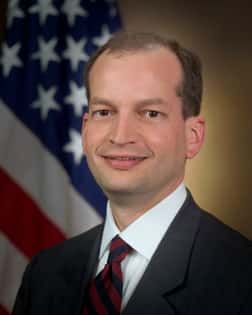
A Former Officer Faces Fraud Charges
Miami-Dade State Attorney Katherine Fernandez Rundle announced the arrest of former City of Miami Police officer Djimy Joseph, 47, on charges stemming from a public corruption investigation into pandemic-era relief programs. The case places a onetime law enforcement officer on the other side of the justice system he once served, and it adds to a growing list of Florida prosecutions tied to fraud in federal aid programs.
Joseph is charged with organized scheme to defraud involving more than $50,000, money laundering involving more than $100,000, and false official statements. Each charge reflects a different facet of the alleged conduct, from the underlying scheme to obtain funds to the movement of the proceeds and the statements prosecutors say were made in connection with the programs.
According to prosecutors, a public corruption investigation found that Joseph owned businesses and allegedly fraudulently applied for and received more than $246,000 in COVID relief loans through the federal Paycheck Protection Program, known as the PPP, and other government programs. The figure represents the total amount authorities say was improperly obtained across the relief programs at issue.
Joseph is presumed innocent, and the charges are allegations that must be proven in court. He has not been convicted, and the case will proceed through the Miami-Dade court system, where prosecutors will bear the burden of establishing each element of the offenses beyond a reasonable doubt.
How the Alleged Scheme Was Uncovered
The case reportedly came to light through a routine licensing inspection, which revealed that Joseph owned a bar and grill. That discovery, according to prosecutors, exposed a potential violation of a Florida statute barring officers from owning or operating a business that serves alcohol, and it opened a broader inquiry into his business dealings.
Investigations that begin with a seemingly minor administrative finding sometimes expand into far larger cases. Here, the licensing detail reportedly prompted deeper scrutiny of Joseph's business interests, which in turn led investigators to the relief loans at the center of the fraud allegations. The progression illustrates how public corruption units follow initial red flags toward more serious potential offenses.
The statute prohibiting officers from owning or operating businesses that serve alcohol reflects a longstanding concern about conflicts of interest in law enforcement. Rules of this kind are intended to prevent situations in which an officer's private financial interests could clash with public duties, particularly in industries subject to regulation and enforcement.
Prosecutors say the licensing issue was not the end of the inquiry but a starting point. As investigators examined Joseph's businesses, they allegedly found that the applications for pandemic relief funds contained fraudulent information, forming the basis for the organized-scheme-to-defraud and related charges announced by the state attorney's office.
The Charges in Detail
The most serious charge, organized scheme to defraud involving more than $50,000, targets a pattern of conduct designed to obtain money through deception. Under Florida law, an organized scheme to defraud involves a coordinated effort to defraud one or more victims, and the severity of the charge escalates with the amount of money involved. The threshold cited by prosecutors places the alleged conduct in a serious felony category.
The money laundering charge, involving more than $100,000, addresses what prosecutors allege was the handling of proceeds from the scheme. Money laundering charges typically focus on efforts to disguise the origins of illicitly obtained funds or to move them through financial channels, and the dollar threshold again reflects the scale of the alleged activity.
The false official statements charge concerns representations prosecutors say were made in connection with the relief applications or the investigation. False statement charges are common in fraud cases involving government programs because the programs rely on applicants to certify the accuracy of the information they provide, and false certifications can form the basis for criminal liability.
Together, the three charges outline a case built around the alleged acquisition, movement and justification of pandemic relief funds. Prosecutors will need to connect Joseph to each element, from the fraudulent applications to the handling of the proceeds, as the case moves forward in Miami-Dade County.
The PPP and Pandemic Relief Fraud in Florida
The Paycheck Protection Program was created during the coronavirus pandemic to help businesses keep workers employed as the economy shut down. The program distributed forgivable loans to businesses that met certain criteria, and its rapid rollout prioritized getting money out quickly to struggling employers. That speed, while intended to provide relief, also created openings for fraud.
Across the country, and prominently in Florida, prosecutors have pursued numerous cases alleging that individuals obtained PPP funds through false applications. Common allegations include inflating payroll figures, claiming employees who did not exist, or applying on behalf of businesses that were not genuinely operating. The alleged fraud in Joseph's case fits within this broader pattern of relief-program prosecutions.
Florida has been a focal point for pandemic-fraud enforcement, with state and federal authorities bringing charges against a wide range of defendants. The prosecutions reflect an effort to recover misused public funds and to hold accountable those accused of exploiting programs meant to help businesses and workers survive the pandemic's economic shock.
Cases involving public employees, and especially law enforcement officers, draw particular attention because of the trust associated with those positions. When an officer is accused of defrauding relief programs, the allegations raise questions not only about the alleged financial crimes but also about accountability within public institutions.
Prosecutors and investigators have often described relief-fraud cases as a long-term enforcement priority rather than a passing response to the pandemic. Because the loans were disbursed rapidly and in enormous volume, authorities have continued to review applications and financial records years after the money went out, meaning charges can surface well after the programs themselves have wound down. The timing of Joseph's arrest, in 2026, reflects that extended enforcement horizon.
The Role of the Miami-Dade State Attorney's Office
The prosecution is being handled by the Miami-Dade State Attorney's Office, led by Katherine Fernandez Rundle, one of Florida's most prominent prosecutors. Her office announced the arrest and laid out the charges, signaling the seriousness with which it is treating the case and the alleged abuse of public relief programs.
The office's Public Corruption Unit focuses on offenses involving public officials and employees, including allegations of abuse of position and misconduct in office. Cases handled by such a unit often involve individuals whose public roles intersect with the alleged wrongdoing, as in the prosecution of a former police officer accused of fraud.
Economic crimes, including complex fraud and money laundering allegations, fall within the expertise of the office's Economic Crimes Unit. These units are staffed to handle cases that require tracing financial transactions, analyzing business records and untangling the movement of funds, all of which are central to a relief-fraud prosecution of this kind.
By pursuing the case, the state attorney's office signals a continued emphasis on police accountability and on protecting public funds. Prosecutions of former officers underscore the principle that law enforcement officials are subject to the same laws they are sworn to uphold, a message that resonates in debates over accountability across Florida and the nation.
Police Accountability and Public Trust
The case arrives amid ongoing national and statewide attention to police accountability. Allegations that a former officer defrauded relief programs touch on public trust in law enforcement, an institution whose credibility depends on the perceived integrity of its members. Prosecutions of this kind become part of the broader conversation about oversight and accountability.
The Florida statute at the heart of the initial licensing discovery, which bars officers from owning or operating businesses that serve alcohol, is itself a mechanism intended to preserve integrity within police ranks. The rule reflects an understanding that certain private business interests can create conflicts that undermine public confidence in law enforcement.
For the City of Miami Police Department, the arrest of a former officer on fraud charges is a reminder of the scrutiny that accompanies public service. While Joseph is no longer with the department and is presumed innocent of the charges, cases involving current or former officers inevitably draw attention to internal standards and the systems meant to enforce them.
Public corruption prosecutions serve a dual purpose in the justice system. They seek to hold individual defendants accountable, and they aim to reinforce broader norms of integrity in public institutions. The outcome of Joseph's case will contribute to how those norms are understood and applied in Miami-Dade County.
What's Next
With the arrest announced, Joseph's case now enters the court process, where he will face arraignment and the opportunity to respond to the charges. As with any criminal defendant, he retains the presumption of innocence, and prosecutors must prove the allegations of organized scheme to defraud, money laundering and false official statements in court.
The case is likely to involve detailed financial evidence as prosecutors seek to trace the more than $246,000 in relief funds they allege was fraudulently obtained. Documentation of the loan applications, business records and the movement of the proceeds will probably feature prominently as the matter advances through pretrial proceedings.
Defense arguments in relief-fraud cases often center on questions of intent and on whether applications contained knowingly false information. How Joseph responds to the charges, and whether the case proceeds to trial or resolves through a negotiated plea, will become clearer as the proceedings develop in Miami-Dade County.
For Florida, the prosecution adds to the state's substantial record of pandemic-relief fraud cases and to the continuing work of public corruption prosecutors. The case will be watched as an example of how authorities pursue accountability when a former law enforcement officer is accused of exploiting programs meant to provide relief during a national emergency.
Spotted an issue with this article?
Have something to say about this story?
Write us a letterComments
No comments yet. Be the first to weigh in.
Related Coverage
DNA From ICE Arrest Leads to Charges in 2012 LaBelle Rape and Kidnapping of 14-Year-Old Girl
2h ago

Two Spring Hill men indicted in 2018 home invasion killing of young father in Hernando County
21h ago
Operation Cooked: Undercover Osceola Sting Nets At Least 20 Arrests of Men Accused of Seeking Sex With Children
23h ago

Federal Jury Convicts Three Naples Men in $30,000 Murder-for-Hire Plot Targeting a Man Whose Brother Wanted Him Dead
1d ago