Florida University Board to Vote on Barring Undocumented Students From Enrollment
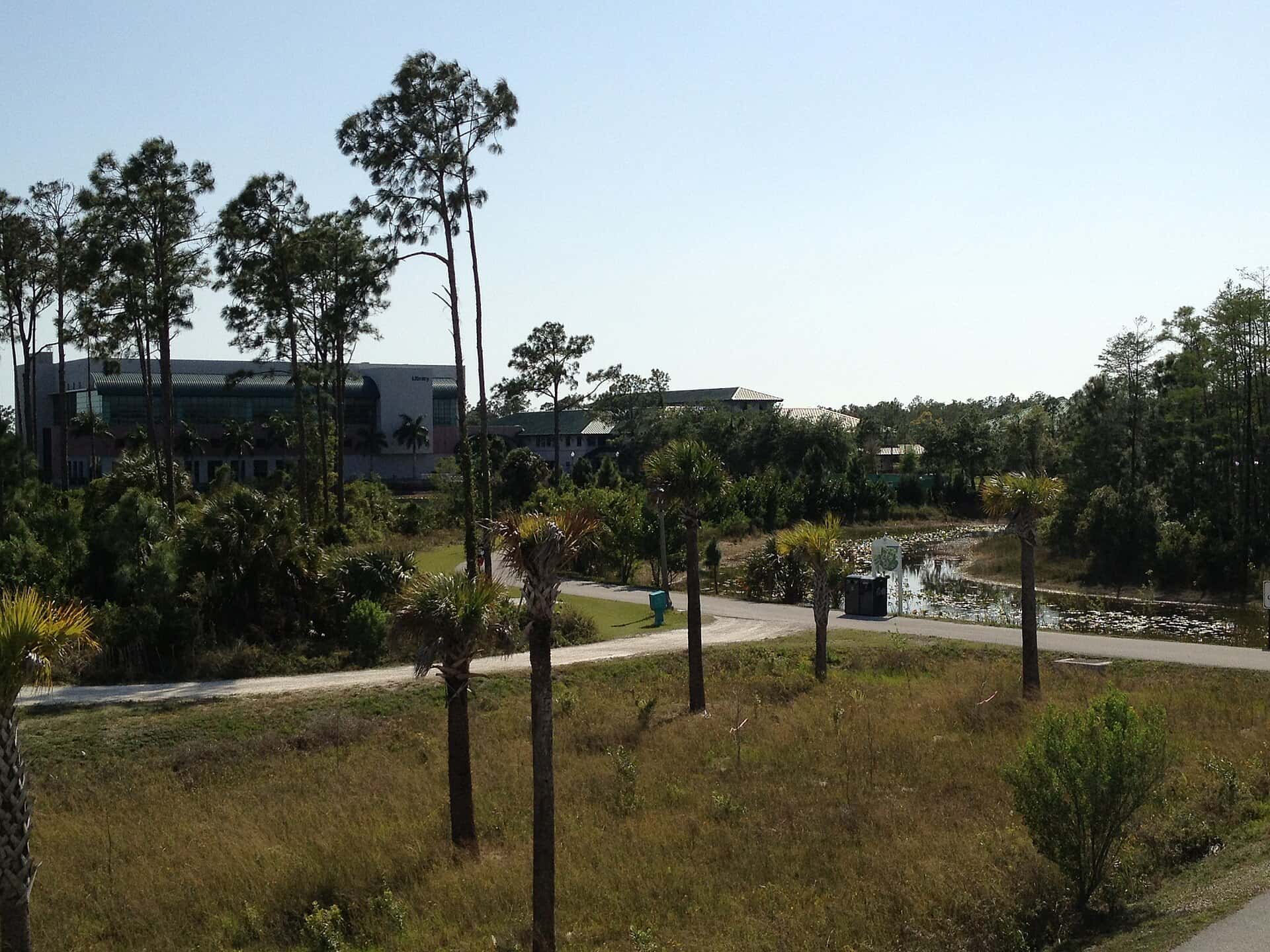
The Florida Board of Governors is scheduled to vote this week on a proposed change to the state university system's general admissions rule that would prohibit students who are present in the United States unlawfully from enrolling at any of Florida's 12 public universities. The meeting is set for Thursday at Florida Gulf Coast University in Fort Myers, and the proposal has drawn organized opposition from the United Faculty of Florida, the Florida Education Association, students and community groups who have urged the board to reject it. The vote would resolve one of the more consequential open questions in Florida higher education policy, and it arrives with the fall semester already underway.
What is being proposed
The change targets Regulation 6.001, the board regulation governing general admissions to the State University System. The amendment would add immigration status as a disqualifying condition for enrollment, applying to students the regulation describes as present in the United States unlawfully.
The Board of Governors is the constitutional body that governs Florida's public university system, distinct from the State Board of Education, which oversees K-12 and the Florida College System. Its regulations bind all 12 universities, from the University of Florida and Florida State to smaller institutions such as New College and the University of West Florida. A change to Regulation 6.001 is therefore a systemwide change, not an institutional policy that individual campuses could implement differently.
Florida had already eliminated in-state tuition eligibility for undocumented students who graduated from Florida high schools, ending a waiver that had been in place since 2014. The admissions proposal goes further. Tuition classification determines what a student pays. An admissions bar determines whether the student may enroll at all.
The opposition campaign
The United Faculty of Florida, the union representing faculty across the state system, has called on the board to vote no, joined by the Florida Education Association, students, educators and community members. Their arguments have run along several lines.
The first is educational. Faculty groups argue that universities exist to educate qualified students, and that an admissions screen based on immigration status rather than academic preparation asks institutions to perform a function that belongs to federal immigration authorities. Under this view, the change conscripts admissions offices into enforcement.
The second is practical. Verifying immigration status at the point of admission requires universities to build documentation processes that do not currently exist in that form, with a meaningful risk of error affecting students who are lawfully present but whose documentation is complex: students with pending applications, students in mixed-status families, students whose status changed during their academic career.
The case for the change
Supporters of the amendment frame it as a matter of allocating a subsidized public benefit. Florida's public universities are funded substantially by state taxpayers, and under that argument access should be limited to people lawfully present in the country. The position aligns the university system with the broader direction of Florida immigration policy under recent legislation and with federal enforcement priorities the state has embraced.
There is also a consistency argument. Having ended the in-state tuition waiver for undocumented students, the state created a situation in which those students could still enroll but at out-of-state rates, an outcome supporters characterize as a half measure. The admissions change resolves that inconsistency in the restrictive direction.
Board members have generally not campaigned publicly on the question in advance of the vote, which is typical for the body. The Board of Governors operates with less public political theater than the Legislature, and its most consequential decisions frequently arrive at meetings with limited advance signaling about how members intend to vote.
The legal terrain
The proposal enters contested legal ground. The Supreme Court's 1982 decision in Plyler v. Doe held that states may not deny a free public education to children based on immigration status, but that ruling addressed K-12 education, and courts have generally not extended it to higher education, which is neither free nor compulsory.
Federal law does address the question indirectly. A provision of the 1996 welfare reform legislation restricts postsecondary education benefits for unlawfully present individuals unless a state affirmatively provides otherwise through legislation. States have interpreted that provision in divergent ways, and roughly half of states have at some point extended in-state tuition to undocumented students who graduated from local high schools.
Whether an outright admissions bar is legally distinct from a tuition classification is the question a challenge would likely turn on. Litigation would probably raise arguments about federal preemption of immigration classifications and about equal protection, and about whether a governing board may adopt through regulation a restriction the Legislature did not enact by statute.
Who would be affected
The population at issue is smaller than the volume of debate suggests, but it is not trivial. It consists largely of students who arrived in the United States as children, attended Florida elementary and secondary schools, and graduated from Florida high schools. Many have lived in the state nearly their entire lives.
The proposal would also raise questions about students already enrolled. A rule change affecting admissions does not automatically address continuing students, but universities would need to determine whether currently enrolled students may complete their degrees, whether the rule applies at readmission after a break in enrollment, and how transfer applications from Florida College System institutions would be handled.
That last point deserves attention. Florida's 28 state colleges are governed separately from the university system and would not be directly bound by a Board of Governors regulation. A student could potentially complete an associate degree at a state college and then find the transfer pathway to a university closed, a discontinuity that would fall hardest on students in regions where the state college is the accessible institution.
What it means for Floridians
For affected students and families, the vote determines whether a Florida public university education remains available in any form. For students already partway through a degree, the uncertainty itself carries a cost, because enrollment decisions for the spring term are made in the coming months.
For Florida employers, the question touches the pipeline for nursing, teaching, engineering and technology roles the state has struggled to fill. Florida has invested heavily in workforce alignment for its universities, and any admissions restriction interacts with that goal, though supporters would argue that employment eligibility rules make the point moot for students who could not lawfully work after graduating.
For the university system as an institution, the vote is another marker in a period of significant governance change. Between presidential searches, accreditation shifts, tenure review changes and curriculum reviews, Florida's universities have been operating under more concentrated state direction than at any point in recent memory, and this decision extends that pattern to the front door of admissions.
How Florida got here
Florida extended in-state tuition to undocumented students who graduated from Florida high schools in 2014, under legislation signed by then-Governor Rick Scott with bipartisan legislative support. At the time, the policy was framed as a workforce and fairness measure: students educated in Florida schools, whose families paid Florida sales and property taxes, would pay resident rates at Florida institutions.
That waiver was repealed in 2025 as part of a broader immigration package, ending eligibility and immediately raising costs for affected students by a factor of roughly three, since nonresident tuition at Florida universities runs several times the in-state rate.
The proposal now before the Board of Governors is the next step in that sequence. It moves from what a student pays to whether a student may enroll, and it does so through board regulation rather than through legislation, which is a meaningful procedural difference. A statute passed by the Legislature carries different legal standing than a regulation adopted by a governing board, particularly on a question involving immigration classification.
What other states do
State policy on this question varies widely and does not sort neatly along regional or partisan lines. Roughly half the states have at some point extended in-state tuition to undocumented students meeting residency and high school graduation requirements, including several with Republican legislatures.
A smaller number of states have gone the other direction and restricted enrollment or eligibility outright. Those restrictions have generally been enacted by legislature rather than by governing board action, and several have faced litigation with mixed results.
Florida is unusual in the speed of its reversal. Moving from one of the states extending in-state tuition to one considering an outright admissions bar within roughly two years is a sharper policy swing than most states have executed, and it is the pace as much as the direction that has made Florida a reference point in the national debate. Whatever the board decides Thursday will be read that way by legislators and university systems in other states.
What's next
The board meets Thursday at Florida Gulf Coast University. Public comment is a standard feature of the agenda, and the opposition coalition has signaled it intends to use it. If the board adopts the amendment, implementation details will fall to system staff and to individual campus admissions offices, including the documentation standard and the treatment of continuing students.
A legal challenge is a realistic possibility if the measure passes, and the timing of any injunction would matter for students applying for spring and fall 2027 terms. Immigrant advocacy organizations have litigated related Florida measures with mixed but not negligible success.
If the board declines to adopt the change, the matter is likely to move to the Legislature, which convenes in the new year and which has the authority to impose the restriction by statute rather than regulation. Either way, the question of who may enroll at Florida's public universities is unlikely to be settled by a single vote in Fort Myers.
Spotted an issue with this article?
Have something to say about this story?
Write us a letterComments
No comments yet. Be the first to weigh in.
Related Coverage

Pasco proposes closing Fox Hollow Elementary and remaking two west Pasco schools under 'Elevate 34668'
1d ago

Florida's proposed K-12 science standards face scrutiny ahead of December state board vote
2d ago

Santa Rosa Board Keeps Schools Closed Until Oct. 19, Reversing Isaias Reopening Order as Escambia, Okaloosa and UWF Set Returns
4d ago
No Florida College or University Has Joined the Armed Guardian Program Five Months After HB 757 Became Law
4d ago