Florida's Clout Grows in Washington as U.S. Senate Picture Shifts Ahead of 2026 Special Election
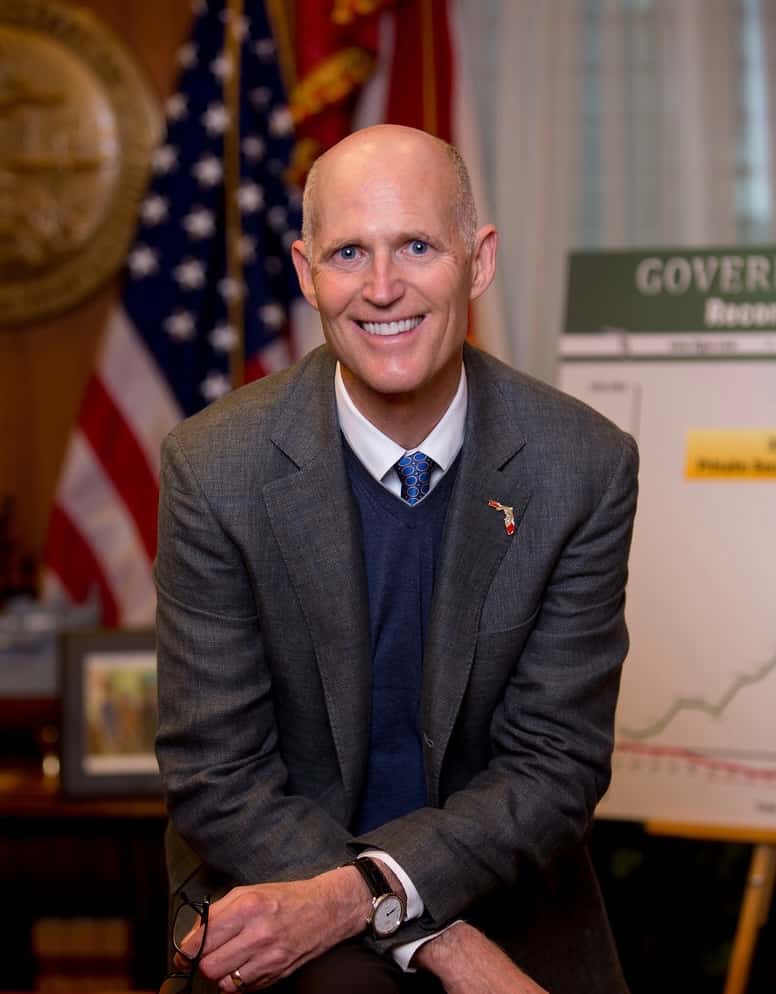
Florida is entering a stretch in which its footprint in Washington looks larger than it has in years, and the changes flow directly from the state's own delegation. Marco Rubio left the U.S. Senate to become President Donald Trump's Secretary of State, his former Senate seat is now in play for a special election scheduled for November 3, 2026, and Sen. Rick Scott has been positioning himself for a Republican leadership role. For Floridians, the result is a state whose officials sit at several of the highest pressure points in federal politics at once.
The Florida lens here is hard to miss. A sitting Secretary of State hails from the state, one of its senators is reaching for a top spot in the chamber's GOP hierarchy, and a competitive Senate contest will appear on the November ballot to decide who serves the final two years of Rubio's former term. Each of those threads carries consequences for how much sway Florida holds when federal decisions on hurricanes, insurance, immigration, and the economy are made.
None of this unfolded in a vacuum. Rubio's elevation to the State Department triggered the vacancy, and the way that seat is being managed in the interim has drawn attention from across the state's political class. The story is still developing, and several details around leadership jockeying and the appointment to hold the seat are best understood as reported rather than fully settled.
How the Vacancy Came About
The chain of events began when Rubio resigned his U.S. Senate seat to serve as Secretary of State in Trump's second administration. The move pulled one of Florida's two senators out of the chamber and into the executive branch, where he now leads American diplomacy. For a state accustomed to having both of its Senate voices fixed on Capitol Hill, the shift was significant.
Because the resignation came in the middle of a term, the seat does not simply wait until the next regularly scheduled federal election. Instead, a special election was set for November 3, 2026, to fill the remaining two years. Whoever wins will not be starting a fresh six-year term but completing the balance of the seat Rubio left behind.
That timing matters for Florida voters, who will weigh in on the contest the same way they would any high-profile federal race. The compressed nature of the term, two years rather than six, shapes the stakes for both parties and for the candidates who decide to run.
The vacancy also reshaped the dynamics within the state's delegation. With one of its long-serving senators gone to the Cabinet, Florida's remaining members of Congress have absorbed a larger share of the work of representing the state in Washington, at least until the seat is permanently filled. That redistribution of responsibility is part of the backdrop against which the special election will unfold.
An Appointed Senator Holds the Seat
According to reports, an appointed senator has been holding Rubio's former seat in the interim, with that appointee reported to be Ashley Moody. The arrangement is consistent with how Senate vacancies are commonly bridged: a temporary appointment keeps the seat occupied and the state fully represented until voters render their own verdict at the special election.
Because this detail comes through reporting rather than a settled public record presented here, it is best treated with appropriate caution. The broad point, however, is that Florida has not gone without a second voice in the Senate during the transition, and the appointee is positioned to participate in the chamber's work while the campaign for the permanent seat takes shape.
For residents trying to follow who speaks for them in Washington, the interim period can be confusing. The key takeaway is that the seat is filled for now and that the November 3 election will determine who carries it through the end of the original term.
The interim period is also consequential because the Senate's work does not pause for a vacancy. Votes on spending, nominations, and major legislation continue, and the appointee participates in that work on Florida's behalf. The choices made during these months are not symbolic; they count toward the record that residents and candidates alike will assess as the campaign matures.
Rick Scott's Bid for Leadership
Alongside the vacancy, Florida's remaining senator has been making his own moves. Sen. Rick Scott has been positioning himself for a Senate Republican leadership role, an effort that, if successful, would place a Floridian among the chamber's most influential figures. Leadership posts carry outsized power over the floor schedule, legislative priorities, and the messaging that defines a party's agenda.
According to reports, Rubio has backed Scott for a leadership post, lending the support of a newly installed Cabinet secretary to his former colleague's ambitions. That kind of endorsement, attributed here as reported, can matter in the internal arithmetic of a leadership contest, where relationships and momentum often shape the outcome.
For Florida, the prospect is straightforward in its potential payoff. A senator in leadership tends to wield greater influence over which bills advance and how federal resources are steered, a dynamic that can translate into more attention for a state's priorities. Whether Scott secures such a role remains to be seen, and the details of who is supporting whom should be read as part of an evolving picture.
Leadership contests in the Senate are decided behind closed doors among a party's members, which makes endorsements and alliances especially valuable. A senator seeking to climb the hierarchy must assemble support colleague by colleague, and the backing of a figure with national standing can lend credibility to that effort. For Florida, the significance is less about the mechanics of any single vote than about what a leadership post would mean for the state's reach: a Floridian helping to set the chamber's agenda would mark a meaningful step up from the influence the state has typically wielded.
Rubio's Return to Capitol Hill
Even after moving to the executive branch, Rubio has not been a stranger to the Senate's halls. He returned to Capitol Hill in early June 2026 for meetings, where he fielded questions from members of Florida's congressional delegation. The visit underscored how intertwined his new role and his old one remain, at least in the near term.
For Florida's House and Senate members, the chance to question the Secretary of State directly offered a line into the administration's thinking on foreign policy and related matters. Those conversations also reinforced the unusual closeness between Florida's delegation and the State Department at this moment, with a former senator from the state now setting diplomatic priorities.
The optics of a recently departed senator working the building he left only weeks earlier highlight the fluid nature of this period. It is a reminder that the lines between Florida's representation in Congress and in the Cabinet are, for now, closely drawn.
Such direct access can cut both ways. It gives Florida's lawmakers an unusually open channel to the administration's foreign policy leadership, but it also blurs the customary separation between the legislative and executive branches. For now, the arrangement works to the state's advantage, concentrating Florida voices at the points where policy is shaped and carried out.
Why This Matters for Florida
The cumulative effect of these developments is a state with multiple seats at the table where national decisions are made. A Secretary of State from Florida helps shape foreign policy, a senator angling for leadership could help shape the legislative agenda, and a competitive special election will decide who joins that effort in the chamber. Few states can claim that combination at a single moment.
That concentration of influence has practical implications. Issues that hit Florida hard, from disaster recovery and flood insurance to immigration and trade, are often decided in Washington, and having well-placed officials can affect how forcefully the state's interests are pressed. The benefit is not guaranteed, but the positioning is real.
At the same time, the situation invites scrutiny. Voters across the political spectrum will want to know how their representatives use this influence and whether it translates into tangible results back home. The November 3 special election gives Floridians a direct say in part of that equation.
There is also a question of durability. Influence built on a Cabinet appointment, a leadership bid, and a contested seat can shift quickly if any one of those pieces changes. A leadership contest can be lost, an appointee can be replaced, and an election can break in an unexpected direction. The current concentration of Florida influence is notable precisely because it depends on several outcomes holding together at the same time.
The Race Ahead
The special election on November 3, 2026, will be the public's clearest point of decision in this whole rearrangement. The winner inherits the final two years of Rubio's former term, and the campaign is expected to draw significant attention given the broader backdrop of Florida's expanding role in federal politics.
For candidates, the shortened term changes the calculus. A two-year window means the seat will be contested again relatively soon, which can influence both who chooses to run and how they frame their pitch to voters. The interim appointment and the leadership maneuvering only add to the layers of strategy at play.
Floridians weighing the race will do so amid a rare confluence of state influence in Washington. How they vote will help determine whether that influence grows, holds, or recedes in the years immediately ahead.
What's Next
The immediate calendar centers on November 3, 2026, when Florida voters fill the remaining two years of Rubio's former Senate seat. Until then, the interim appointment, reported to be held by Ashley Moody, keeps the state represented in the chamber, while the broader contest takes shape across the campaign season.
Watch, too, for the outcome of Scott's reported push for a Republican leadership post, an effort said to have Rubio's backing. Should it succeed, Florida would add a leadership voice to its already notable presence in Washington. Should it fall short, the state's clout would still rest on a Cabinet secretary and a contested Senate seat.
For Floridians, the practical guidance is to track these threads as official details firm up and to treat the still-fluid pieces, the appointment and the leadership jockeying, as reported rather than final. The November vote will be the moment when residents themselves shape the next chapter of the state's standing in the nation's capital.
Spotted an issue with this article?
Have something to say about this story?
Write us a letterComments
No comments yet. Be the first to weigh in.
Related Coverage
Democrat Nicole Locklin Challenges Longtime Rep. Mario Díaz-Balart in Redrawn 26th Congressional District
1h ago

SpaceX Launches Bandwagon-5 Rideshare From Cape Canaveral, Lighting Up a Brief Space Jellyfish Over Florida
18h ago
Kathy Castor and Mike Beltran enter final stretch of a tight race in a redrawn, Trump-leaning Tampa district
23h ago
G20 Summit at Trump National Doral Will Bring Road Closures and a Secret Service Security Zone to Miami-Dade in December
1d ago