Florida's Space Coast Keeps Up Record Launch Cadence With New Starlink Mission
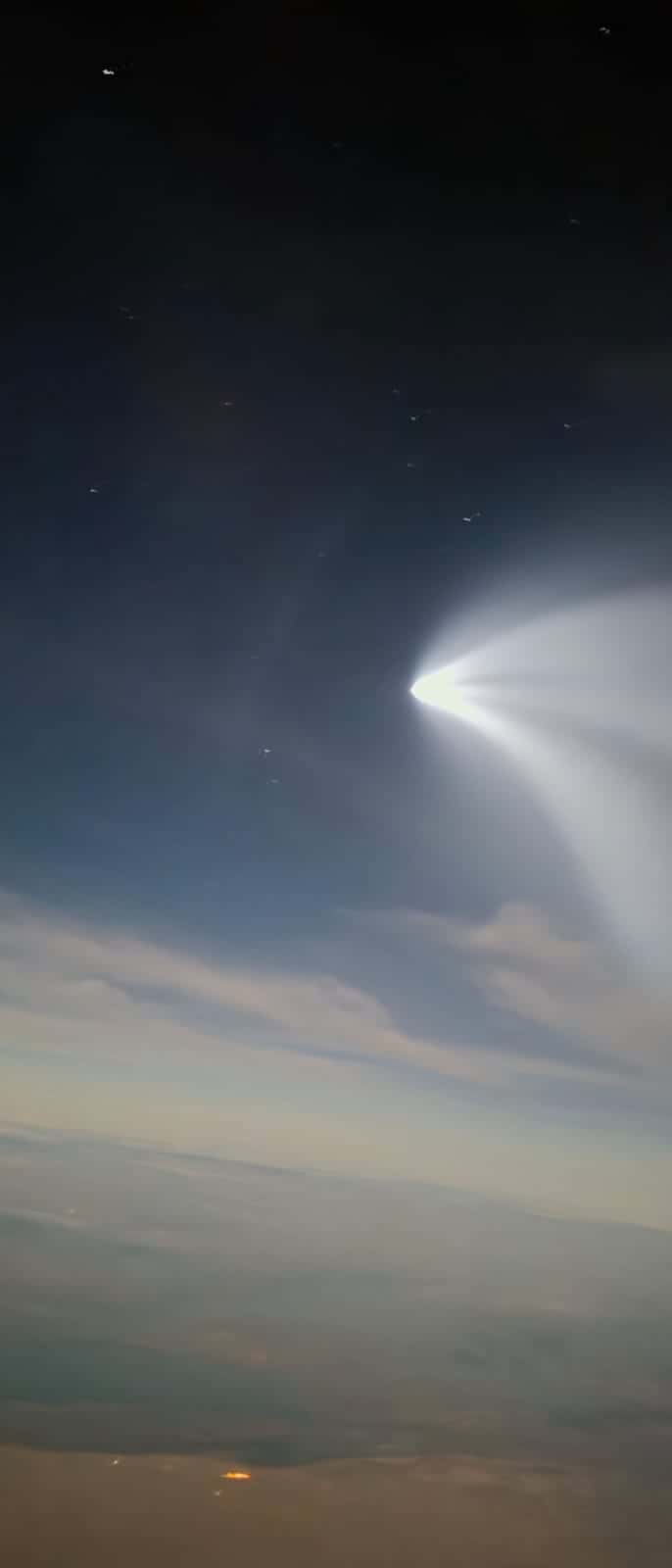
Florida's Space Coast is on pace for one of its busiest stretches on record this June, with SpaceX stacking Starlink launches from Cape Canaveral Space Force Station at a rhythm that would have seemed implausible only a few years ago. After a sunrise mission on June 3 that flew once weather cleared a previous scrub, and another batch shortly before 10 a.m. on June 4, the company has a Falcon 9 set to carry 29 Starlink V2 Mini Optimized satellites toward low Earth orbit on June 7, with the launch window opening around 6:30 a.m. EDT. More Starlink batches are penciled in for June 8 and June 12.
For Florida, and specifically for Brevard County, the relentless cadence is far more than a string of bright streaks across the predawn sky. It is the heartbeat of a regional economy that has remade itself around the launch business, drawing workers, tourists, and investment to a stretch of the Atlantic coast that the nation has long treated as its gateway to space. Each mission that lifts off from Space Launch Complex 40 reinforces Florida's standing as the busiest spaceport on the planet.
The June flights are routine in one sense, another set of internet satellites for a constellation that already numbers in the thousands, yet they are extraordinary in aggregate. The sheer frequency of launches from the Cape has turned what was once a rare, ceremonial event into something close to a public utility, a steady industrial drumbeat that powers jobs, fills hotel rooms, and keeps Florida at the center of the national space program.
A June of Near-Daily Liftoffs
The early-June schedule captures the pace in miniature. A Starlink mission flew at sunrise on June 3 after weather forced a delay, followed roughly a day later by another batch that climbed away from the Cape just before 10 a.m. on June 4. The June 7 flight is set to deploy 29 of the upgraded V2 Mini Optimized satellites, with additional Starlink launches targeted for June 8 and June 12. Within a single week, Florida's Eastern Range is being asked to support liftoff after liftoff.
Each of those missions deploys roughly 29 satellites into low Earth orbit, feeding SpaceX's space-based internet network. The constellation delivers broadband to customers who are hard to reach with traditional cable or fiber, including rural communities, ships at sea, aircraft, and emergency responders operating where terrestrial networks have failed. Every Florida launch adds capacity to that global web, much of it built and flown from the state's coast.
The reusability of the Falcon 9 is what makes this tempo possible. Boosters return to land on drone ships or back at the Cape, are refurbished, and fly again, compressing the time and cost between missions. That turnaround has converted launch from a scarce, bespoke undertaking into a repeatable industrial process, and Florida is where much of that process plays out, mission after mission, month after month.
The result is a launch manifest that keeps the Space Coast humming around the clock. Crews, range operators, and recovery teams cycle through a schedule that rarely pauses, and the steady drumbeat of liftoffs has become a defining feature of life along Florida's central Atlantic shore, audible and visible far beyond the boundaries of the spaceport itself.
Brevard County's Launch Economy
Behind every Starlink flight stands a workforce concentrated in Brevard County, the heart of Florida's Space Coast. The launch business supports engineers, technicians, range operators, logistics crews, and a wide network of suppliers and contractors who keep the spaceport running. As the cadence has climbed, so has demand for skilled labor, drawing new residents and reinforcing the county's identity as a place built around getting to orbit.
The economic reach extends well beyond the launch pads. Restaurants, hotels, and shops benefit from the steady flow of workers and visitors, and the housing market has felt the pull of an industry on the rise. Local officials and business leaders have watched the launch tempo translate into payrolls and tax base, anchoring a regional economy that once leaned heavily on the cyclical fortunes of single government programs.
Tourism is a pillar of that economy. Launch viewing has become a draw in its own right, with visitors timing trips to catch a Falcon 9 climbing off the pad, packing causeways, beaches, and parks for a glimpse of a rocket and the thunder that follows seconds later. The Kennedy Space Center Visitor Complex and the surrounding communities have built an experience economy around the spectacle, turning each mission into a potential tourist event.
That blend of high-skill industry and tourism gives Brevard County a distinctive economic profile within Florida. The county sells both the work of reaching space and the wonder of watching it happen, and the record launch cadence feeds both sides at once. The more often rockets fly, the more reliably the region can market itself as the place where the nation's space ambitions become visible reality.
The Eastern Range Under Pressure
The surge in launches puts real demand on the Eastern Range, the network of tracking, safety, and support systems managed by the U.S. Space Force that makes launches from Cape Canaveral possible. The range must clear airspace and sea lanes, monitor each vehicle's trajectory, and stand ready to act if a flight goes wrong, all while juggling a manifest that now includes flights spaced just days or even hours apart.
Meeting that demand has required modernization. The range has worked to automate flight safety and streamline the procedures that once made each launch a slow, labor-intensive affair, shaving the time needed to reset between missions. Those upgrades are what allow Florida's spaceport to support a tempo that would have overwhelmed the systems of an earlier era, and they remain essential as the manifest grows.
The pressure is not only technical but logistical. Multiple providers share the Cape and nearby Kennedy Space Center, and coordinating their schedules so that pads, airspace, and recovery zones do not collide is a constant exercise in deconfliction. The June Starlink flights are woven into a broader calendar of government, commercial, and crewed missions that all compete for the same finite range resources.
For Florida, the health of the Eastern Range is a strategic asset. The state's ability to host an ever-rising number of launches depends on infrastructure that can keep pace, and continued investment in range modernization is what protects the Space Coast's edge against rising competition from other launch sites. The June cadence is, in part, a demonstration that the range can carry the load.
Florida at the Center of the Space Economy
The Starlink launches are one thread in a much larger story of Florida's resurgence as the focal point of American spaceflight. Year after year, the Cape and Kennedy Space Center have set new records for the number of orbital launches, a trend driven by the rise of reusable rockets and the explosion of commercial demand for satellites, broadband, and eventually crewed missions. Florida has positioned itself to capture an outsized share of that growth.
The space industry's expansion has rippled across the state's economy and education system. Universities and technical colleges have built programs to feed the talent pipeline, and aerospace firms have clustered near the coast to be close to the action. The state has actively courted the industry, treating spaceflight as a signature sector alongside tourism, agriculture, and trade in its long-term economic strategy.
That strategy reflects a broader national reality. As the United States leans more heavily on commercial providers to deliver cargo, satellites, and astronauts to orbit, the physical center of gravity for that work sits on Florida's Atlantic coast. The nation's space economy increasingly runs through the Cape, and the steady drumbeat of Starlink missions is among the clearest signs of how routine, and how concentrated, that activity has become.
The constellation those flights are building also matters for Floridians on the ground. Space-based internet reaches parts of the state and the wider region where traditional connectivity is thin, and it offers a measure of resilience when hurricanes knock out terrestrial networks, a recurring concern in a state defined by its storm season. The satellites launched from Florida circle back, in a sense, to serve Florida's own needs.
The Technology Riding to Orbit
The June 7 mission is notable for the specific hardware it carries: 29 Starlink V2 Mini Optimized satellites, a refined version of the spacecraft that anchor the constellation. The V2 Mini line packs more capability into each satellite than earlier generations, and the optimized variant reflects SpaceX's continual tweaking of mass, power, and capacity to wring more performance out of every launch. The goal is to deliver more bandwidth per flight.
That iterative improvement is central to the economics that make the Florida cadence sustainable. By steadily upgrading the satellites and the rockets that carry them, the company drives down the cost of adding capacity to the network, which in turn supports a higher flight rate. The technology and the tempo reinforce each other, and Florida's launch pads are where that feedback loop becomes visible to the public.
The satellites themselves are designed for a defined operational life before they deorbit and burn up in the atmosphere, which means the constellation requires constant replenishment. That built-in turnover guarantees a steady stream of future launches, giving Florida's spaceport a durable pipeline of work rather than a one-time burst. The state's launch economy is, in effect, underwritten by the ongoing need to refresh a network in the sky.
For observers along the Space Coast, the technical details matter less than the experience: a Falcon 9 rising on a column of flame, the booster peeling away to return home, and a fresh batch of satellites slipping into orbit. Yet it is precisely those engineering advances that keep the rockets flying often enough to make the spectacle a near-weekly feature of Florida life.
What's Next
The immediate horizon is crowded. With the June 7 Starlink flight set to deploy 29 satellites, and additional batches targeted for June 8 and June 12, the Space Coast is poised to keep its record pace through the heart of the month, weather and range availability permitting. Each successful liftoff tightens Florida's grip on its status as the world's busiest launch site and adds another increment of capacity to the orbital network.
Looking further ahead, the trajectory points up. The combination of reusable rockets, surging commercial demand, and continued range modernization suggests that Florida's launch totals will keep climbing, with Starlink missions forming a steady backbone alongside government and crewed flights. For Brevard County, that promises continued growth in jobs, tourism, and investment tied to the space sector, provided the infrastructure keeps pace with ambition.
The stakes for Florida extend beyond any single mission. The Space Coast has become a national asset, the place where the country's expanding presence in orbit is physically realized, and the June cadence is a snapshot of that role in motion. As long as the rockets keep flying from Cape Canaveral, Florida will remain at the literal launch point of the American space economy, and Brevard County will keep watching its skies fill with the streaks that have come to define the region.
Spotted an issue with this article?
Have something to say about this story?
Write us a letterComments
No comments yet. Be the first to weigh in.
Related Coverage

SpaceX Launches Bandwagon-5 Rideshare From Cape Canaveral, Lighting Up a Brief Space Jellyfish Over Florida
14h ago

Kathy Castor and Mike Beltran enter final stretch of a tight race in a redrawn, Trump-leaning Tampa district
18h ago
G20 Summit at Trump National Doral Will Bring Road Closures and a Secret Service Security Zone to Miami-Dade in December
20h ago

Florida's Brazilian voters head back to the polls for Oct. 25 presidential runoff as corruption dominates the race
21h ago