Florida Voters Will Fill Rubio's Old Senate Seat Starting Next Week
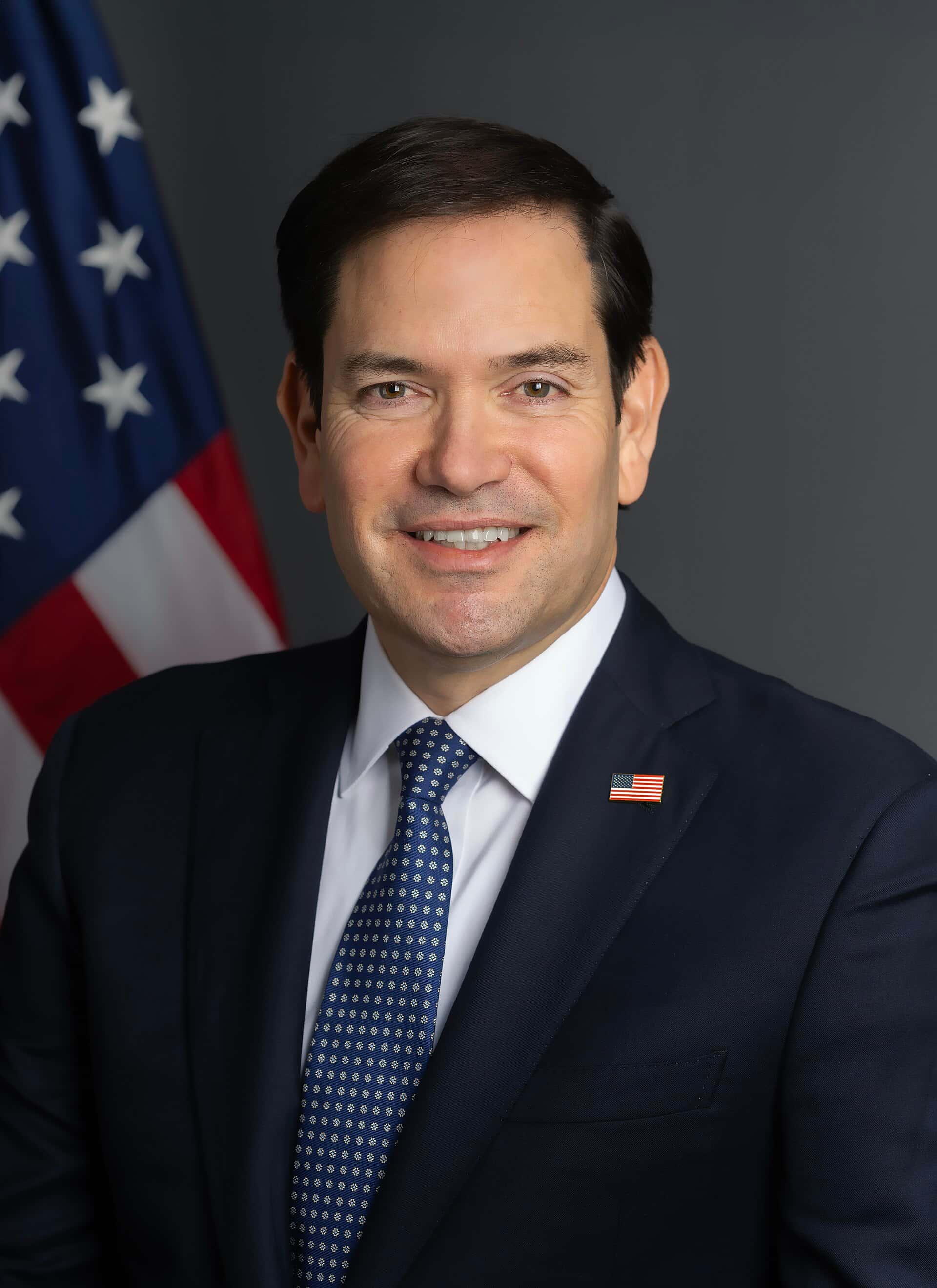
Florida voters go to the polls August 18 in primaries for a United States Senate special election that will determine who serves the remaining two years of the term Marco Rubio vacated when he was confirmed as Secretary of State in January 2025. Governor Ron DeSantis appointed Ashley Moody, then the state's attorney general, to hold the seat, and she must now win an election to keep it.
Moody faces Republican primary challengers Chris Gleason, Neelam Taneja Perry and Ernest Rivera. Campaign finance reports show she has substantially outraised her primary opponents, and she has been endorsed by President Donald Trump along with a range of elected officials and organizations. Democrats hold their own primary the same day, with the general election set for November 3.
The race matters beyond Florida. A Senate seat is a Senate seat, and in a chamber where margins have been narrow for several cycles, the outcome carries national consequence. For Floridians, the more concrete question is which policy portfolio the winner will carry into a body that decides an unusually large share of what affects the state directly.
How the seat came open
Rubio represented Florida in the Senate from 2011 until his confirmation as Secretary of State. Under Florida law, the governor fills a United States Senate vacancy by appointment, with the appointee serving until an election can be held. That election is the one now taking place.
Moody had served as Florida attorney general since 2019, winning statewide election twice. Her appointment triggered a chain of succession: James Uthmeier was appointed attorney general and is now the Republican nominee for a full term in that office, facing Democrat Jose Javier Rodriguez in November.
The winner of the Senate special election serves the balance of Rubio's term, which runs through January 2029. The seat then comes up again on the regular cycle, which means whoever wins in November faces another statewide campaign in 2028.
Why this seat carries Florida-specific weight
Senators exercise influence over federal decisions that hit Florida disproportionately. Disaster policy is the clearest example. Federal Emergency Management Agency funding, the National Flood Insurance Program and post-storm supplemental appropriations shape how Florida recovers from hurricanes, and Florida draws on those mechanisms more than nearly any other state.
The National Flood Insurance Program in particular is a recurring congressional item. The program requires periodic reauthorization, has operated with substantial debt for years, and its rate structure directly determines what hundreds of thousands of Florida property owners pay. Reform proposals affect Florida more than any other state.
Immigration policy, agricultural labor rules, Cuba and Venezuela policy, and federal appropriations for the Everglades restoration program all run through the Senate. So does confirmation of federal judges for Florida's three district courts and the Eleventh Circuit, which handles appeals from Florida, Georgia and Alabama.
The space and defense portfolio
Florida's federal footprint includes assets that make Senate committee positions particularly valuable. Kennedy Space Center and Cape Canaveral Space Force Station form the busiest launch complex in the world, and NASA appropriations, commercial launch regulation and Space Force basing decisions all involve congressional action.
The state hosts a substantial military presence, including MacDill Air Force Base in Tampa, which is home to United States Central Command and United States Special Operations Command, Naval Air Station Jacksonville and Naval Station Mayport, Naval Air Station Pensacola, Eglin and Tyndall Air Force Bases in the Panhandle and Patrick Space Force Base on the Space Coast.
Base realignment decisions, defense authorization language and military construction appropriations have direct employment consequences for the communities around those installations. Senate Armed Services Committee membership has historically been a priority for Florida senators for exactly that reason.
The August 18 ballot
The Senate special election primary shares the ballot with an unusually consequential set of Florida races. The Republican gubernatorial primary is on the same day, with Governor DeSantis term-limited and unable to seek a third consecutive term. Five state executive offices appear on the 2026 ballot: governor, lieutenant governor, attorney general, agriculture commissioner and a treasurer position.
Congressional primaries under Florida's redrawn map are also on the ballot, including the Republican primary in the 19th District, the Democratic primary in the 20th and the Republican primary in the 7th. Local races, including mayoral contests in Tallahassee, St. Petersburg and Orange County, appear on ballots in those jurisdictions.
Florida runs closed primaries. Voters may only participate in the primary of the party in which they are registered, and the deadline to change party registration for this election has passed. Voters registered with no party affiliation cannot vote in either party's primary, though they may vote in nonpartisan races and on any local ballot questions.
How to vote
Florida offers three voting methods. Vote by mail requires a request submitted to the county supervisor of elections, and requests must now be renewed each general election cycle rather than carrying over as they previously did. Voters who assume their old request is still active should verify with their supervisor.
Early voting periods and locations are set by each county supervisor within a state-defined window, and hours vary. Election Day voting on August 18 runs from 7 a.m. to 7 p.m. local time, and anyone in line at 7 p.m. is entitled to vote.
Voters should confirm their polling location, which can change between elections, and bring an acceptable photo and signature identification. A voter without acceptable identification may cast a provisional ballot, which is counted if the signature matches the one on file.
The signature match rule
Vote-by-mail ballots in Florida are verified by comparing the signature on the return envelope against the signature on file with the supervisor of elections. Ballots with signatures that do not appear to match, or that are missing a signature entirely, are set aside.
Florida law provides a cure process. Voters whose ballots are flagged must be notified and given an opportunity to submit a cure affidavit with identification, and the deadline for that submission falls shortly after Election Day. Voters who move or whose signature has changed over time are the most likely to be affected.
The practical advice is to update a signature on file if it has changed substantially, which can be done through a voter registration application, and to return vote-by-mail ballots early enough that a cure notice can reach the voter with time to respond. Ballots must be received by the supervisor by 7 p.m. on Election Day, not merely postmarked by then.
Why Senate confirmations matter to Florida
Beyond legislation, the Senate's confirmation power has direct consequences for the state. Federal district judges for the Northern, Middle and Southern Districts of Florida, and circuit judges for the Eleventh Circuit, require Senate confirmation, and those courts decide cases involving Florida law, Florida agencies and Florida businesses.
The blue slip tradition, under which home-state senators have historically exercised substantial influence over district court nominations, gives Florida's senators a meaningful role in who sits on those benches. That influence has varied with Senate practice over time but remains significant for district courts.
United States attorneys for the three Florida districts also require confirmation, and those offices set federal prosecution priorities across the state, including in areas Florida cares about disproportionately: health care fraud, maritime enforcement, immigration and public corruption.
The special election's unusual timeline
Special elections for Senate seats operate on schedules that can be confusing, because the winner takes office as soon as the result is certified and the oath administered rather than waiting for the January start of a new Congress. That means the outcome affects the chamber's composition within weeks of the November election.
The term at stake runs only through January 2029, which is shorter than a full six-year term and has practical consequences for the winner. Senate seniority, which governs committee assignments and subcommittee chairmanships, accrues from the start of service, and a two-year term provides limited time to build it.
It also means the seat returns to the ballot in 2028, on the regular cycle, which shapes how the winner approaches the term. A senator facing another statewide campaign in two years operates under different incentives than one with six years of runway.
Florida's shifting electorate
The state's partisan composition has changed markedly over the past decade. Florida spent decades as the archetypal swing state, decided by margins under two percentage points in multiple presidential elections, and it is no longer regarded that way by either party's national strategists.
Voter registration has shifted, with Republicans overtaking Democrats in total registered voters after a long period in which Democrats held the advantage. Population growth from domestic migration has contributed, as has changing partisan alignment among some voter groups, particularly Hispanic voters in South Florida.
Registration is an imperfect predictor of behavior, and the fastest-growing category remains voters registered with no party affiliation. Those voters cannot participate in closed primaries but decide general elections, which is why campaigns pivot sharply in tone between August and November.
What's next
Primary results on August 18 set the November 3 general election matchups. Florida has voted Republican in recent statewide federal contests by comfortable margins, and the state's registration advantage has shifted toward Republicans over the past several cycles, which shapes expectations for the general election.
The winner of the Senate special election will be sworn in for the remainder of the term and will immediately be part of the chamber's working majority calculation. For a state with Florida's federal exposure, seniority and committee assignments accumulate slowly, and a two-year term provides limited runway.
County supervisors of elections are the authoritative source for ballot information, polling locations, early voting schedules and vote-by-mail status. The Florida Division of Elections maintains statewide voter registration lookup and candidate filing records.
Spotted an issue with this article?
Have something to say about this story?
Write us a letterComments
No comments yet. Be the first to weigh in.
Related Coverage
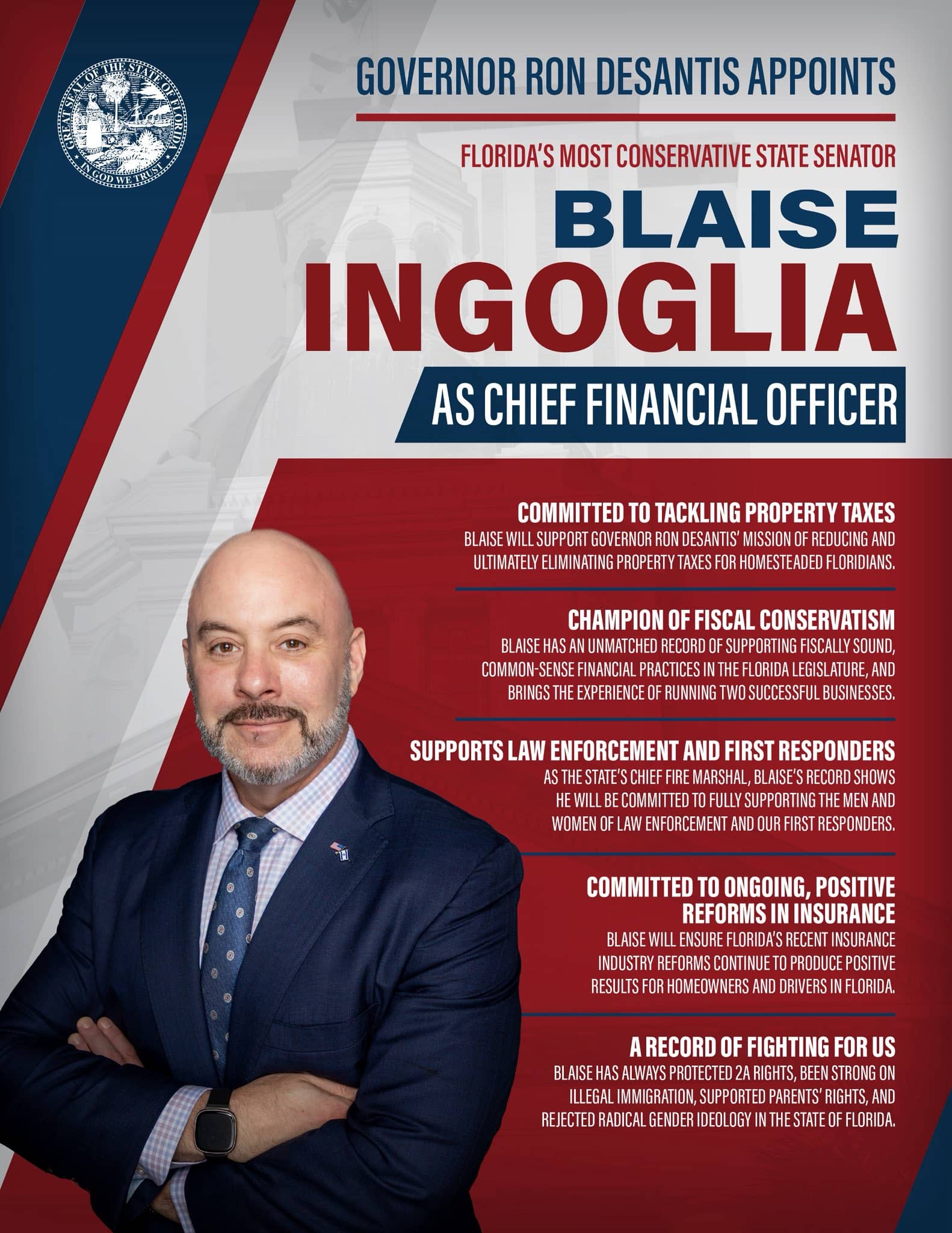
Florida Cabinet Races 2026: Uthmeier, Ingoglia and Simpson Face Democratic Challengers on Nov. 3
1h ago
Florida AG James Uthmeier Says He Wants to Go Beyond the Six-Week Ban, Presses Case Arguing Surrogacy Contracts Are Unconstitutional
1d ago

Harry Shorstein, five-term Jacksonville-area state attorney and juvenile justice reformer, dies at 86
2d ago

Pinellas commissioners set Oct. 27 vote on Vince Nowicki's Flock camera ban after Bob Gualtieri's fierce defense
2d ago