Helicopter in fatal Biscayne Bay crash was turning extremely close to the water, NTSB preliminary report says
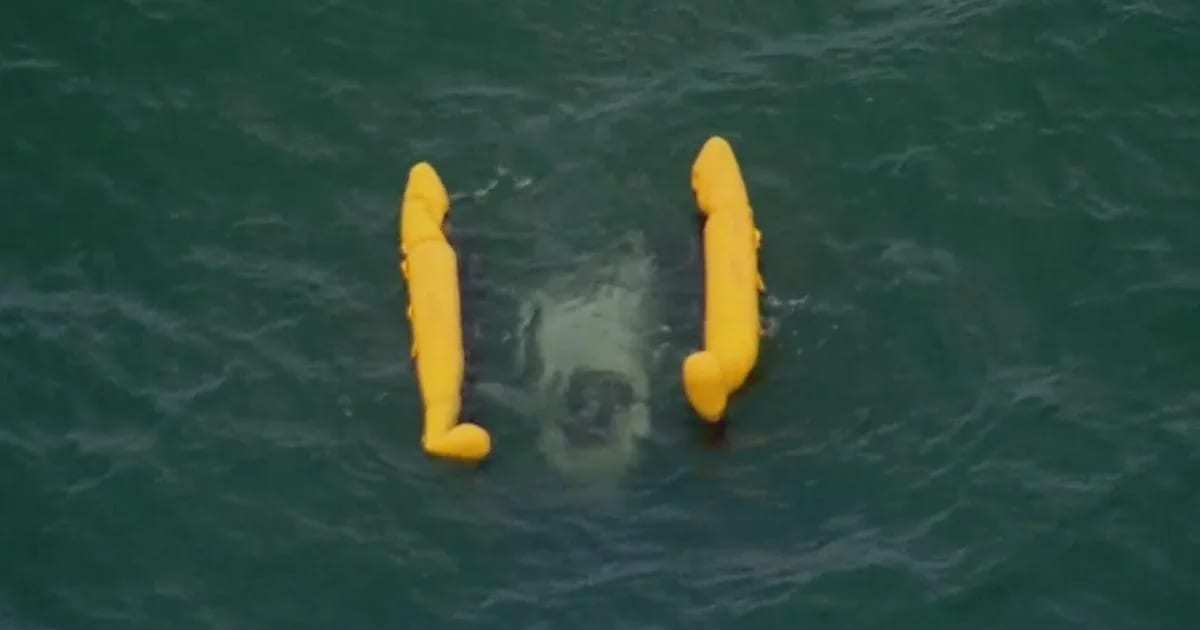
The helicopter that crashed into Biscayne Bay on Nov. 4, killing its pilot and injuring two men on board, was turning extremely close to the water while filming a powerboat event when its main rotor blades struck the bay, according to a preliminary report from the National Transportation Safety Board. Investigators found no evidence of a mechanical failure in the flight controls or engine before impact.
The Robinson R44 II went down off Key Biscayne near Bill Baggs Cape Florida State Park during a low-altitude photo flight over a Poker Run, a high-performance powerboat event. The Miami-Dade Sheriff's Office identified the pilot as Tomas Pendas, 63, president of Global Aerials Inc., the Pembroke Pines company listed as the helicopter's registered owner. The preliminary report does not assign a cause; that will come in the NTSB's final report, which is likely more than a year away.
What the NTSB found
According to the report, as described by CBS News Miami, witnesses and passengers told investigators the helicopter was flying low and parallel off the starboard side of a boat, then banked toward the vessel at about a 45-degree angle. Witnesses on two nearby boats said the helicopter was making turns "extremely" close to the water's surface just before the main rotor blades hit the bay. A videographer on board also reported seeing the blades strike the water.
The helicopter's emergency floats deployed, and it rolled upside down in roughly 10 feet of water. Camera and video equipment aboard was thrown from the aircraft and was not recovered, according to the report.
Examining the wreckage, investigators found:
- Flight control continuity confirmed across all flight control surfaces, with no evidence of pre-impact flight control or engine malfunction
- One of three main rotor hydraulic servos had broken free, but all three worked when operated by hand
- Rotor blades that moved freely on the teetering hinge, with no sign of mast bumping, a hazardous condition in two-bladed rotor systems
- An engine with mechanical continuity, normal compression in all six cylinders and normal spark plug wear
- One main rotor blade missing its outboard 6 feet, a fractured main rotor gearbox case and a tail rotor shaft separated from the main transmission
Investigators drained about 3 gallons of a mix of saltwater and oil from the engine after its time underwater. The helicopter's last 100-hour inspection was completed Aug. 5, at about 2,500 total flight hours, with roughly 400 hours on the engine since its last overhaul. The NTSB retained the wreckage for further examination.
The crash and rescue
The helicopter took off late that Wednesday morning from North Perry Airport in Pembroke Pines, according to flight tracking data cited by local outlets, which differed by several minutes on the departure time. NBC 6 reported that FlightAware data showed a helicopter of the same model flying for about five minutes over the bay before a sudden drop in altitude at around 11:17 a.m., though authorities had not confirmed it was the same aircraft. Two U.S. Customs and Border Protection marine interdiction agents heard mayday calls at about 11:20 a.m., WLRN reported, and they were the first to reach the scene, pulling the two passengers from the water and handing them off to Miami-Dade rescue crews. City of Miami Fire Rescue and Key Biscayne Fire Rescue then moved the passengers to a nearby landing spot where a Miami-Dade Fire Rescue air rescue helicopter was waiting.
Sheriff's marine units found a good Samaritan trying to bring the pilot to shore. Firefighters attempted lifesaving measures, but Pendas was declared dead at No Name Harbor inside the state park. The two passengers, both adult men, were airlifted to Jackson Memorial Hospital's Ryder Trauma Center. They were initially listed in critical but stable condition, but authorities later said their injuries were minor and that both had been released from the hospital.
Sheriff Rosie Cordero-Stutz thanked the unidentified bystander for acting quickly. On the day of the crash she said, "At this time, we really do not have any information as to what the cause of this crash is."
The Miami-Dade Sheriff's Office is investigating the death, and the NTSB is leading the federal crash investigation. News helicopter footage showed the aircraft upside down underwater with two yellow emergency floats attached to its landing skids, and WLRN reported it was unclear whether the pilot deployed the floats or they deployed automatically. The helicopter was towed out of the water the next day and taken to a secure location for examination.
Who was on board
Pendas ran Global Aerials, an aerial services company based at North Perry Airport. Adonis Lugo, an aerial photojournalist for NBC 6 and Telemundo 51 who said he had known Pendas for about five years, told NBC 6 that Pendas was a go-getter who was always kind in their interactions.
The two passengers, ages 52 and 27, were a photographer and a videographer working the Poker Run, according to reports. One is the owner of a South Florida digital marine marketing company.
A familiar risk for South Florida aerial work
Helicopters are a regular sight over South Florida's waters during powerboat events, where operators shoot photos and video of boats at speed. That kind of work often requires flying close to the surface and maneuvering around moving vessels, which leaves little margin if a turn goes wrong.
An NTSB investigator told NBC 6 after the crash that the agency looks at "the man, the machine and the environment," and said investigators would examine the pilot's background, the helicopter's maintenance history and flight conditions, including any demands tied to the photo shoot. WLRN reported that investigators would also consider whether stormy weather played a role.
The Robinson R44 is one of the most widely used light helicopters. According to NTSB data cited by WLRN, the model was involved in 63 other accidents nationwide over five years, six of them fatal, and four in Florida. In April 2024, a different Robinson helicopter crashed off Key Biscayne; its pilot walked away.
What's next
A preliminary report lays out initial facts but does not determine probable cause. The NTSB's final report, which will include its probable cause finding and any safety recommendations, could take about 18 months, according to the investigator. Anyone who witnessed the crash can contact the NTSB at witness@ntsb.gov.
Spotted an issue with this article?
Have something to say about this story?
Write us a letterComments
No comments yet. Be the first to weigh in.
Related Coverage

Florida Bids for NASA's New U.S. Space Academy With UCF Interim Campus and 1,000-Acre Kennedy Space Center Site
2h ago

Ecuadorian Fishermen Sue Trump Administration Over March Drone Strike, the First Survivor Challenge to a Boat Campaign Run From Doral
3h ago

Class Action Targets Florida's SNAP Ban on Soda and Candy, One of 18 State Waivers Challenged in Federal Court
3h ago
148 sick in illness outbreak on Caribbean Princess cruise from Fort Lauderdale, CDC says
5h ago