Jaguars Prepare for Home Opener Against Cleveland After Shutting Out Tampa Bay
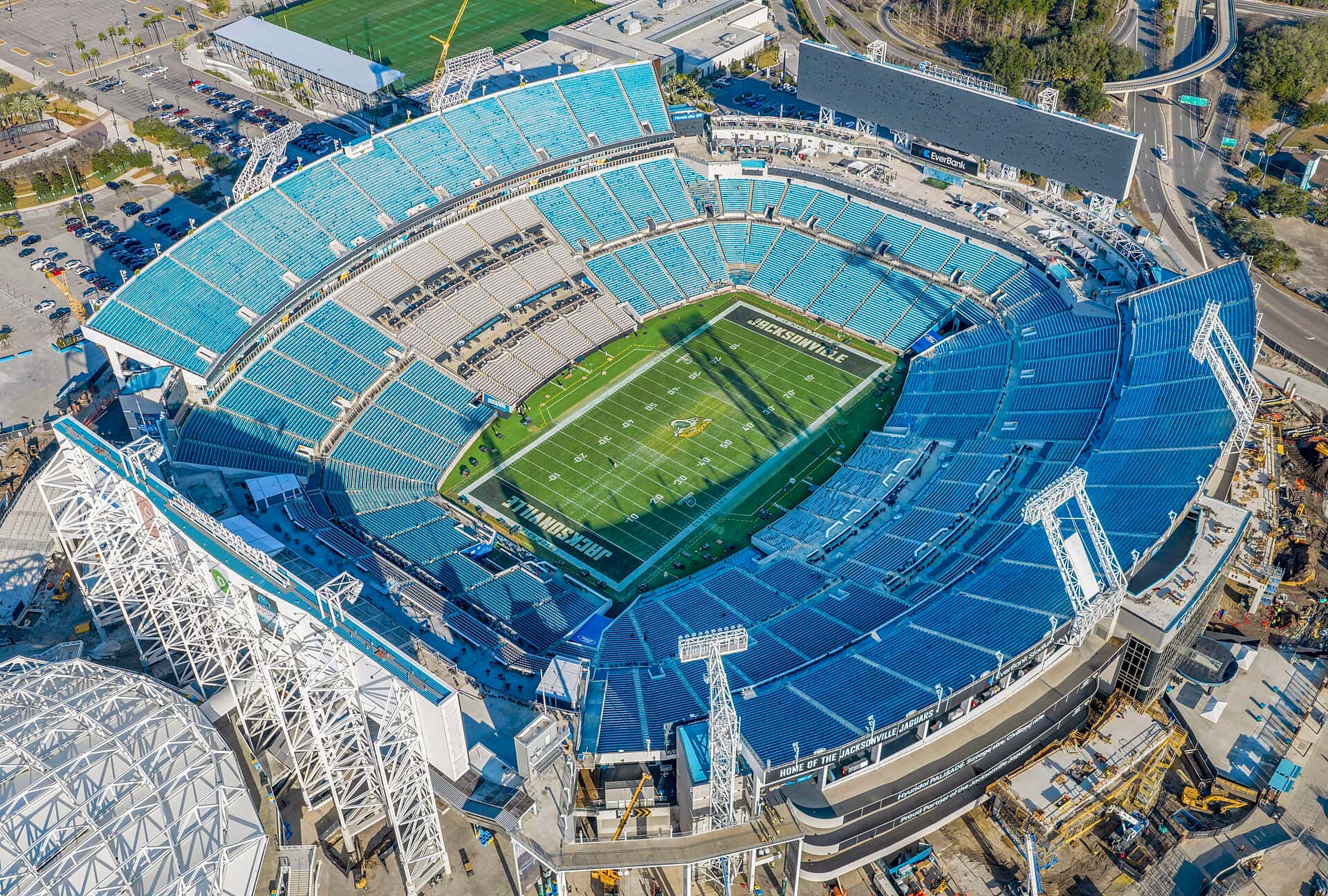
The Jacksonville Jaguars open the 2026 regular season on Sunday, September 13 against the Cleveland Browns at EverBank Stadium, closing a preseason that ended with a 19-0 shutout of the Tampa Bay Buccaneers. All three of Florida's NFL franchises begin their seasons that same afternoon, with Miami traveling to Las Vegas and Tampa Bay playing at Cincinnati.
The preseason finale against Tampa Bay produced the kind of one-sided result that carries limited predictive value but reflects well on roster depth. Jacksonville's defense held the Buccaneers to 87 total yards and forced a 2-for-12 performance on third down, the sort of showing that generally involves reserves on both sidelines but that indicates competent coaching of the players competing for final roster spots.
Jacksonville enters the season within a division that has produced varied outcomes in recent years, and the home opener against Cleveland offers an early opportunity to establish a position before the schedule turns more difficult.
What preseason results actually tell you
NFL preseason games are among the least informative contests in professional sports, and the reason is structural rather than incidental. Front-line players participate minimally or not at all, particularly in the final week when the priority shifts entirely to avoiding injury. Play-calling is deliberately generic, since teams have no interest in revealing scheme material before games that count.
What preseason does reveal is information about the bottom of a roster. Coaching staffs use those games to evaluate players competing for the final spots, to assess special teams contributors and to determine which developmental players warrant practice squad retention. A 19-0 result suggests Jacksonville's depth outperformed Tampa Bay's on that particular evening, which matters at the margins across a season in which injuries are certain.
The historical record on preseason results as a predictor of regular season performance is clear enough that few analysts attempt the connection. Teams have gone undefeated in August and finished poorly, and the reverse occurs with similar frequency. The value of the exhibition schedule lies almost entirely in roster evaluation.
Cleveland as an opening opponent
The Browns arrive as an AFC opponent in a matchup that does not carry divisional implications but that counts equally in the conference standings for tiebreaking purposes. Conference record functions as an early tiebreaker in NFL playoff seeding, which gives games against AFC opponents value beyond the win itself.
Opening at home carries a measurable advantage in the NFL, though a smaller one than in college football. Analyses across large samples of games generally place home field worth roughly two points, an edge that matters in a league where a substantial share of games are decided by one score. Crowd noise affects visiting offenses at the line of scrimmage, producing procedural penalties and communication difficulty.
September home games in Jacksonville present an additional variable. Early-season heat and humidity in Northeast Florida are genuinely taxing, and visiting teams from northern cities arrive without the acclimatization that comes from training through a Florida summer. Coaching staffs in warm-weather markets have historically treated that as a competitive asset worth emphasizing.
The stadium project
EverBank Stadium is in the midst of a major renovation program that the franchise and the City of Jacksonville agreed to fund jointly, a project that will reshape the venue substantially over several seasons. Construction of that scale affects capacity and the game day experience during the work, and clubs undertaking similar projects have typically played through reduced seating for at least one season.
Stadium financing arrangements between NFL franchises and host cities have been a recurring subject of public debate, in Jacksonville as elsewhere. Proponents point to long-term lease commitments that secure a franchise's presence and to economic activity generated by events beyond football. Critics question the return on public investment and note that independent economic analyses have generally found the benefits smaller than projections suggest.
For Jacksonville specifically, the stadium question carries additional weight because the market is among the smallest in the NFL by metropolitan population. Franchise stability in smaller markets depends more heavily on facility revenue than it does in larger ones, which is the argument the club has advanced in support of the arrangement.
Jacksonville's position in the AFC South
The AFC South has been among the league's less predictable divisions over the past several seasons, with the standings order changing substantially from year to year. Divisions of that character reward teams that start well, since the absence of an entrenched favorite means early results carry more influence over the eventual outcome than they would in a division with a dominant club.
Six of Jacksonville's seventeen games come against divisional opponents, and those matchups determine the head-to-head and division record tiebreakers that frequently decide playoff berths. Teams that split their divisional games generally need to accumulate wins elsewhere, which places pressure on the conference schedule.
The practical implication for the opener is that a home win against a nonconference-division AFC opponent contributes to conference record without affecting divisional standing. That is a favorable outcome but not a decisive one, and the games that will determine Jacksonville's season arrive later.
Florida's three NFL teams
Florida is one of a small number of states hosting three NFL franchises, and the fact that all three open on the same Sunday makes for an unusual concentration of interest across the state. The Dolphins begin a rebuild under a new coaching staff, the Buccaneers travel to Cincinnati, and the Jaguars host Cleveland.
The three markets differ substantially in size and character. South Florida is the largest and most competitive sports market of the three, with professional franchises in every major league competing for attention. Tampa Bay supports NFL, NHL and Major League Baseball franchises. Jacksonville is the smallest market of the three and the only one where an NFL team faces no competition from another major professional league.
That last point shapes the relationship between the Jaguars and their city in ways that distinguish it from the other two. Attendance, local broadcast ratings and civic attention concentrate on a single franchise, which produces both a more devoted base and greater exposure when results disappoint.
What a successful season looks like
For a franchise that has reached the postseason intermittently, the practical measure of a successful season is contention into December. NFL playoff races frequently come down to the final two weeks, and a team that remains mathematically alive at that point has generally accomplished enough to justify continuity in its coaching staff and front office.
Roster health is the variable that most often determines whether that happens. NFL seasons turn substantially on injuries at premium positions, particularly quarterback and along both lines, and teams with depth at those spots weather attrition better than teams whose quality is concentrated in a small group of starters.
The schedule's structure also matters. Teams that face a difficult stretch early sometimes recover, while those that start against weaker opposition and fail to accumulate wins face a steeper path. Jacksonville's early-season slate will establish the margin the team has to work with through the middle of the season.
Building the final roster
The week between final cuts and the opener is among the most active periods on the NFL calendar for roster management. Every team reduces to its regular season limit on the same day, which floods the waiver wire with several hundred players simultaneously, and clubs then claim, sign and assemble practice squads over the following days. Rosters that looked settled in August frequently turn over meaningfully in that window.
Practice squad construction has grown more consequential as the league has expanded the number of players teams may carry and the flexibility with which they may elevate them to the active roster on game days. A well-built practice squad functions as insurance against the injuries that arrive inevitably, and clubs that manage it well often avoid the mid-season scrambling that undermines depth-dependent positions.
For a team in Jacksonville's competitive position, those decisions carry real weight. The difference between a season that stays in contention and one that unravels is frequently the quality of the eighth through fifteenth players at a given position group, and those players are assembled precisely in this period rather than through the draft or free agency.
What Northeast Florida gets from the franchise
The Jaguars occupy a distinctive place in Jacksonville's civic identity, functioning as the city's principal connection to national sports attention. That role brings tangible effects, including nationally televised exposure of the city, event weekends that fill hotels and restaurants along the riverfront, and a rallying point that a city of Jacksonville's size might not otherwise possess.
Independent economists have generally been skeptical of the largest claims made about professional sports franchises as engines of local economic growth, finding that spending on games substantially substitutes for other local entertainment spending rather than adding to it. The stronger arguments for public involvement tend to rest on civic and reputational grounds rather than on direct return calculations.
What is less disputed is the effect on the calendar and the culture. Ten home dates each fall structure the social rhythm of a city in ways residents notice, and the stadium district's continued development has been organized substantially around that anchor. Those considerations sit behind the franchise and city arrangements that have shaped the venue's future.
What's next
The regular season begins September 13 at EverBank Stadium, the first competitive measurement of a roster that the coaching staff has been assembling since the spring. Final roster moves and practice squad assignments will continue through the week preceding the game, as they do league-wide.
Early season results in the NFL move public perception faster than they should, given that most teams change substantially between September and December. The more meaningful evaluation of Jacksonville's season will come after the schedule has produced a representative sample of opponents.
The Florida Press will cover all three of the state's NFL franchises through the 2026 season, including the Jaguars' home opener and the divisional games that will determine their postseason prospects.
Spotted an issue with this article?
Have something to say about this story?
Write us a letterComments
No comments yet. Be the first to weigh in.
Related Coverage

Magic Open Sean Sweeney Era Against Hawks at Kia Center With Franz Wagner's Shoulder in Question
1h ago

Heat Open Season vs. Timberwolves as Giannis Antetokounmpo Makes Miami Debut and LaMelo Ball Starts in Minnesota
4h ago
Nikita Kucherov Scores Twice as Lightning Rally From Two Goals Down to Beat Canucks 4-2
2d ago
Lionel Messi Scores Twice, Inter Miami Beats Atlanta United 3-1 to Hold Second in the East
2d ago