Judge Lets DeSantis Congressional Map Stand for 2026 Midterms as Legal Fight Continues
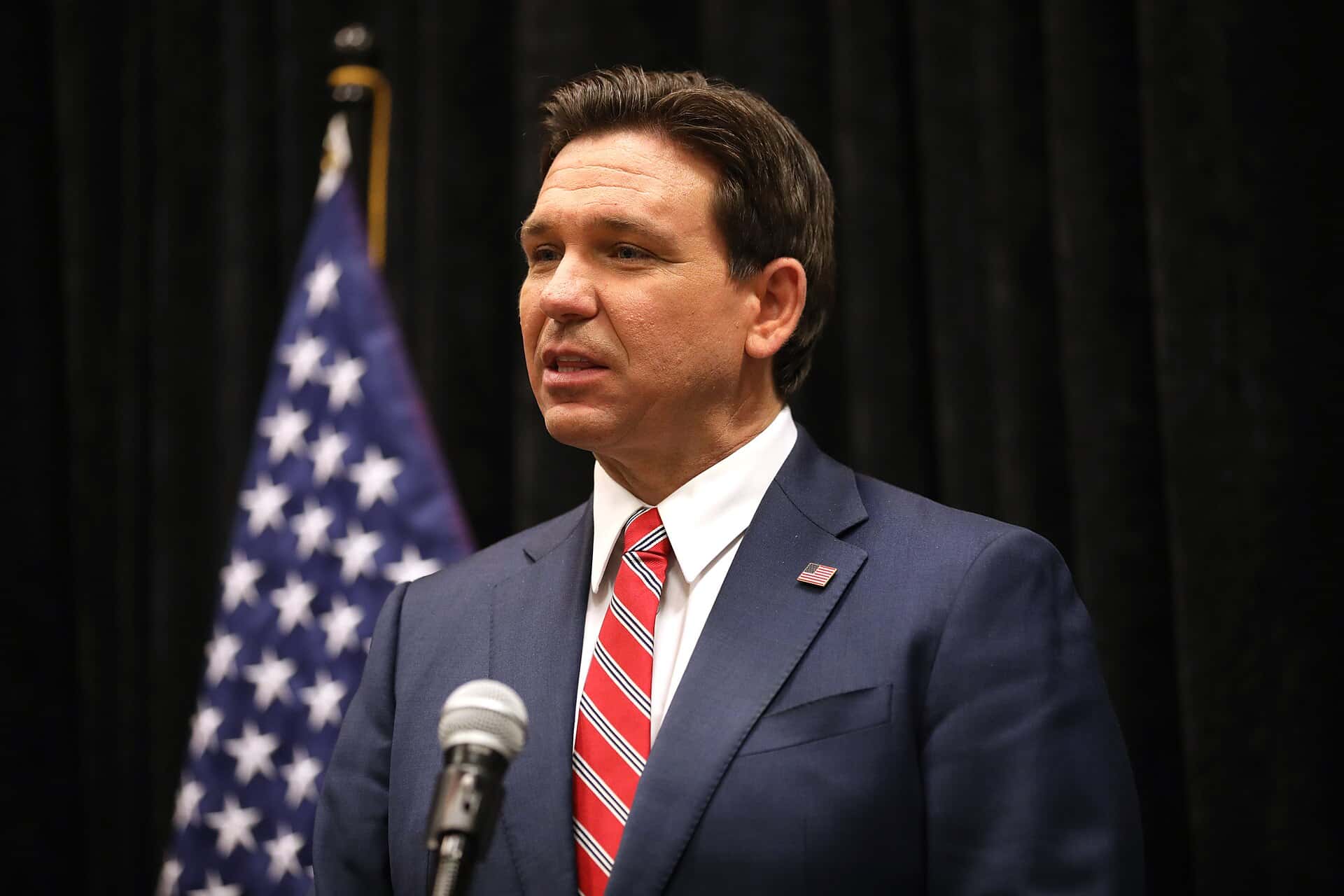
A Leon County circuit judge has ruled that Florida's contested congressional map will remain in place for the 2026 midterm elections, handing the DeSantis administration a significant near-term victory even as the underlying legal challenge presses forward. The decision means election officials can move ahead with preparations for this year's races under the boundaries the state enacted, while plaintiffs pursue an appeal that could ultimately reach the Florida Supreme Court.
What the judge decided
The ruling came from Leon County Circuit Judge Joshua Hawkes, who declined to block the map while litigation continues. Three state lawsuits challenging the boundaries had been consolidated before him, and his order keeps the current districts operative for the coming election cycle. In his reasoning, the judge wrote that the challenge appeared more relevant to future election cycles, such as 2028 or 2030, than to the 2026 vote that is now bearing down on candidates and supervisors of elections.
The judge's language acknowledged the tension at the heart of the case. He framed the decision as choosing between competing harms, writing that allowing the map to stand was, in his view, the lesser of the available evils given how close the election calendar is. Plaintiffs quickly filed notices of appeal, signaling that the dispute is far from settled even as the practical reality of the 2026 ballot locks into place.
The decision not to grant an injunction is significant in its own right. Courts weighing whether to halt a challenged policy generally consider whether the party seeking the block is likely to win on the merits and whether allowing the policy to continue would cause irreparable harm in the meantime. By declining to enjoin the map, the judge effectively concluded that the balance of those considerations tilted toward keeping the existing boundaries in place for now, without resolving the ultimate constitutional question. That posture leaves the heart of the case alive for a higher court while removing any immediate disruption to the 2026 calendar.
The consolidation of three separate lawsuits into one proceeding also shaped how the dispute reached this point. Rather than litigating overlapping claims in parallel, the challengers and the state argued the questions before a single judge, which produced one order governing the map's status for the coming cycle. That efficiency cuts both ways: it concentrated the near-term outcome in a single ruling that the state won, but it also tees up a cleaner record for the appellate courts to review as the broader fight moves forward.
The Florida context
The legal battle traces back to the way the map was drawn. Challengers argue that the administration's map-drawing process relied on political data in a manner that violates the Fair Districts amendments, which Florida voters added to the state constitution in 2010 with strong support. Those amendments bar drawing districts with the intent to favor or disfavor a political party or incumbent, and they are the legal hook for the plaintiffs' case.
The state has defended the map through the courts, and the consolidation of the three lawsuits before a single judge streamlined the litigation. The plaintiffs include advocacy organizations that have argued the boundaries dilute the political power of certain communities. The case touches on one of the most consequential questions in any democracy: who draws the lines that determine representation, and under what constraints.
The Fair Districts amendments grew out of a long-running frustration with maps that critics said were engineered to protect incumbents and lock in partisan advantage. When Florida voters approved the standards in 2010, they wrote into the state constitution explicit limits on the intent behind district lines, a higher bar than exists in many other states. Those standards have been the basis for prior redistricting litigation in Florida, including disputes that reached the state's highest court in earlier cycles and resulted in maps being redrawn. That history gives the current plaintiffs a template, and it is part of why the present case has drawn such close attention from legal observers.
The substance of the challenge centers on how political data factored into the drawing of the boundaries. Plaintiffs contend that the process used such information in a way that produced an outcome favoring one party, which they argue is precisely what the Fair Districts amendments forbid. The state counters that its map complies with the constitutional requirements and that the boundaries reflect legitimate, neutral criteria. Resolving that factual and legal dispute is the work that lies ahead for the appellate courts, and it will turn on a detailed examination of the record rather than on the broad political characterizations that tend to dominate public debate.
Florida's congressional delegation is among the largest in the country, so the shape of these districts carries national weight. Control of the U.S. House can hinge on a handful of seats, and Florida's map is one piece of a broader national redistricting landscape that both parties are watching closely heading into the midterms.
The state's rapid population growth adds another dimension. Florida gained seats in Congress after the last census, reflecting years of in-migration, and the way those seats are distributed across regions affects communities from the Panhandle to South Florida. Densely populated metropolitan areas, fast-growing suburban counties, and rural stretches all have a stake in how lines are drawn, because the configuration determines whether their interests are concentrated into cohesive districts or split across several. For many Florida voters, the abstract debate over redistricting becomes concrete at exactly that level: which neighbor is in their district, and which member of Congress answers to their community.
Why it matters for Floridians
For voters, the immediate consequence is clarity. With the map staying in place, Floridians will cast ballots in 2026 under known boundaries, and candidates can campaign without the uncertainty of last-minute district changes. Supervisors of elections, who must print ballots, assign precincts, and administer the vote, benefit from the stability the ruling provides.
The deeper stakes concern representation. District lines determine which communities are grouped together and, by extension, whose voices are amplified or diluted in Congress. The plaintiffs' core argument is that the current configuration does not fairly reflect Florida's population, and that concern does not disappear simply because the map survives for one more cycle.
The ruling also underscores how difficult it is to change election rules close to an election. Courts are generally reluctant to upend procedures once the calendar is underway, a principle that worked in the state's favor here regardless of how the constitutional questions are eventually resolved. Election administration in Florida is a logistical undertaking that begins months before voters cast ballots, involving the printing of materials, the assignment of precincts, the testing of equipment, and the training of poll workers. A late change to district lines would cascade through all of those steps, and judges weigh that practical reality heavily when deciding whether to intervene as a vote approaches.
For candidates, the stability has immediate consequences. Those who have already announced campaigns, raised money, and built organizations within the current districts can proceed without the risk that their constituency will shift beneath them. A redrawn map can turn a safe seat into a competitive one or move a candidate's home outside the district they intended to represent, so the certainty the ruling provides shapes the strategic decisions of everyone weighing a run in 2026.
The path through the courts
With notices of appeal already filed, the case is set to continue toward a fuller resolution. The litigation is widely expected to make its way to the Florida Supreme Court, the body that will have the final say on whether the map complies with the state constitution. That court's composition is relevant to handicappers: its current justices were all appointed by Republican governors, a fact both sides are aware of as the appeal proceeds.
An appeal does not guarantee a reversal, and the timeline could stretch well beyond the 2026 election. If the courts ultimately find the map unconstitutional, the remedy could require redrawing districts for future cycles, which is part of why the trial judge framed the dispute as more pertinent to 2028 and 2030. The outcome will shape Florida representation for years even if it does not alter the upcoming vote.
The appellate path itself can take several forms. A ruling from the circuit court is typically reviewed first by a district court of appeal, though cases of statewide constitutional significance can move toward the Florida Supreme Court on a more direct track. Each stage involves written briefs, potential oral argument, and deliberation that can consume months, which is why a final answer may not arrive until the 2026 races are already decided. That sequencing is common in redistricting disputes, where the legal questions are weighty but the election calendar moves faster than the courts.
Whatever the higher courts decide, the precedent they set will guide how Florida draws its next maps after the 2030 census. A ruling interpreting the Fair Districts standards would clarify how much weight political data can carry in the process and what kind of evidence is needed to prove improper intent. In that sense, the case is about far more than a single decade's boundaries; it is about the rules of the road for redistricting in a state whose population, and therefore its congressional footprint, continues to grow.
The national picture
Redistricting fights are playing out in multiple states, and Florida's is a high-profile entry. Because the U.S. House majority can turn on narrow margins, every state's map is scrutinized for its partisan implications. National party committees, advocacy groups, and analysts track these cases closely, and a decision in Florida reverberates well beyond the state line.
The Fair Districts amendments make Florida's case distinctive. Unlike states without such explicit constitutional limits, Florida has built-in standards that prohibit partisan intent in map-drawing, giving challengers a concrete legal standard to invoke. How the courts interpret and apply those standards will be watched as a bellwether for similar disputes elsewhere.
What's next
For 2026, the map is set, and the focus now shifts to candidates and campaigns operating within the established lines. The appellate process will unfold on its own timeline, with the Florida Supreme Court the likely final arbiter. Floridians should expect the constitutional questions to linger as a backdrop to this year's elections and to resurface in earnest as the state looks toward the next round of redistricting.
The bottom line is a split outcome: a procedural win for the state that secures the map for the coming vote, paired with an unresolved constitutional challenge that will continue to work its way through Florida's courts.
Spotted an issue with this article?
Have something to say about this story?
Write us a letterComments
No comments yet. Be the first to weigh in.
Related Coverage

Volusia County Council Takes Final Vote on Banning Large-Scale Data Centers as the Issue Splits Florida's Governor's Race
22h ago

Judge Disqualifies North Miami Mayor Alix Desulme From November Ballot Over Cashier's Checks, Leaving Race Unopposed
1d ago

Jacksonville's Five-Year Homelessness Plan Heads for a Third Deadline Extension as Duval's Homeless Count Rises
1d ago

Florida Republicans Hold 1.5 Million Voter Registration Edge Over Democrats Heading Into Nov. 3 Election
1d ago