Miami Commissioners Vote to Keep City Hall in the Historic Pan Am Terminal
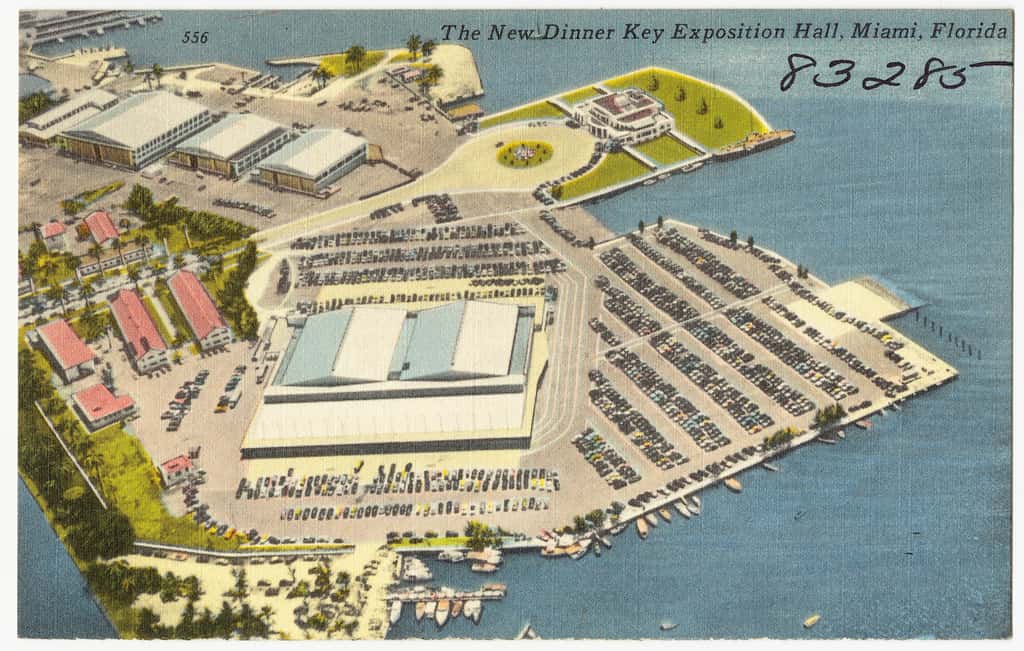
Miami city commissioners voted 4 to 1 on Thursday, September 10, to keep City Hall in the historic Pan American Airways terminal at Dinner Key in Coconut Grove. The resolution, sponsored by Commissioner Damian Pardo, directs the city manager to continue using the waterfront building as the seat of city government. Commissioner Miguel Gabela cast the lone dissenting vote.
The decision resolves, at least for now, a question that had been building as Miami prepares to open a new government building at Miami Freedom Park in 2028. That project raised the prospect that the city would vacate the 1930s terminal it has occupied since the 1950s and consolidate operations at the new site.
The vote does not stop the Freedom Park building from opening, and city offices are expected to occupy space there. What it settles is that the commission chamber and the formal designation of City Hall remain on Pan American Drive.
The building at the center of it
The structure was built in the 1930s as Pan American World Airways' seaplane terminal, the departure point for flying boats that carried passengers from Miami across the Caribbean and into Latin America. Its exterior carries a marine white and blue palette, and its interior ceiling features artwork depicting astrological symbols and the history of aeronautics.
Pan Am's Dinner Key operation was, for a period, the busiest international passenger terminal in the United States. The flying boats that departed from the adjacent basin represented the practical beginning of commercial air travel between North and South America, and Miami's identity as a gateway city traces in significant part to that era.
The airline ceased seaplane operations at the site after World War II, and the city acquired the property. Miami converted the terminal into City Hall in the 1950s, and the building has housed the commission chamber and the mayor's office since.
Its waterfront location is both its appeal and its vulnerability. The building sits at the edge of Biscayne Bay in a low lying area of Coconut Grove, which makes it exposed to storm surge and to the long term sea level pressures that Miami faces across its bayfront.
Why the question came up
Miami Freedom Park is the mixed use development built around the soccer stadium in the area near Miami International Airport. The project includes commercial, retail, and civic components, and a new city government building is scheduled to open there in 2028.
A newer, larger, inland facility offers advantages that a 1930s waterfront terminal cannot match. Modern buildings meet current accessibility standards more easily, accommodate the technology infrastructure that municipal operations now require, and sit outside the highest risk flood zones. Consolidating departments in one building also reduces the cost of maintaining scattered leased offices.
Against that, the terminal carries civic meaning that a new building cannot manufacture. Speakers who supported keeping City Hall at Dinner Key framed the building as belonging to residents rather than to any administration, and the commission majority accepted that framing.
There is also a property question in the background. Pan American World Airways, which ceased operations in 1991, is the subject of a relaunch effort, and the company's chief executive has said publicly he would be interested in buying the building back from Miami if the city chose to sell. That possibility sharpened the stakes of the vote for preservationists.
What the vote does and does not settle
The resolution directs the city manager to continue using the building as City Hall. It is a policy direction from the commission rather than a permanent legal restriction, which means a future commission could revisit it.
It also does not address the condition of the building or the cost of maintaining it. A structure of that age in a saltwater environment requires continuous investment in roofing, windows, electrical systems, and structural elements exposed to corrosion. Those costs do not disappear because the commission voted to stay.
Nor does the resolution specify which functions move to Freedom Park. City departments currently spread across multiple locations may still consolidate there, leaving the Dinner Key building to house the commission, the mayor's office, and the ceremonial functions of city government.
What it means for Coconut Grove and Miami
For Coconut Grove, the practical effect is continuity. City Hall generates foot traffic, parking demand, and a steady presence of residents who come to the building for public meetings and city business. Neighborhood businesses near Pan American Drive benefit from that activity, and losing it would have changed the character of the area.
For residents across Miami, the vote preserves the accessibility of a bayfront civic building that has become a familiar destination for public comment on everything from development approvals to police oversight. Public meetings held in a building people recognize tend to draw participation that a new office tower does not.
For preservation advocates statewide, the vote is a marker. Florida has lost a substantial portion of its early aviation and tourism era architecture to redevelopment, and a decision by a major city to retain an original building in active government use is unusual enough to register.
The resilience question nobody resolved
Keeping a government seat in a low lying bayfront structure raises a planning question that Miami will eventually have to answer. The building sits in an area where tidal flooding has become more frequent and where storm surge from a major hurricane would present serious risk.
Cities facing that problem generally choose among three responses: elevate and harden the structure, relocate critical functions while preserving the building for other uses, or accept the risk and plan for periodic disruption. The commission's vote implies the first or third, without specifying which.
Emergency operations are typically housed separately from ceremonial city halls, which reduces the stakes somewhat. Miami-Dade County and the City of Miami both maintain emergency operations centers designed for storm conditions, so a compromised City Hall would not disable the response to a hurricane.
Still, the maintenance and hardening bill for a historic waterfront building tends to grow rather than shrink, and the commission will face it in future budget cycles.
What Dinner Key was before it was City Hall
The site's history explains why the building carries the weight that surfaced in Thursday's debate, and much of that history is not widely known even among Miami residents.
Dinner Key was originally an island, connected to the mainland by fill placed during the early twentieth century. The Navy established an air station there during World War I, training pilots in seaplanes at a time when naval aviation barely existed.
Pan American World Airways arrived afterward and built the terminal that stands today. The airline's flying boats, large aircraft that took off and landed on water, opened commercial air routes to Cuba, the Caribbean, Central America, and eventually across South America.
That operation made Miami the gateway between North and South America in a literal sense. Passengers, mail, and freight moving between the continents passed through Dinner Key, and the commercial relationships Miami built during that period underpin the city's present role as the business capital for Latin America.
The terminal's interior reflected the ambition of the enterprise. The ceiling artwork depicting astrological symbols and the history of aeronautics was commissioned for a building meant to signal that air travel was extraordinary rather than routine.
Flying boats became obsolete after World War II, when wartime airfield construction left long paved runways available worldwide and land based aircraft became more efficient. The terminal outlived its purpose, and Miami repurposed it.
Miami's record on preservation
The vote fits into a longer Miami story about what the city has kept and what it has lost, and that record is mixed.
Miami Beach's Art Deco district is the most successful preservation effort in the region, and it happened only because of sustained organized advocacy in the 1970s and 1980s against demolition plans. That district is now among the most economically valuable assets in South Florida, which is an argument preservationists make regularly and which is not always persuasive to developers evaluating individual parcels.
The losses are substantial as well. Miami has demolished significant portions of its early commercial architecture, and historically Black neighborhoods including Overtown were partially destroyed by highway construction during the interstate era, erasing a commercial district that had been a center of Black cultural life in the South.
The economic pressure is unusual in scale. Miami's land values, particularly on waterfront parcels, are high enough that the highest and best use analysis for almost any site favors demolition and redevelopment. Preservation in that environment requires legal protection rather than goodwill.
Historic designation provides that protection, subjecting alterations and demolition to review. It also constrains what owners can do, which is why designation proceedings are frequently contested.
What a relaunched Pan Am would mean
The interest expressed by the chief executive of a Pan American World Airways relaunch effort in purchasing the building adds an unusual dimension to the preservation question.
The original Pan Am ceased operations in 1991 after a period of decline that included deregulation, fuel cost shocks, and the Lockerbie bombing. The brand has been licensed and revived in various forms since, and the name retains commercial value precisely because of the era the Dinner Key terminal represents.
A purchase would return the building to something resembling its original ownership, which has obvious appeal as a narrative. It would also convert a public building into private property, which changes public access to a waterfront site that residents currently reach freely.
The commission's vote forecloses that possibility for now by directing continued use as City Hall. Whether a future commission facing budget pressure and a deteriorating structure reaches a different conclusion is not something Thursday's resolution can control.
Miami has sold public waterfront property before, and those transactions have generally been contested at the ballot box, since the city charter requires voter approval for certain dispositions of waterfront land.
What's next
The city manager is now directed to plan around continued use of the Dinner Key building. That implies decisions in coming budget cycles about capital investment in the structure, and about which departments occupy the Freedom Park building when it opens in 2028.
Residents who want to follow the issue can track City of Miami commission agendas, which are published in advance of meetings and list capital items and property resolutions. Budget hearings in the fall are where maintenance funding for the building would appear.
The broader question of what Miami does with its waterfront civic property as sea levels rise is not going away. Thursday's vote answered where the commission meets. It did not answer how the building survives the next 50 years, and that conversation is still ahead.
Spotted an issue with this article?
Have something to say about this story?
Write us a letterComments
No comments yet. Be the first to weigh in.
Related Coverage

Orphaned Pacific Walrus Calf Annautaq, Rescued From an Alaska Beach, Arrives at SeaWorld Orlando
1d ago

St. Petersburg Gears Up for World Series at Tropicana Field: Security, Block Parties and a Mayor's Race
3d ago

St. Pete Pride Asks Supporters to Raise $289,000 by Nov. 30 to Erase Its Deficit Before the 25th Anniversary
Oct 20

Joe Redner, Tampa's 'Strip Club King' and longtime courtroom combatant, dies at 86
Oct 17