NASA Pushes Crew-13 Launch to Late September After a Dragon Leak
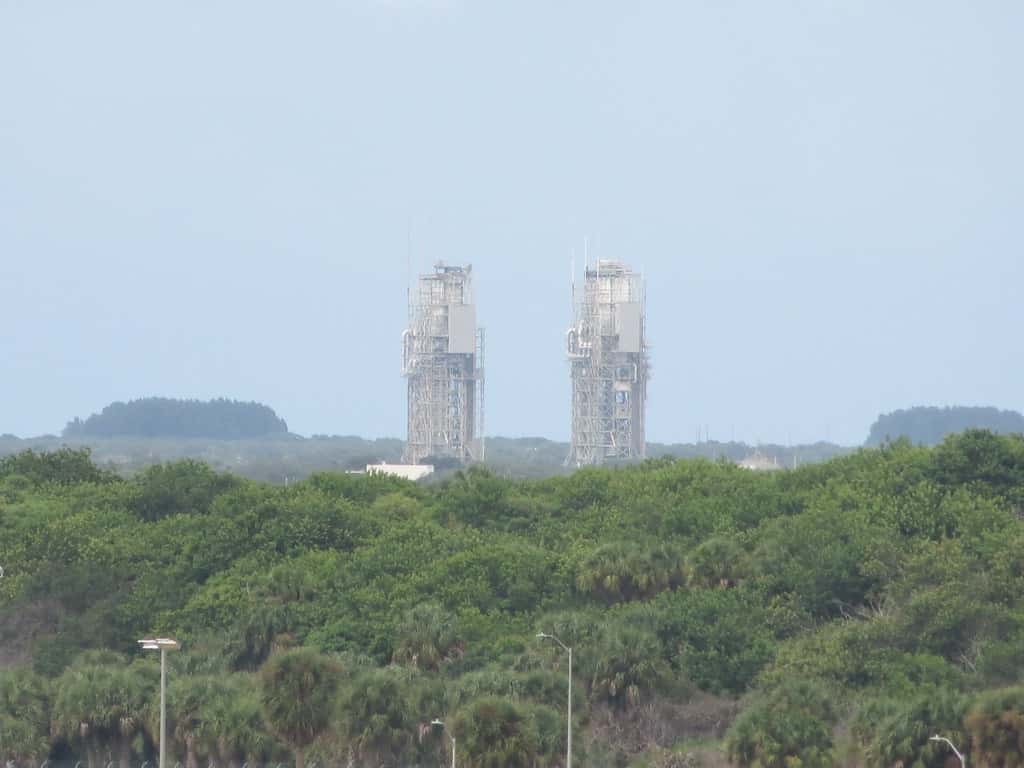
NASA and SpaceX have delayed the Crew-13 mission to the International Space Station after detecting an oxidizer leak in the Dragon spacecraft's propulsion system during standard prelaunch processing, pushing a flight that had been targeted for September 12 toward late September or early October.
The propellant involved is nitrogen tetroxide, the oxidizer half of the hypergolic combination that powers Dragon's Draco thrusters. NASA Administrator Jared Isaacman indicated the repair could take two to four weeks. Joint NASA and SpaceX teams are conducting additional tests and data review and will complete any necessary rework before setting a new launch date.
The four-person crew consists of NASA commander Jessica Watkins and pilot Luke Delaney, along with mission specialists Joshua Kutryk of the Canadian Space Agency and Sergey Teteryatnikov of Roscosmos.
Why an oxidizer leak stops a crew launch
Dragon's Draco thrusters use monomethylhydrazine as fuel and nitrogen tetroxide as oxidizer. The pairing is hypergolic, meaning the two ignite on contact without an ignition source. That property is extraordinarily useful for a spacecraft that needs reliable propulsion for orbital maneuvers, rendezvous, and the deorbit burn, because there is no ignition system to fail.
It is also why a leak is treated with the seriousness it is. Both propellants are highly toxic and corrosive. Nitrogen tetroxide in particular is dangerous to ground crews handling the vehicle and can damage spacecraft systems it contacts. And propulsion is not a system with redundancy margin to spare on a crewed vehicle: Dragon needs its thrusters to rendezvous with the station, to maneuver while attached, and critically to perform the deorbit burn that brings the crew home.
Finding the leak during standard prelaunch processing is the system working. Ground processing exists to find exactly this class of problem before a vehicle carries people, and the decision to stand down rather than press ahead reflects the risk posture that crewed spaceflight requires.
What the delay means operationally
International Space Station crew rotations are choreographed months in advance and involve multiple international partners. Delaying one mission has cascading effects on the handover period between arriving and departing crews, on the station's staffing level, and on the research schedule aboard the orbiting laboratory.
The station is never left unoccupied, and NASA manages these situations by extending the departing crew's stay when necessary. Crew increments have been extended before for exactly this kind of reason, and the agency and its partners have well-developed procedures for it.
The research program takes the more measurable hit. Experiments aboard the station operate on schedules tied to crew availability, and some have time-sensitive biological or materials components. A multi-week slip reshuffles the manifest.
The Florida dimension
Crew Dragon missions launch from Florida's Space Coast, and crewed launches are a different category of event for Brevard County than routine satellite flights. They draw larger crowds, more media, and more visitor spending, and they generate the kind of attention the region built its identity around during the Apollo and shuttle eras.
A delay shifts that economic activity rather than eliminating it, and for local hospitality the effect is a redistribution across weeks rather than a loss. Launch viewing tourism is now a planned component of the Space Coast economy, with Titusville, Cocoa Beach, and Port Canaveral all benefiting.
The contrast with the rest of SpaceX's Florida manifest is instructive. The company launched the 700th Falcon rocket in the vehicle family's history on September 13, carrying the final O3b mPOWER satellites, along with a classified Space Force payload on September 9 and its 80th Starlink mission of the year on September 5. Uncrewed cadence continues while a crew mission holds, which is exactly the distinction the program's risk framework is designed to produce.
Commercial Crew and what it replaced
The Commercial Crew Program exists because the shuttle's retirement in 2011 left the United States without a domestic capability to launch astronauts, a gap filled for nearly a decade by purchasing seats on Russian Soyuz vehicles. NASA contracted with SpaceX and Boeing to restore domestic access.
SpaceX's Dragon has carried the operational load since 2020, flying regular crew rotations. Boeing's Starliner has had a considerably more difficult development path. That has left the program more dependent on a single vehicle than the two-provider model intended, which is part of why a Dragon propulsion issue draws the attention it does.
The Crew-13 mission also marks a first for the Canadian Space Agency in the commercial crew era, with Kutryk becoming the first Canadian to fly on a Commercial Crew mission. International partner seats on Dragon reflect the station's multinational operating structure.
What it means for Floridians
For Space Coast residents, the practical effect is a shifted launch date and a rescheduled window of road closures and visitor traffic. Brevard County has become accustomed to a launch schedule that changes frequently, and residents generally track it rather than plan around it.
For the broader Florida aerospace sector, the delay is a normal event rather than a setback. Launch delays are routine, they occur for weather as often as for technical reasons, and the industry's economics are built around a manifest that slips constantly at the individual mission level while holding at the annual level.
For Florida's space workforce, which spans engineering, manufacturing, and operations roles across Brevard County and beyond, program continuity matters more than any single launch date. The state's investment in aerospace through Space Florida has emphasized manufacturing and research presence precisely because those are less sensitive to schedule volatility than launch operations.
The safety culture question
It is worth stating plainly that standing down a crewed launch over a propulsion leak is the right call and reflects lessons paid for expensively. NASA's history includes two shuttle losses in which known technical concerns were assessed as acceptable risk and turned out not to be.
The modern posture treats anomalies in crew-critical systems as stop conditions rather than as items to be evaluated against schedule pressure. That posture produces delays, and the delays are the visible cost of a system working the way it is supposed to.
The two-to-four-week repair estimate is a range rather than a commitment, and NASA has been clear that a new target date follows the completion of testing and rework rather than driving it.
What the crew has been doing while waiting
A launch delay does not put a crew on hold. Astronauts in the final phase before flight are in quarantine, a health stabilization protocol that limits contact with anyone outside a defined group to prevent an illness from reaching the space station, where a virus in a closed environment with a small crew is a serious problem.
Training continues through a delay. Crews run simulations, review procedures, and maintain proficiency on the systems they will operate. The gap also allows additional preparation time for experiments and station tasks the crew will conduct.
For crew families, a delay of two to four weeks extends an already long separation. NASA's astronaut office manages that as a routine part of the job, and the crews themselves generally treat schedule changes as unremarkable.
Why the station's staffing math is tight
The International Space Station operates with a crew complement that has been carefully sized against the work it needs to do. Roughly half of crew time goes to maintaining the vehicle itself: filters, water recovery systems, carbon dioxide scrubbers, exercise equipment, and the unglamorous maintenance that a 25-year-old orbiting laboratory requires.
The remainder goes to research, which is the station's purpose. Experiments in microgravity cover materials science, combustion, protein crystallization, plant biology, and human physiology, and many of them cannot be conducted anywhere else.
When a crew rotation slips, the departing crew's stay extends, which is manageable, or the station operates with reduced staffing for a period, which cuts into the research allocation first. That is the practical cost of a delay, and it falls on principal investigators and their institutions rather than on the agency's headline metrics.
What comes after the station
The International Space Station is approaching the end of its operational life, with planned deorbit later this decade, and NASA's strategy for what follows runs through commercial providers. Several companies are developing commercial space stations intended to host both NASA astronauts and private customers.
Florida's stake in that transition is substantial. Commercial destinations will launch from and return to the same infrastructure that serves the station today, and the payload processing, crew training, and mission operations work that accompanies human spaceflight has increasingly concentrated on the Space Coast.
The state's aerospace development efforts have been oriented toward capturing that work rather than treating launch as the entire opportunity. Whether that strategy pays off depends on decisions being made now about where the next generation of human spaceflight infrastructure gets built.
What a launch window actually is
A mission to the International Space Station cannot launch whenever the vehicle is ready. The station orbits at an inclination of about 51.6 degrees, and a spacecraft launching from Florida must enter that same orbital plane, which the launch site passes through only at specific times each day as the Earth rotates.
That produces what is called an instantaneous window for station missions: a single moment at which launch is possible, rather than the multi-hour windows available for many satellite deployments. Miss it by seconds and the attempt scrubs to the next opportunity.
The consequence is that weather, technical holds, and range conflicts have no slack to absorb them. A boat straying into the hazard zone or a cloud layer violating launch commit criteria at the wrong minute ends the attempt. It is one reason station launches scrub more often than the public expects, and why a two-to-four week repair estimate translates into a launch date that depends on orbital mechanics as much as on the wrench work.
What's next
NASA and SpaceX will announce a new launch date once joint teams complete testing, data review, and any necessary repair. The agency publishes updates through its space station blog and through mission-specific briefings.
The launch window depends on orbital mechanics as well as vehicle readiness, since a mission to the station can only launch when the orbital plane aligns. That constrains the available dates within any given period.
Residents and visitors planning to watch should verify timing through official channels close to the date, since crewed launch schedules remain subject to both technical and weather holds up to the final minutes of a countdown.
Spotted an issue with this article?
Have something to say about this story?
Write us a letterComments
No comments yet. Be the first to weigh in.
Related Coverage

Maxwell Frost's Orlando Office Evacuated, Suspicious Envelope Intercepted at Darren Soto's Kissimmee Office
13h ago

FTC settles with Orlando's Greenway Auto Group over hidden fees and deceptive car price ads
14h ago

Fort Myers Missionary, 70, Appears in Miami Federal Court Accused of Sexually Abusing Children in Haiti
15h ago

Cook Political Report Moves FL-25 Toward Jared Moskowitz as Scott Singer Race Draws $14 Million in GOP Spending
17h ago