NASA and SpaceX Target October 1 for Crew-13 Launch From Cape Canaveral
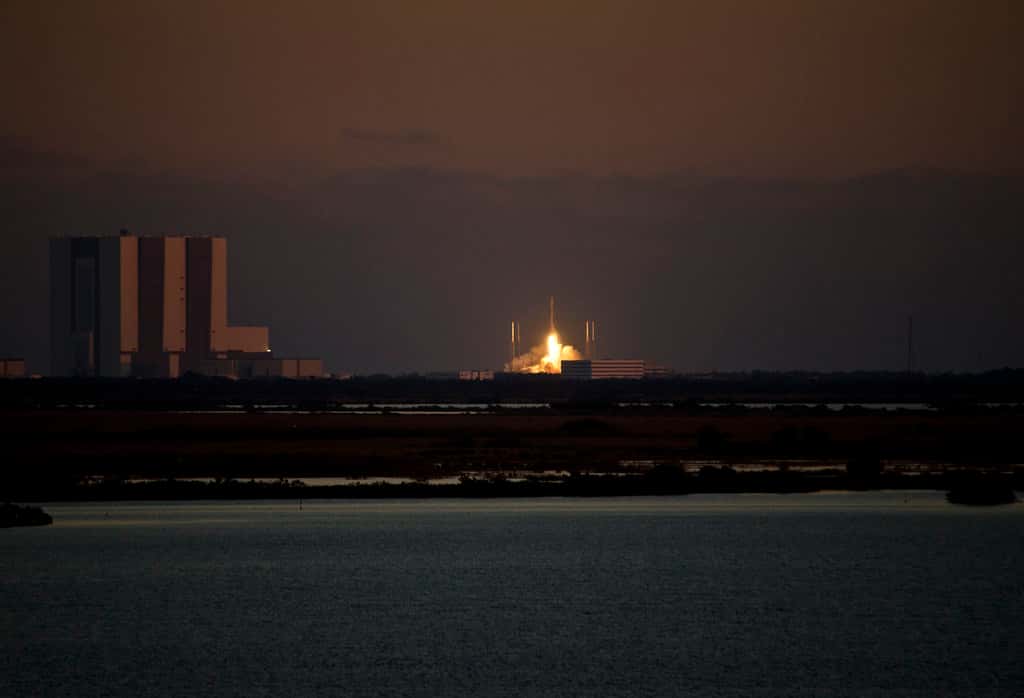
NASA and SpaceX are targeting 11:10 a.m. Eastern on Thursday, October 1 for the launch of Crew-13 from Florida's Space Coast, sending four astronauts to the International Space Station for a mission expected to last about seven months.
The crew will fly aboard a SpaceX Dragon capsule atop a Falcon 9 rocket from Cape Canaveral Space Force Station. NASA and SpaceX moved into final prelaunch preparations on September 22, following the crew's entry into quarantine ahead of the flight.
NASA astronauts Jessica Watkins and Luke Delaney will serve as spacecraft commander and pilot. Canadian Space Agency astronaut Joshua Kutryk and Roscosmos cosmonaut Sergey Teteryatnikov will serve as mission specialists.
The crew completes quarantine at NASA's Johnson Space Center in Houston before traveling to Kennedy Space Center in Florida on September 26, the standard health stabilization protocol that has preceded crewed missions since the Apollo program.
What quarantine accomplishes
Health stabilization exists because a common illness on orbit is a serious problem. The station is a closed environment with limited medical capability, and an infection that would be trivial on Earth can compromise a mission and endanger the crew already aboard.
The protocol restricts crew contact to a small group of cleared individuals for roughly two weeks before launch. Family contact continues under controlled conditions, and the crew's medical status is monitored throughout.
The practice traces to Apollo 13's backup crew member exposure to measles, which forced a late crew change and demonstrated the operational cost of an infectious exposure close to launch. NASA has maintained the protocol in some form ever since.
The September 26 travel date to Kennedy Space Center places the crew in Florida with roughly five days before the launch window, the standard interval for final preparations, suit fit checks and dress rehearsals.
The Commercial Crew Program
Crew-13 is the thirteenth operational crew rotation flight under NASA's Commercial Crew Program, which contracts with private companies to transport astronauts to the station rather than operating the vehicles directly.
The program's origin was the Space Shuttle retirement in 2011, which left the United States without domestic crew launch capability and dependent on Russian Soyuz vehicles for nine years. Crew Dragon's first operational flight in 2020 ended that dependency.
The commercial model changed the economics. NASA buys seats rather than owning and operating the vehicle, and the contractor retains the asset and can sell capacity to other customers, which SpaceX has done through private astronaut missions.
The program's second provider, Boeing's Starliner, has had a considerably more difficult development path, and the practical effect has been that SpaceX has carried the operational crew rotation schedule.
What the Space Coast has become
Launch operations at Cape Canaveral and Kennedy Space Center have reached a cadence that would have been implausible a decade ago. Falcon 9 flights from the two facilities have become routine enough that most launches draw limited local attention.
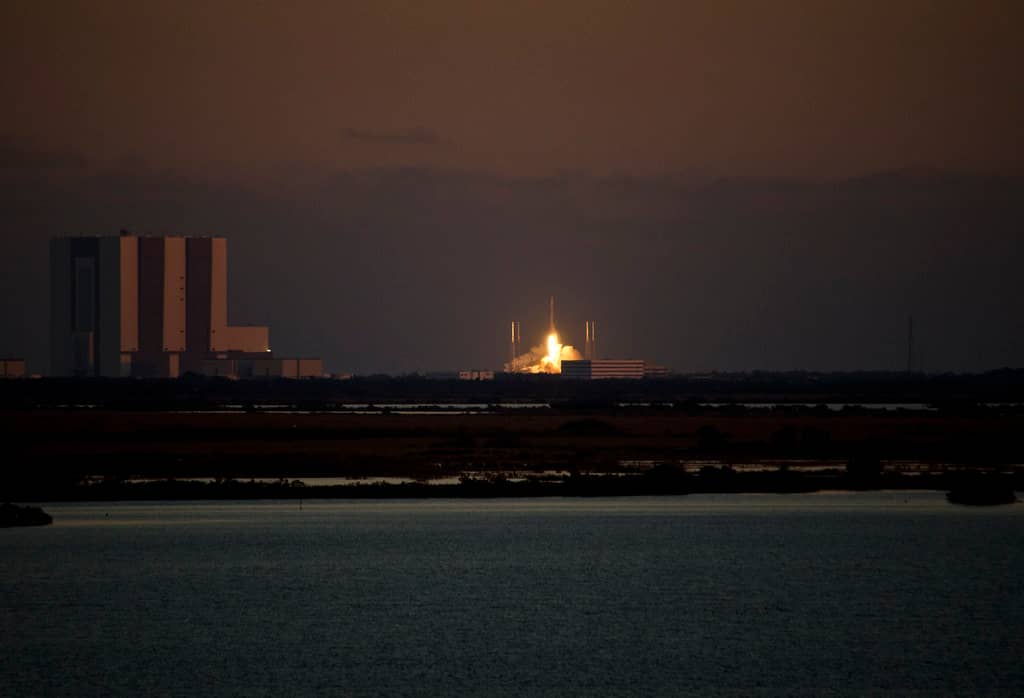
A Falcon 9 launched the SES O3b mPOWER satellite constellation from Cape Canaveral earlier this month, with the first-stage booster flying for its 29th time before landing aboard the drone ship A Shortfall of Gravitas in the Atlantic.
Booster reuse at that level is the central economic change in the industry. A vehicle flying 29 times amortizes its construction cost across missions in a way expendable rockets never could, and that economics is what enabled the cadence.
For Brevard County, the effect has been an economy rebuilt after the shuttle program's end cost thousands of aerospace jobs. Launch operations, manufacturing, range support and the visitor economy around them now anchor the Space Coast.
The economic footprint in Florida
Florida's aerospace sector extends well beyond the launch pads. Space Florida, the state's aerospace economic development agency, works to attract manufacturing, research and operations to the state, and the state treats spaceports as transportation infrastructure eligible for transportation funding.
The governor's office announced this month that up to $5 million of a nearly $23 million package would flow through the Florida Department of Transportation's Spaceport Improvement Program in partnership with Space Florida.
That package also directed money to workforce training, including more than $7 million to Florida State College at Jacksonville and $1.7 million to Polk State College for a commercial vehicle driving program serving aerospace and defense supply chains.
Tourism is the visible piece. The Kennedy Space Center Visitor Complex draws substantial annual attendance, and launch viewing has become a scheduled activity that Brevard County hotels and attractions build around.
What the crew will do on orbit
A seven-month increment aboard the station involves a research program spanning biology, materials science, combustion, Earth observation and human physiology. Crews conduct experiments designed by researchers worldwide and return samples for analysis.
Human physiology research has taken on added importance as space agencies plan longer-duration missions. Bone density loss, muscle atrophy, fluid shifts and vision changes in microgravity are the constraints that long-duration exploration has to solve.
Station maintenance occupies a substantial share of crew time. The orbiting laboratory has been continuously occupied since 2000, and keeping hardware of that age operational requires ongoing repair, replacement and upgrade work.
Spacewalks are scheduled as needed for external maintenance and hardware installation, and each requires extensive preparation, suit checks and choreography developed with ground teams.
The international dimension
Crew-13's composition, two NASA astronauts alongside a Canadian Space Agency astronaut and a Roscosmos cosmonaut, reflects the station's structure as an international partnership spanning the United States, Russia, Japan, Canada and the European Space Agency.
The seat exchange arrangement between NASA and Roscosmos places cosmonauts on Dragon flights and NASA astronauts on Soyuz flights, ensuring that both segments of the station retain crew capable of operating them if one vehicle type becomes unavailable.
That arrangement has persisted through geopolitical tensions that have disrupted cooperation in nearly every other domain, a durability that space policy analysts frequently note as unusual.
The station's operational life is finite. Planning for its eventual deorbit and for the commercial stations intended to succeed it has been underway for several years, and the transition is among the central questions in current space policy.
Watching the launch from Florida
Crewed launches draw the largest crowds of any Space Coast event, and an 11:10 a.m. weekday launch is more accessible than the overnight windows many missions require.
Public viewing areas along the Brevard County coast, including Playalinda Beach, Jetty Park and points along the Indian River, offer views without a ticket. The Kennedy Space Center Visitor Complex sells viewing packages that bring spectators closer.
Traffic on State Road 528 and US 1 is the practical constraint. Launch day congestion in Brevard County is substantial, and arriving hours early is the standard advice for anyone planning to watch from a specific location.
Launch windows for station missions are instantaneous or nearly so, because the vehicle has to match the station's orbital plane. A scrub means waiting for the next day's window rather than a delay of hours.
What could delay it
Weather is the most common cause of scrubs, and the criteria are stricter for crewed flights than for satellite launches. Conditions along the ascent corridor and at abort landing sites in the Atlantic both have to be acceptable.
Late September and early October weather on the Space Coast is variable, and the cold front that moved through the peninsula this week is part of the seasonal transition that brings more changeable conditions.
Technical issues with the vehicle or the spacecraft can also delay a launch, and NASA and SpaceX conduct a flight readiness review before committing to a date. Any anomaly found in final checkouts takes priority over schedule.
Station operations can drive schedule changes as well. Visiting vehicle traffic, docking port availability and the handover requirements between the departing and arriving crews all constrain when a rotation flight can occur.
What else is on the Florida launch manifest
Crew-13 is one entry on a Space Coast manifest that now includes commercial satellite deployments, national security payloads, cargo resupply missions to the station and the Artemis program's lunar hardware.
Multiple operators share the range. United Launch Alliance flies from Cape Canaveral, Blue Origin has developed launch capability at the Cape, and SpaceX operates from both Cape Canaveral Space Force Station and Kennedy Space Center Launch Complex 39A.
Range scheduling has become a genuine constraint, requiring coordination among operators, the Space Force range authorities that manage safety and tracking, and the Federal Aviation Administration, which licenses commercial launches.
The cadence also affects air and maritime traffic. Launch windows require clearing airspace and ocean areas downrange, and the frequency of operations has made that coordination a routine part of regional aviation and marine planning.
Florida's stake in the station's successor
The International Space Station's operational life is finite, with current planning pointing toward deorbit around the end of the decade. What replaces it is among the central open questions in United States space policy.
NASA has contracted with several companies developing commercial space stations, under a model similar to the one used for crew and cargo transportation: the agency becomes a customer rather than an owner and operator.
Florida's stake in that transition is direct. Whatever platform succeeds the station will need crew and cargo launches, and the overwhelming majority of American human spaceflight launches originate from the Space Coast.
Manufacturing and integration work is the other opportunity. Space Florida has worked to attract that activity to the state, and the state's treatment of spaceports as transportation infrastructure supports the facilities that host it.
What's next
The crew travels to Kennedy Space Center on September 26, followed by final prelaunch activities including a dry dress rehearsal and the flight readiness review process.
Launch is targeted for 11:10 a.m. Eastern Thursday, October 1, with docking at the station following roughly a day later depending on the rendezvous profile. The outgoing crew returns after a handover period.
NASA provides coverage of launch and docking through its broadcast channels, and the agency's space station blog publishes prelaunch milestones as they occur.
For Florida, the flight is one more entry in a launch calendar that has made Cape Canaveral the busiest spaceport in the world, and one more piece of an aerospace economy that now employs tens of thousands of people across the state.
Spotted an issue with this article?
Have something to say about this story?
Write a letter to the editor