ULA Delays Vulcan Launch of 40 Amazon Leo Satellites at Cape Canaveral After Power Interruption
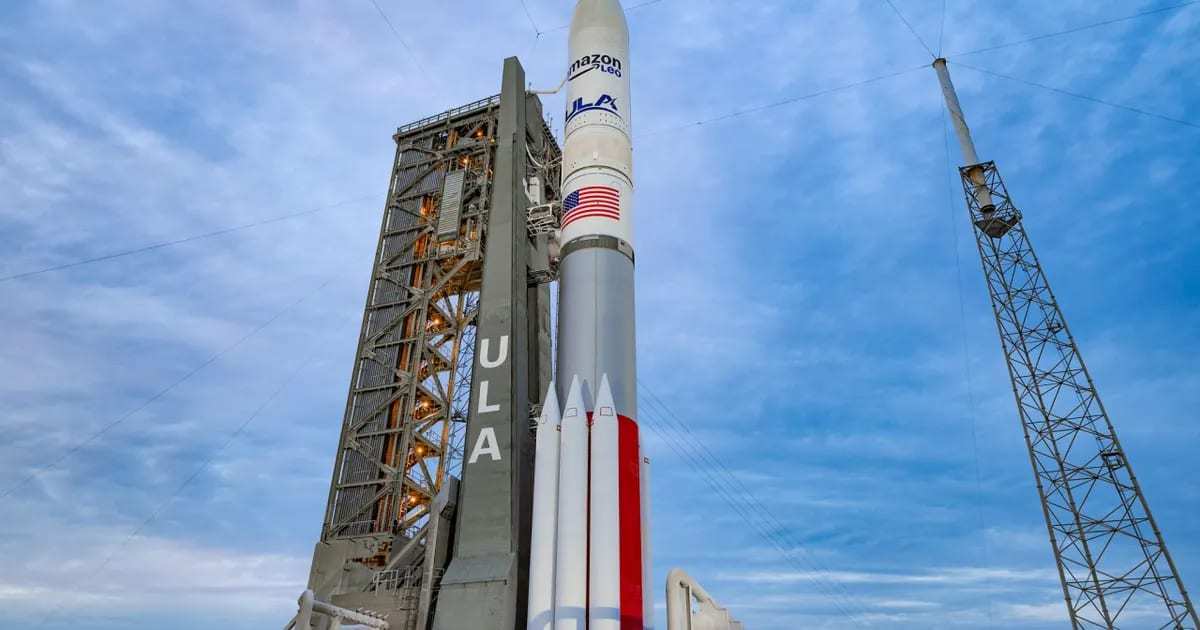
United Launch Alliance pushed back the return to flight of its Vulcan rocket from Cape Canaveral by a day after a "power interruption" at a nitrogen plant that supplies the launch pad, resetting the launch of 40 Amazon Leo internet satellites for Saturday, Nov. 14, with a window opening at 12:32 p.m. EST. The mission, called Vulcan Leo 1, is the rocket's first flight since a booster problem grounded it in February and the first of 38 Vulcan launches Amazon has booked, a pipeline of work that runs through the Space Coast for years.
The Saturday window runs from 12:32 to 1:01 p.m. from Space Launch Complex 41 at Cape Canaveral Space Force Station, according to ULA. At the time of publication, ULA had not reported the outcome of Saturday's attempt, and the company planned to stream the launch on its YouTube channel.
Why Friday's launch was called off
The problem was on the ground, not on the rocket. Hours before Friday's planned liftoff, ULA said a power interruption at the Air Liquide gaseous nitrogen plant that supports the pad caused the loss of the plant's high-pressure pumps. Without confirmation of a sustained flow of nitrogen, which is used during fueling and launch operations, the team moved to the backup opportunity on Saturday. ULA said the rocket and the 40 satellites remained healthy.
Vulcan's return after a nine-month grounding
The flight carries more weight for ULA than a typical commercial launch. Vulcan has not flown since Feb. 12, 2026, when one of the four Northrop Grumman GEM 63XL solid rocket boosters on the USSF-87 national security mission suffered a nozzle failure roughly 20 to 30 seconds after liftoff. The rocket rolled more than intended, but the main booster and Centaur upper stage compensated and delivered the Space Force payload to its intended orbit, according to Spaceflight Now.
It was the second time a booster nozzle had failed on Vulcan. A nozzle on one of two boosters also came apart during the rocket's second certification flight in October 2024. After February, ULA, Northrop Grumman and the U.S. Space Force formed a joint team to investigate. ULA said the team identified several potential contributors that have been mitigated through design and process improvements to the nozzle. Northrop Grumman test-fired a booster with a new nozzle design on April 15, and ULA announced on Oct. 28 that Vulcan would return to flight in mid-November.
The timeline of Vulcan's recent setbacks and recovery is below.
| Date | Event |
|---|---|
| Oct. 2024 | Booster nozzle fails on second certification flight |
| Feb. 12, 2026 | Nozzle fails on USSF-87; Vulcan grounded |
| April 15, 2026 | Northrop Grumman tests redesigned nozzle |
| Oct. 28, 2026 | ULA sets mid-November return to flight |
| Nov. 13, 2026 | Launch delayed by nitrogen plant power loss |
| Nov. 14, 2026 | Backup window opens at 12:32 p.m. EST |
A new, more powerful configuration
Vulcan Leo 1 also debuts a version of the rocket that has never flown. The VC6L configuration uses six GEM 63XL solid rocket boosters, a Centaur V upper stage optimized for low Earth orbit and a 70-foot payload fairing, according to ULA. The core booster is powered by two Blue Origin BE-4 engines burning liquefied natural gas, while the Centaur V uses two RL10 engines burning liquid hydrogen and oxygen.
The flight will provide the first flight data on the improved booster nozzle and the six-booster setup, and Next Spaceflight describes it as a certification flight of the new configuration for the Space Force. ULA's return to commercial flight does not by itself mean an automatic restart of national security launches, which the Space Force suspended on Vulcan while the anomaly was addressed.
Amazon's satellite race
The 40 satellites would be the largest batch Amazon has launched at once. Amazon Leo, the broadband network formerly known as Project Kuiper, is designed to compete with SpaceX's Starlink and will eventually include more than 3,000 satellites in low Earth orbit. Amazon has deployed hundreds so far, according to FOX 35 Orlando, including 29 that ULA launched on an Atlas V in July. ULA has flown eight Atlas V missions for the constellation.
Amazon faced a Federal Communications Commission milestone to have half its first-generation constellation in orbit by July 30, 2026. The FCC waived that interim deadline in June rather than grant the two-year extension Amazon had requested, though satellites launched after July 30 temporarily lose some spectrum priority. Amazon's final deadline to deploy the full constellation remains July 30, 2029, which the company has said it is on track to meet. A steady cadence of Vulcan launches is central to that plan, and ULA is already preparing the next Amazon rocket, LV-02.
What it means for the Space Coast
Vulcan Leo 1 is the first ULA mission to use new Amazon-funded infrastructure at Cape Canaveral. The rocket was stacked in a dedicated Amazon Vertical Integration Facility, known as VIF-A, and then rolled about 2.7 miles by rail to the pad, a second processing line that lets ULA prepare two rockets at once at Launch Complex 41.
Amazon has also invested on the Space Coast directly. In 2023 it announced a $120 million, 100,000-square-foot satellite processing facility at Kennedy Space Center, where satellites shipped from its factory in Kirkland, Washington, are prepared for launch. The company said at the time that the facility was expected to bring about 50 jobs.
The Amazon contract adds to an already crowded launch schedule. Florida's Space Coast hosted a record 109 launches in 2025, most of them SpaceX Falcon 9 missions, and the commander of the Space Force's 45th Space Launch Delta, Brian Chatman, said late last year that the record could soon be broken again. Thirty-eight Vulcan launches for Amazon alone would mean a regular stream of heavy rockets from Launch Complex 41, supporting work for ULA's launch teams and the contractors around Cape Canaveral.
What's next
If Saturday's attempt is scrubbed, ULA would need to set a new date based on the readiness of the rocket, the ground systems and the range. A successful flight would clear the way for ULA to resume a more frequent Vulcan schedule from Cape Canaveral, including the next Amazon Leo mission and, once the Space Force signs off, national security launches that have waited since February.
Spotted an issue with this article?
Have something to say about this story?
Write us a letterComments
No comments yet. Be the first to weigh in.
Related Coverage
US terrorist list for Latin American gangs and cartels grows to 22 with Guatemalan clan, with ripple effects in South Florida
11m ago
Trump administration scraps required pay raises for Head Start teachers, affecting programs serving nearly 40,000 Florida children
1h ago
Supreme Court will decide whether Trump can ban asylum at the southern border, a case watched closely in Florida
2h ago
Student Loan Collections Loom for 9 Million in Default, Including Hundreds of Thousands of Floridians
3h ago