US terrorist list for Latin American gangs and cartels grows to 22 with Guatemalan clan, with ripple effects in South Florida
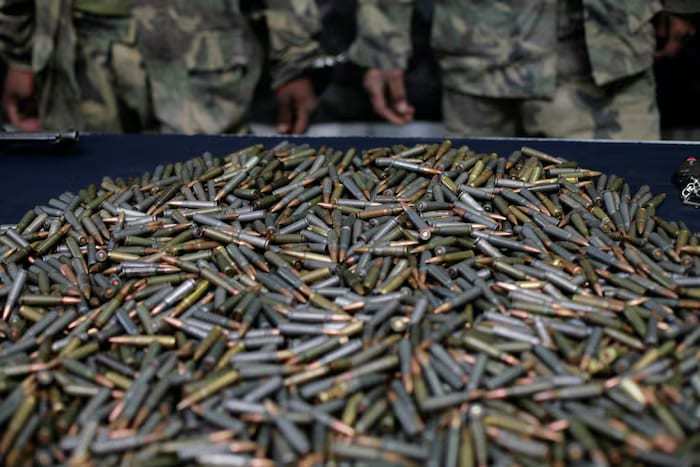
The United States on Friday added Guatemala's Los Lorenzana drug trafficking clan to its list of foreign terrorist organizations, bringing to 22 the number of Latin American and Caribbean criminal groups that carry the label under President Donald Trump. The designations, which now span cartels and gangs from Mexico to Brazil to Haiti, have particular weight in South Florida, home to large Venezuelan, Colombian, Haitian and Central American communities, to the U.S. military command that runs operations in the region and to federal prosecutors who handle many of the hemisphere's drug cases.
Secretary of State Marco Rubio, a Miami native, announced the designation of Los Lorenzana as both a foreign terrorist organization and a specially designated global terrorist. On the same day, the Treasury Department's Office of Foreign Assets Control sanctioned two other Guatemalan groups, Los Mendoza and Los Huistas, as specially designated global terrorists. Treasury said both provide logistical support to Mexico's Sinaloa Cartel and the Jalisco New Generation Cartel.
What was announced Friday
The State Department described Los Lorenzana as one of Guatemala's most powerful drug trafficking clans and blamed it for violence against civilians, officials and military forces. Rubio's statement said the Guatemalan groups have deep ties to Mexican cartels. Treasury has said the Lorenzana family works with the Sinaloa Cartel to move cocaine into Mexico, and it has sanctioned members of the family before.
Only Los Lorenzana received the foreign terrorist organization label, which carries criminal and immigration consequences beyond the financial sanctions attached to the global terrorist designation. Under federal law, it is a crime for anyone in the United States or subject to U.S. jurisdiction to knowingly provide material support or resources to a designated foreign terrorist organization. The U.S. Embassy in Guatemala warned that people who knowingly provide such support to Los Lorenzana could face federal charges in the United States.
The 22 groups on the list
The terrorist label was once reserved for groups such as the Islamic State and al-Qaida. The administration began applying it to Latin American criminal organizations in February 2025. According to The Associated Press, the list now includes these groups:
| Country or region | Designated groups | Count |
|---|---|---|
| Mexico | Sinaloa Cartel, Jalisco New Generation Cartel, Gulf Cartel, Northeast Cartel, Juarez Cartel, La Nueva Familia Michoacana, Carteles Unidos, Viagras | 8 |
| Ecuador | Los Lobos, Los Choneros, Chone Killers, Los Tiguerones | 4 |
| Venezuela | Tren de Aragua, Cartel de los Soles | 2 |
| Haiti | Viv Ansanm, Gran Grif | 2 |
| Brazil | Comando Vermelho, Primeiro Comando da Capital | 2 |
| Central America | MS-13, Barrio 18 | 2 |
| Colombia | Clan del Golfo | 1 |
| Guatemala | Los Lorenzana (added Nov. 13, 2026) | 1 |
Mexico has the most groups on the list. Tren de Aragua was among the first designated, in February 2025. The Haitian gang coalition Viv Ansanm and the Gran Grif gang were added in May 2025, Ecuador's Los Choneros and Los Lobos in September 2025 and Colombia's Clan del Golfo in December 2025, according to State Department records. Cartel de los Soles, which the AP noted is not a cartel in the usual sense, was designated less than six weeks before U.S. forces captured then-Venezuelan President Nicolas Maduro in January.
Why it matters in South Florida
Much of the policy runs through Miami-Dade County. U.S. Southern Command, headquartered in Doral, oversees U.S. military operations in Latin America and the Caribbean, including the campaign of strikes on boats the administration says carry drugs for "narcoterrorist" groups. The AP reported that the strategy behind the terrorist designations served as a pretext for Maduro's capture and for dozens of strikes on alleged drug boats that have killed more than 200 people. CNN, in a tally published in late August, counted at least 67 vessels destroyed and at least 221 people killed in the campaign that began in September 2025. Southern Command is led by Marine Corps Gen. Francis Donovan, who has acknowledged limits to what the strikes can achieve. Lawmakers including Sen. Tim Kaine have raised concerns that some of those killed were not involved in drug trafficking.
Doral is also home to more Venezuelan immigrants than any other U.S. city, and residents poured into the streets in the predawn hours of Jan. 3 to celebrate Maduro's capture.
The designations touch other South Florida communities as well. Haitian Americans in Miami-Dade and Broward counties have followed the violence of Viv Ansanm and Gran Grif in Port-au-Prince and Haiti's Artibonite region. Colombian, Ecuadorian and Central American families in the region have ties to countries where designated groups operate.
Prosecutions and state action
The foreign terrorist label gives federal prosecutors an additional tool, the material support statute, on top of drug trafficking and racketeering laws. The Justice Department's nationwide Tren de Aragua crackdown announced in May 2026 included a complaint in the Southern District of Florida charging three people with alleged ties to the gang with drug conspiracy.
Florida has also moved on its own. A state anti-terrorism law that took effect July 1, 2026, lets Florida designate domestic and foreign terrorist organizations. Gov. Ron DeSantis recommended designating more than 90 groups already listed by the federal government, including Tren de Aragua, the Sinaloa Cartel and the Gulf Cartel, and the state later finalized designations of more than 90 groups. Parts of the law, including designations of domestic groups, face legal challenges.
Regional reaction
Guatemala designated MS-13 and Barrio 18 as terrorist organizations in October, and Ecuador labeled 22 of its own gangs as terrorists in 2024, a separate list from the U.S. designations. The administration has framed the designations as part of a broader push against cartels and gangs it blames for drug trafficking, migration and violence across the hemisphere.
What's next
The Los Lorenzana designation takes effect upon publication in the Federal Register. Banks and businesses must block any assets of the designated groups that come under U.S. jurisdiction, and anyone who knowingly supports the groups risks federal prosecution. With Southern Command in Doral and federal prosecutors in Miami already central to the administration's hemisphere strategy, further designations and prosecutions are likely to keep South Florida at the center of the effort.
Spotted an issue with this article?
Have something to say about this story?
Write us a letterComments
No comments yet. Be the first to weigh in.
Related Coverage
ULA Delays Vulcan Launch of 40 Amazon Leo Satellites at Cape Canaveral After Power Interruption
2h ago

Trump administration scraps required pay raises for Head Start teachers, affecting programs serving nearly 40,000 Florida children
2h ago
Supreme Court will decide whether Trump can ban asylum at the southern border, a case watched closely in Florida
3h ago
Student Loan Collections Loom for 9 Million in Default, Including Hundreds of Thousands of Floridians
4h ago