New Measles Case in Collier County Renews Focus on Vaccination Rates

A new measles case was confirmed this week in Collier County, reported in Immokalee by a nonprofit health care provider that serves the community. The case adds to a running count in a county that has recorded repeated measles activity during 2026, and it lands as families across Southwest Florida return to school for the fall term.
Public health officials treat measles differently from most communicable diseases because of how efficiently it spreads. The virus travels through the air and can remain infectious in a room for up to two hours after an infected person has left. Someone who is not immune and enters that space has a very high probability of contracting it, which is why a single case triggers immediate contact tracing rather than routine monitoring.
The Florida angle here is specific and measurable. Public school kindergarten vaccination coverage in Collier County sits at roughly 89 percent, below the threshold of approximately 95 percent that epidemiologists identify as necessary to interrupt community transmission. That gap is what turns an isolated case into a potential cluster.
What was reported
The case was confirmed in Immokalee, an agricultural community in eastern Collier County, and was reported by Healthcare Network, a nonprofit provider that operates clinics in the area. County health officials have made the measles, mumps and rubella vaccine available at no cost to Collier residents at locations in Naples and Immokalee.
Collier County has appeared repeatedly in Florida measles reporting during 2026, with earlier clusters documented in the spring. Statewide, Florida has recorded measles activity in multiple counties this year, including a separate outbreak associated with a college campus and a first case of the year reported in Central Florida.
Health departments respond to a confirmed case by identifying everyone who shared space with the patient during the infectious period, which begins roughly four days before the rash appears. Those contacts are assessed for immunity, and people without documented protection may be advised to quarantine for up to 21 days, the outer limit of the incubation period.
Why the vaccination number matters
The 95 percent figure is not arbitrary. Measles has an unusually high basic reproduction number, meaning one infected person in a fully susceptible population would be expected to infect a large number of others. Interrupting that chain requires a correspondingly high proportion of the population to be immune.
Two doses of the MMR vaccine provide approximately 97 percent protection against measles, and immunity is generally durable. The vaccine is typically administered at 12 to 15 months and again at four to six years, which is why kindergarten enrollment records serve as the standard measurement point for community coverage.
When coverage sits at 89 percent, roughly one in nine children entering kindergarten lacks documented protection. In a classroom of 25, that is between two and three children. Because measles transmits so efficiently, that margin is sufficient to sustain spread once the virus is introduced.
Coverage is also not evenly distributed. County-level averages conceal schools and neighborhoods where rates run well below the county figure, and those pockets are where outbreaks concentrate. A county at 89 percent may contain individual schools in the 70s.
The Florida context
Florida requires immunization for school entry, with exemptions available for medical reasons and for religious objection. The religious exemption does not require documentation of a specific affiliation, and the number of exemptions filed statewide has risen over the past decade, contributing to the decline in kindergarten coverage.
Florida's demographics add particular considerations. The state hosts substantial international travel through its airports and seaports, and measles remains endemic in parts of the world where routine immunization coverage is lower. Importation is the typical starting point for a domestic outbreak, and Florida's exposure to international arrivals is proportionally high.
Immokalee's circumstances warrant specific attention. The community has a large agricultural workforce, substantial seasonal population movement and household densities that increase the number of close contacts per case. Those conditions do not cause outbreaks, but they affect how quickly one can expand once transmission begins.
What it means for Floridians
For parents, the practical step is verifying immunization records. Two documented doses of MMR provide strong protection, and adults uncertain about their status can be vaccinated safely without needing to establish prior history. Adults born before 1957 are generally presumed immune through childhood infection.
For anyone with symptoms, the guidance from health officials is consistent and specific: call ahead before going to a clinic or emergency department rather than walking in. Measles presents with fever, cough, runny nose and conjunctivitis before the characteristic rash appears, and an unannounced arrival in a crowded waiting room is one of the most common ways a single case becomes several.
For people who cannot be vaccinated, including infants under 12 months, some immunocompromised patients and pregnant women, community coverage is the only available protection. Those groups also face the highest risk of severe complications, which include pneumonia and encephalitis.
Local impact across the state
Southwest Florida hospital systems and county health departments have carried the operational burden of Florida's 2026 measles activity, with Collier County appearing most frequently in case reports. Contact tracing consumes significant staff time, and each confirmed case can generate dozens of contacts requiring assessment.
School districts across the state monitor immunization compliance at enrollment, and a case in one county typically prompts districts elsewhere to review their own exemption rates. Districts with coverage below the herd immunity threshold face the same exposure Collier does if a case is introduced.
Tourism-dependent regions have an additional interest. Central Florida's theme park corridor, South Florida's cruise terminals and the state's beach destinations concentrate large numbers of people from many origins in shared spaces, which is the environment in which a single importation can seed exposures across multiple states.
How Florida tracks and reports measles
Measles is a reportable disease in Florida, meaning physicians and laboratories are legally required to notify the county health department when a case is suspected or confirmed. That requirement is what allows public health investigation to begin before laboratory confirmation is complete.
Confirmation involves laboratory testing, and the interval between a clinical suspicion and a confirmed result creates a window during which contact tracing proceeds on presumption. Health departments generally act as though a suspected case is real rather than waiting, because the incubation period gives them limited time.
Reporting practices have themselves become a subject of discussion in Florida during 2026. Coverage has noted discrepancies between case counts published in state data and counts compiled from local reporting, with some analyses suggesting the official figures lag actual case identification.
That gap matters practically. Residents making decisions about vaccination or about visiting a particular area rely on published counts, and a lag between identification and publication reduces the usefulness of those figures for individual decision-making.
The exemption trend
Florida allows two categories of exemption from school immunization requirements. A medical exemption requires a physician's certification that vaccination is contraindicated, which applies to a small number of children with specific conditions including certain immune deficiencies.
A religious exemption requires a signed form and does not require documentation of affiliation with any particular faith tradition or a description of the belief involved. The administrative simplicity of obtaining one is part of why the number filed has grown.
The statewide kindergarten exemption rate has risen over the past decade, and Collier County's coverage near 89 percent reflects that trend rather than being an outlier. Several Florida counties have kindergarten coverage below the herd immunity threshold, which means the conditions that produced this case exist elsewhere in the state.
Public health officials have generally responded through provider education and access expansion rather than through policy changes to the exemption framework, which would require legislative action. Free vaccine availability, extended clinic hours and school-based programs are the tools available at the county level.
What measles does to a patient
Measles is frequently described as a childhood rash illness, which understates it. The infection begins with high fever, cough, runny nose and inflamed eyes, and the characteristic rash appears several days later, spreading from the face downward. The illness typically lasts a week or more.
Complications occur in a meaningful fraction of cases. Ear infections and diarrhea are common, pneumonia is the most frequent cause of measles deaths in young children, and encephalitis, inflammation of the brain, occurs in roughly one in a thousand cases and can produce permanent neurological damage.
The infection also suppresses the immune system for a period after recovery, an effect sometimes described as immune amnesia, which can leave a patient more vulnerable to other infections for months. That consequence is less widely known than the acute illness and is one reason clinicians treat measles as more than a temporary discomfort.
There is no specific antiviral treatment. Care is supportive, addressing fever, hydration and complications as they arise, which is why prevention through vaccination remains the only meaningful intervention.
What is next
County health officials will complete contact tracing for this case and monitor identified contacts through the incubation period. Whether additional cases emerge over the next three weeks will determine whether this remains isolated or is treated as the start of a cluster.
Free MMR vaccination remains available at Collier County health department locations in Naples and Immokalee, and uptake in the weeks following a confirmed case is one indicator officials watch. Local clinics have historically seen a short-term increase in vaccination requests after a publicized case.
The longer-term question is whether kindergarten coverage recovers. That trend has been moving in one direction for several years, and reversing it requires sustained work at the school and provider level rather than response to individual cases. Until coverage rises back toward 95 percent, Florida counties in Collier's position will continue to see imported cases convert into local transmission.
Spotted an issue with this article?
Have something to say about this story?
Write us a letterComments
No comments yet. Be the first to weigh in.
Related Coverage
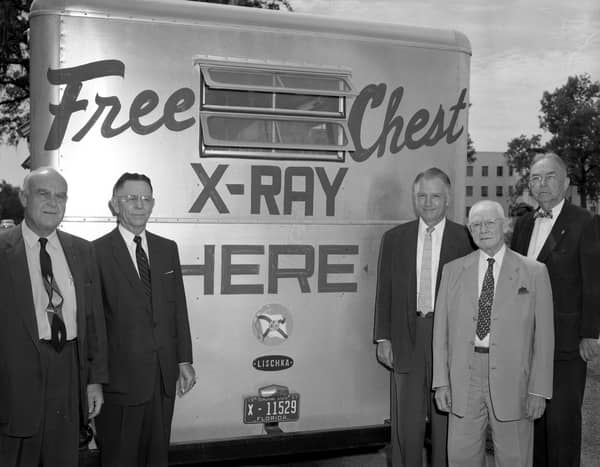
Florida Health Department Moves Closer to Dropping Four School Vaccine Requirements After Heated Lake Mary Hearing
22h ago

DeSantis Says Florida Has Cut 220 Medicaid Providers and Sent 150 Fraud Referrals as Crackdown Expands
3d ago
Tampa General takes over DeSoto County's only hospital, renaming it TGH DeSoto
5d ago
Florida on pace for record child drownings as families seek swim lessons
Oct 3