Florida Health Department Moves Closer to Dropping Four School Vaccine Requirements After Heated Lake Mary Hearing
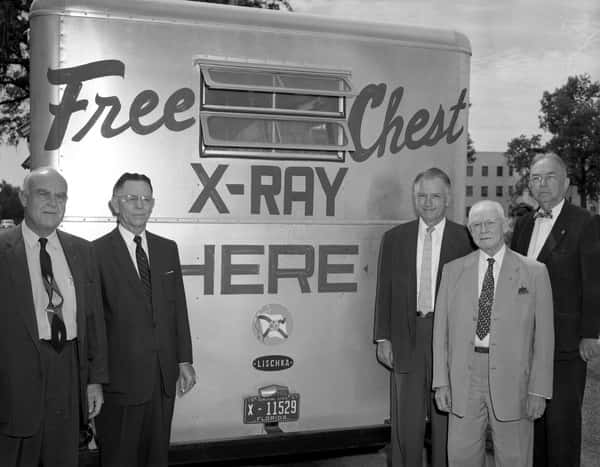
Florida's Department of Health is one step from removing four vaccines from the list of shots children need to enter school and child care, after a public hearing in Lake Mary on Oct. 8 drew hours of testimony from parents' rights advocates who backed the plan and doctors who warned it would invite preventable diseases back into classrooms. Written comments are due by 5 p.m. on Oct. 19, and the department has said it will not hold another hearing.
The proposed revisions to Rule 64D-3.046 of the Florida Administrative Code would drop requirements for the hepatitis B, varicella (chickenpox), Haemophilus influenzae type b (Hib) and pneumococcal conjugate vaccines. Because those four requirements were created by department rule rather than state law, the agency can repeal them without a vote of the Legislature. If the change is adopted, Florida would become the first state with no chickenpox vaccine requirement for school entry, according to Central Florida Public Media.
What the rule would change
In a release after the hearing, the department said the four vaccines would no longer be required for school or child care entry under department rule. Requirements for polio, diphtheria, measles, rubella, pertussis, mumps and tetanus, which are written into section 1003.22 of Florida Statutes, would remain in place. The revisions would also update immunization and exemption forms, opt-out procedures, school compliance reporting and access to Florida SHOTS, the state's immunization registry.
The department stressed that parents could still choose to give their children the four vaccines, that religious and medical exemptions remain recognized, and that the hearing is one step in the rulemaking process, not final adoption of the rule.
"Parents know their children best, and they should be the ultimate decision-makers about their children's health," State Surgeon General Dr. Joseph Ladapo said in the release.
A narrower proposal than first floated
The rule now under consideration is narrower than earlier versions. The week before the hearing, the department dropped a plan to expand exemptions and removed the phrase "sincerely held moral or ethical belief" from the proposed rule, WUSF reported. Under current law, nonmedical exemptions must be based on religious tenets and practices, and that remains the case.
The fight dates to early September 2025, when Gov. Ron DeSantis and Ladapo announced a push to end all vaccine mandates in Florida. Ladapo has compared mandates to slavery. The statutory requirements, including measles and polio, could only be repealed by lawmakers, and no legislator filed a bill to do so during the 2026 sessions. A separate "medical freedom" bill that would have expanded exemptions passed the Florida Senate but died in the House.
Supporters: a matter of parental choice
At the Orlando Marriott Lake Mary, Ladapo listened to public comment and told the audience that concerns about illness are real but that parents' right to decide for their children should not be overridden, according to Central Florida Public Media. He said the proposal was not a statement about vaccine safety or effectiveness. His wife, Brianna Ladapo, had urged supporters on social media to attend.
Kathleen Murray, executive director of Citizens Defending Freedom in Duval County, told the department she is the mother of a vaccine-injured child and that parents should make informed decisions. Dr. Jessica Peatross of St. Petersburg said she is not against vaccines but that physicians do not give parents complete information. Some speakers also attacked the COVID-19 and measles, mumps and rubella vaccines, repeating claims such as a link to autism that have been studied extensively and are not supported by scientific evidence.
Doctors: children who cannot choose will pay
Physicians and other health professionals dominated the opposition. Dr. Sarah Nosal, president of the American Academy of Family Physicians board, urged the department to reconsider, calling the vaccines vital. Dr. Brandon Chatani of the Florida Chapter of the American Academy of Pediatrics said the department had not provided "adequate scientific answers" and asked officials to consider children who cannot choose their own immune status.
Pediatrician Dr. Donald Neel described caring for children critically ill with pneumococcal pneumonia or meningitis, the diseases the vaccines help prevent. Seven-year-old Evelyn Huneycutt of Maitland, who was diagnosed with cancer at age 3, asked the department not to change the rules so children like her can stay safe at school, and her father, Kyle Huneycutt, asked the state to consider families whose children have not recovered. Eimear Roy of Orange County, who said she is immunocompromised, argued that parental rights do not outweigh other people's right to exist.
Ahead of the hearing, Sten Vermund, dean of the University of South Florida College of Public Health, told WUSF that chickenpox is not a very serious disease for most young children but questioned the logic of the change. "So why would we invite these two horrible diseases back into our society?" he said, referring to hepatitis B and Hib.
What the four vaccines prevent
The vaccines target diseases that were common within living memory. Before the Hib vaccine arrived in 1987, Hib was the leading cause of bacterial meningitis in children under 5, with about 1 in 200 young children developing an invasive infection and roughly 4% of cases fatal, according to a white paper by physician-scientists cited by WUSF. Before routine pneumococcal vaccination, the paper counted more than 17,000 severe cases and about 200 deaths a year among U.S. children under 5. The United States had 200,000 to 300,000 acute hepatitis B infections a year before the vaccine, and prevalence fell sharply after universal vaccination of newborns.
Florida's coverage is already below federal targets. The state's kindergartners were 91% fully vaccinated for the 2025-2026 school year, according to the Department of Health, and Orange County was at 89%. The Centers for Disease Control and Prevention recommends 95% coverage to protect communities.
Few states go as far as Florida proposes. According to immunize.org data cited by Central Florida Public Media, West Virginia is the only state without a Hib school requirement, Alabama is the only state without a hepatitis B requirement, and five states (Alaska, Arizona, California, Oregon and West Virginia) do not enforce a pneumococcal requirement.
What's next
The department is accepting written comments at vaccinerule@flhealth.gov until 5 p.m. on Oct. 19. After the comment period closes, the department can move to final adoption, though it has not announced a timeline, and adopted rules can be challenged through the state's administrative process. Any change would affect requirements for children entering Florida schools and licensed child care programs, while the measles, polio and other statutory requirements stay in place unless the Legislature acts when it convenes for its 2027 regular session in March.
Spotted an issue with this article?
Have something to say about this story?
Write us a letterComments
No comments yet. Be the first to weigh in.
Related Coverage

DeSantis Says Florida Has Cut 220 Medicaid Providers and Sent 150 Fraud Referrals as Crackdown Expands
3d ago
Tampa General takes over DeSoto County's only hospital, renaming it TGH DeSoto
4d ago
Florida on pace for record child drownings as families seek swim lessons
Oct 3
Florida Attorney General James Uthmeier Sues Pfizer and CEO Albert Bourla Over COVID-19 Vaccine Claims
Oct 2