Rare 6.1 Earthquake Off Cuba Sends Shaking Across Florida From Miami to Jacksonville
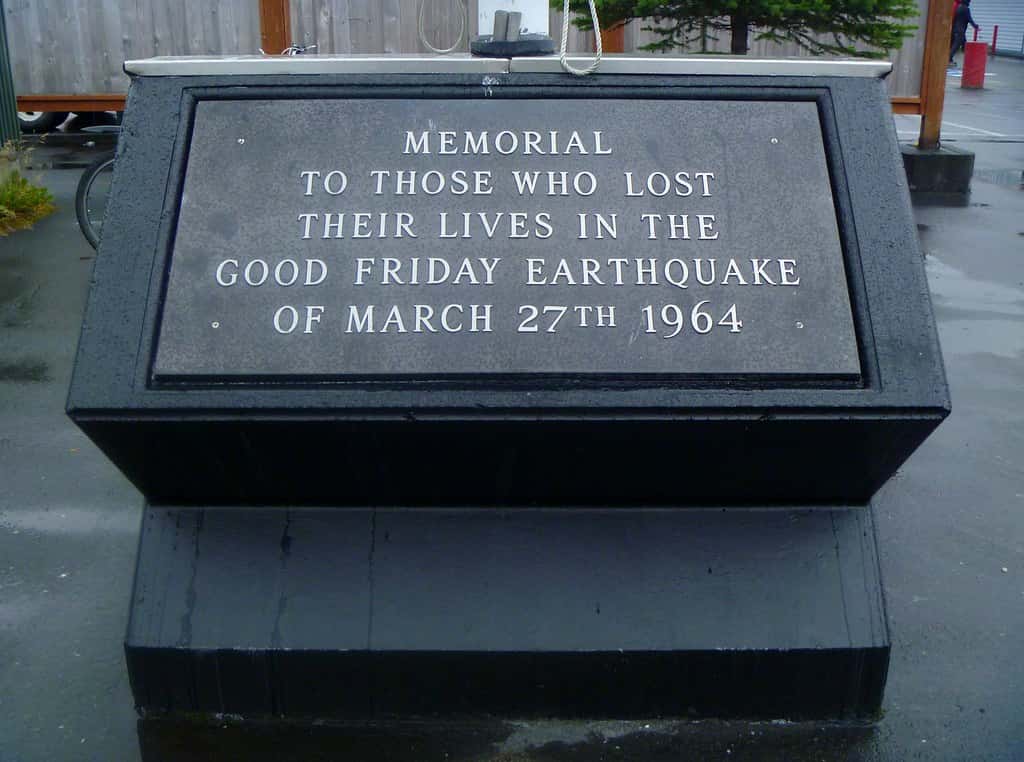
Floridians felt the ground move on Monday in a way they almost never do. A 6.1-magnitude earthquake struck in the southern Gulf of Mexico just west of Cuba, sending shaking across much of Florida, from Miami north to Orlando and Jacksonville. The U.S. Geological Survey confirmed the quake, one of the stronger seismic events recorded in the Gulf region, and the National Tsunami Warning Center said there was no danger of a tsunami.
What happened
According to the U.S. Geological Survey, the earthquake registered a magnitude of 6.1 and was centered roughly 65 miles west-northwest of Mantua, Cuba, in the southern Gulf of Mexico. The location, offshore and at a distance from population centers, helped limit the most severe effects, but the magnitude was large enough to be felt across a wide area, including the Florida peninsula. Because the energy radiated outward from a point beneath the seafloor rather than from solid ground under a populated city, the strongest motion dissipated over open water before it ever reached land.
Residents across the state reported the telltale signs of a distant but powerful quake: gentle swaying of household objects, hanging plants rocking back and forth, and a brief sense of movement that many at first struggled to explain. Social media filled with videos showing items swaying in homes from South Florida to the central part of the state, capturing a phenomenon that is deeply unfamiliar to most Floridians. Some described a faint, rolling sensation that lasted only seconds, while others reported feeling nothing at all and learned of the quake only after neighbors and online posts began comparing notes.
The USGS noted that it is uncommon for an earthquake to be felt across such a broad swath of Florida. The state sits far from the active plate boundaries that produce frequent, powerful earthquakes in places like California, and significant shaking is a rare experience for residents. That rarity is precisely what made Monday's event so striking and so widely discussed. In a state where the seasonal calendar of natural hazards is dominated by tropical weather, the idea of feeling an earthquake at all struck many people as almost surreal, and the conversation it generated reflected how unaccustomed Floridians are to seismic events of any kind.
The way the shaking arrived also shaped how people experienced it. Rather than the sudden jolt that residents of seismically active regions associate with nearby quakes, the motion that reached Florida built and faded gradually, a slow sway more than an abrupt shock. That gentle, drawn-out quality is characteristic of the long-period waves that survive a long journey from a distant epicenter, and it is part of why so many residents described the moment as confusing rather than frightening.
No tsunami threat and limited damage
The most important early reassurance came from the National Tsunami Warning Center, which said there was no tsunami threat from the quake. Tsunami risk depends on the type and location of seafloor movement, and in this case officials quickly determined that coastal Florida and the surrounding region were not in danger of dangerous waves. The speed of that all-clear mattered, because coastal communities understandably look first to the question of whether the ocean itself poses a threat after any significant offshore quake.
Initial indications also pointed to minimal damage in Florida, consistent with the distance from the epicenter and the nature of the shaking. The swaying that residents felt, while unsettling, was the kind of motion associated with a strong but distant quake rather than the violent ground movement that causes structural collapse near an epicenter. No widespread reports of serious damage or injuries emerged in the hours after the event. Buildings in Florida are engineered with the state's familiar hazards in mind, and the gentle, long-period motion that reached the peninsula was far below the threshold that would stress ordinary construction.
Officials and seismologists used the event to remind the public how to interpret earthquake reports. The USGS operates a Did You Feel It program that collects firsthand accounts to map the reach and intensity of shaking, and the flood of reports from Florida helped illustrate just how far the effects traveled from the offshore epicenter. Those crowd-sourced reports serve a scientific purpose as well, helping researchers refine their understanding of how seismic energy moves through the particular geology of the Gulf region and the Florida peninsula.
The absence of significant damage should not be mistaken for an absence of disruption to people's sense of normalcy. For many residents, the unfamiliar motion prompted a wave of phone calls, text messages, and online searches as people tried to confirm what they had felt and whether anything was wrong. The episode underscored how quickly an unusual natural event can ripple through a population that has no prior frame of reference for it, even when the physical effects are slight.
Why Florida felt a distant quake
The science of why the shaking reached so far has to do with both the strength of the quake and the way seismic energy travels. A magnitude 6.1 event releases substantial energy, and in regions with certain geological characteristics, that energy can propagate efficiently over long distances, allowing people far from the epicenter to feel gentle but noticeable motion. The energy released by an earthquake grows sharply with magnitude, so an event in the 6 range carries far more force than the smaller tremors that occasionally register in the broader region without being felt at all.
Florida's own geology contributes to the unusual experience. The state is underlain in many areas by soft sediments and porous limestone, and such ground can amplify and prolong the long-period shaking that travels from distant earthquakes. The result is that tall buildings and suspended objects sway even when the energy reaching the surface is far too weak to threaten structures. This is why people in high-rise condominiums and office towers, common features of Florida's urban skylines, were among those most likely to notice the motion, as the height of a building can accentuate the slow sway that accompanies long-period waves.
Earthquakes in the Gulf of Mexico and Caribbean are not unheard of, but a quake of this magnitude felt so broadly across Florida is a genuine rarity. Cuba and the surrounding Caribbean sit near tectonic boundaries capable of producing significant seismic activity, and events offshore occasionally remind the wider region of that geological reality. The Caribbean is a tectonically complex area where the movement of crustal plates has produced damaging earthquakes throughout history, and the waters around Cuba lie within reach of that activity.
It is the combination of factors, a sizable quake, an efficient path for seismic energy across the Gulf, and ground in Florida that responds readily to long-period waves, that explains why so many residents across hundreds of miles shared the same brief experience. Remove any one of those elements and the event might have gone entirely unnoticed on the peninsula, as countless smaller and more distant quakes do every year.
The Florida and Cuba connection
For Florida, an earthquake centered near Cuba carries a human dimension beyond the geology. The state is home to the largest Cuban-American community in the United States, concentrated in South Florida, and many residents have family and close ties on the island. News of a strong earthquake near Cuba naturally draws concern from a community deeply connected to events there. For these residents, the quake was not an abstract scientific curiosity but a reason to think immediately of relatives and friends who live much closer to the epicenter.
The shared seismic exposure also underscores how closely linked Florida and Cuba are by geography. Separated by only about 90 miles of water at the narrowest point, the two are part of the same regional environment, and a significant geological event near one is felt, sometimes literally, by the other. Monday's quake made that proximity tangible for residents across the peninsula, a physical reminder of a closeness that is usually expressed through culture, family, and history rather than through the ground itself.
For the Cuban-American community, the event prompted attention to conditions on the island, where the practical effects of the quake closer to the epicenter would be of immediate concern to families with relatives there. Information from Cuba can be limited, and residents often rely on personal networks to learn how loved ones fared after such events. That reliance on word of mouth and personal connections is a familiar pattern for the diaspora, which has long navigated the challenge of staying informed about a place to which communication can be difficult.
What it means for Floridians
The practical takeaway for most Floridians is reassurance combined with a dose of perspective. The quake caused no tsunami and little apparent damage in the state, and there is no indication of an elevated ongoing seismic threat to Florida. The event was, for nearly everyone who felt it, a strange and memorable few moments rather than a dangerous one. The state does not face the kind of persistent earthquake hazard that shapes building codes and daily preparedness in seismically active parts of the country.
It also serves as a reminder that natural hazards are not limited to the hurricanes and floods Floridians know well. While earthquakes are an extraordinarily rare concern for the state, Monday's shaking showed that the region is not entirely insulated from seismic events occurring elsewhere in the Gulf and Caribbean. Understanding what to expect, gentle swaying from a distant quake, helps residents respond calmly rather than with alarm when the ground behaves in an unfamiliar way.
For those who felt the motion and wondered what it was, the answer is now clear. The brief swaying that rippled through homes and offices was the distant echo of a powerful earthquake near Cuba, transmitted across the Gulf and amplified by Florida's soft ground into something residents could feel hundreds of miles away. Knowing the cause turns an unsettling mystery into an understandable, if uncommon, natural event.
What's next
Seismologists will continue to analyze the earthquake and any aftershocks, and the USGS will refine its data as more reports come in. Aftershocks are common following a quake of this size, though any that occur near the original epicenter would likely produce little or no noticeable effect in Florida given the distance. The agency typically revises its initial estimates of magnitude and location as additional data from monitoring stations is processed, so early figures can be adjusted slightly in the days that follow.
For residents, no special action is required beyond the ordinary preparedness that Florida's more familiar hazards demand. The event is best understood as a rare natural curiosity, a moment when the usually stable ground beneath the Sunshine State briefly reminded millions of people that the earth is always in motion. For a state that prepares each year for storms and floods, the swaying of Monday afternoon was an unusual entry in the record of Florida's encounters with nature, and one that residents are likely to remember and talk about for some time given how seldom anything like it occurs.
Spotted an issue with this article?
Have something to say about this story?
Write us a letterComments
No comments yet. Be the first to weigh in.
Related Coverage

Florida Poly unveils Astro, a piloted electric aircraft it calls the nation's first flying police vehicle
1d ago
Palm Beach County Bets About $15 Million in Public Money on Becoming a Quantum Computing Hub
2d ago

Scammers Clone Osceola Sheriff's Captain's Voice With AI in Fake Arrest Warrant Calls
3d ago

Neil Armstrong Apollo 11 Training Jacket Found in a Closet Goes Up for Auction at Titusville's American Space Museum
4d ago