Rays Clear the Final Hurdle on a $2.3 Billion Tampa Ballpark After City and County Votes
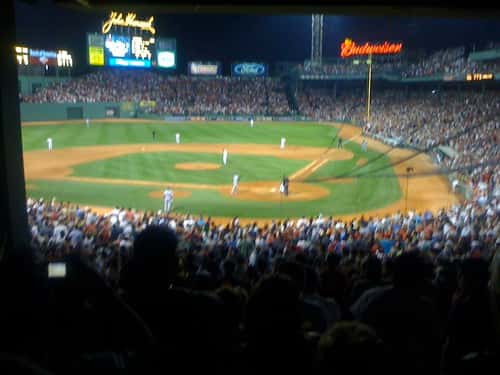
The Tampa Bay Rays have cleared the last governmental approval standing between them and a new ballpark. The Hillsborough County Commission voted 5 to 2 on Friday, August 28, to approve the county's $796 million share of a mixed use entertainment district anchored by a new 31,000-seat stadium, a week after the team, the county and the City of Tampa reached a final agreement.
Tampa's city council approved its portion of the roughly $2.3 billion project on Thursday, August 27. Together the two votes complete the public financing side of a deal that had appeared to collapse more than once over the past two years.
The stadium will be built near Raymond James Stadium, placing Tampa Bay's baseball and football venues in the same district. The Rays expect to open the new ballpark in 2029.
The financing structure
The facility carries a total cost of roughly $2.36 billion. Of that, approximately $876 million comes from public sources and roughly $1.37 billion from the team's ownership group. That split places the majority of the capital cost on private investment, a ratio that differs from many recent major league stadium deals.
The agreement calls for a 35 year initial term with a non relocation commitment binding the franchise to the market for the duration. Non relocation clauses are the primary protection a public partner obtains in exchange for a capital contribution, and 35 years is a long horizon by the standards of such agreements.
Local officials have emphasized that the deal involves no new taxes and protects public safety funding. The public share draws on existing revenue streams rather than a new levy, which was a central condition for several commissioners.
The commission's 5 to 2 margin reflects genuine debate rather than a formality. Public financing of professional sports venues remains contested among economists, and two commissioners were not persuaded.
How the franchise got here
The Rays have played at Tropicana Field in St. Petersburg since entering the American League in 1998. The venue's limitations, a domed stadium with obstructed sightlines, an aging structure and a location on the wrong side of the bay from much of the region's population, have been the franchise's defining off field problem for two decades.
A previous plan to build in St. Petersburg's Historic Gas Plant District advanced further than any prior proposal before unraveling, leaving the team without a path forward and with a lease clock running.
The Tampa alternative shifts the franchise across the bay, closer to Hillsborough County's population and business base. That relocation within the market has been a source of tension with St. Petersburg, which has hosted the team for its entire existence and invested public money in the Tropicana Field site.
What a 31,000-seat ballpark signals
The announced capacity is small by major league standards, where most parks seat between 38,000 and 45,000. A 31,000-seat design is a deliberate choice reflecting the market's actual attendance patterns rather than an aspiration.
Smaller venues have advantages beyond cost. A park that fills more consistently produces a better atmosphere, supports stronger pricing and creates scarcity in the ticket market. Several recent stadium designs across sports have moved in the same direction.
The mixed use district surrounding the stadium is where much of the economic argument sits. Modern stadium projects are typically structured as real estate developments with a ballpark as the anchor, generating year round activity rather than revenue concentrated on 81 home dates.
What it means for Tampa Bay
For fans, the immediate change is geographic. A ballpark in Tampa is more accessible to residents of Hillsborough, Pasco and eastern Pinellas counties and less accessible to those in western and southern Pinellas. Attendance patterns across the bay will shift accordingly.
For St. Petersburg, the loss is real. Tropicana Field's site occupies a substantial footprint near downtown, and the city faces decisions about redevelopment that were previously bound up in the stadium question.
For taxpayers, the practical question is what the public revenue streams used for the county's share would otherwise have funded. Commissioners who voted no raised exactly that point, and the answer depends on the specific sources involved.
The 2026 season continues
The stadium news arrives during the franchise's strongest on field position in years. The Rays entered the final week of August leading the American League East with a record of 81 wins and 54 losses, a .600 winning percentage that placed them among the league's best teams.
The regular season ends Sunday, September 27, with the Wild Card Series beginning September 29, followed by the Division Series and the Championship Series. A division title would give the Rays a bye through the Wild Card round.
The American League wild card race has been crowded, with New York, Boston and Cleveland holding the three non division winner positions and Baltimore within a game of the cutoff during the final week of August.
Local impact across the state
The Tampa Bay region gains a construction project of significant scale over the next three years, with the employment and economic activity that accompanies it. Skilled trades in the region have had steady work through a period of substantial commercial and residential development.
Florida's other professional franchises have their own venue situations. The Miami Marlins play at loanDepot park under an arrangement whose public financing remains politically contentious in Miami-Dade County more than a decade after it opened.
Spring training adds another layer to Florida's baseball infrastructure. The Grapefruit League brings roughly half of Major League Baseball to Florida each February and March, and the facilities that host those clubs are themselves the product of local public investment decisions.
The economics debate over stadium subsidies
Public financing of professional sports venues is one of the few questions on which economists across the ideological spectrum have reached substantial agreement. The research literature generally finds that stadium subsidies do not generate the regional economic growth their proponents project.
The core finding is substitution. Money spent at a ballpark is largely money that residents would otherwise have spent on other local entertainment, meaning the stadium redistributes spending within a metropolitan area rather than adding to it. Jobs created are frequently part time and seasonal.
Proponents respond that the analysis undervalues effects that are real but hard to measure, including civic identity, national visibility and the option value of retaining a franchise. They also point out that a mixed use district generates year round activity that a standalone stadium does not.
The Tampa deal's structure, with the team's ownership carrying roughly $1.37 billion of a $2.36 billion cost, places a larger share on private investment than many recent comparable projects. That ratio was central to how supporters argued for it.
What St. Petersburg faces now
Tropicana Field opened in 1990, before the Rays existed, built on the expectation that a franchise would follow. The surrounding site occupies a substantial footprint near downtown St. Petersburg and includes land with development value independent of baseball.
The Historic Gas Plant District, where the stadium sits, has its own history. The area was a predominantly Black neighborhood cleared through mid twentieth century redevelopment, and commitments regarding that history have been part of every subsequent development proposal for the site.
With the franchise moving across the bay, St. Petersburg faces redevelopment decisions unencumbered by stadium requirements for the first time in decades. The city has substantial leverage over what happens on land it controls.
The economic loss to St. Petersburg is real but bounded. Eighty one home dates generate meaningful activity, though the research on substitution applies here as well, and the site's redevelopment potential could exceed what a stadium delivers.
The 2029 timeline
Three years is a realistic construction window for a ballpark of this size, and the schedule assumes design work proceeds without significant revision and that permitting moves on the expected track.
Stadium projects carry characteristic risks. Cost escalation in materials and labor, weather delays in a state with a hurricane season, and design changes requested after construction begins have all extended timelines on comparable projects nationally.
The mixed use district surrounding the ballpark follows its own development schedule and typically continues after the stadium opens. Districts of this kind are built in phases, with the anchor venue first and the surrounding development following as market conditions permit.
Between now and 2029, the franchise plays somewhere. The operational arrangements for the intervening seasons are a logistical question the organization and Major League Baseball will resolve.
What the votes on August 27 and August 28 settled is the underlying question that hung over the franchise for two decades. The Rays have a signed agreement, an approved public share and a 35 year non relocation commitment binding them to Tampa Bay.
Florida's baseball footprint
Florida's relationship with baseball extends well beyond its two major league franchises. The Grapefruit League brings roughly half of Major League Baseball to the state each February and March, with clubs training in facilities from the Gulf Coast to the Treasure Coast.
Those facilities are themselves the product of local public investment decisions, with counties competing to attract and retain clubs through stadium construction and renovation. Spring training generates concentrated visitor spending in markets that would otherwise see little February tourism.
Minor league affiliates operate across the state, including clubs in Jacksonville, Pensacola, Clearwater, Dunedin, Bradenton, Fort Myers, Jupiter, Palm Beach, Daytona Beach, Lakeland and Tampa. Those franchises provide affordable professional baseball in markets far from the major league parks.
College baseball is a further layer, with Florida programs regularly competing at the highest national level and the state hosting regional and super regional tournament rounds most years.
What's next
With approvals secured, the project moves to design finalization, permitting and site preparation. Stadium projects of this scale typically require 30 to 36 months of construction, consistent with the stated 2029 target.
Interim arrangements for the seasons between now and then remain part of the operational picture, and the franchise's playing venue during the construction period is a logistical question the organization will address.
For now, the significance is straightforward. After more than 20 years of stadium uncertainty that repeatedly raised the possibility of the franchise leaving the region, the Rays have a signed agreement, approved public financing and a 35 year commitment to stay.
Spotted an issue with this article?
Have something to say about this story?
Write us a letterComments
No comments yet. Be the first to weigh in.
Related Coverage

Messi Sets Up De Paul as Inter Miami Beats NYCFC 2-0 and Clinches an MLS Cup Playoff Berth
2h ago
Giannis Antetokounmpo Posts 20, 15 and 9 as Heat Beat Nets 144-128 in Final Home Preseason Game
3h ago
Florida Gators at No. 7 Texas: Aaron Philo Questionable, Vernell Brown III Could Return as Sumrall's Team Tries to Stop a Two-Game Skid
5h ago

Buccaneers Host Aaron Rodgers and the Steelers Sunday as Jalon Daniels Lines Up for a Third Start and Trump Drops Plans to Attend
8h ago