Royal Caribbean Posts Strong Quarter as Florida's Cruise Ports Power the Tourism Economy
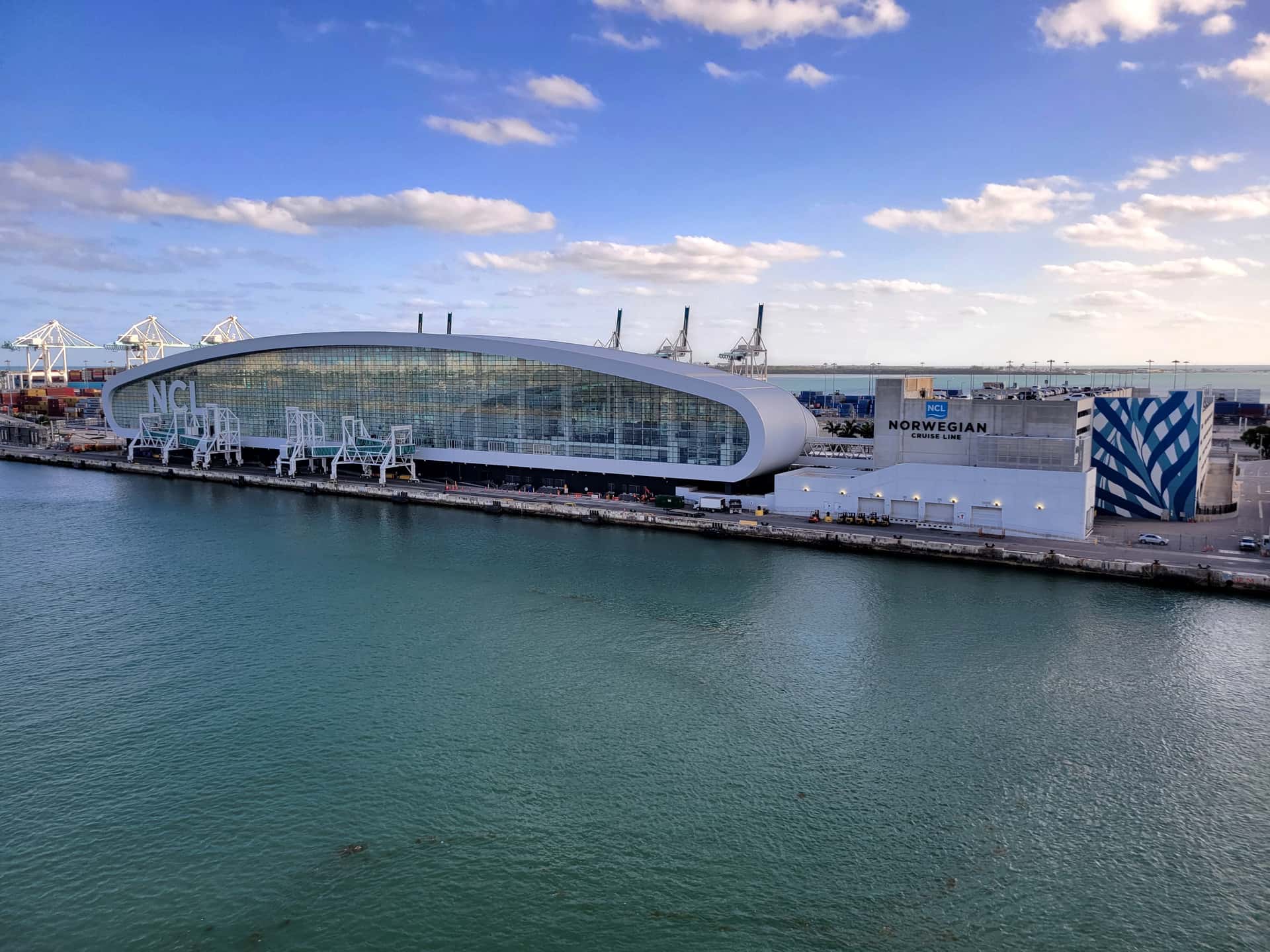
Royal Caribbean Group, the Miami-headquartered cruise giant, reported strong first-quarter 2026 results, posting $4.5 billion in total revenue and carrying 2.5 million guests, a performance that underscores the health of an industry central to Florida's tourism economy. The company's home in Miami ties its fortunes directly to a state that bills itself as the cruise capital of the world, where major ports support tens of thousands of jobs.
The quarter delivered earnings per share of $3.48, or $3.60 on an adjusted basis, alongside adjusted EBITDA of $1.7 billion, a measure of operating profitability. Guest volume rose 12% year over year while capacity grew 8%, indicating that the company filled its ships more fully even as it expanded, a sign of robust demand for cruising.
Yet the strong operating results came with a note of caution from Wall Street. In early June 2026, after earnings-estimate downgrades, Zacks assigned Royal Caribbean a Strong Sell rank, even as the company's revenue and margins remained solid. The contrast between healthy operations and a wary stock signal frames a nuanced moment for a business whose performance reverberates across Florida's ports.
The First-Quarter Results
Royal Caribbean's first-quarter 2026 figures painted a picture of a company operating at scale and with momentum. Total revenue reached $4.5 billion, and the company carried 2.5 million guests over the period, a 12% increase from the same quarter a year earlier. Capacity, meanwhile, grew 8%, meaning demand outpaced the company's expansion of available berths.
Profitability matched the strong top line. Earnings per share came in at $3.48, with an adjusted figure of $3.60 that strips out certain items to reflect underlying performance. Adjusted EBITDA of $1.7 billion signaled healthy operating margins, reinforcing the sense that the quarter was a strong one by the measures the company emphasizes.
The relationship between the 12% rise in guests and the 8% growth in capacity is telling. When passenger growth exceeds capacity growth, it implies that ships are sailing fuller, a favorable dynamic for a business whose costs are heavily fixed. Filling more berths spreads those costs across more guests, supporting the margins the quarter produced.
Taken together, the metrics describe a company benefiting from strong consumer demand for cruising. The results suggest that travelers continued to book voyages in significant numbers, a trend with direct relevance to the Florida ports from which many of those voyages depart.
The Full-Year Outlook
Looking ahead, Royal Caribbean guided full-year 2026 adjusted earnings per share to a range of $17.70 to $18.10. That guidance offers a window into management's expectations for the year and signals confidence that the strong start can carry through, assuming demand and operating conditions hold.
Guidance ranges like this one give investors a benchmark against which to measure subsequent quarters. A range rather than a single figure acknowledges the uncertainty inherent in forecasting a full year, but the level of the projection conveys management's view that 2026 will be a substantial year for earnings.
For Florida, the outlook matters because the company's projected performance is intertwined with activity at the state's ports. A strong full-year forecast implies continued sailings, continued passenger volume, and the associated economic activity that flows through the terminals from which Royal Caribbean operates.
The guidance also sets expectations that the company will be measured against as the year unfolds. If results track toward the upper end of the range, it would reinforce the narrative of a healthy business; shortfalls would invite scrutiny. Either way, the trajectory bears on the Florida economy that the cruise industry helps sustain.
The Wall Street Caution
Despite the strong operating results, Royal Caribbean's stock drew a cautionary signal in early June 2026. After earnings-estimate downgrades, Zacks assigned the company a Strong Sell rank, a rating that stands in contrast to the solid revenue and margins the quarter delivered.
The downgrade reflects the forward-looking nature of stock ratings, which weigh expectations and estimate revisions rather than past results alone. When analysts trim their forecasts, ranking systems that track those revisions can turn cautious even when current performance appears healthy, capturing a shift in sentiment about where earnings are headed.
The juxtaposition is notable: a company posting $4.5 billion in quarterly revenue and $1.7 billion in adjusted EBITDA, yet carrying a Strong Sell rank. The tension illustrates that strong operating performance and a wary stock signal can coexist, with the rating responding to changes in estimates rather than to the absolute level of the results.
For observers in Florida, the caution is a reminder that the financial market's view of the cruise business can diverge from the operational reality at the ports. Even as ships sail full and revenue climbs, shifting analyst expectations can color the investment narrative around the industry's leading companies.
Florida, the Cruise Capital
Florida's claim as the cruise capital of the world rests on a concentration of major ports that rank among the busiest globally. PortMiami, Port Everglades in Fort Lauderdale, and Port Canaveral together form a hub of cruise activity that few places on earth can match, and Royal Caribbean's Miami headquarters places the company at the center of it.
These ports are not merely points of departure; they are economic engines. The cruise industry supports tens of thousands of Florida jobs, spanning port operations, provisioning, transportation, hospitality, and the many businesses that serve cruise passengers before and after their voyages. The scale of employment tied to cruising makes the industry's health a matter of broad economic consequence.
Port revenue is another dimension. The fees and economic activity generated by cruise traffic contribute meaningfully to the finances of the port authorities and surrounding communities. When cruise lines sail full ships and expand capacity, that activity translates into tangible benefits for the Florida ports that host them.
Royal Caribbean's strong quarter therefore carries direct implications for the state. As one of the industry's largest players operating from Florida, its performance is woven into the economic fabric of the ports and the communities around them, making the company's results a barometer of sorts for a key Florida sector.
The Jobs and Economic Stakes
The connection between cruise-line performance and Florida employment is direct and substantial. The tens of thousands of jobs supported by the industry depend on ships sailing, terminals operating, and passengers flowing through the state's ports. Strong results from a major operator like Royal Caribbean help sustain that activity.
The economic reach extends beyond the ports themselves. Cruise passengers often arrive ahead of their sailings, staying in hotels, dining in restaurants, and spending in the communities surrounding the ports. This pre- and post-cruise activity amplifies the industry's economic footprint, spreading its benefits across Florida's broader tourism economy.
Capacity growth adds another layer. As Royal Caribbean expands, with first-quarter capacity up 8%, the increased activity can support additional employment and economic activity at the ports it serves. Growth in the industry's leading companies thus has the potential to widen the economic benefits that accrue to Florida.
This linkage means that the health of cruise lines is not an abstraction for the state. It directly affects the livelihoods of workers and the vitality of communities that depend on the steady rhythm of ships arriving and departing from Florida's ports, making the industry's results a matter of real consequence.
Reading the Mixed Signals
The Royal Caribbean story presents two threads that do not align neatly. On one side stands a quarter of strong revenue, rising guest volume, and solid margins, with full-year guidance pointing to substantial earnings. On the other stands a cautious stock rating driven by estimate downgrades. Reconciling the two requires distinguishing operations from market sentiment.
From the standpoint of Florida's ports and the jobs they support, the operational picture is the more immediately relevant one. Ships sailing full, capacity expanding, and demand running strong are the conditions that sustain port activity and employment, and those conditions characterized the first quarter.
The stock signal, by contrast, speaks to investor expectations and the trajectory of earnings estimates rather than to the current flow of passengers through Florida's terminals. A Strong Sell rank reflects a forward-looking judgment that can shift, and it does not negate the operating strength the quarter displayed.
For Florida, the prudent reading holds both threads in view. The strong results affirm the industry's current health and its support for the state's economy, while the cautious rating serves as a reminder that the financial outlook for cruise companies can be volatile, warranting attention to how the rest of the year develops.
What's Next
The coming quarters will test whether Royal Caribbean can deliver on its full-year guidance of $17.70 to $18.10 in adjusted earnings per share. Tracking toward that range would reinforce the narrative of a healthy business and support continued activity at the Florida ports from which the company operates.
The interplay between the company's operating performance and the cautious stock rating will also bear watching. Should results continue to come in strong, the tension between healthy operations and a wary market signal may ease; persistent estimate downgrades could keep it alive, shaping the investment conversation around the cruise sector.
For Florida, the most consequential measure remains the activity at PortMiami, Port Everglades, and Port Canaveral. As long as ships sail full and the industry expands, the jobs and economic benefits that flow from cruising are likely to hold, anchoring the state's standing as the cruise capital of the world.
The first quarter set a strong baseline. Whether the year sustains that momentum will determine how much benefit accrues to Florida's ports and the tens of thousands of workers whose livelihoods are tied to the steady cadence of cruise traffic through the state.
Spotted an issue with this article?
Have something to say about this story?
Write a letter to the editor