Royal Caribbean Raises Guidance as Florida Ports Carry Record Cruise Demand
Royal Caribbean Group reported second quarter results above expectations on Tuesday and raised its full-year guidance, delivering adjusted earnings of 4.21 dollars per share against analyst consensus of roughly 3.98 dollars. Total revenues came in at 4.8 billion dollars with adjusted EBITDA of 1.8 billion dollars. The company now expects full year adjusted earnings in a range of 17.73 to 17.87 dollars per share, representing roughly 14 percent year over year growth.
The results extend a run of strength across the cruise sector that has been anchored in Florida. Carnival Corporation, headquartered in Miami, generated record revenue of 6.7 billion dollars in its second quarter, its twelfth consecutive quarter of record net yields.
For Florida, these are not simply corporate earnings stories. The cruise industry is a Florida industry in a way it is not anywhere else in the United States, and the health of these companies flows through port revenue, employment, tourism, and the tax base of several coastal counties.
What drove the quarter
Royal Caribbean attributed its outperformance to strong close-in demand, meaning bookings made relatively near the sailing date, along with lower costs and favorable results from joint ventures. The debut of Legend of the Seas contributed to net yields, which rose 1.9 percent.
Close-in demand strength is a meaningful signal for the industry. Cruise lines prefer to book far in advance at established pricing, and late bookings historically came at discounts. Strong close-in demand at maintained pricing indicates that consumer appetite is holding rather than that inventory is being cleared.
The company did moderate one figure. Royal Caribbean pulled back its annual revenue growth target to roughly 9 percent from roughly 10 percent, citing softening demand for certain sailings attributed to ongoing geopolitical tensions. That is a specific and limited adjustment rather than a broad demand warning, but it is the caveat in an otherwise positive report.
The company framed its results against its Perfecta program, which targets a 20 percent earnings compound annual growth rate from 2024 through 2027 and returns on invested capital in the high teens by 2027. Management described the current trajectory as a 23 percent compound rate over the program's first two years.
Why Florida is the industry's center
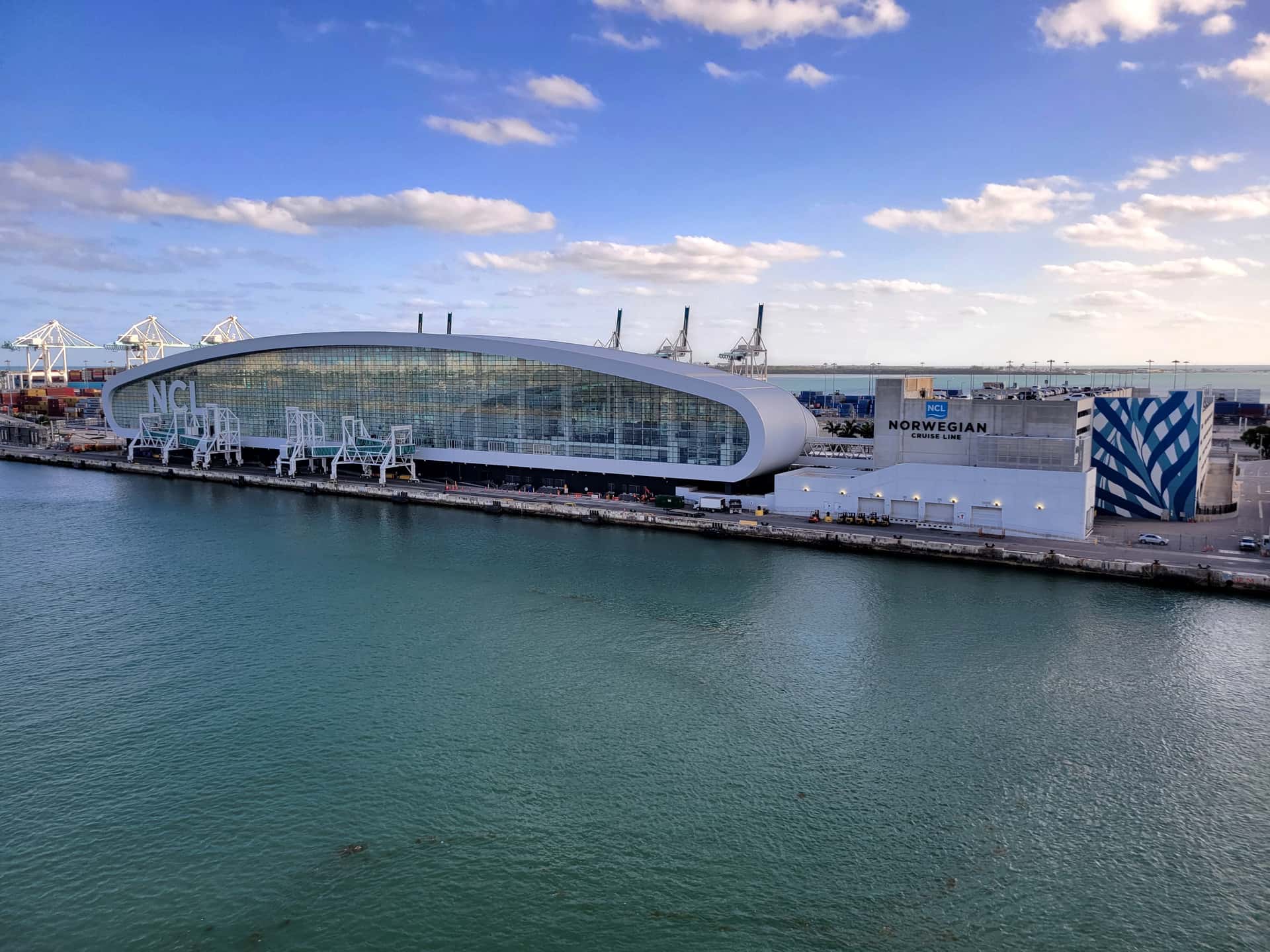
Florida hosts the largest concentration of cruise operations in the world. PortMiami has long described itself as the cruise capital of the world by passenger volume, Port Canaveral serves the Orlando tourism market, Port Everglades in Fort Lauderdale is among the busiest embarkation points globally, and Port Tampa Bay and JAXPORT add capacity on the Gulf and northeast coasts.
The corporate presence follows the operational one. Carnival Corporation is headquartered in Miami, Royal Caribbean Group is headquartered in Miami, and Norwegian Cruise Line Holdings is headquartered in Miami. Three of the largest cruise companies in the world run their global operations from a single Florida county.
That concentration produces employment well beyond ship crews, who are largely not Florida residents. Shoreside corporate staff, port operations, provisioning and logistics, ship maintenance, travel agencies, and the ground transportation and hotel sectors serving embarkation and debarkation all depend on cruise volume.
Royal Caribbean's Legend of the Seas is scheduled to operate from Fort Lauderdale beginning in November, offering six-night Western Caribbean and eight-night Southern Caribbean itineraries. Fort Lauderdale has hundreds of Royal Caribbean sailings scheduled, a measure of how central Port Everglades is to the company's deployment.
What it means for Florida's economy
Port revenue is the most direct channel. Florida seaports collect fees per passenger and per vessel call, and those revenues fund port operations and capital investment in terminals, dredging, and landside infrastructure. Ports are typically governed by county authorities or independent districts, which means the money stays local.
Tourism spending is the larger channel. Passengers embarking from Florida ports frequently arrive a day or more early and stay in local hotels, eat in local restaurants, and use local transportation. Passengers from the Orlando market driving to Port Canaveral combine theme park visits with sailings, linking two of the state's largest tourism sectors.
Employment in the sector is substantial and geographically concentrated in Miami-Dade, Broward, and Brevard counties. Corporate headquarters employment in particular represents higher-wage positions in finance, marketing, revenue management, and operations.
The tax base effect runs through both property and sales tax. Terminal facilities, corporate offices, and the hospitality infrastructure serving cruise passengers all contribute, and tourist development taxes levied on hotel stays fund local tourism marketing and, in several counties, convention and sports facilities.
The risks the sector carries
Cruise is a cyclical, capital-intensive business exposed to conditions largely outside operator control. Royal Caribbean's own guidance adjustment cited geopolitical tensions affecting demand for particular itineraries, which illustrates the sensitivity of regional deployment to world events.
Fuel costs are a major input, and energy price volatility, including from the conflict involving Iran that has been cited as a contributor to broader inflation, flows into operating expense. Companies hedge, but hedges are partial and temporary.
Hurricane season is Florida's specific risk. Storms disrupt itineraries, close ports, and can damage terminal infrastructure. Cruise lines routinely reroute ships around storms, which protects passengers but adds cost and affects the shoreside spending that Florida communities capture. The National Oceanic and Atmospheric Administration has forecast a below-normal Atlantic season for 2026, and no named storm currently threatens the state.
The competitive picture
Norwegian Cruise Line Holdings was scheduled to report its second quarter results on July 30, completing the reporting cycle for the three largest publicly traded operators. Carnival reported in June.
The sector's collective performance since the return to full operations has exceeded most expectations, with pricing power and occupancy both recovering more strongly than analysts projected during the industry's shutdown period. New ship deliveries have continued, adding capacity that the market has so far absorbed.
Private destination development, including exclusive island and beach club properties in the Caribbean and Bahamas, has become a competitive focus, since those destinations capture onboard-equivalent spending and reduce dependence on third-party port calls.
How Florida ports are funded and governed
Florida's seaports operate under a mix of governance structures. Some are departments of county government, some are independent special districts with elected or appointed boards, and each sets its own tariffs and capital plans within state and federal regulatory frameworks.
Revenue comes primarily from tariffs charged per passenger and per vessel call, along with parking, concessions, and leases of terminal and land assets. Those revenues fund operations and service debt issued for capital projects.
Capital needs in the cruise sector have been substantial because ship sizes have grown. Larger vessels require deeper channels, longer berths, and terminals capable of processing several thousand passengers within a single turnaround window.
Dredging projects are typically federal partnerships involving the Army Corps of Engineers, with cost sharing between federal and local sponsors. Those projects run on multi-year timelines and represent the largest single category of port capital spending.
The workforce behind the terminals
Cruise operations generate substantial shoreside employment that is easy to overlook because ship crews are largely not Florida residents. Terminal operations, baggage handling, security screening, provisioning, ground transportation, and ship maintenance all draw local workers.
Turnaround days are labor-intensive in a compressed window. A vessel carrying several thousand passengers must be fully debarked, cleaned, provisioned, and re-embarked within hours, which requires a large workforce available on a schedule set by sailing itineraries.
Provisioning alone represents a significant logistics operation. Food, beverage, fuel, and supplies for a week-long voyage arrive by truck at Florida ports, supporting distribution and trucking employment across the surrounding region.
Corporate headquarters employment in Miami-Dade adds higher-wage positions in revenue management, itinerary planning, marketing, finance, and legal functions for three of the largest operators in the world.
What passengers should know this season
For Floridians and visitors booking cruises from state ports during hurricane season, itinerary changes are a normal operational reality rather than an exception. Cruise lines reroute ships around storms as a safety matter, which can substitute destinations without notice.
Travel insurance terms vary considerably in how they treat weather-related disruption, and coverage generally must be purchased before a storm is named to apply. Passengers should read policy terms rather than assume coverage.
Embarkation delays and port closures can also occur when a storm affects the departure port itself rather than the itinerary. Florida ports close on the direction of the Coast Guard captain of the port when conditions warrant, which affects all vessel movements.
The National Oceanic and Atmospheric Administration has forecast a below-normal Atlantic season for 2026, and no named storm currently threatens the state, but the season's peak months begin in mid-August.
Reading cruise company results
Cruise operators report several metrics that do not appear in most industries. Net yield measures revenue per available passenger cruise day after commissions and certain costs, and it is the primary indicator of pricing power.
Occupancy in the cruise industry routinely exceeds 100 percent, because capacity is calculated on double occupancy per cabin and many cabins carry third and fourth passengers. A figure above 100 indicates strong demand rather than an error.
Booked position, the percentage of future inventory already sold and the pricing at which it sold, is the forward-looking measure that drives guidance. Companies disclose it qualitatively rather than in full detail.
What's next
Royal Caribbean's raised guidance sets the benchmark against which its remaining quarters will be measured. Winter Caribbean deployment from Florida ports, the peak season for the region, begins in the fall.
Florida port authorities continue capital programs to accommodate larger vessels and higher passenger throughput, projects that require dredging, terminal construction, and landside traffic management.
Hurricane season peak activity runs from mid-August through October, and itinerary disruption during that window is the most likely near-term operational variable. The Florida Press will continue reporting on the cruise industry and Florida's ports.
Spotted an issue with this article?
Have something to say about this story?
Write a letter to the editor