USDA's Final Citrus Forecast Lifts Florida Orange Crop to 12.92 Million Boxes
The United States Department of Agriculture's final citrus forecast of the 2025-26 season put Florida's all-orange production at 12.92 million boxes, an increase of 6 percent from the 12.2 million boxes projected in April. The figure consists of 4.77 million boxes of non-Valencia oranges and 8.15 million boxes of Valencias.
The final number represents a modest improvement over the 12.28 million boxes produced in the 2024-25 season, making it the first meaningful year-over-year increase after a long run of decline. It is also the third consecutive upward revision within the season, having started at 12.0 million boxes in the January forecast.
The context tempers the good news. Florida orange production remains approximately 28 percent below the 18.06 million boxes harvested in the 2023-24 season, and far below the levels the state produced before citrus greening disease reshaped the industry.
How the forecast moved through the season
The USDA's National Agricultural Statistics Service issues Florida citrus forecasts monthly through the growing and harvest season, cooperating with the Florida Department of Agriculture and Consumer Services. Growers, processors, and commodity markets follow those releases closely because they set expectations for supply and pricing.
The January 2026 forecast projected 12.0 million boxes of all oranges, which at that point represented a 2 percent decrease from the prior season's final production. That starting point reflected a season that had already absorbed damaging freezes.
By April, the projection had risen to 12.2 million boxes. The July final forecast added another 6 percent to reach 12.92 million boxes. Upward revisions through a season generally indicate that fruit sizing and drop rates performed better than early estimates assumed.
Forecast revisions of this magnitude are meaningful for growers making harvest and marketing decisions, and for processors contracting for juice supply. The Valencia crop, which comprises the larger share at 8.15 million boxes, is harvested later in the season and processed predominantly into juice.
What has happened to Florida citrus
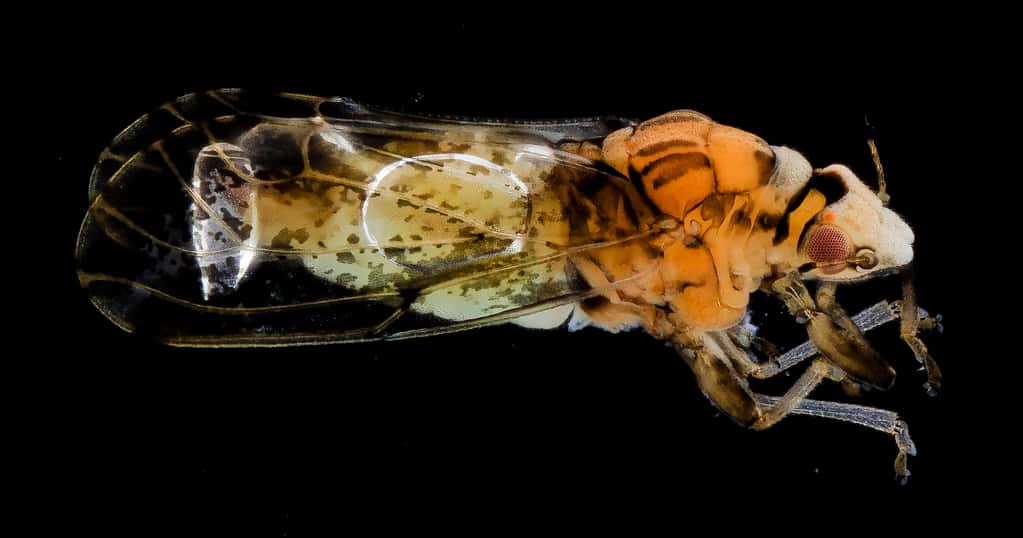
Florida's citrus industry has contracted dramatically over roughly two decades. The principal driver has been Huanglongbing, commonly called citrus greening, a bacterial disease spread by the Asian citrus psyllid that reduces fruit quality and yield and eventually kills trees.
Greening has no cure. Management strategies focus on psyllid control, tree nutrition, and replanting with the understanding that infected trees decline over time. Research into resistant rootstocks and varieties, along with treatment approaches including trunk injection, has advanced but has not restored the industry to prior scale.
Hurricanes have compounded the damage. Storms including Irma in 2017 and Ian in 2022 destroyed groves, stripped fruit, and flooded root systems in the state's primary production regions. Recovery from a major storm takes years, and each event has accelerated grower exit.
Freezes have added another layer. The 2025-26 season absorbed damaging cold events, which is the ordinary risk of citrus production in Florida and which the industry has historically managed but which compounds when trees are already stressed by disease.
Land conversion has locked in much of the loss. Grove acreage in Central and Southwest Florida sits in the path of residential and commercial development, and growers facing declining yields have found sale to developers economically rational. Once converted, that land does not return to citrus.
Why this matters beyond agriculture
Citrus occupies a place in Florida's identity that exceeds its current share of state economic output. The orange blossom is the state flower, orange juice is the official state beverage, and the image of the citrus grove is embedded in how Florida has marketed itself for a century.
The economic footprint, while diminished, remains real in specific regions. Polk, DeSoto, Hendry, Highlands, and Hardee counties among others retain significant citrus acreage and the processing, packing, and transportation employment associated with it. In those counties, the industry's contraction has been felt directly in jobs and tax base.
The Florida Department of Citrus, funded by grower assessments, conducts marketing and research on behalf of the industry, and the Florida Department of Agriculture and Consumer Services administers regulatory and support programs. Both operate at a scale calibrated to an industry substantially smaller than it once was.
What it means for consumers
Orange juice prices at Florida grocery stores reflect global supply rather than Florida supply alone. Brazil is the world's largest orange juice producer, and Brazilian crop conditions drive international pricing more than Florida's output does at current volumes.
That said, Florida production affects the domestic not-from-concentrate market, where fresh-squeezed and premium juice products depend more heavily on domestic fruit. A 6 percent improvement in the Florida crop is marginally supportive of supply in that segment.
Fresh fruit is a smaller portion of Florida's orange crop than juice, with the non-Valencia varieties accounting for 4.77 million boxes. Florida grapefruit and specialty citrus are tracked separately in the USDA forecasts.
Consumers who prioritize Florida-grown fruit can find it seasonally at farmers markets, roadside stands, and through direct grower shipping, all of which have become more important channels as commodity volumes have fallen.
The research and recovery effort
The University of Florida's Institute of Food and Agricultural Sciences operates citrus research programs, including at the Citrus Research and Education Center in Lake Alfred, focused on greening tolerance, rootstock development, and grove management practices.
Federal and state funding has supported that research over more than a decade, with results that have improved grower ability to keep infected trees productive longer but have not produced a decisive solution. Genetically engineered and conventionally bred resistant varieties remain in development pipelines that operate on tree-crop timescales, meaning years from field trial to commercial availability.
Grower economics determine whether research findings get deployed. Replanting requires capital and years before returns, which is a difficult proposition for operations that have absorbed sustained losses.
Grapefruit, specialty citrus and the wider crop
Oranges dominate Florida citrus volume, but the state also produces grapefruit and specialty citrus including tangerines and tangelos, each tracked separately in USDA forecasts. Florida grapefruit production has declined even more steeply than oranges over the past two decades.
The Indian River district along Florida's Atlantic coast has historically been the center of grapefruit production and holds a distinctive market reputation for fruit quality. That district has been particularly affected by greening and by hurricane damage.
Specialty citrus serves the fresh fruit market more heavily than oranges do, which means it is more exposed to appearance standards and to competition from imports during overlapping seasons.
Fresh market fruit generally commands higher per-box returns than fruit destined for processing, which is why growers with fruit that meets fresh standards direct it there. The economics of that split shape planting and harvest decisions across the industry.
What a box actually measures
Citrus production is reported in boxes, a unit that reflects historical shipping practice rather than a modern container. A standard box of Florida oranges is defined by weight, at 90 pounds, and grapefruit boxes are defined at a different weight.
Juice yield per box is tracked separately and reported as pounds solids per box, a measure of the sugar and soluble content that determines how much juice concentrate a box produces. Greening reduces both fruit size and juice quality, so declining pounds solids compounds the effect of declining box counts.
USDA forecasts also report fruit size and droppage, the proportion of fruit that falls before harvest. Greening increases pre-harvest drop substantially, which is one of the mechanisms by which the disease reduces marketable yield beyond what tree loss alone would explain.
Those technical measures are why season-to-season comparisons of box counts alone understate the industry's difficulty. A season with similar box counts but lower pounds solids delivers less juice.
Land, water and what replaces groves
Converted citrus land does not sit idle. In Central Florida and along the Interstate 4 corridor, former groves have become residential subdivisions and commercial development. In inland areas, some has moved to cattle, sod, vegetables, or other agricultural uses.
That conversion has water implications. Citrus groves and residential development have different water demand profiles and different runoff characteristics, and water management districts account for those differences in consumptive use permitting.
Agricultural land conservation programs, including the Rural and Family Lands Protection Program administered by the Florida Department of Agriculture and Consumer Services, purchase easements that keep land in agriculture. Those programs operate at a scale far smaller than the conversion pressure.
For rural Florida counties that depended on citrus, the transition raises questions about tax base, employment, and community identity that extend well beyond the agricultural economics.
Where the industry goes from here
Industry projections have generally settled around the expectation that Florida citrus will stabilize at a substantially smaller scale rather than returning to historical volumes. The question is where that floor sits and how long stabilization takes.
Grower confidence is the variable that determines replanting, and replanting determines production five to seven years out. A season with an upward revision and a modest year-over-year increase supports confidence at the margin, which is why the final 2025-26 figure carries more weight than its size suggests.
Processing capacity is another constraint. Juice processing facilities require throughput to operate economically, and plant closures reduce the options available to growers, which in turn affects planting decisions. The industry's contraction has been partly self-reinforcing through that channel.
The 2026-27 season's first forecast in October will be the next data point.
What's next
The 2026-27 season begins with the first USDA forecast in October, which will provide the initial indication of whether this season's modest improvement extends. Bloom conditions, psyllid pressure, and weather through the fall and winter will determine that outcome.
Hurricane season is the immediate variable. A landfalling storm through the citrus belt during the peak months of August through October would affect the coming crop directly, as recent storms have. The National Oceanic and Atmospheric Administration has forecast a below-normal Atlantic season, and no named storm currently threatens the state.
USDA citrus forecasts are published by the National Agricultural Statistics Service and are available publicly. The Florida Press will report on the first forecast of the 2026-27 season when it is released.
Spotted an issue with this article?
Have something to say about this story?
Write a letter to the editor