Rubio Signals US Pressure on Cuba, a Message That Resonates Across Florida's Diaspora
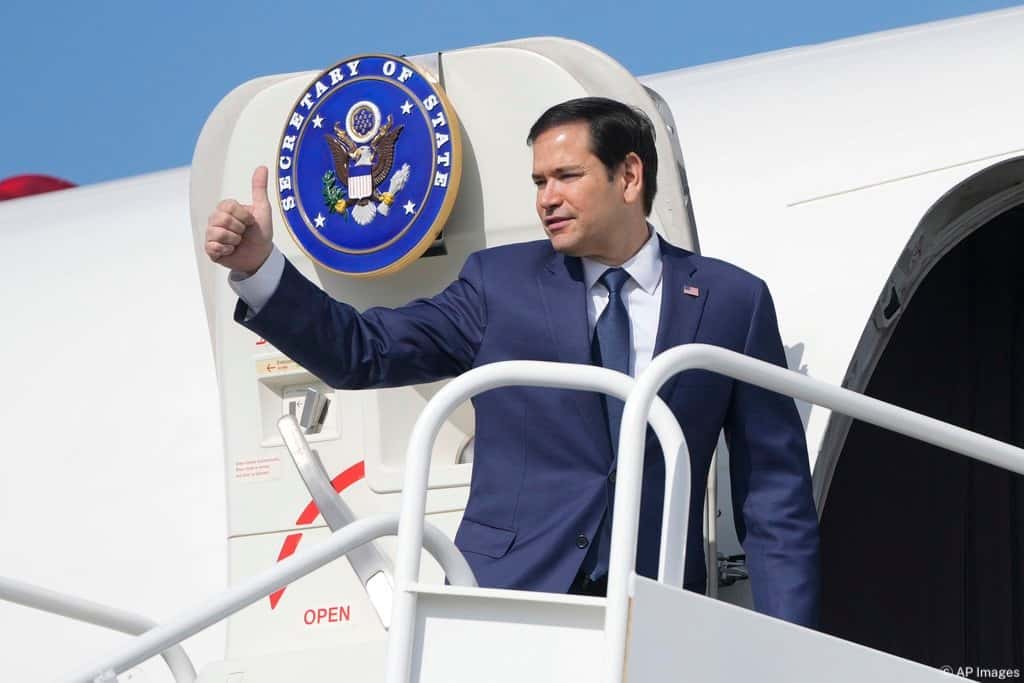
Secretary of State Marco Rubio said the United States is prepared to do what it can to push for positive change in Cuba, remarks delivered on the sidelines of a diplomatic summit in Asia that carry outsized weight for Florida, home to the largest Cuban American community in the country. The comments from Rubio, a Florida native and the son of Cuban immigrants, underscored the continued centrality of Cuba policy to a state where the issue is deeply personal for hundreds of thousands of residents.
For many Floridians, the words of a leading national official on Cuba are never simply a matter of distant diplomacy. They touch on questions of family, homeland, and identity that have defined a community for more than half a century. That Rubio speaks both as the nation's chief diplomat and as someone whose own family story is bound up with the island lends his remarks a resonance that few other figures in American public life can match on this particular subject.
What Rubio said
Speaking during a press conference on the margins of a gathering of foreign ministers in Manila, Rubio addressed Cuba and signaled that the United States stands ready to act to encourage change on the island. The remarks reflected the administration's posture toward the Cuban government and Rubio's own long-standing focus on the issue, which has been a defining theme of his political career. As the nation's top diplomat, his words on Cuba are closely parsed both in Washington and in South Florida.
Rubio has been among the most prominent and consistent voices advocating a hard line toward the Cuban government, and his elevation to secretary of state placed a Floridian with deep ties to the issue at the center of American foreign policy. His comments abroad served as a reminder that Cuba remains a priority even as the administration juggles a full agenda of global challenges.
Statements of this kind tend to be measured in their specifics while broad in their intent, and observers in South Florida have learned to read them for signals of direction rather than for detailed policy blueprints. The general message of readiness to press for change is one that many in the community have heard from officials across administrations, though the identity of the speaker gives these particular remarks an added weight.
Why it matters for Florida
Few foreign policy issues resonate as strongly in Florida as Cuba. The state is home to the largest and most politically influential Cuban American population in the United States, concentrated heavily in the Miami area, where the community's history, identity, and politics have been shaped by the experience of exile and by decades of tension between Washington and Havana. Policy toward the island is not an abstract question in South Florida but a matter that touches families, memories, and deeply held convictions.
Generations of Cuban Americans have watched U.S. policy toward the island shift over the years, and the community remains attentive to every signal from Washington. Rubio's remarks, coming from a hometown figure who has risen to the highest levels of American diplomacy, land with particular force among constituents who see the issue through the lens of personal and family history.
The stakes are heightened by Florida's role in national politics. As one of the most closely watched states in the country, its electorate draws sustained attention from candidates and officials, and the Cuban American community's engagement on the question of the island ensures that Cuba policy is rarely absent from the political conversation. Local leaders, community organizations, and media in South Florida keep the issue prominent, reinforcing its place at the intersection of foreign policy and local concern.
A community shaped by exile
The Cuban American community in Florida traces its roots to waves of migration that followed the Cuban revolution and the decades of hardship that followed. Many residents or their forebears fled the island, and the experience of exile has profoundly shaped the community's politics and its relationship with successive administrations in Washington. Hardline policy toward the Cuban government has long enjoyed strong support among many in the community, though views have evolved and diversified over time, particularly among younger generations.
That diversity of opinion means Cuba policy is not monolithic even within the community, but the issue remains central to the political identity of South Florida. Candidates and officials of both parties court Cuban American voters and calibrate their positions on the island with care, aware of the community's influence in a state that plays an outsized role in national politics.
The neighborhoods where the community has taken root, from Little Havana to broader Miami-Dade, carry the imprint of that history in their businesses, cultural institutions, and civic life. The story of exile is passed down through families and preserved in the everyday fabric of these places, keeping the connection to the island alive even for those born long after the initial waves of migration. That continuity helps explain why remarks from Washington about Cuba are received not as routine policy news but as commentary on a shared and unfinished story.
Cuba's ongoing crisis
Rubio's comments come against the backdrop of severe hardship on the island, where Cubans have endured economic crisis, shortages, and hardship that have driven waves of migration. The conditions have fueled departures from the island, some of which have reached Florida's shores, connecting the situation in Cuba directly to the state through immigration and family ties. The humanitarian dimension adds urgency to the policy debate and keeps the island's plight in the news in South Florida.
The crisis on the island has strained the Cuban government and intensified scrutiny of its handling of the economy and its treatment of dissent. For the United States, the situation presents both a challenge and an opportunity, and officials like Rubio have signaled a willingness to press for change while weighing the humanitarian consequences of policy choices.
For families in Florida with relatives still on the island, the hardship is not a matter of headlines but of daily concern, communicated through phone calls, remittances, and the anxious tracking of conditions across the Florida Straits. Those personal connections give the community a direct stake in how the crisis unfolds and in how Washington responds, and they help ensure that the human cost of the situation remains at the forefront of the debate in South Florida.
The diplomatic backdrop
Rubio delivered his Cuba remarks while traveling in Asia for a series of high-level diplomatic meetings, a reminder that Cuba is one of many issues competing for the attention of the nation's top diplomat. His trip focused heavily on relationships in the Asia-Pacific region, but the Cuba comments demonstrated how the issue follows him and how readily it surfaces given his background and Florida's stake in it.
The juxtaposition of a global diplomatic tour with pointed remarks about a nearby island underscored the breadth of the secretary's portfolio and the enduring place of Cuba within it. For Florida observers, the comments were a signal that the administration's approach to the island remains active even amid a crowded international agenda.
That a question about a Caribbean island would arise during a summit focused on Asia speaks to how thoroughly Cuba is woven into Rubio's public profile. Reporters and observers alike expect him to weigh in on the subject, and his willingness to do so from a distant stage reinforced the perception that the island remains a fixed reference point in his approach to foreign affairs, regardless of where his official duties take him.
A test of enduring influence
The prominence of Rubio's comments illustrates the lasting influence of Florida's Cuban American community on national policy. Over the decades, the community has helped keep Cuba on the agenda in Washington through sustained political engagement, and the presence of a Floridian of Cuban descent in one of the highest offices of American government is in many ways a reflection of that long effort. The community's voice has shaped how successive administrations approach the island, and its concerns continue to inform the debate.
Yet the community's evolving character, including generational shifts in attitudes and a broadening range of perspectives, means that its influence is not static. The way officials frame policy toward Cuba is likely to continue adapting to these changes, even as the core concern with conditions on the island endures. Rubio's remarks land within this dynamic landscape, addressed to a constituency that is at once deeply rooted in its history and gradually changing in its outlook.
How that balance plays out will help determine the political resonance of Cuba policy in the years ahead. For now, the community remains a powerful and attentive audience, and its response to signals from Washington continues to matter in both local and national terms.
What comes next
The path of U.S. policy toward Cuba will continue to be watched closely in Florida, where any shift carries direct implications for a large and engaged community. Rubio's remarks suggest the administration intends to maintain pressure, but the specifics of how that translates into policy will unfold over time and will be scrutinized by constituents on all sides of the debate.
For Florida's Cuban American community, the issue is never far from the surface, and the words of a hometown figure now serving as secretary of state carry special significance. As the situation on the island continues to evolve, Cuba policy will remain a defining concern in South Florida, linking the state's residents to events just across the Florida Straits and keeping Washington's approach under close and personal watch.
In the near term, attention will focus on whether the general readiness Rubio described takes shape in concrete steps and how the Cuban government and the island's population respond. Whatever direction events take, the subject will continue to occupy a prominent place in the civic life of South Florida, where the connection to Cuba is measured not in policy statements alone but in the lived experience of a community that has kept the island at the center of its attention for generations.
Spotted an issue with this article?
Have something to say about this story?
Write us a letterComments
No comments yet. Be the first to weigh in.
Related Coverage
Second Kennedy Space Center Contractor Plans Layoffs as NASA Brings Work In-House
8h ago

RFK Jr. Brings Medical School Nutrition Push to Orange Park as UF, LMU and Jacksonville Programs Sign On
9h ago

Nine Florida HIV Prevention Groups Lose Direct CDC Grants as Federal Money Shifts to State Health Department
10h ago

Customs Rule That Could Cut Off Mailed Prescriptions From Canada for Florida Seniors Delayed to Jan. 20
13h ago