SpaceX Launches 29 Starlink Satellites from Cape Canaveral on Memorial Day
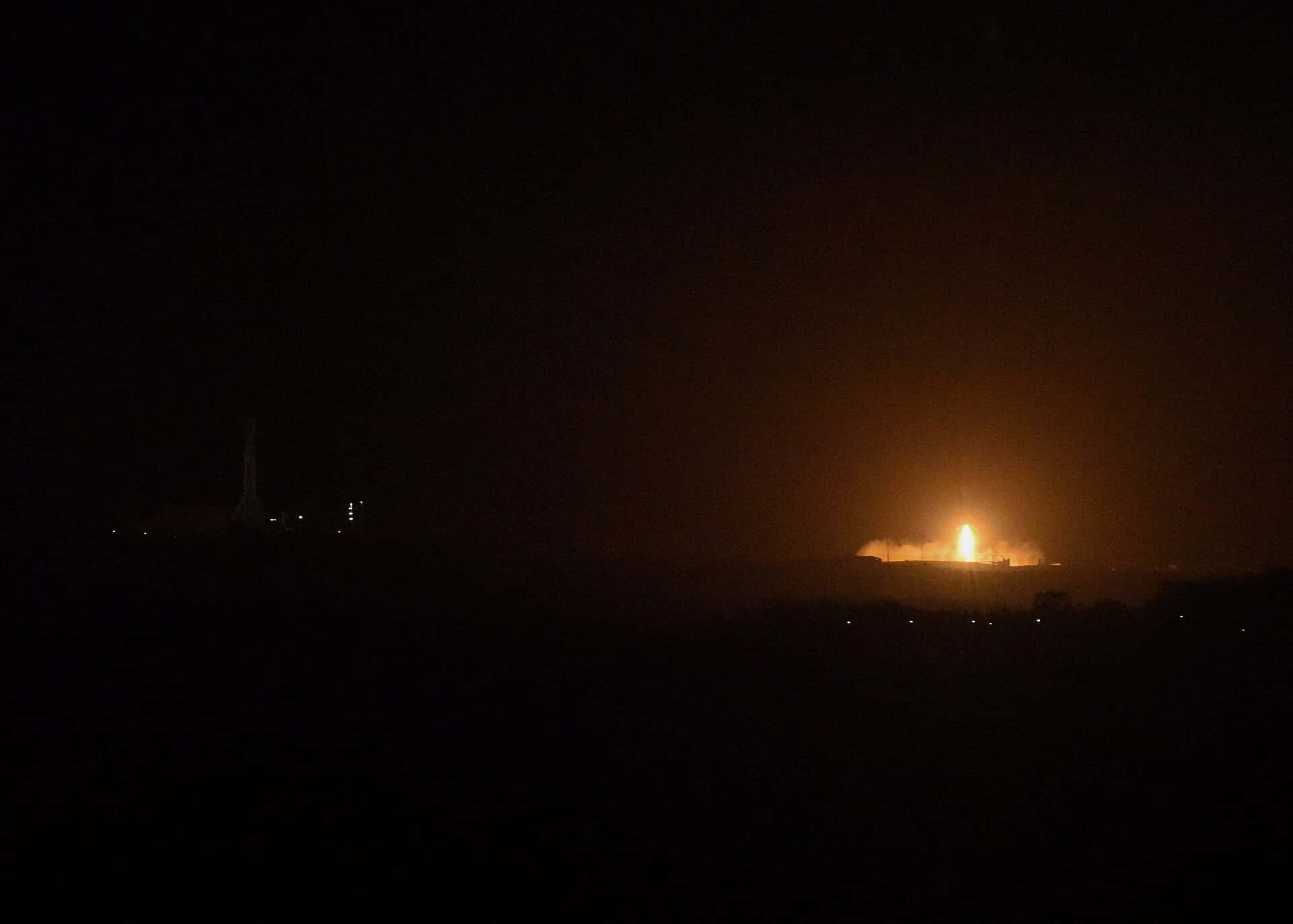
Memorial Day Launch Lights Up the Space Coast
A SpaceX Falcon 9 rocket roared off Space Launch Complex 40 at Cape Canaveral Space Force Station on Memorial Day, May 25, 2026, carrying 29 Starlink V2 Mini Optimized satellites into low Earth orbit. The mission, designated Starlink 10-47, drew attention from residents and visitors across Florida's Space Coast, with the rocket's exhaust plume visible for miles in the clear holiday sky. Launch operations teams monitored the ascent closely as the booster climbed through the upper atmosphere and separated from the second stage on schedule.
The flight came just days after another Starlink mission departed the same Florida launch site, underscoring the relentless operational tempo that SpaceX has maintained at Cape Canaveral throughout 2026. For communities in Brevard County and beyond, launches have become a defining feature of daily life, with viewing parties organized along the beaches of Cocoa Beach, Jetty Park, and along the Indian River Lagoon. Memorial Day launches carry added symbolic weight, drawing larger crowds and broader media coverage than typical weekday missions.
Officials at SpaceX confirmed the satellite deployment occurred approximately 61 minutes and 26 seconds after liftoff, with all 29 spacecraft released into their target orbital shell. The company did not immediately report any anomalies during the deployment sequence. The payload represents the latest batch in the ongoing expansion of the Starlink broadband internet constellation, which now serves millions of residential, commercial, and government customers across more than 100 countries.
Booster B1078 Completes Its 28th Flight
The Falcon 9 first stage involved in the Starlink 10-47 mission carried the serial designation B1078, and the Memorial Day flight marked the 28th time that particular booster had flown to space and returned. The milestone highlights SpaceX's approach to rocket reusability, a strategy that has fundamentally reshaped launch economics and allowed the company to dramatically increase its launch cadence without a proportional increase in hardware costs.
Approximately 8.5 minutes after liftoff, booster B1078 executed a propulsive landing on the drone ship named A Shortfall of Gravitas, which was stationed in the Atlantic Ocean off the coast of South Carolina. The recovery went smoothly, according to SpaceX, with the booster touching down on the ship's deck and securing itself for the return voyage to Port Canaveral. Recovery crews were standing by to begin processing the booster for its next mission after the ship arrived back in Florida.
The name A Shortfall of Gravitas is one of two autonomous drone ships SpaceX operates in the Atlantic to support launches from Florida. The other ship, Just Read the Instructions, is also active in the fleet. These vessels are equipped with grid fin guidance systems and robotic leg-locking mechanisms that allow them to operate far offshore, reducing the fuel penalty that would otherwise be required to fly a booster all the way back to a land-based landing zone at Cape Canaveral. The combination of offshore recovery and rapid booster refurbishment has been central to SpaceX achieving its high launch rate.
The Starlink Constellation Surpasses 10,000 Spacecraft
The 29 satellites added by the Starlink 10-47 mission pushed the total number of Starlink spacecraft in low Earth orbit past the 10,000 mark, a threshold that would have seemed extraordinary when the project was first announced. SpaceX began launching Starlink satellites in 2019 and has accelerated deployments steadily in the years since, using the operational revenue generated by subscriber fees to fund continued constellation growth. The network now provides broadband internet to rural households, maritime vessels, aviation customers, and government agencies in regions where terrestrial infrastructure is limited or unavailable.
SpaceX has been steadily transitioning its Starlink deployments to the V2 Mini Optimized variant, which offers improved throughput and antenna performance compared to earlier satellite generations. According to company communications, each V2 Mini satellite provides significantly more capacity per unit than the original Starlink design, meaning each successive launch contributes more usable bandwidth to the overall network. The V2 Mini platform is also compatible with direct-to-cell connectivity, a service that SpaceX has been rolling out in partnership with telecommunications carriers to bring basic messaging and eventually voice and data services to standard mobile phones without the need for specialized hardware.
Industry analysts tracking the commercial space sector note that a constellation exceeding 10,000 active satellites represents a structural shift in how global internet infrastructure is organized. Traditional ground-based networks require years and billions of dollars in infrastructure investment to extend coverage to underserved regions. Starlink and similar low Earth orbit networks can extend service to almost any point on the globe with an unobstructed view of the sky, a capability that has made the technology particularly attractive for disaster response, maritime operations, and remote industrial sites such as mining camps and offshore energy platforms.
A Busy May for Cape Canaveral Launches
The Memorial Day launch was at least the second major Starlink mission to depart Cape Canaveral in May 2026, following Starlink 10-31, which lifted off on May 21. The two missions in quick succession illustrated the pace at which SpaceX operates its Florida launch infrastructure, with turnaround times between missions often measured in days rather than weeks. Space Launch Complex 40, which SpaceX leases from the U.S. Space Force, is one of the busiest orbital launch pads in the world by mission count.
Kennedy Space Center, located adjacent to Cape Canaveral Space Force Station on Merritt Island, also hosts SpaceX operations, including the historic Launch Complex 39A, which has been used for Falcon 9 and Falcon Heavy missions as well as crewed spaceflights under NASA's Commercial Crew Program. The combined footprint of SpaceX at Cape Canaveral and Kennedy Space Center makes the company the dominant commercial launch provider at the Space Coast, a position it has held for several years as legacy launch providers have reduced their operational tempo or exited the market entirely.
The Florida Space Coast, anchored by Brevard County, hosts a constellation of aerospace employers beyond SpaceX, including Boeing, Northrop Grumman, United Launch Alliance, and a growing number of smaller commercial space companies attracted by the region's existing infrastructure, skilled workforce, and favorable climate for year-round launch operations. The Space Coast economy has benefited substantially from the commercial launch boom, with aerospace employment supporting thousands of well-paying technical and trades jobs in the region.
Space Coast Economy Tied to Launch Activity
The economic relationship between SpaceX's launch activity and Brevard County's broader economy has grown more pronounced as the company's mission count has risen. Local hotels, restaurants, and tourism businesses report elevated occupancy and revenue on launch days, particularly for high-profile missions that draw visitors from across the state and beyond. The county's tourism development council has increasingly incorporated launch-viewing experiences into its promotional campaigns, marketing the Space Coast as a destination where visitors can witness history being made.
Aerospace and defense employment in Brevard County supports a significant share of the county's workforce, with the industry offering wages well above the Florida median. The multiplier effect of those salaries ripples through local housing markets, retail, and services sectors. Economic development officials have pointed to Kennedy Space Center and the surrounding launch complex as foundational assets that attract ancillary businesses ranging from precision machining shops to satellite systems integrators looking for proximity to the launch pad.
State officials have worked to position Florida as the nation's preeminent launch state, offering incentives and permitting support to attract commercial space companies. The Florida Space Authority, operating under the state's Department of Economic Opportunity structure, has pursued agreements with launch providers and satellite manufacturers to encourage long-term investment in Florida launch facilities. Cape Canaveral's combination of geographic advantages, including its eastward-facing Atlantic coastline that allows launches to take advantage of Earth's rotation, and its deep inventory of proven launch infrastructure makes it difficult for competing sites in other states to replicate the location's natural advantages.
Memorial Day Crowds and Public Engagement
The choice of Memorial Day for a launch created an unusually large viewing audience along the Space Coast. Beachgoers and holiday campers throughout Brevard County were treated to the sight and sound of the Falcon 9 ascending in the morning sky, with the sonic boom from the booster's return landing audible across a wide area. SpaceX typically streams its launches live on its website and social media channels, and the Memorial Day mission attracted a substantial online viewership as well.
Public interest in Space Coast launches has remained consistently high despite the increased frequency of missions, a trend that observers attribute to the spectacle of rocket launches remaining genuinely compelling even for those who witness them regularly. Local educators have also used the cadence of SpaceX launches as a teaching tool, with schools in Brevard County incorporating launch schedules into STEM curriculum and organizing field trips to viewing areas. The accessibility of free public viewing spots along the Space Coast means that rocket launches function as a form of civic spectacle that cuts across demographic and economic lines.
SpaceX has not announced the next Starlink mission scheduled to depart from Cape Canaveral, but given the pace of 2026 operations, additional launches are expected within weeks. The company's internal target of deploying hundreds of satellites per quarter requires a sustained cadence that shows no sign of slowing. For residents and visitors on Florida's Space Coast, the next launch is rarely far away.
What the Growing Constellation Means for Users
As the Starlink constellation expands beyond 10,000 satellites, service quality for existing subscribers is expected to continue improving. A larger constellation means more satellites are overhead at any given moment, reducing latency and increasing the likelihood that users can maintain a high-bandwidth connection even in regions with complex terrain or heavy foliage that can briefly interrupt line-of-sight to individual spacecraft. SpaceX has indicated that ongoing satellite deployments will allow it to reduce customer hardware costs over time as demand for terminals grows and manufacturing scales.
For Florida specifically, Starlink service has been particularly valuable in rural areas of the state's interior, including agricultural communities in the Lake Okeechobee region, the Big Bend coast, and parts of the Panhandle where cable and fiber internet infrastructure remains sparse. Emergency management agencies in Florida have also adopted Starlink terminals as backup communications tools for use during hurricanes, when traditional ground infrastructure is often disrupted by wind and flooding. The Florida Division of Emergency Management has included satellite internet connectivity in its disaster preparedness planning in recent years.
The broader trajectory of the Starlink program suggests that additional launches from Cape Canaveral will continue to be a regular feature of the Space Coast calendar for the foreseeable future. Each mission adds capacity to a network that is increasingly embedded in both commercial and government communications infrastructure, and the Memorial Day 2026 launch stands as one chapter in an ongoing effort to build the largest satellite constellation in history from a pad on Florida's Atlantic coast.
Spotted an issue with this article?
Have something to say about this story?
Write us a letterComments
No comments yet. Be the first to weigh in.
Related Coverage
Severe Turbulence on Avianca Flight Sends 8 to Miami Hospitals After Emergency Diversion
1h ago

Every Florida Child Now Has a Trump Account, but Parents Must Claim It to Unlock the $1,000
4h ago
Businessman Samir Handal Pleads Not Guilty in Miami as Federal Case Over Haitian President's Assassination Expands
5h ago

Panhandle Roads and Bridges Reopen After Isaias, but Pensacola and Okaloosa Airports Stay Closed
1d ago