SpaceX Launches Robotic Satellite Servicer From Cape Canaveral, Keeping the Space Coast Busy
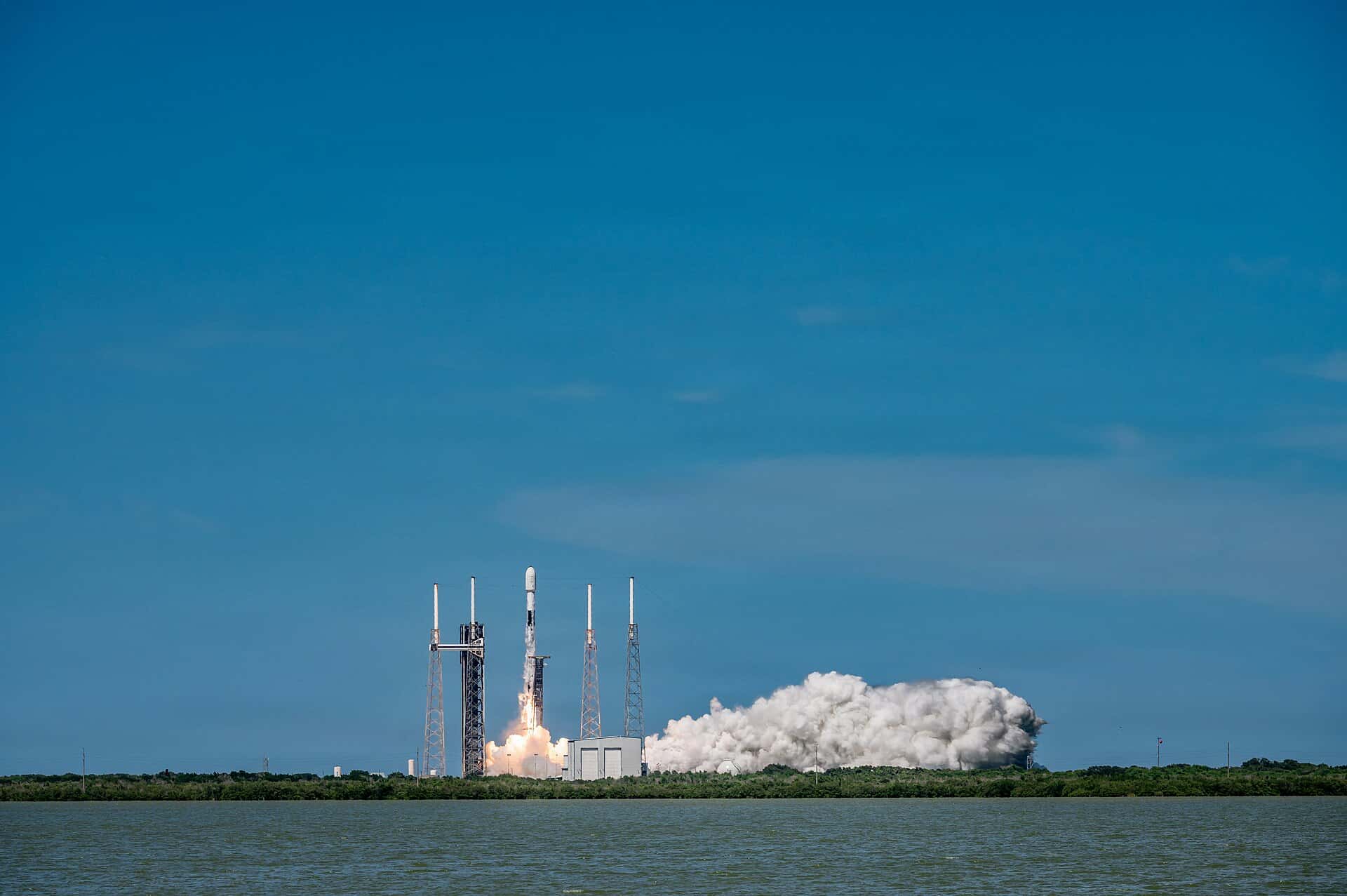
A SpaceX Falcon 9 rocket roared off a launch pad at Cape Canaveral Space Force Station carrying a novel robotic spacecraft designed to service satellites in orbit, the latest liftoff in a relentless launch cadence that has kept Florida's Space Coast among the busiest spaceports on the planet. The mission, built around technology intended to extend the life of aging satellites, highlights both the growing sophistication of the space industry and the central role Florida plays in it.
The launch drew the familiar rhythm of a modern Space Coast liftoff, from the countdown and the roar of engines to the arc of the rocket climbing over the Atlantic. Yet the payload it carried set the mission apart from the communications satellites and cargo runs that make up much of the region's manifest. Rather than simply placing a spacecraft into orbit and moving on, this flight was aimed at delivering a machine whose purpose is to tend other machines already circling the planet.
The mission
The Falcon 9 launched from a pad at Cape Canaveral carrying a robotic servicing spacecraft designed to rendezvous with and service satellites in geosynchronous orbit, a capability that could reshape how operators manage their fleets. The payload centered on a mission robotic vehicle intended to dock with existing satellites, extending their operational lives and demonstrating a technology that has long been a goal of the industry. The concept promises to reduce the need to replace expensive satellites simply because they run low on fuel or need repositioning.
In-orbit servicing represents a frontier for the space industry, with the potential to change the economics of operating satellites. Rather than launching a costly replacement when a satellite nears the end of its useful life, operators could dispatch a servicing vehicle to refuel, reposition, or repair it. The mission that launched from Florida marks a step toward making that vision a routine part of the space economy.
Reaching a target satellite in geosynchronous orbit demands precise navigation and delicate maneuvering, since the servicing vehicle must approach a spacecraft that was never designed to be caught and held. Engineers have spent years refining the sensors, docking mechanisms, and control systems needed to close in on a client satellite without damaging it. A successful demonstration would help prove that such rendezvous operations can be carried out reliably and safely, a prerequisite for any broader business built on the idea.
A relentless launch cadence
The launch is one of many from Florida's Space Coast, where SpaceX and other operators have driven the frequency of liftoffs to record levels. The company's Falcon 9 has become one of the most-flown rockets in history, with boosters routinely landing and being reused across dozens of missions. That reusability has helped push down the cost of reaching orbit and enabled a pace of launches that would have been unimaginable a generation ago.
The Space Coast now regularly hosts multiple launches within a single week, a tempo that has transformed the region and cemented its status as a global hub for spaceflight. The steady stream of missions carries a wide range of payloads, from communications satellites and government spacecraft to science missions and cargo bound for orbit. The servicing mission adds to that diverse manifest, showcasing the range of activity flowing through Florida's launch sites.
Sustaining that cadence requires an intricate choreography behind the scenes. Range crews clear airspace and waterways, weather officers track conditions along the coast, and recovery teams position themselves offshore to retrieve returning boosters. Each of those steps has been streamlined over years of repeated operations, turning what was once an exceptional event into something closer to routine. The result is a launch site capable of turning around missions in rapid succession while still holding to strict safety standards.
Why it matters for Florida
The space industry has become a major economic force on Florida's east coast, supporting thousands of jobs and drawing companies, workers, and investment to the region around Cape Canaveral and the Kennedy Space Center. The relentless launch cadence sustains a broad ecosystem of aerospace firms, contractors, and suppliers, and it draws crowds of spectators who gather along the coast to watch rockets climb into the sky.
Each launch reinforces Florida's position at the center of the American space enterprise, a status that carries economic and strategic weight. The Space Coast competes with other launch sites around the country and the world, and its high tempo of operations helps keep it at the forefront. For the communities of Brevard County and the surrounding area, the space industry is a defining feature of the local economy and identity.
The benefits ripple well beyond the launch pads themselves. Hotels, restaurants, and small businesses along the coast see a lift when major missions bring visitors to the region, and the presence of a skilled aerospace workforce supports schools, housing, and services throughout the area. A specialized mission like an in-orbit servicing flight underscores the breadth of expertise the region now hosts, reaching beyond routine launch operations into advanced spacecraft technology.
The broader space economy
The servicing mission fits into a rapidly expanding commercial space sector that has moved well beyond simply launching satellites into orbit. Companies are developing capabilities to service, refuel, and eventually manufacture and assemble structures in space, opening new lines of business and new possibilities for how humanity operates beyond Earth. Florida's launch infrastructure positions the state to benefit from that growth.
Government agencies and private companies alike are investing in these advanced capabilities, seeing them as essential to the future of space operations. The mission that launched from Cape Canaveral demonstrates technology that could become a standard tool for satellite operators, and its success would help validate a business model that many in the industry believe represents the next phase of the space economy.
Servicing and life-extension technology also speaks to a broader concern within the industry about the sustainability of activity in orbit. As the number of satellites grows, so does interest in tools that can keep spacecraft functioning longer, reposition them when needed, and eventually help manage the crowded regions of space around the planet. A vehicle capable of approaching and working with an existing satellite is a foundational piece of that larger effort, one that could inform how operators think about the full life cycle of their fleets.
A busy stretch for spaceflight
The launch came amid an especially active period for the space industry, with missions lifting off from Florida and from other launch sites around the country. SpaceX has maintained an aggressive schedule across its facilities, and other operators are ramping up their own launch activity, contributing to a broader surge in spaceflight. The pace shows no sign of slowing, with a full manifest of missions planned in the months ahead.
That activity keeps launch teams, range operators, and the supporting workforce busy around the clock. The high tempo also underscores the maturation of an industry that has shifted from occasional, headline-grabbing launches to a routine, high-volume operation. Florida sits at the heart of that transformation, hosting a significant share of the nation's launches.
The growing frequency of flights has changed how the public experiences spaceflight as well. Where a single launch once commanded national attention for days, missions now lift off often enough that many pass with only brief notice. Even so, distinctive flights continue to stand out, and a mission carrying a robotic servicer bound for satellites already in orbit offers a reminder of how varied and technically ambitious the manifest passing through Florida has become.
The workforce behind the launches
Behind every liftoff stands a workforce that has grown alongside the region's launch tempo, spanning engineers, technicians, and specialists across a range of disciplines. Missions built around advanced technology such as in-orbit servicing draw on skills that reach beyond traditional launch operations, from spacecraft design and robotics to the software that guides autonomous rendezvous. That demand for talent has helped make the Space Coast a magnet for aerospace professionals and for the training programs that prepare them.
The steady flow of work has encouraged companies to build or expand facilities in the region, deepening the local supply chain and creating opportunities for smaller firms that support larger operators. As the industry pushes into more complex missions, the range of expertise concentrated along Florida's coast continues to widen, strengthening the region's ability to take on ambitious projects.
For workers and their families, the industry offers a measure of stability rooted in a launch schedule that has stayed full and a sector that keeps expanding. The presence of high-skill, high-wage jobs shapes the character of communities across the area and reinforces the region's long identity as a center of American spaceflight. Each specialized mission adds another dimension to the work available, from routine satellite deployments to the emerging field of on-orbit services.
What comes next
The servicing spacecraft now begins its own mission in orbit, a journey expected to unfold over years as it demonstrates its capabilities and services satellites. Its performance will be watched closely as a test of whether in-orbit servicing can become a dependable and economical part of the space industry.
For Florida, the launch is one more entry in a busy year for the Space Coast, with many more missions on the schedule. The region's launch pads will continue to see steady activity as the space economy expands, reinforcing the state's role as a launchpad for the nation's ambitions in orbit and beyond. For the workers, businesses, and space enthusiasts of Florida's east coast, the rockets climbing over the Atlantic remain a powerful symbol of the region's place in the future of spaceflight.
Whether in-orbit servicing grows into a routine business or remains a specialized capability, the mission that lifted off from Cape Canaveral illustrates the direction the industry is heading and the part Florida is positioned to play in it. As operators look for ways to make satellites last longer and space activity more sustainable, the technologies being demonstrated in orbit today could shape the missions launching from the Space Coast for years to come.
Spotted an issue with this article?
Have something to say about this story?
Write us a letterComments
No comments yet. Be the first to weigh in.
Related Coverage
Second Kennedy Space Center Contractor Plans Layoffs as NASA Brings Work In-House
11h ago

RFK Jr. Brings Medical School Nutrition Push to Orange Park as UF, LMU and Jacksonville Programs Sign On
11h ago

Nine Florida HIV Prevention Groups Lose Direct CDC Grants as Federal Money Shifts to State Health Department
13h ago

Customs Rule That Could Cut Off Mailed Prescriptions From Canada for Florida Seniors Delayed to Jan. 20
15h ago