SpaceX Scrubs Starlink Falcon 9 Launch at Cape Canaveral as Busy June Manifest Looms
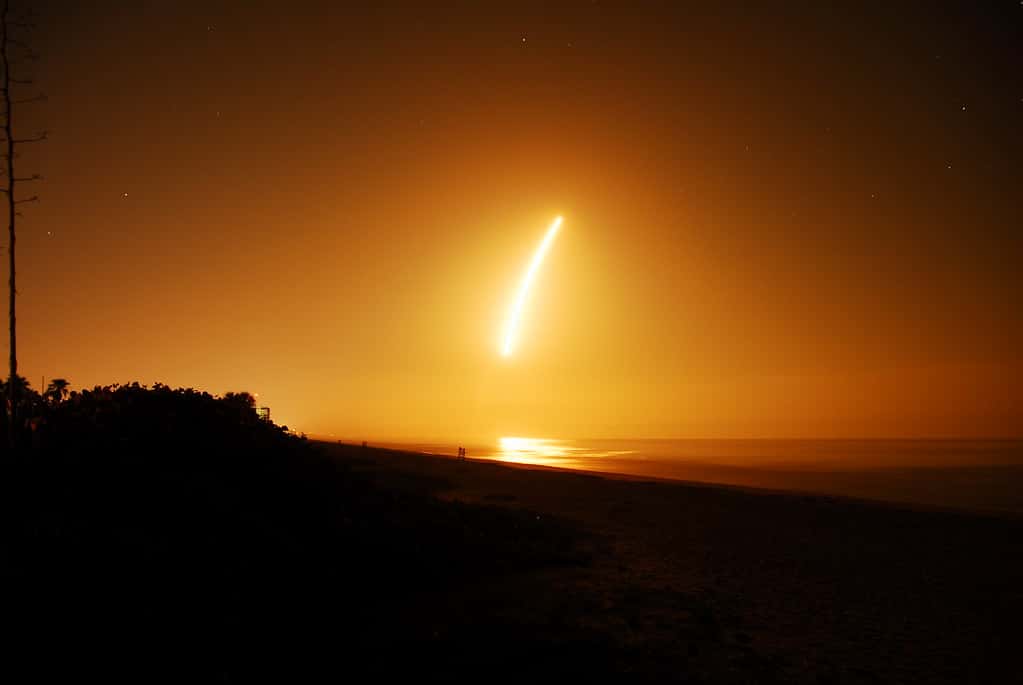
SpaceX scrubbed a Falcon 9 launch from Cape Canaveral Space Force Station on June 3, 2026, citing poor weather, a routine but consequential delay for the Florida Space Coast economy that depends on a steady drumbeat of rocket launches. The mission, designated Starlink 10-43, was set to carry 29 Starlink broadband internet satellites into low-Earth orbit to expand the company's sprawling constellation.
For Brevard County, where Cape Canaveral and the neighboring Kennedy Space Center anchor a launch-driven economy, a single scrub is a familiar inconvenience rather than a crisis. But the delay underscores how tightly Florida's Atlantic coast has bound its fortunes to the cadence of spaceflight, and how the area's weather, hotels, viewing crowds and thousands of jobs all revolve around the question of when the next rocket leaves the pad.
The scrubbed flight was just one entry in a crowded June manifest that promises a string of high-profile launches from the Cape in the weeks ahead. With multiple missions queued up, the rescheduling of Starlink 10-43 is likely to be absorbed quickly, but it offers a window into the rhythms that define life and commerce along Florida's Space Coast.
What Was Scrubbed and Why
The Falcon 9 rocket was prepared to loft 29 Starlink satellites, the broadband spacecraft that form SpaceX's low-Earth-orbit internet network. Each batch adds capacity and coverage to a constellation that now beams internet service to customers around the world, including rural and underserved areas where traditional connectivity is scarce. The Starlink 10-43 designation marks it as one in a long, numbered series of routine constellation-building flights.
Weather was the culprit behind the June 3 scrub. SpaceX called off the launch because of poor conditions, a decision that reflects the strict criteria that govern rocket launches. Lightning, thick clouds, high winds and other atmospheric factors can all force a delay, and launch controllers will stand down rather than risk a rocket and its payload by flying into unsafe skies.
Such scrubs are a regular feature of operations on Florida's Atlantic coast, where the warm, humid climate routinely spawns thunderstorms and rapidly shifting conditions, particularly heading into the summer months. The same weather that draws tourists to Florida's beaches also makes the Space Coast one of the more challenging environments for keeping rockets on schedule, and launch teams build flexibility into their plans to accommodate frequent delays.
When a launch is scrubbed, SpaceX typically targets the next available window, often the following day or shortly after, once conditions improve. The company's high launch frequency and reusable hardware allow it to recycle quickly, turning what might once have been a major setback into a brief pause in an otherwise relentless schedule.
The summer scrub season is a familiar rhythm for anyone who lives near the Cape. As Florida moves into its rainy months, afternoon and evening storms build along the coast with little warning, and the strict launch-weather rules that protect rockets from lightning and turbulence frequently come into play. Launch teams plan around these patterns, often targeting early-morning or late-night windows to slip between the storms, but the weather still forces regular delays through the heart of summer.
A Veteran Booster and a Record Chase
The mission was also set to add to SpaceX's growing ledger of reusability records. The Falcon 9 first-stage booster assigned to the flight, tail number B1090, was scheduled for its 12th trip to space. That single booster has already compiled a notable resume, having previously flown NASA's Crew-10 astronaut mission, the CRS-33 cargo run to the International Space Station, and the Bandwagon-3 rideshare mission.
That track record illustrates the reusability model that has reshaped the economics of spaceflight and helped drive the high launch tempo Florida now relies on. By recovering and reflying boosters, SpaceX can launch far more often and at lower cost than the expendable rockets of the past, fueling the dense schedule of missions that flows through Cape Canaveral.
After delivering its payload, the booster was to attempt a landing on the droneship A Shortfall of Gravitas, stationed in the Atlantic Ocean. That recovery would have marked the 153rd landing on that particular vessel and the 619th booster landing overall for the company, milestones that capture just how routine, and how frequent, rocket recovery has become.
The scale of those numbers, hundreds of landings and a single booster on its 12th flight, would have seemed like science fiction only a decade ago. For the Space Coast, the reusability revolution has translated into more launches, more recovery operations and more of the activity that sustains the region's space-focused workforce and the businesses that orbit around it.
Why Florida's Launch Tempo Matters
The economic stakes of the launch cadence are substantial for Brevard County and the surrounding region. Cape Canaveral and the Kennedy Space Center area support thousands of jobs, spanning the engineers, technicians and support staff who prepare and fly rockets, as well as the broader web of contractors, suppliers and service businesses that depend on a busy launch site.
Beyond the direct workforce, the Space Coast has cultivated a thriving launch-tourism industry. Each high-profile launch draws crowds of spectators to beaches, parks and viewing areas along the coast, filling Space Coast hotels and restaurants and turning rocket launches into a reliable tourist attraction. The more frequently rockets fly, the more often visitors stream into the region to witness them.
That tourism dynamic gives launch frequency a direct line to local commerce. A packed manifest means more weekends with launch crowds, more booked hotel rooms and more spending at the businesses that cater to space enthusiasts. A scrub like the one on June 3 can disappoint visitors who timed a trip around a launch, but the sheer volume of missions on the calendar usually offers another chance soon after.
The region's identity is now inseparable from spaceflight. Decades after the area earned its Space Coast nickname during the early space age, the modern surge in commercial launches has revitalized that brand, anchoring an economy that markets itself around the spectacle of rockets rising over the Atlantic. Maintaining a high launch tempo is, in effect, maintaining a core engine of the local economy.
The ripple effects reach well beyond the immediate coastline. Real estate, restaurants, retailers and a growing cluster of aerospace suppliers have all expanded as the launch cadence climbed, drawing new residents and workers to Brevard County. The promise of a sustained, high-volume launch schedule has become a selling point for the region, helping to attract the kind of long-term investment that turns a cyclical industry into a stable economic foundation.
A Packed June Manifest
The scrubbed Starlink flight is only the opening act in a busy June schedule at Cape Canaveral. Among the missions on the upcoming manifest is the launch of SiriusXM's SXM-11 satellite, a spacecraft for the satellite radio company that delivers audio programming to millions of subscribers across the country, including throughout Florida.
Also on the docket is an AST SpaceMobile BlueBird Block 2 satellite. AST SpaceMobile is building a network designed to connect everyday smartphones directly to satellites, an ambitious effort to extend cellular coverage to areas beyond the reach of traditional cell towers. Launching its next-generation BlueBird spacecraft from the Cape adds another marquee mission to the month's lineup.
Rounding out the highlighted manifest is a Globalstar 2-R Mission 1, which is set to carry nine satellites. Globalstar operates a satellite network used for communications and connectivity services, and the multi-satellite launch reflects the broader trend of deploying constellations of spacecraft to expand global coverage. Together, the SiriusXM, AST SpaceMobile and Globalstar missions illustrate the diversity of customers funneling through Florida's premier launch site.
That diversity matters for the Space Coast's long-term health. A manifest that spans broadband megaconstellations, satellite radio, direct-to-phone connectivity and traditional satellite networks signals a deep and varied pipeline of business, insulating the region from reliance on any single customer and reinforcing Florida's position as the nation's busiest gateway to orbit.
The volume of missions also shapes how the Cape operates day to day. Range officials, recovery crews and ground teams must juggle overlapping launch windows, droneship deployments and weather constraints across multiple customers, a logistical balancing act that has become routine only because the cadence has grown so steep. Each scrub reshuffles that schedule slightly, but the depth of the manifest means the overall tempo rarely slows for long.
What's Next
With the June 3 scrub behind it, SpaceX is expected to make another attempt at launching Starlink 10-43 as soon as weather and range conditions allow, in keeping with the company's pattern of quickly recycling scrubbed missions. The 29 Starlink satellites aboard will, once launched, continue the steady expansion of a constellation that has become central to SpaceX's business.
The broader story for Florida is the relentless pace of the weeks ahead. With SiriusXM's SXM-11, the AST SpaceMobile BlueBird Block 2 satellite and the nine-satellite Globalstar 2-R Mission 1 all on the manifest, the Space Coast is poised for a busy stretch that will keep launch crews, recovery teams and tourism operators occupied throughout the month.
Attention will also stay fixed on booster B1090 and the reusability milestones it was poised to extend. A successful 12th flight and a landing on A Shortfall of Gravitas would push the company past the 619th booster landing mark, adding to a tally that has redefined expectations for how often and how cheaply rockets can fly. Each such milestone reinforces the model that keeps Florida's launch site humming.
For Floridians who live and work along the coast, the cycle of scrubs and successful launches is simply the texture of the regional economy. A weather delay here and there is the price of doing business beneath Florida's volatile summer skies, and the long-term trajectory points only toward more launches, more recoveries and a Space Coast ever more tightly woven into the nation's reach for orbit.
Spotted an issue with this article?
Have something to say about this story?
Write us a letterComments
No comments yet. Be the first to weigh in.
Related Coverage

Democrat Nicole Locklin Challenges Longtime Rep. Mario Díaz-Balart in Redrawn 26th Congressional District
1h ago

SpaceX Launches Bandwagon-5 Rideshare From Cape Canaveral, Lighting Up a Brief Space Jellyfish Over Florida
18h ago

Kathy Castor and Mike Beltran enter final stretch of a tight race in a redrawn, Trump-leaning Tampa district
23h ago

G20 Summit at Trump National Doral Will Bring Road Closures and a Secret Service Security Zone to Miami-Dade in December
1d ago