Supreme Court will decide whether Trump can ban asylum at the southern border, a case watched closely in Florida
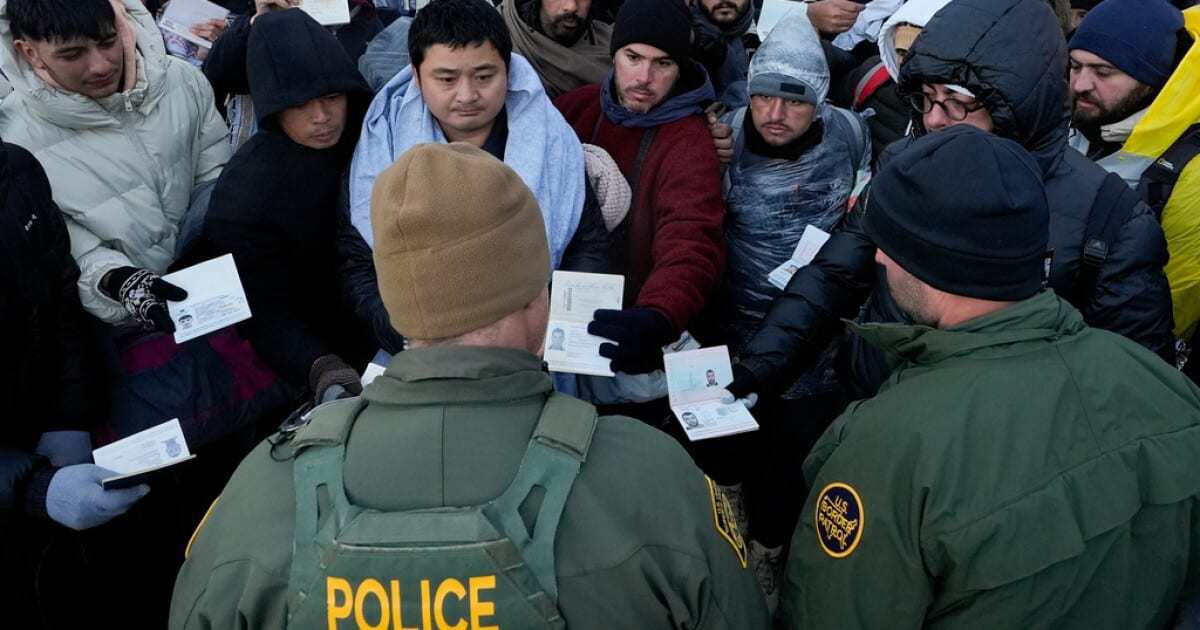
The U.S. Supreme Court agreed Friday to decide whether President Donald Trump can shut off access to asylum for migrants who cross the southern border between ports of entry, taking up a case that goes to the heart of the administration's immigration crackdown and to a legal protection that has mattered to many of the Cuban, Venezuelan, Haitian and Nicaraguan migrants who have settled in Florida.
The justices will review a lower court ruling that found Trump's asylum ban illegal. The case, captioned Mullin v. RAICES after Homeland Security Secretary Markwayne Mullin and the Texas immigrant legal aid group that is one of the challengers, is expected to be argued in the spring, with a decision likely by the end of June or early July 2027. The ban remains in effect while the case is pending.
What the court agreed to decide
On his first day back in office in January 2025, Trump issued a proclamation declaring an "invasion" at the southern border. Relying on a section of the Immigration and Nationality Act that lets the president suspend the entry of classes of foreigners, the order suspended entry for migrants crossing between official ports of entry and barred them from seeking asylum and other legal protections. Department of Homeland Security guidance put the policy into effect, and authorities have used it to remove migrants without letting them apply for asylum, CBS News reported.
The justices accepted two questions, according to reports on the order: whether the proclamation and the guidance carrying it out are lawful, and whether the lower court had authority to grant relief as broad as it did. A third question the government raised, about class action procedure, was not included, according to one report.
How the case got here
Three nonprofit groups and 13 individuals filed a class action lawsuit in February 2025. Later that year, U.S. District Judge Randolph Moss in Washington set aside the asylum restrictions, finding that the president lacked authority to replace the rules and procedures Congress wrote into immigration law. Moss certified a class covering everyone subject to the proclamation and blocked enforcement against them.
In April, a divided three-judge panel of the U.S. Court of Appeals for the D.C. Circuit upheld Moss's decision. The majority held that the proclamation and guidance exceeded the president's authority, including the power to suspend migrants' right to apply for asylum and to carry out summary removals. The appeals court then paused its own ruling while the administration asked the Supreme Court to step in, which is why the policy has stayed in force.
The arguments on each side
Federal attorneys argue that the government can categorically deny asylum to migrants covered by the order and should not have to accept applications that are destined to be rejected. They contend that long processing times contributed to a major influx at the border because many migrants were released into the country while they waited for a decision.
The challengers are represented by lawyers from the American Civil Liberties Union and the National Immigrant Justice Center. They argue that border crossings were already falling before Trump took office and that the order is an attempt to unilaterally "eviscerate" legal protections for people fleeing danger. Federal law gives people the right to seek asylum if they fear persecution in their home countries, regardless of how they arrived in the United States, and the challengers say asylum decisions must be made case by case. The executive branch decides whether to grant asylum, which allows people to live and work legally in the country.
Unlawful border crossings have since reached what CBS News described as historic lows, while immigration detention has hit record highs.
Why it matters in Florida
Few states have as much at stake in the nation's asylum system as Florida. Over the past several years, large numbers of Cubans, Venezuelans, Nicaraguans and Haitians fleeing political repression and economic collapse settled in South Florida and the Orlando area, many after crossing the southern border and seeking protection. Their cases now sit in immigration courts in Miami, at the Krome detention center in southwest Miami-Dade County and in Orlando, among others.
Miami-Dade County has more residents with pending deportation cases in immigration court than any other county in the country, according to Syracuse University's Transactional Records Access Clearinghouse, which tracks court data. Nationally, about 3 million cases were pending at the end of September 2026, according to the clearinghouse. Many of those cases include asylum claims.
The proclamation itself is aimed at the U.S.-Mexico border, so a ruling would not directly decide cases already pending in Florida's courts. But the justices' view of how far a president can go in suspending asylum by proclamation could shape future policy toward the same nationalities that make up much of South Florida's immigrant community, and toward any future mass migration from the Caribbean.
A string of immigration cases
The asylum ban is one of several Trump immigration policies before the high court. The justices are also weighing the administration's removal of migrants to third countries and its detention of immigrants without bond hearings, CBS News reported.
In June, the court ruled 6-3 in Mullin v. Al Otro Lado that the government may turn away asylum seekers at the border before they cross, finding that a migrant still in Mexico has not arrived in the United States under the asylum statute. That decision addressed a practice known as metering. The new case asks a different question: whether the president can bar people who are already on U.S. soil from applying at all.
Floridians have watched earlier rulings closely. In May 2025, the Supreme Court allowed the administration to end a humanitarian parole program that had let more than 500,000 Cubans, Haitians, Nicaraguans and Venezuelans live and work in the United States, a decision that drew sharp reaction across South Florida. In July 2025, the court declined Florida's request to enforce a state law that made it a crime for undocumented immigrants to enter the state, leaving that law blocked while litigation continued.
Florida's role in enforcement
Florida has made itself one of the administration's closest partners on immigration enforcement under Gov. Ron DeSantis, from state-run detention to agreements that let local law enforcement agencies work with federal immigration authorities. The asylum case does not involve those state programs directly, but its outcome will help define the federal legal framework that state enforcement operates within. Gov.-elect Byron Donalds, a Republican who won the governor's race Nov. 3, takes office in January, months before the justices are expected to rule.
What's next
The parties will file written briefs over the winter, and the court is expected to hear arguments in spring 2027. A decision is expected by the end of June or early July. Until then, the proclamation stays in place, and migrants who cross between ports of entry along the southern border can continue to be turned away without an asylum hearing. The ACLU said it looks forward to making its case before the justices.
Spotted an issue with this article?
Have something to say about this story?
Write us a letterComments
No comments yet. Be the first to weigh in.
Related Coverage

Trump administration scraps required pay raises for Head Start teachers, affecting programs serving nearly 40,000 Florida children
4m ago

Student Loan Collections Loom for 9 Million in Default, Including Hundreds of Thousands of Floridians
1h ago
Rubio acknowledges 'people are struggling' economically after GOP midterm losses as Florida Republicans hold on narrowly
1h ago
Cuban Man Who Lived in Miami Describes 'Nightmare' After ICE Deported Him to the Central African Republic
5h ago