Suspended Osceola Sheriff Marcos Lopez Heads Toward a Fall Racketeering Trial as Co-Defendants Plead Out
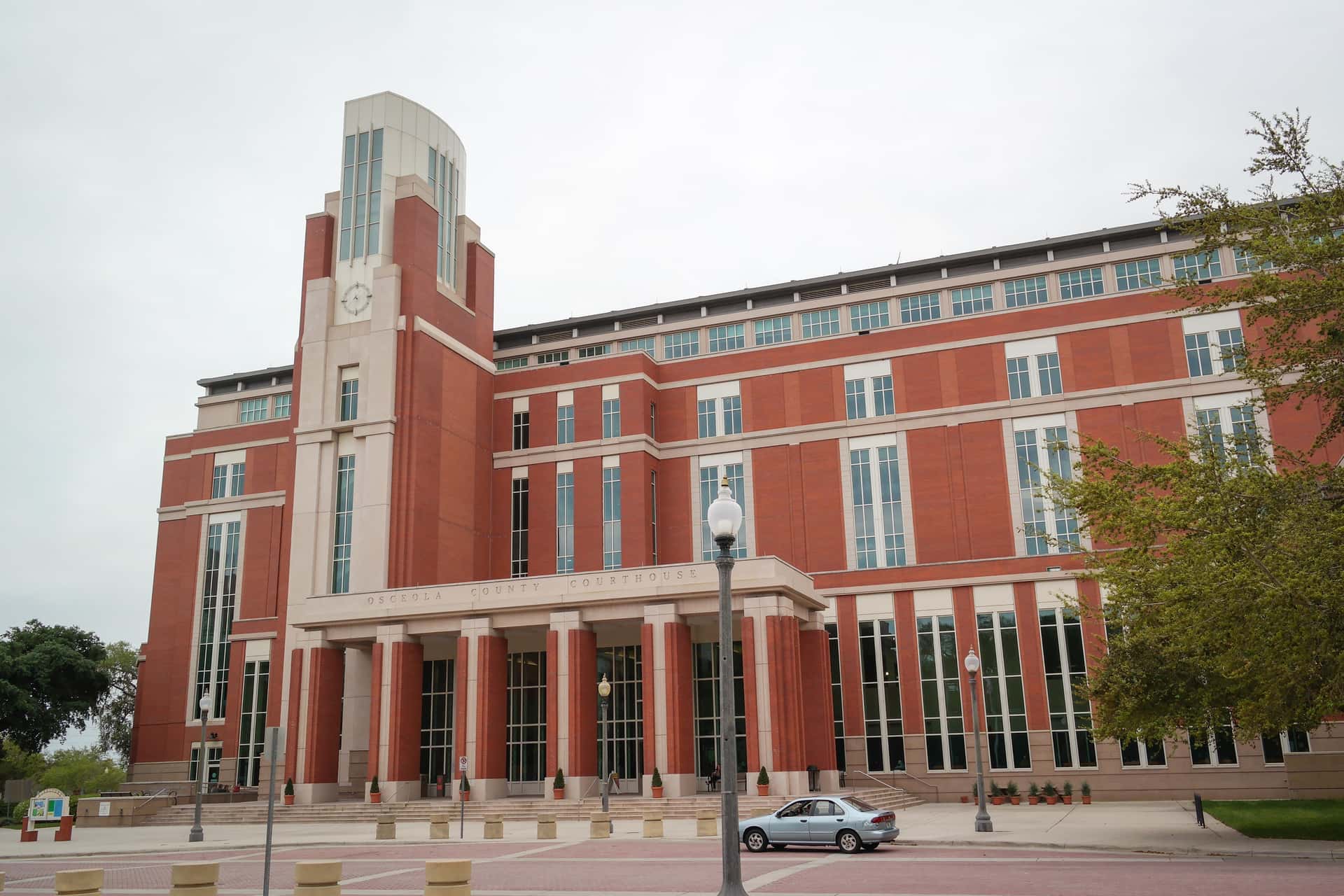
Suspended Osceola County Sheriff Marcos Lopez is heading toward a fall trial on racketeering charges connected to what prosecutors describe as a multimillion-dollar illegal gambling operation running through arcades and casinos in Lake and Osceola counties, in one of the most closely watched criminal cases in Central Florida.
Lopez has pleaded not guilty. He was arrested in June 2025 and suspended from office by Governor Ron DeSantis following that arrest, and he remains suspended pending the outcome of the case. He is presumed innocent unless and until the state proves the charges at trial.
Three co-defendants have already resolved their cases. Carol Cote, Sharon Fedrick and Sheldon Wetherholt have pleaded guilty or no contest to racketeering charges, and at least one co-defendant has agreed to testify, according to reporting on the case docket.
What the state alleges
The charges center on Florida's Racketeer Influenced and Corrupt Organization Act, the state analogue to the federal RICO statute. A racketeering charge under Florida law requires the state to prove a pattern of predicate criminal offenses connected to an enterprise, which is a more demanding structure than proving any single underlying crime.
Prosecutors have described the alleged enterprise as an illegal gambling network operating through arcades and casinos in Lake and Osceola counties. Florida law permits certain amusement arcade operations while prohibiting games of chance that pay out cash or cash equivalents, and the line between the two has generated litigation and enforcement action across the state for years.
The state has indicated it intends to prove the case using documentary records, digital evidence and insider testimony. That combination is characteristic of racketeering prosecutions, where the pattern element requires the state to connect discrete transactions and communications into a demonstrated structure.
The figure of roughly $21 million has been associated with the alleged scheme in coverage of the case. That number reflects the state's characterization of the operation's scale rather than an adjudicated finding.
The trial schedule
Trial dates in the case have moved more than once, which is common in complex prosecutions where discovery volume is large. Reporting on the docket has referenced an October 20, 2026 setting and a subsequent November 10 date, with Judge Brian Welke of the Fifth Judicial Circuit presiding.
Judge Welke sits in Lake County, one of the two counties where the alleged conduct occurred. Complex racketeering cases involving multiple defendants and extensive documentary discovery routinely require continuances as defense counsel work through the state's disclosures.
The resolution of the three co-defendants ahead of trial changes the posture of the case. Cooperating witnesses who have pleaded and agreed to testify are a standard feature of racketeering prosecutions and are also a standard target for cross-examination, because their plea agreements give the defense a basis to challenge their motivation.
The suspension and the office
Florida's constitution gives the governor authority to suspend county officers, including sheriffs, who are charged with a felony or with misconduct in office. That suspension is an executive action independent of the criminal case, and the Florida Senate holds the power to remove or reinstate a suspended official.
DeSantis suspended Lopez following the June 2025 arrest and appointed a replacement to run the Osceola County Sheriff's Office in the interim. The office has continued operating under that appointed leadership through the pendency of the case.
Osceola County is one of Central Florida's fastest-growing counties, anchored by Kissimmee and St. Cloud and by the tourism corridor extending toward the Orlando theme park complex. The sheriff's office serves a population that has expanded substantially over the past decade.
Lopez's arrest followed years of controversies documented in local coverage of his tenure. He was first elected in 2020, becoming the county's first Hispanic sheriff.
Why racketeering cases are difficult
Florida RICO prosecutions carry a high evidentiary burden and a correspondingly high sentencing exposure. The state must prove both the predicate offenses and the pattern connecting them to an enterprise, and jurors must find that structure rather than merely finding that individual crimes occurred.
That burden cuts both ways for the defense. A racketeering charge that fails on the pattern element can collapse even where individual predicate acts are provable, which is why defense strategy in these cases often focuses on severing the alleged conduct into unconnected pieces.
The involvement of a sitting law enforcement official adds a layer. Public corruption prosecutions face jury pools with strong prior views in both directions, and the state's burden includes overcoming the credibility a badge conveys while the defense works to preserve it.
Conviction on a first-degree felony racketeering count in Florida carries substantial prison exposure, and racketeering convictions frequently trigger forfeiture proceedings against assets alleged to be proceeds of the enterprise.
What it means for Osceola County
The immediate practical effect on county residents has been limited, because the sheriff's office has continued to operate under appointed leadership. The longer-term question is when the office returns to elected leadership and under what circumstances.
Public corruption cases involving law enforcement carry consequences beyond the individual defendant. Agencies facing prosecutions of their leadership deal with recruitment and retention effects, with defense challenges in unrelated cases where agency credibility is raised, and with community trust that is easier to lose than to rebuild.
Osceola County's electorate will eventually decide the office's future at the ballot box, on a timeline shaped by the case outcome and by the Senate's disposition of the suspension.
How Florida's suspension power works
Article IV of the Florida Constitution gives the governor authority to suspend from office any state or county officer, other than a member of the Legislature or the cabinet, who is indicted for a crime or charged with misconduct in office, malfeasance, neglect of duty, drunkenness, incompetence, permanent inability to perform official duties or commission of a felony.
The suspension takes effect by executive order and does not require any judicial finding. The governor may also appoint a replacement to serve during the suspension, which is what happened in Osceola County following the June 2025 arrest.
The Florida Senate holds the power to remove the officer permanently or to reinstate them. That process is quasi-judicial, involving a special master who takes evidence and makes recommendations, and the Senate has historically deferred action until the underlying criminal case resolves.
The result is that a suspended official can remain in limbo for a year or more, drawing no salary and holding no authority while the criminal case proceeds. An acquittal does not automatically restore the office; the Senate must act.
Gambling law in Florida
The legal framework the case operates within is genuinely complicated. Florida prohibits most forms of gambling by statute while carving out exceptions for the state lottery, pari-mutuel wagering, tribal gaming operated by the Seminole Tribe under a compact with the state, and certain charitable activities.
Amusement arcades occupy contested ground. Florida law permits arcade machines that award noncash prizes of limited value, a category intended to cover skill-based amusement games. Operations that pay cash or cash equivalents fall outside that exception, and the distinction has generated enforcement actions across the state for two decades.
The Legislature has amended the arcade statutes multiple times in response to operators structuring around prior definitions. Each amendment has produced a new round of operations testing the revised boundaries, and law enforcement agencies have brought cases under both gambling statutes and racketeering provisions.
Racketeering charges are the state's preferred tool when it can establish an organized structure, because they allow prosecutors to present the operation as a whole rather than as a series of individual regulatory violations, and because they carry substantially greater penalties and forfeiture exposure.
Public corruption prosecution in Florida
Florida has a substantial history of public corruption cases at the county and municipal level, prosecuted by State Attorneys, by the Office of Statewide Prosecution and by federal prosecutors depending on the conduct alleged and the jurisdictional hooks available.
The Florida Commission on Ethics handles civil enforcement of the state's ethics laws, a separate track from criminal prosecution. Its jurisdiction covers conflicts of interest, gift restrictions and financial disclosure violations rather than criminal conduct.
Sheriffs occupy an unusual position in Florida's governmental structure. They are constitutional officers elected countywide, they control their own budgets subject to county commission approval and they answer to voters rather than to any county administrator. That independence limits routine oversight.
The suspension and removal process is therefore the primary accountability mechanism between elections, and it depends on executive and legislative action rather than on administrative supervision. That structure is why criminal charges against a sheriff move directly to the governor's office.
Osceola County's growth
Osceola County has been among Florida's fastest-growing counties over the past two decades, absorbing population along the U.S. 192 corridor and in the master-planned communities that have developed south and east of the Orlando metropolitan core.
That growth has expanded the sheriff's office substantially in personnel and budget. Agencies growing quickly face recruitment, training and supervision challenges that established agencies with stable staffing do not, and rapid expansion has been identified in other jurisdictions as a risk factor for accountability problems.
The county's demographics have shifted alongside its growth, with a large and growing Puerto Rican and broader Hispanic population, particularly following migration after Hurricane Maria. Law enforcement community relations in that context involve language access and trust-building considerations.
Tourism shapes the county's public safety demands as well. The corridor serving visitors to the Orlando theme park complex generates calls for service, traffic enforcement and property crime patterns distinct from those in residential areas.
What's next
The trial setting is the immediate milestone. Complex cases of this type frequently see further schedule adjustments, and the docket in the Fifth Judicial Circuit is the authoritative source for the operative date.
Pretrial motions will shape what evidence the jury sees. Racketeering cases generate substantial litigation over the admissibility of co-conspirator statements, the scope of the alleged enterprise and the treatment of cooperating witness testimony.
Court records in the case are public through the Fifth Judicial Circuit clerk's offices. For Osceola County residents, the case docket rather than any single news report is where the case's actual progress can be tracked.
Spotted an issue with this article?
Have something to say about this story?
Write a letter to the editorComments
No comments yet. Be the first to weigh in.
Related Coverage
Six Years After the Frostproof Fishing Killings, a Polk County Jury Hears the Capital Case
1h ago

JSO Keeps Seizing Cars as Jacksonville Street Takeovers Collide With a Traffic Death Toll
3h ago
A 1992 Boynton Beach Assault Ends in a Prison Sentence After DNA and a Border Stop
13h ago
Hillsborough Deputies Arrest Lutz Man Accused of Holding Abuse Files
1d ago