DeSantis Breaks With the Florida GOP Over Amendment 1, Calling the Reserve Fund Push Foolish
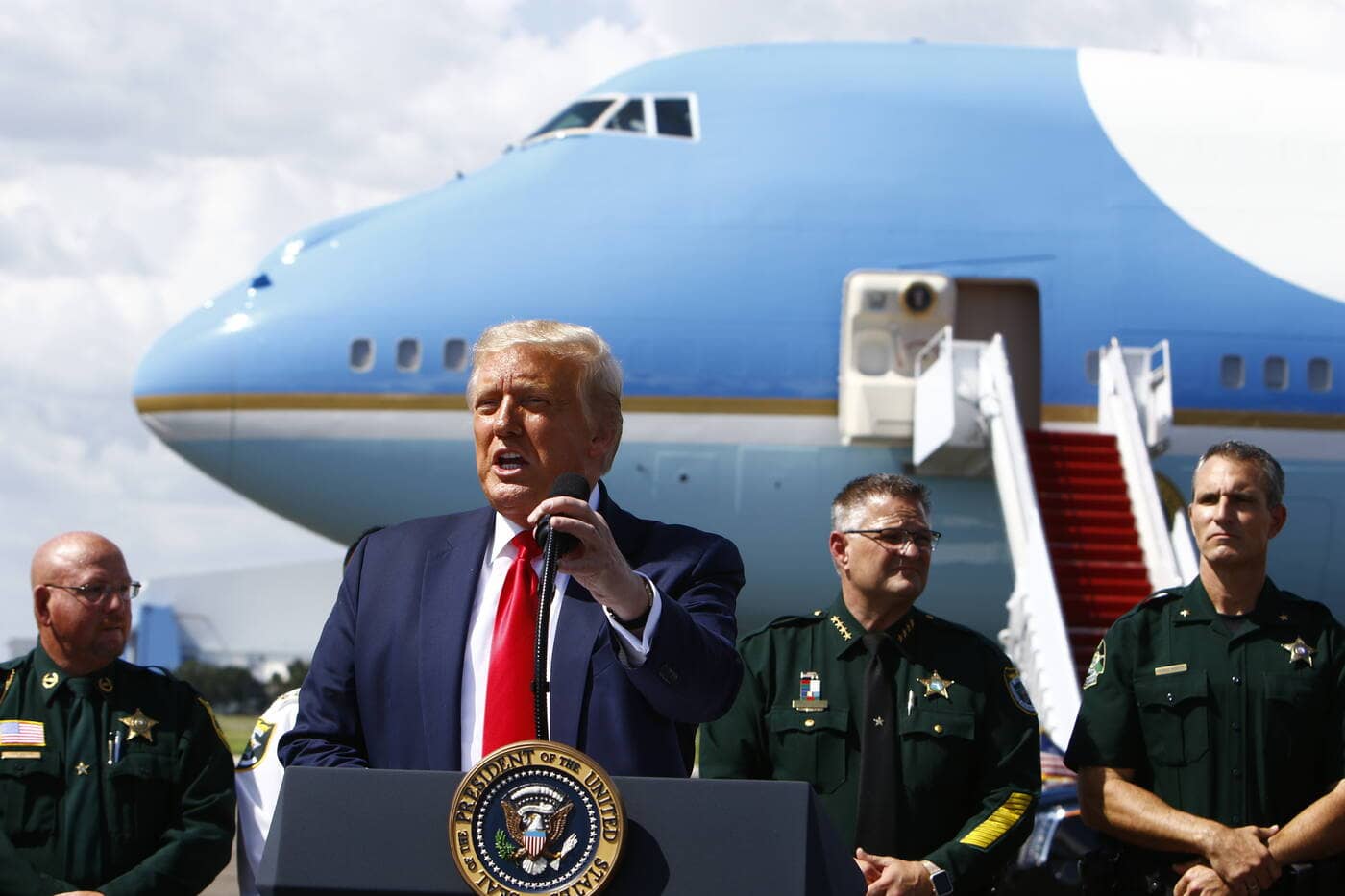
Governor Ron DeSantis publicly broke with the Republican Party of Florida on Tuesday over Amendment 1, the November ballot measure that would raise the cap on how much money state lawmakers can place in Florida's budget stabilization fund. Hours after the state party formally endorsed the amendment, DeSantis called the effort foolish and argued that any surplus revenue should be returned to Floridians through property tax relief rather than parked in a reserve account.
The split is unusual. A sitting governor rarely contradicts his own state party's official position on a ballot measure, and the disagreement exposes a policy fault line that has been widening in Tallahassee all year: what Florida should do with the large budget surpluses it has accumulated. The party's position is that the state should bank more of the money against future storms and downturns. The governor's position is that the state already has enough in reserve and should be cutting taxes instead.
Both sides of the argument have real consequences for Florida households. A larger reserve fund is what allows the state to respond to a major hurricane or a recession without raising taxes or cutting services mid-year. Property tax relief is the most direct way the state can address a cost that has climbed sharply for Florida homeowners. Voters will decide on November 3.
What Amendment 1 would do
Amendment 1 concerns Florida's budget stabilization fund, commonly described as the state's rainy day fund. Under the current constitutional framework, the amount lawmakers may deposit into that fund is capped as a share of general revenue. The amendment would raise that ceiling, allowing the Legislature to set aside a larger reserve than present law permits.
The Republican Party of Florida endorsed the measure alongside Amendment 3, framing Amendment 1 as a way to strengthen the state's ability to absorb storms, economic downturns and other emergencies without raising taxes or pulling money out of ongoing programs. That argument leans on Florida's exposure to hurricanes, which can impose sudden multi-billion-dollar costs on the state for debris removal, emergency housing, infrastructure repair and matching funds for federal disaster aid.
Supporters also point to Florida's bond ratings. Reserve levels are one of the factors rating agencies weigh when evaluating a state's creditworthiness, and a deeper cushion can help hold down the state's borrowing costs. Those savings are diffuse and rarely visible to individual taxpayers, but over the life of long-term infrastructure debt they are not trivial.
The amendment does not require lawmakers to fill the larger reserve. It raises the ceiling and leaves the actual deposit decision to each year's appropriations process. That distinction is central to how supporters describe the measure: they present it as creating an option, not an obligation.
The governor's objection
DeSantis argued that Florida's reserve is already maxed out and that the state has run the largest surpluses in its history. In his framing, the problem is not that Florida lacks the authority to save more, but that surplus revenue sitting in a state account is money that was collected from taxpayers and is not being returned to them.
His preferred use is property tax relief, specifically assisting local governments with grants so that homestead properties could be exempted from local property tax. That is a substantially more ambitious proposal than the incremental homestead exemption increases Florida has enacted in the past, and it would require the state to backfill revenue that currently funds county governments, municipalities, school districts and special districts.
The governor also floated using extra revenue to remove tolls once the property tax question is settled. Florida operates one of the largest toll road networks in the country, concentrated in Central Florida and along the turnpike system, and toll relief has recurred as a theme in his administration's tax proposals.
The disagreement is not new. DeSantis has spent much of the year pressing lawmakers toward aggressive property tax reduction, and has separately distanced himself from Amendment 3, the property tax measure already on the November ballot, noting that it was not his proposal. The tension between the governor's office and legislative Republicans over how to structure tax relief has been one of the defining political storylines of the year in Tallahassee.
Why property taxes are the flashpoint
Property taxes have become one of the most acute cost pressures on Florida households, and the reason is structural. Home values across the state rose sharply through the pandemic era and have largely held those gains. Because local property taxes are assessed as a millage rate applied to taxable value, rising values increase tax bills even when local governments hold their millage rates flat.
Florida's Save Our Homes cap limits annual assessment increases on homesteaded property, which shields long-term owners. It does not protect buyers who purchased recently at market value, and it does not apply to non-homesteaded property such as second homes, rentals and commercial real estate. The result is a widening gap between what neighbors pay on similar houses depending on when they bought.
Property insurance has compounded the squeeze. Florida homeowners carry among the highest premiums in the country, and the combination of insurance and property tax has become the fastest-growing component of the cost of owning a home in much of the state. When a governor proposes exempting homesteads from local property tax entirely, he is speaking directly to that pressure.
The complication is that local property tax is the primary funding source for county sheriff's offices, fire rescue districts, school district operations and municipal services. Replacing it would require a state revenue source of comparable size, and Florida has no personal income tax. Sales tax, documentary stamp taxes and tourism-related revenue would have to carry more of the load, and all three are sensitive to economic downturns in ways property tax is not.
What it means for Floridians
The immediate practical question for voters is narrow: should the Legislature be permitted to bank more surplus revenue than current law allows. A yes vote does not itself increase the reserve; it increases the maximum.
The broader question is what Florida does with money it collects above what it spends. A state that saves aggressively is better positioned to absorb a catastrophic hurricane season without cutting services or borrowing at unfavorable rates. A state that returns surplus revenue to taxpayers lowers the cost of living now and reduces the risk that a large reserve becomes a standing temptation for new recurring spending.
Floridians who have lived through a major storm recovery tend to weigh the reserve argument heavily. State reserves fund the immediate response before federal reimbursement arrives, and federal disaster aid typically requires a state and local match. Floridians facing a property tax bill that has climbed faster than their income tend to weigh the relief argument heavily. Both experiences are common in Florida, sometimes in the same household.
How Florida's reserve actually works
Florida maintains reserves in more than one form, which is part of why the arguments on either side can both sound correct.
The budget stabilization fund is the constitutionally established rainy day fund that Amendment 1 addresses. It is subject to a constitutional cap tied to general revenue, and withdrawals from it require specific legislative action. It is designed for genuine emergencies rather than routine budget smoothing.
Separately, the Legislature maintains unallocated general revenue reserves, which are simply money appropriated to no specific purpose and available in the following year. Those reserves are not subject to the constitutional cap and have grown substantially during Florida's recent surplus years. When the governor says the state already has a maxed out rainy day fund and enormous surpluses, he is describing both categories.
Florida also maintains the Hurricane Catastrophe Fund, a state-run reinsurance mechanism that backs private insurers and Citizens Property Insurance against catastrophic storm losses. That fund is financed by premiums from participating insurers rather than by general revenue, and it is legally distinct from the budget stabilization fund. A quiet hurricane season, such as the one Florida is currently experiencing, allows it to rebuild its own claims-paying capacity.
Understanding those distinctions matters for evaluating the amendment. Amendment 1 raises the ceiling on one of these accounts, not on the state's total financial cushion.
What the rating agencies say
Florida holds high credit ratings from the major rating agencies, and reserve levels are among the factors those agencies cite. The state's low debt burden, growing economy and substantial reserves have supported that position for years.
The rating matters because it determines the interest rate Florida pays when it borrows for infrastructure. Over the multi-decade life of transportation and facility bonds, small differences in borrowing cost compound into substantial sums. That is the concrete benefit supporters of a larger reserve can point to.
The counterargument is one of diminishing returns. Florida's ratings are already near the top of the scale, and additional reserves beyond what agencies consider strong produce little further benefit. Money accumulated past that point is simply money not returned to taxpayers and not spent on services.
Where exactly that threshold sits is a judgment rather than a calculation, and it is the substantive question underneath the political dispute. Neither side has framed the argument in those terms publicly, which is typical of ballot measure campaigns.
The political stakes
A public split between a sitting governor and his own state party creates practical problems for a ballot campaign. Party endorsement typically brings organizational support, volunteer mobilization and fundraising. Gubernatorial opposition brings a competing message delivered by the most visible Republican in the state.
The timing adds another layer. DeSantis leaves office after the 2026 election, and the question of who defines Florida Republican fiscal policy after he departs is already being contested. Legislative leaders who backed Amendment 1 will still be in Tallahassee next year. Candidates running to succeed DeSantis will have to decide which side of this argument to stand on.
For Democrats, the split offers an opening to argue that Republican fiscal policy in Florida is incoherent, though the party faces its own challenge in explaining what it would do with a surplus. Voting rights and budget advocacy groups have generally favored stronger reserves on the grounds that reserve depletion historically precedes cuts to health and human services programs.
What's next
Amendment 1 appears on the November 3 ballot alongside Amendment 3. Florida constitutional amendments require 60 percent approval to pass, a threshold that has defeated measures with clear majority support in past cycles. That bar means an intraparty fight over a Republican-endorsed amendment in a state where Republicans hold a registration advantage is genuinely consequential.
Campaign finance reports over the coming weeks will show whether outside money materializes on either side. Reserve fund amendments do not typically attract large independent expenditure campaigns, which means the public argument may largely be carried by the state party on one side and the governor's platform on the other.
Whatever happens in November, the underlying dispute will continue into the 2027 legislative session. The question of whether Florida's surpluses belong in a savings account or back in taxpayers' hands is not settled by a single ballot measure, and the next governor will inherit it.
Spotted an issue with this article?
Have something to say about this story?
Write a letter to the editor