Three Lawsuits Challenge DeSantis's Redrawn Florida Congressional Maps in Court
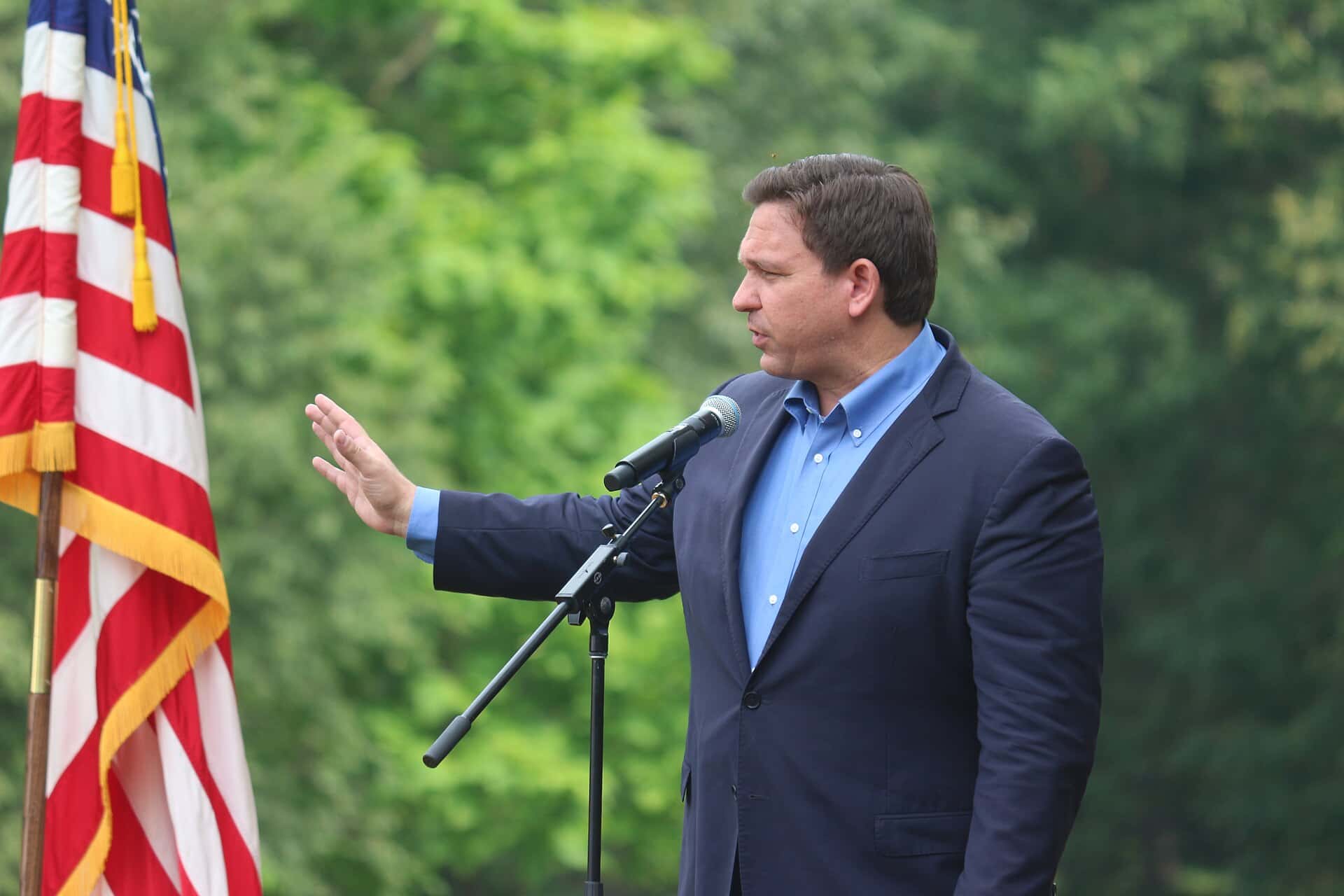
Three separate lawsuits are now pending in Florida state courts challenging the congressional maps signed into law by Governor Ron DeSantis earlier this month, as voting rights advocates, civil liberties organizations, and voter groups argue the redrawn districts violate the Florida Constitution's Fair Districts Amendment. The legal battles represent the first major court test of DeSantis's ambitious mid-decade redistricting effort, which opponents say was drawn with an explicit and unconstitutional partisan intent.
What the New Maps Do
DeSantis unveiled a proposed congressional map on April 27, 2026, one day before a special legislative session convened for the sole purpose of redrawing Florida's 28 congressional districts. The Florida House of Representatives approved the map 83 to 28 on April 29, followed by the Florida Senate in a 21 to 17 vote, with both chambers voting along largely partisan lines. DeSantis signed the legislation on May 4.
Under the new configuration, Republicans expect to control as many as 24 of Florida's 28 congressional seats, up from the current 20 to 8 split. The maps accomplish this by fracturing Democratic-leaning communities in the Tampa Bay area, Greater Orlando, and the Miami metropolitan area, concentrating Republican voters and dispersing Democratic constituencies across multiple districts. The four targeted Democratic incumbents are Kathy Castor of Tampa, Darren Soto of Orlando, Lois Frankel of West Palm Beach, and Debbie Wasserman Schultz of Fort Lauderdale.
Critics have characterized the process as a textbook example of partisan gerrymandering, noting that DeSantis gave the Legislature only one day to review his proposal before the session opened and that the maps were drawn behind closed doors without public input. Democratic lawmakers called the process a sham and argued that all meaningful deliberation was bypassed in favor of speed and partisan advantage.
The Fair Districts Amendment Challenge
Florida voters approved the Fair Districts Amendments in 2010, adding language to the Florida Constitution that explicitly prohibits lawmakers from drawing district lines with the intent to favor or disfavor a political party or an incumbent. The amendments also require that districts be compact, utilize existing political boundaries where possible, and not diminish the voting strength of racial or language minority groups.
The lawsuits filed after DeSantis signed the maps center on a fundamental question: does the governor's new map violate those constitutional prohibitions? The answer seems straightforward to the plaintiffs. In one legally notable development, both the DeSantis administration and the plaintiffs in at least one case agreed in filings that the new map does, in fact, break the Florida Constitution. Their disagreement concerns whether the Fair Districts Amendment can be enforced at all, not whether the maps comply with it.
DeSantis has advanced an unusual constitutional argument rooted in a 2025 United States Supreme Court ruling in Louisiana v. Callais, which addressed voting rights and redistricting. The governor contends that the Callais decision effectively nullifies Florida's Fair Districts Amendment by rendering the state's anti-gerrymandering provisions unenforceable as applied to congressional districts. Under this theory, the federal requirement to comply with the Voting Rights Act supersedes Florida's own anti-partisan-gerrymandering rules, freeing the Legislature to draw any map it chooses.
Who Filed Suit
Within two days of the governor signing the redistricting legislation, three separate legal challenges landed in the Second Circuit Court in Leon County, which covers Tallahassee and is the customary venue for Florida constitutional disputes. The League of Women Voters of Florida, Common Cause, and the League of United Latin American Citizens were among the first to file, arguing the maps violate both the Fair Districts Amendment and the Voting Rights Act's protections for minority voters.
The Elias Law Group, a prominent Democratic-affiliated election law firm, filed a separate challenge on behalf of the Equal Ground Education Fund and individual Florida voters, focusing specifically on the partisan gerrymandering claims. The Campaign Legal Center also filed suit, arguing that the maps represent an egregious partisan power grab that the Florida Constitution was specifically designed to prevent.
A circuit judge has taken preliminary steps to consolidate the cases ahead of a hearing on whether to put the new maps on hold while the litigation proceeds. Voting rights advocates are seeking an injunction that would block implementation of the redrawn districts before the 2026 congressional elections in November.
DeSantis's Constitutional Defense
The governor's legal team argues that the Supreme Court's Callais ruling fundamentally altered the landscape of congressional redistricting. In that case, the Supreme Court found that Louisiana's congressional maps violated the Voting Rights Act by failing to draw a sufficient number of majority-Black districts. DeSantis's lawyers contend the ruling established that states must draw majority-minority districts to comply with federal law, which can directly conflict with Florida's ban on intentional partisan line-drawing.
Under this reasoning, DeSantis argues Florida's Fair Districts Amendment cannot be applied to congressional maps because doing so could place the state in conflict with the Voting Rights Act. Critics call the argument a legal overreach, noting that the Republican sponsor of DeSantis's own redistricting bill stated publicly that the Callais decision does not invalidate Florida's Fair Districts protections.
Florida courts have enforced the Fair Districts Amendment vigorously since voters adopted it in 2010, including striking down legislative maps in 2015 after a Florida Supreme Court review found partisan intent behind the line-drawing. Legal observers are watching to see whether the current Florida Supreme Court, which features several DeSantis appointees, will take a more deferential approach to the governor's maps than the court that ruled in 2015.
What Floridians Stand to Lose or Gain
For Florida voters, the stakes are significant. Millions of constituents in targeted districts could find themselves represented by members of Congress whose political priorities differ sharply from their own if the maps survive court challenge and take effect for the November 2026 elections. Communities of color in South Florida, Central Florida, and the Tampa Bay area face the most dramatic changes under the proposed lines, with the new maps fracturing communities that have historically elected minority representatives.
The broader implications extend beyond which party controls individual seats. Florida sends 28 members to the House of Representatives, making it the third-largest congressional delegation in the country. A shift from a 20 to 8 Republican advantage to a 24 to 4 split would significantly amplify Florida Republicans' influence in a chamber where Republicans currently hold only a five-seat majority. The outcome of the litigation will therefore shape not just Florida's representation but potentially the balance of power in the full House.
For individual Floridians, the maps also affect which primary elections they can vote in, which member of Congress holds their district office, and whether their communities' interests are bundled with or separated from neighboring areas. Voters in Castor's Tampa district, for example, could find themselves folded into a sprawling district designed to dilute the heavily Democratic precincts that have returned her to Congress since 2006.
Timeline and What Comes Next
The litigation is moving quickly given the compressed calendar before the November 2026 elections. Courts typically require several months to conduct hearings, weigh evidence, and issue rulings in redistricting cases, and any trial court decision is likely to be appealed immediately by whichever side loses. The Florida Supreme Court would have the final say on state constitutional questions, while federal claims could eventually reach the Eleventh Circuit Court of Appeals.
Voting rights advocates are pressing for an injunction that would require Florida to use its existing 2022 congressional maps for the 2026 elections while the legal challenge proceeds. If no injunction issues, the new maps take effect immediately and candidates would file to run in the redrawn districts beginning in the summer of 2026.
The cases come at a moment when Florida's judiciary is itself the subject of intense scrutiny. DeSantis has appointed a series of conservative jurists to the Florida Supreme Court and lower appellate courts during his time in office, and legal analysts are divided on whether those appointments will influence how aggressively the courts enforce the Fair Districts Amendment. The outcome will set a precedent not just for Florida but for other states where governors and legislatures are attempting mid-decade redistricting ahead of the 2026 cycle.
What Experts Are Saying
Legal scholars who study election law say the DeSantis constitutional argument, while creative, faces an uphill battle in Florida courts because it requires essentially reading the Fair Districts Amendment out of the Florida Constitution based on an indirect inference from a federal court ruling that addressed a different state's different facts. The argument has few precedents and would require courts to adopt an expansive interpretation of federal preemption that has not been tested in this context.
Supporters of the maps counter that the prior congressional maps, drawn under court supervision in 2022, themselves were the product of contested litigation and failed to produce a congressional delegation that reflects Florida's political reality. Republicans note that Florida voters have elected DeSantis and Republicans to statewide office by comfortable margins and argue the maps simply reflect the state's partisan composition more accurately than lines drawn to protect Democratic incumbents.
The courts will ultimately determine which view prevails. For now, Florida voters and candidates are left watching the dockets in Tallahassee to see whether the state's November elections will be fought on the new DeSantis maps or on the boundaries that have governed Florida's congressional races for the past four years.
Spotted an issue with this article?
Have something to say about this story?
Write us a letterComments
No comments yet. Be the first to weigh in.
Related Coverage

Miami shuts enclosed park slides after 13-year-old dies following Shenandoah Park incident
21h ago

Appeals Court Orders Hope Florida Grand Jury Report Expunged, Rules $10 Million Was Never Public Money
1d ago

Jacksonville Council Committees Clear $30 Million Gas Tax Loan to Rescue JTA Ahead of Oct. 13 Final Vote
1d ago

Florida Supreme Court Suspends Pinellas-Pasco Judge Jennifer Cruz Dubbeld 20 Days Over 2024 Campaign Misconduct
2d ago