DeSantis Moves to Designate CAIR, Antifa as Terrorist Organizations Under New Florida Law
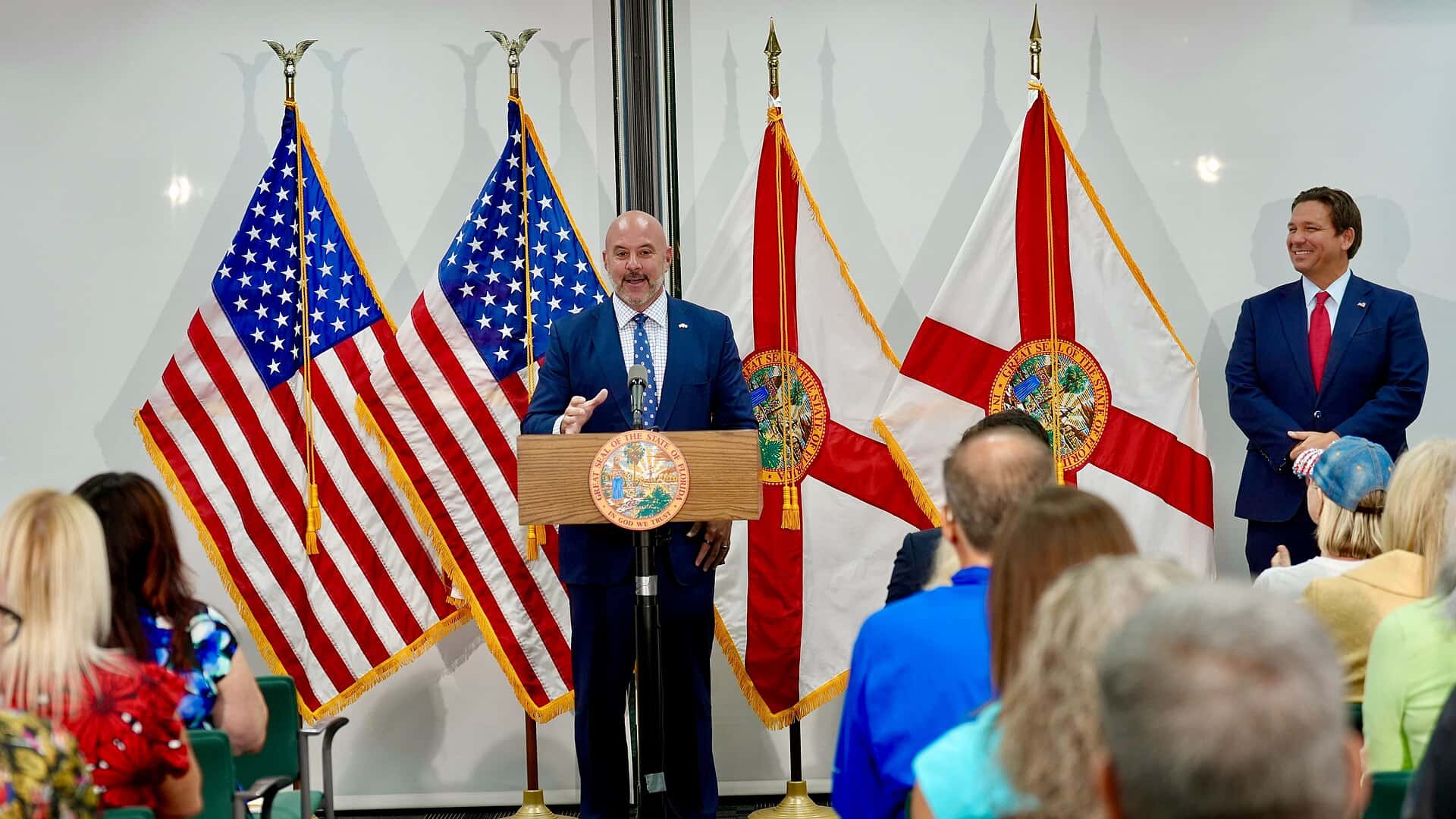
Gov. Ron DeSantis announced in early July 2026 that Florida intends to label roughly 100 groups as "terrorist organizations" under a new state law that took effect this year, a sweeping designation that would draw the state directly into a national debate over free speech, national security, and the limits of government power. Speaking at a news conference in Tampa alongside the Florida Department of Law Enforcement and the statewide prosecutor, the governor named Antifa, the Muslim Brotherhood, and the Council on American-Islamic Relations, including CAIR's Florida chapter, among the organizations targeted for the label. For Floridians, the announcement raises immediate questions about what a state-level terrorist designation actually means, how it would be enforced, and whether it can survive the legal challenges that critics have already promised.
The move is one of the most consequential exercises yet of a Florida law that gives the state its own mechanism for branding groups as terrorist entities, separate from the federal government's long-standing foreign terrorist organization list. Because the statute is new, much about its practical reach remains untested, and the coming weeks are likely to determine how far the state can go before the courts weigh in. The governor's office framed the designations as a public-safety measure aimed at groups it says have promoted or enabled political violence and extremism.
Civil-liberties advocates and Muslim community organizations reacted quickly and sharply, arguing that the inclusion of CAIR, an established advocacy group with an active Florida presence, crosses a constitutional line. Their concern centers on the First Amendment protections for speech and free association, and on the precedent of a state government deciding which advocacy organizations may be branded as terrorist entities. The clash sets up a legal and political fight with statewide implications.
What DeSantis Announced in Tampa
At the Tampa news conference, DeSantis said his administration would pursue the terrorist label for approximately 100 groups under the authority of the new law. The presence of FDLE, the state's primary law-enforcement agency, and the statewide prosecutor underscored that the administration intends to treat the designations as a matter of criminal enforcement rather than symbolic politics. Officials at the event presented the designations as part of a broader effort to confront what they described as organized extremism operating inside the state.
The specific naming of Antifa, the Muslim Brotherhood, and CAIR drew the most attention. Antifa, a loosely organized movement rather than a single formal group, has been a frequent target of conservative officials nationally. The Muslim Brotherhood is a transnational organization with a contested history in U.S. policy debates. CAIR, by contrast, is a domestic civil-rights and advocacy organization that operates chapters across the country, including in Florida, and that has long positioned itself as a defender of Muslim Americans' civil liberties.
The governor's office said the designations reflect concerns about extremism and public safety, and it pointed to the new statutory authority as the legal foundation for the action. The administration has cast the effort as a natural extension of Florida's posture on law and order, a theme that has defined much of DeSantis's tenure.
How a State Terrorist Designation Works
A state terrorist designation is a relatively novel legal instrument, and its consequences differ from the federal system most Americans are familiar with. Federal foreign terrorist organization designations, administered by the U.S. State Department, carry well-defined penalties, including asset freezes and criminal liability for material support. A Florida designation operates under state law and is bounded by the powers the Legislature granted when it wrote the statute.
In practice, a designation can expose named groups and, potentially, individuals associated with them to enhanced legal scrutiny and possible criminal exposure under state law. It can also carry significant reputational and financial consequences for the organizations involved, affecting their ability to operate, raise funds, and partner with other institutions. Because the law is new, the exact scope of these consequences has not yet been tested in Florida courts.
The uncertainty cuts in more than one direction. Supporters argue the designation gives state prosecutors a tool to disrupt genuinely dangerous networks. Critics counter that the vagueness of the authority, combined with the inclusion of an advocacy organization like CAIR, invites arbitrary or politically motivated enforcement. That tension is likely to be central to any court challenge.
The Cabinet Ratification Process
Under the new law, the governor cannot finalize the designations alone. The statute requires that the designations be ratified by members of the Florida Cabinet, a body of independently elected statewide officials who share executive authority with the governor on certain matters. The ratification requirement means the fate of the designations rests with a small group of officials whose votes will now be closely watched.
The Cabinet members whose approval is required include Attorney General James Uthmeier, Chief Financial Officer Blaise Ingoglia, and Agriculture Commissioner Wilton Simpson. All three are Republicans who have generally aligned with the governor's agenda, which suggests the designations face a favorable path. Still, the formal ratification step introduces a checkpoint that could shape the final list, its timing, and its legal footing.
The requirement also distributes political accountability. By law, the designations become the collective act of the state's top executive officials rather than the governor acting unilaterally. That structure may strengthen the state's legal position by demonstrating a deliberative process, but it also means each Cabinet member will be answerable for a vote on one of the most contested state actions in recent memory.
Critics Warn of First Amendment Problems
The strongest objections have come from civil-liberties groups and Muslim advocacy organizations, which have focused their criticism on the decision to include CAIR. They argue that branding a domestic advocacy organization as a terrorist entity raises serious First Amendment concerns, particularly around the freedoms of speech and association that shield Americans who join or support lawful advocacy groups.
Critics contend that the designation could chill protected activity, discouraging people from participating in advocacy, donating to civil-rights organizations, or speaking out on contested political issues for fear of being associated with a labeled group. They also warn that a state government drawing up its own list of terrorist organizations, especially one that includes ideological or religious advocacy groups, sets a precedent that could be turned against a wide range of civic organizations in the future.
Muslim community leaders have framed the CAIR designation as part of a broader pattern they say singles out their communities. Advocacy groups have signaled that they view the action as legally vulnerable and have suggested that litigation is likely if the designations are ratified. The administration, for its part, maintains that the designations rest on public-safety grounds rather than on speech or religion.
The Legal Challenges Ahead
Legal challenges appear all but certain if the Cabinet ratifies the designations. Constitutional lawyers are likely to test the statute on multiple fronts, including whether it is too vague to give groups fair notice of what conduct is prohibited, whether it improperly burdens protected speech and association, and whether a state may create a terrorist designation regime that overlaps with or conflicts with federal authority.
The inclusion of CAIR, a recognized domestic organization, may make the state's task harder in court than the inclusion of a foreign entity would. Courts have historically given the government broad latitude in matters of national security, but they have also been protective of core First Amendment rights when domestic political and religious advocacy is at stake. The outcome could hinge on how narrowly the state defines the conduct that triggers a designation and its consequences.
Because Florida's law is new, any ruling could establish precedent well beyond the state's borders. Other states considering similar measures will be watching closely, as will federal officials and national advocacy organizations on all sides of the debate. The litigation could stretch across multiple levels of the court system before the law's boundaries are settled.
Why It Matters for Florida
For Florida residents, the stakes extend beyond the specific groups named. The designations test how much authority the state can claim over the classification of organizations as terrorist entities, and they will help define the practical relationship between state security powers and constitutional protections that apply to everyone. The result could affect advocacy organizations, religious institutions, and political movements across the ideological spectrum.
The dispute also lands during a period of national attention on Florida's assertive use of state power on cultural and legal questions. Supporters see the designations as evidence that the state is willing to act decisively against extremism where the federal government has not. Opponents see them as an overreach that risks punishing lawful advocacy under the banner of security.
Communities most directly affected, including Muslim Floridians and members of advocacy organizations, face immediate uncertainty about how the designations, if ratified, would touch their daily lives, their institutions, and their willingness to engage in public life. That uncertainty is likely to persist until the Cabinet acts and the courts respond.
What's Next
The immediate next step is the Cabinet ratification process. Attorney General Uthmeier, Chief Financial Officer Ingoglia, and Agriculture Commissioner Simpson must approve the designations for them to take effect under the new law, and the timing and details of that vote will determine how quickly the state can move. The composition of the final list may also shift as officials weigh the legal risks tied to individual groups.
If the designations are ratified, litigation is widely expected, with civil-liberties and Muslim advocacy organizations positioned to challenge the CAIR designation in particular. Those cases could take months or longer to resolve and may ultimately reach higher courts, where the constitutional questions surrounding state terrorist designations would be tested for the first time.
In the meantime, Floridians can expect continued public debate as the administration defends the designations on public-safety grounds and critics press their First Amendment objections. The coming weeks will show whether Florida's new law becomes a durable tool of state enforcement or a flashpoint that the courts sharply constrain.
Spotted an issue with this article?
Have something to say about this story?
Write us a letterComments
No comments yet. Be the first to weigh in.
Related Coverage

Miami shuts enclosed park slides after 13-year-old dies following Shenandoah Park incident
1d ago
Appeals Court Orders Hope Florida Grand Jury Report Expunged, Rules $10 Million Was Never Public Money
2d ago

Jacksonville Council Committees Clear $30 Million Gas Tax Loan to Rescue JTA Ahead of Oct. 13 Final Vote
2d ago
Florida Supreme Court Suspends Pinellas-Pasco Judge Jennifer Cruz Dubbeld 20 Days Over 2024 Campaign Misconduct
2d ago