Trump Orders Federal Contractors to Clear Congressional Requests With White House, Putting Florida Defense Firms in the Middle
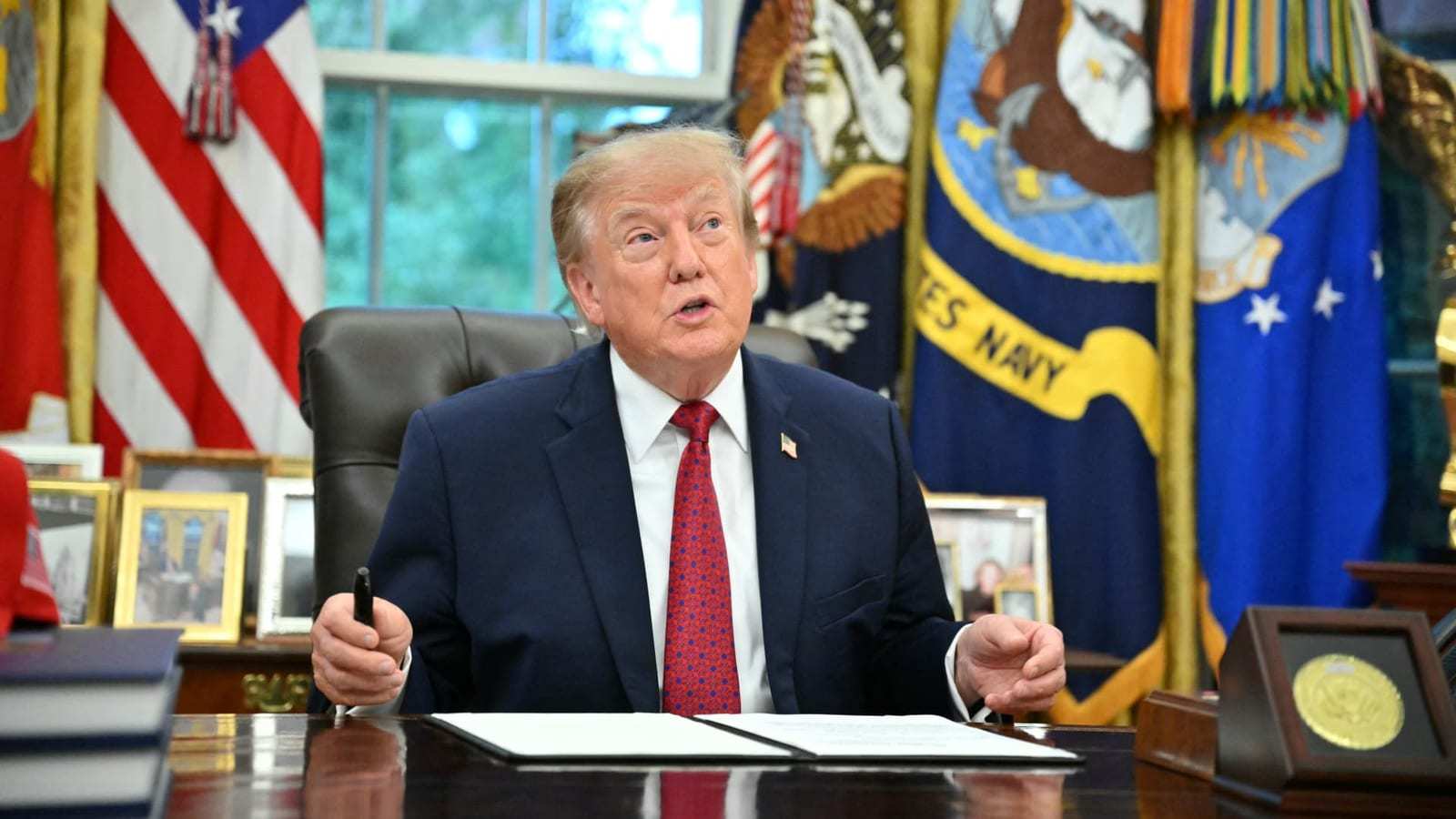
President Donald Trump signed an executive order late Friday, Nov. 20, 2026, requiring federal contractors and subcontractors to notify the White House of congressional requests about their government work, coordinate their responses with the administration and withhold any communications the White House considers privileged, with contract termination among the penalties for companies that do not comply. The order lands squarely on Florida, one of the country's major hubs for federal contracting, where aerospace and defense companies on the Space Coast and in Orlando could find themselves caught between the administration and a Democratic-led Congress that takes power in January promising aggressive oversight.
What the order requires
According to a White House fact sheet titled "President Donald J. Trump Protects the Executive's Privileges and Enhances Efficiencies in Federal Contracting," the order directs contractors and subcontractors to:
- Notify the White House and their contracting agencies of any pending and future congressional requests.
- Coordinate with the White House and those agencies on appropriate responses and relevant privileges.
- Follow instructions from the White House or contracting agencies on withholding privileged communications.
Prime contractors must also make sure their subcontractors comply, and executive agencies are told to promptly inform all contractors and subcontractors of their obligations. The order applies to all federal contractors and subcontractors, a universe of tens of thousands of businesses, according to the Associated Press. Companies that fail to comply could have their contracts terminated and could be suspended from future federal work, the AP reported.
The fact sheet says Congress may not compel the disclosure of privileged executive branch information except in narrow circumstances, and it describes the confidentiality of communications between agencies and contractors as essential to government functioning.
The White House rationale
The administration framed the order as "protecting executive privileges from congressional overreach," arguing that some congressional leaders have been "harassing private companies that contract with the federal government," according to the fact sheet as quoted by the AP. The White House argues that if agencies cannot be sure their communications with contractors will remain confidential, they will be reluctant to share sensitive information, including material touching on national and homeland security. It also contends that a lack of coordination between contractors and the executive branch undermines contractors' efficiency.
A week of moves against congressional oversight
The order is the second step in a week by the White House to control what Congress can learn from the executive branch. On Monday, Nov. 16, White House Counsel Will Scharf told agencies they must get approval from his office and the White House Office of Legislative Affairs before any employee agrees to appear before a congressional committee, as first reported by Axios. In a letter to Rep. Robert Garcia of California, the top Democrat on the House Oversight Committee, Scharf suggested some congressional investigations may amount to "blatant criminality," according to the AP.
The backdrop is the midterm elections, in which Democrats won majorities in both the House and the Senate. Garcia has already sent letters directing members of Trump's family and senior administration officials to preserve documents, and Democrats have made federal contracts a top investigative target, pointing to federal money that has flowed to companies linked to the president's family, particularly at the Pentagon, the AP reported.
Democrats call it unlawful
Rep. Jamie Raskin of Maryland, who is poised to chair the House Judiciary Committee when Democrats take control in January, called the order unprecedented and "blatantly unlawful," according to published reports. Raskin argued that companies paid with public funds have a duty to speak candidly when Congress asks them questions. Garcia called the order part of the administration's "blatant attack on Congress' constitutional right to conduct oversight."
If the White House directs companies to withhold information under claims of executive privilege, the dispute could end up in court. No lawsuit challenging the order had been reported as of Sunday. Scharf has also argued in a letter to Democratic lawmakers that they are not yet in the majority and cannot compel compliance, according to the AP.
Why it matters in Florida
Few states have as much riding on federal contracts as Florida. The state hosts a dense network of aerospace, defense, space and simulation companies whose biggest customer is the federal government.
On the Space Coast, L3Harris Technologies, one of the nation's largest defense contractors, is headquartered in Melbourne, and Cape Canaveral and Kennedy Space Center anchor a cluster of launch providers and aerospace suppliers working for NASA and the U.S. Space Force. In Orlando, the Central Florida Research Park beside the University of Central Florida includes Naval Support Activity Orlando, home to the Naval Air Warfare Center Training Systems Division and the Army's Program Executive Office for Simulation, Training and Instrumentation, which together anchor a large military simulation and training industry. Lockheed Martin maintains a large simulation and training facility in the Orlando area. Many smaller Florida firms work as subcontractors on these programs, and the order reaches them as well.
For those companies, the order creates a new compliance obligation with real stakes. A defense or space contractor that receives a letter or subpoena from a congressional committee would now have to notify the White House and its contracting agency, wait for guidance on what is privileged, and weigh the risk of losing federal work against the risk of defying Congress. Subcontractors, which often lack large legal departments, could face the same choice through flow-down requirements from prime contractors.
The order had not drawn public comment from members of Florida's congressional delegation in national coverage as of Sunday. With so much federal work performed in the state, how Florida's Republican and Democratic members respond could shape the debate as Democrats map out their investigations.
What's next
Federal agencies must now notify their contractors of the new requirements, and companies will be watching for details on how notification and privilege reviews will work in practice. The bigger test comes in January, when Democratic committee chairs gain subpoena power and begin requesting documents and testimony. A clash between a company caught in the middle, a committee demanding answers and a White House asserting privilege could produce the first court challenge to the order. Until then, Florida's contractors face a new layer of uncertainty in their dealings with Washington.
Spotted an issue with this article?
Have something to say about this story?
Write us a letterComments
No comments yet. Be the first to weigh in.
Related Coverage

Thanksgiving Week Storms Threaten Florida Travel as Northeast Florida Tidal Flooding Drags On
59m ago

Stock Market Correction Hits Florida Retirees as S&P 500 and Dow Close More Than 10% Below Records
1h ago

Coast Guard Sends 10 Chinese Nationals Back to Bahamas After Miami Interdiction as Florida Straits Cases Continue
6h ago

Appeals Court Keeps Venezuelan TPS Frozen at Trump's Request, Leaving South Florida Families in Limbo
8h ago