Venezuela and Cuba Policy Keeps Florida's Diaspora at the Center

United States policy toward Venezuela and Cuba has entered an intense phase, and nowhere in the country does it register more directly than in South Florida, home to the largest Cuban diaspora in the world and to one of the largest Venezuelan communities outside Venezuela.
Reporting this month describes an administration that has conducted more than two dozen strikes on alleged drug trafficking vessels, killing more than a hundred people, and that has ordered a blockade of sanctioned oil tankers. On Cuba, analysts describe an approach that has moved away from seeking the government's collapse, on the reasoning that a sudden failure would produce a migration crisis destabilizing the Caribbean and reaching South Florida directly.
Secretary of State Marco Rubio, a Florida Republican who spent years in the Senate representing the state, has been central to the administration's hemispheric approach. That places a Floridian at the center of policy whose consequences land on Florida communities.
Why Florida is the domestic center of this policy
Florida's connection to Cuba and Venezuela is not primarily ideological. It is familial. Hundreds of thousands of Florida households have relatives in both countries, and policy decisions about remittances, travel, visas and sanctions translate into whether people can send money to a parent, visit a sibling or reunite with a spouse.
The Cuban community in South Florida developed across successive waves of migration beginning after 1959, and each wave arrived under different circumstances with different legal treatment. Those differences produced a community with more internal political variation than external coverage typically conveys, particularly across generations.
The Venezuelan community is more recent and grew rapidly during the country's economic collapse and political crisis. It is concentrated in Doral and surrounding areas of Miami-Dade County, and its members arrived under a range of immigration statuses including asylum claims and Temporary Protected Status.
The two communities have overlapping but distinct interests. Both generally support pressure on their home governments. They diverge sharply on immigration policy, because a large share of Venezuelans in Florida hold statuses that are themselves subject to federal decisions.
The Temporary Protected Status question
The most acute issue for Venezuelans in Florida concerns immigration status rather than foreign policy. Temporary Protected Status has been revoked for tens of thousands of Venezuelans, and reporting indicates more than 15,000 deportations have followed.
TPS is a designation the executive branch may extend to nationals of countries experiencing armed conflict, disaster or other extraordinary conditions that make safe return impossible. It provides protection from removal and work authorization for a defined period, subject to renewal. It confers no path to permanent residence.
The revocation created an acute contradiction for many Venezuelan families in Florida. They support maximum pressure on the Venezuelan government while facing removal to the country that pressure targets. Reporting has documented that many welcome the prospect of political change at home while opposing the immigration policies affecting them personally.
The practical consequences fall on households that have been in Florida for years, with children in local schools, mortgages, businesses and community ties. Loss of work authorization removes the legal ability to hold employment, which affects households and the businesses that employ them.
The shift in Cuba policy
Analysis published this year describes a notable evolution in the administration's approach to Cuba. Rather than pursuing the government's collapse, the White House is described as viewing sudden collapse as undesirable because of the migration crisis it would produce across the Caribbean and into South Florida.
The reported objective instead involves a negotiated transition, with the current leadership departing and American investment permitted, particularly from Cuban Americans, which has long been prohibited under the embargo.
That framing represents a substantial departure from decades of stated policy, and it has produced disagreement within the Cuban American community. Some view any arrangement preserving elements of the existing structure as a betrayal of exile principles. Others, particularly among younger generations and those with family still on the island, view engagement as more likely to improve conditions than continued isolation.
The migration consideration is grounded in history. The 1980 Mariel boatlift and the 1994 rafter crisis both produced large arrivals in South Florida within compressed periods, straining local systems. Florida officials across administrations have treated Caribbean migration surges as a planning scenario.
The maritime strikes
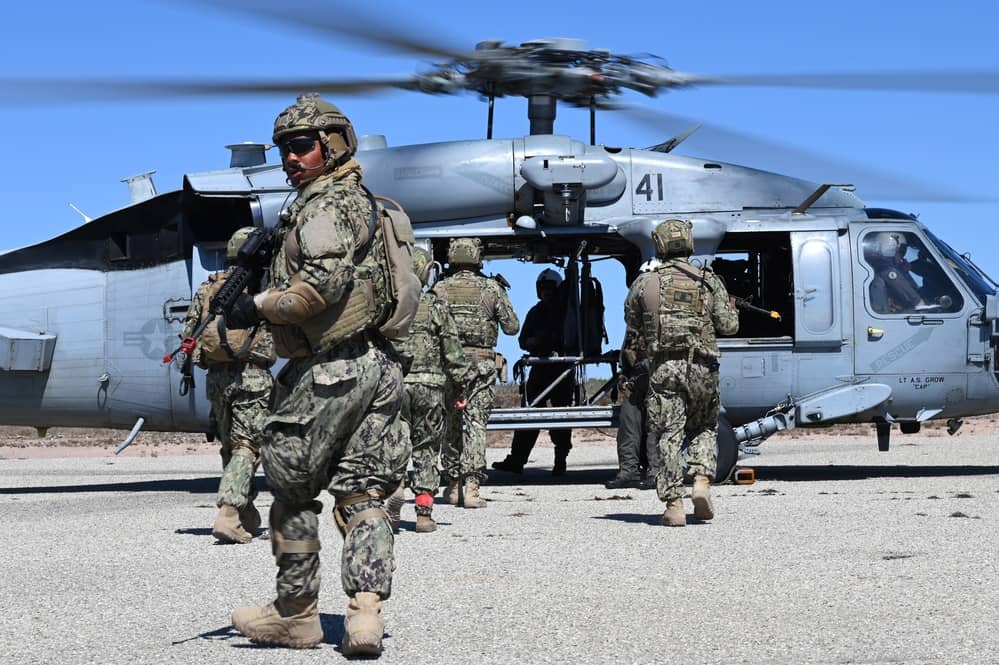
The reported campaign against alleged drug trafficking vessels has drawn scrutiny on legal grounds. Strikes against boats in international waters, resulting in deaths of those aboard, raise questions about the legal authority claimed and about the standards applied in identifying targets.
Traditional counter-narcotics operations at sea have involved interdiction by the Coast Guard or Navy, with vessels boarded, cargo seized and crews detained for prosecution. That approach generates evidence and produces defendants who can be charged in federal court, frequently in the Southern District of Florida.
The Coast Guard's Seventh District, headquartered in Miami, has historically conducted interdiction operations across the Caribbean, and Florida ports and courts have long been the endpoint for such cases.
Congressional oversight of the strikes has been the subject of debate, with questions raised about the legal basis and about notification requirements. Members of Florida's delegation sit on relevant committees.
The influence question
Analysts have written this year about the degree to which a geographically concentrated South Florida constituency shapes United States policy toward the hemisphere. The argument, made in critical terms by some observers, holds that a relatively narrow community exercises influence over hemispheric policy disproportionate to its national size.
The mechanism is electoral. Florida's status as a large state, historically competitive though increasingly Republican, meant candidates in both parties courted Cuban American voters, and positions on Cuba became durable commitments. Venezuelan American voters became a comparable constituency more recently.
Whether this constitutes appropriate democratic representation of an affected community or disproportionate capture of foreign policy is a genuine dispute. What is not disputed is that Florida politics has shaped American policy toward Cuba and Venezuela more than any other domestic factor.
What it means for Floridians
For families with relatives in either country, the practical implications concern remittances, travel and immigration status, each of which can change through administrative action with limited notice. Families should track official guidance from the Treasury Department's Office of Foreign Assets Control on financial restrictions and from US Citizenship and Immigration Services on status matters.
For Venezuelans in Florida affected by status changes, legal consultation is important, since eligibility for other forms of relief varies by individual circumstance. Immigration legal aid organizations operate throughout South Florida, and several offer services on a reduced fee or pro bono basis.
For the broader Florida economy, both communities are substantially integrated into the state's business and professional life. Venezuelan professionals and entrepreneurs have contributed significantly to the Doral area and to Miami-Dade's business sector, and disruption to their status affects the businesses they own and staff.
Remittances and the household economy
Among the most immediate ways hemispheric policy reaches Florida households is through remittances, the money residents send to family members abroad.
Florida is one of the largest remittance-sending states in the country, with substantial flows to Cuba, Venezuela, Haiti, Nicaragua and elsewhere in the region. For many households, these transfers are not discretionary. They cover food, medicine and basic necessities for relatives in countries where local incomes cannot.
Sanctions and financial restrictions affect these flows directly, since they determine which financial institutions can process transfers, what limits apply and what documentation is required. Changes made for foreign policy reasons therefore reach Florida kitchen tables through a channel that policy discussion rarely addresses.
Households affected by restrictions frequently turn to informal channels, which carry higher costs and less recourse when transfers fail. That shift is a predictable consequence of tightening formal channels and is one of the practical considerations weighed in remittance policy.
The generational divide
Coverage of Florida's Cuban American community often treats it as a single political bloc, which understates variation that has grown more pronounced over time.
The community formed through successive migration waves separated by decades, and each arrived under different circumstances. Those who left immediately after 1959 had different experiences and different views than those who came during Mariel in 1980, during the 1994 rafter crisis, or in the years since normalization efforts began and stalled.
Generational position matters as much as arrival period. Cuban Americans born in the United States, particularly third generation, tend to hold views on engagement that differ from those of their grandparents, and their family ties to the island are frequently more distant.
The Venezuelan community has its own internal variation, structured largely around immigration status. Those with permanent residence or citizenship are positioned very differently from those whose status depends on decisions subject to reversal, and that difference shapes political priorities within the same national-origin group.
The Haitian and Nicaraguan dimension
Coverage of Florida's diaspora politics concentrates on Cuba and Venezuela, but the state's connections across the hemisphere extend further, and policy toward other countries lands here as well.
Florida has one of the largest Haitian communities in the United States, concentrated in Miami-Dade and Broward counties, and conditions in Haiti including gang violence and institutional collapse have driven migration and family separation. Immigration status for Haitians in Florida has been subject to the same kinds of administrative determinations affecting Venezuelans.
Nicaraguan and Colombian communities in South Florida have their own political concerns tied to conditions at home, and each interacts with United States policy in the region.
The cumulative effect is that a substantial share of South Florida households have a direct stake in hemispheric policy, which explains why the region's politics engage foreign policy questions more intensely than most of the country and why candidates for offices with no foreign policy role are routinely asked to take positions on them.
What's next
Policy toward both countries remains in motion, and the elements described in current reporting could change substantially. The maritime campaign, the tanker blockade and the reported Cuba approach are each subject to reversal or escalation.
For Venezuelans in Florida, immigration status determinations continue through administrative processes and litigation. Court challenges to TPS terminations have been filed in various jurisdictions, and outcomes affect large numbers of Florida residents.
Florida's congressional delegation will remain central to how this develops, given the state's demographic stake and the presence of Floridians in senior positions shaping the policy. Both issues are expected to feature in Florida campaigns this fall.
Spotted an issue with this article?
Have something to say about this story?
Write us a letterComments
No comments yet. Be the first to weigh in.
Related Coverage

ATF Ends Registration for Suppressors and Short-Barreled Rifles, Leaving Florida's Federal-Linked Gun Law in Limbo
18m ago
Appeals Court Lowers the Bar for Proving U.S. Jurisdiction in High-Seas Cocaine Cases Prosecuted in Florida
35m ago

Trump's Russian Diesel Deal Unlikely to Ease Florida's Near-$6 Fuel Bills, Experts Say
18h ago
Trump Approves Federal Emergency Declaration for 27 Florida Counties Hit by Isaias. Here's What It Covers and What It Doesn't
18h ago