Waymo Begins Driverless Rides in Tampa as Robotaxis Reach Florida Streets
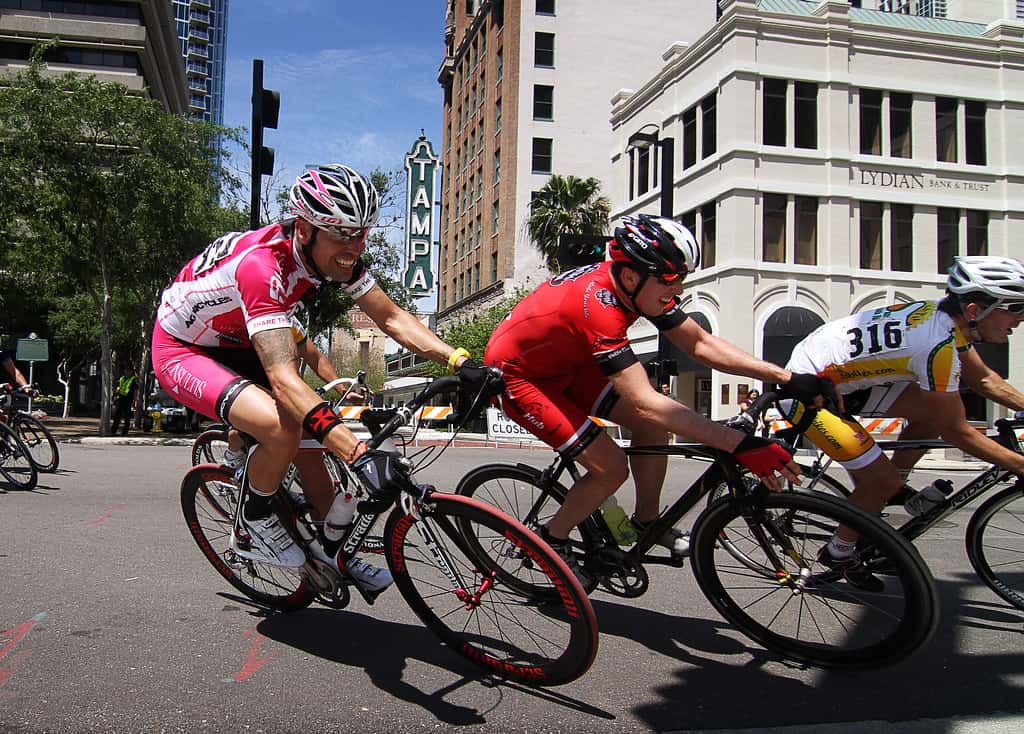
Waymo began offering fully autonomous paid rides to public riders in Tampa on Tuesday, September 1, bringing driverless robotaxi service to Florida's third-largest metropolitan area. The service zone covers nearly 50 square miles and includes Hyde Park, Westshore, Water Street and Ybor City.
The Alphabet-owned company opened service in Denver and San Diego the same day, bringing to 14 the number of cities where it provides fully autonomous trips. Waymo had been testing vehicles in the Tampa area with human safety operators since December 2025 before removing them for public service.
Access is being granted gradually. Selected riders can currently book trips through the Waymo app, with additional passengers added over the coming months from a waitlist that the company says tens of thousands of Tampa residents have joined.
What "fully autonomous" means here
The vehicles operate without a human driver or safety operator aboard, which distinguishes this deployment from driver-assistance systems that require continuous human supervision. Under the widely used classification framework developed by SAE International, this represents Level 4 automation, meaning the vehicle handles all driving tasks within a defined operational domain.
The operational domain is the critical qualifier. Level 4 systems function within specified geographic boundaries and defined conditions, and outside those boundaries they do not operate at all. That is why service areas are described in square miles and why expansion proceeds neighborhood by neighborhood rather than all at once.
Preparation for a new city involves extensive mapping, during which vehicles collect detailed three-dimensional data about roadways, lane markings, signals, signage and permanent features. The resulting map serves as a reference the vehicle compares against live sensor data, which is why entering a new market requires months of groundwork before service begins.
How the technology works
Waymo vehicles combine several sensor types. Lidar units emit laser pulses and measure return times to build a precise three-dimensional model of surroundings. Cameras provide visual information including traffic signal colors, signage and the classification of objects. Radar measures the velocity of other vehicles and performs reliably in conditions that degrade optical sensors.
The combination provides redundancy, since each sensor type has different failure modes. Lidar performs poorly in heavy precipitation, cameras struggle in low light and glare, and radar offers limited resolution. A system fusing all three can compensate when any one is degraded.
Onboard software interprets that sensor data, predicts the likely behavior of other road users, and plans the vehicle's path accordingly. Prediction is generally regarded as the hardest problem in the field, because it requires anticipating what a pedestrian, cyclist or human driver is about to do based on incomplete information.
Florida's regulatory framework
Florida has been among the more permissive states for autonomous vehicle operation. State law enacted over several sessions authorizes operation without a human driver present, provided the vehicle meets insurance requirements and is capable of achieving a minimal risk condition if the automated system fails.
The framework does not require a state-issued permit specific to autonomous operation, a contrast with California, which maintains a detailed permitting and reporting regime through its Department of Motor Vehicles. Florida's approach reflects a deliberate policy choice to attract testing and deployment.
That permissiveness has drawn both companies and criticism. Industry has cited regulatory clarity as a factor in deployment decisions, while safety advocates have argued that limited state reporting requirements reduce the public information available about how these systems perform.
The safety debate
Waymo has published data comparing its vehicles' crash rates against human benchmarks in the areas where it operates, reporting reductions in injury-causing collisions. Independent researchers have generally found the methodology reasonable while noting the difficulty of constructing comparable human baselines, since autonomous vehicles operate in specific conditions that may differ from the full range of human driving.
Federal oversight operates through the National Highway Traffic Safety Administration, which requires reporting of crashes involving automated driving systems and has authority to open investigations. The agency has examined incidents involving multiple operators, and those investigations have at times resulted in software recalls.
Incidents that have drawn attention nationally have tended to involve unusual circumstances rather than routine driving, including interactions with emergency scenes, unconventional road configurations and situations requiring judgment about ambiguous human behavior. Those edge cases are where the remaining engineering difficulty concentrates.
What Tampa presents
Each new market poses distinct challenges, and Tampa's include weather patterns that differ substantially from the arid Southwest where much early deployment occurred. Florida's afternoon thunderstorms produce intense rainfall that degrades sensor performance and creates standing water, and the state's summer months deliver those conditions almost daily.
The service area itself spans varied environments. Ybor City's historic street grid, narrow lanes and pedestrian-heavy nightlife district differ markedly from the arterial roads of Westshore or the recently developed Water Street district. Each presents different driving conditions within a single operational domain.
Tampa also carries a difficult traffic safety record, as does Florida generally. The state has ranked among the most dangerous in the nation for pedestrians for many years, a pattern attributed to wide arterial roads, long distances between safe crossings and development patterns that place destinations across busy roadways from where people live.
Effects on drivers and workers
The expansion of autonomous ride-hailing raises questions about employment for drivers who work through ride-hailing platforms, taxi services and delivery operations. Those effects have so far been limited by the modest scale of autonomous fleets relative to overall trip volume, but the trajectory is the concern rather than the current numbers.
Economic research on technological displacement has generally found that effects concentrate among workers with fewer alternative options and that transitions occur over longer periods than initial projections suggest. Ride-hailing work in particular functions as supplemental income for many drivers, which complicates analysis of what displacement would mean.
The technology also creates employment in different categories, including fleet operations, remote assistance, maintenance, mapping and depot management. Those positions require different skills and exist in different quantities than the driving jobs they partially replace.
Accessibility and access
Autonomous vehicles offer potential mobility benefits for people who cannot drive, including some individuals with disabilities and older adults who have stopped driving. In a state with Florida's demographics, that population is substantial, and mobility loss has documented effects on health, social connection and access to services.
Realizing those benefits depends on details that go beyond the driving technology itself. Wheelchair accessibility requires appropriately equipped vehicles, riders with visual impairments need accessible booking and vehicle identification, and passengers who require assistance entering and exiting a vehicle are not served by a system with no human aboard.
Service area boundaries also determine who benefits. A zone covering downtown, Hyde Park, Westshore and Water Street serves particular neighborhoods, and whether coverage extends to areas with fewer transportation options is a question that will be answered by expansion decisions over time.
What it means for Tampa Bay
For residents within the service area, the immediate effect is an additional transportation option alongside existing ride-hailing services, taxis, transit and personal vehicles. Pricing relative to those alternatives will shape adoption, and companies in this sector have generally priced competitively with existing ride-hailing during expansion phases.
Local government interest extends beyond consumer choice. Autonomous vehicles interact with traffic signal infrastructure, curb space allocation, pickup and dropoff management and long-range transportation planning. Cities where these services operate have generally found that curb management becomes a more pressing issue as volumes grow.
The deployment also positions Tampa within a group of cities serving as proving grounds for the technology. That status carries reputational value for economic development purposes, which local officials in markets pursuing technology sector growth have generally emphasized.
How the industry got here
Commercial driverless service represents the outcome of a development effort that ran far longer and cost far more than early projections suggested. Predictions made in the middle of the last decade that autonomous vehicles would be widely deployed by 2020 proved substantially wrong, and several well-funded programs were discontinued or absorbed by competitors after failing to reach commercial viability.
The difficulty proved to be in the long tail of unusual situations rather than in ordinary driving. Building a system that handles routine highway and arterial driving competently turned out to be tractable; building one that responds appropriately to a police officer directing traffic around a downed power line, a construction zone with contradictory signage or a child chasing a ball into the street required orders of magnitude more work.
The companies that reached commercial operation generally did so by constraining the problem. Operating within carefully mapped geographic areas, in weather conditions the system handles reliably, and with remote human assistance available for situations the vehicle cannot resolve independently, converts an unbounded problem into a bounded one. Expansion then proceeds by widening those bounds incrementally.
Remote assistance and what happens when things go wrong
Driverless does not mean unsupervised. Operators in this sector maintain remote support centers staffed by personnel who can be contacted by a vehicle that encounters a situation it cannot resolve, and who provide guidance that helps the vehicle proceed. The distinction from remote driving is meaningful: these personnel generally advise rather than take direct control.
Vehicles are also designed to reach what engineers call a minimal risk condition when a problem cannot be resolved, which typically means pulling over and stopping safely. That capability is a requirement under Florida's statutory framework, and it is the fallback that allows operation without anyone aboard.
Interactions with emergency responders have emerged as a recurring practical issue in cities where these vehicles operate. Police and fire departments need procedures for stopping a vehicle with no driver, communicating with the operator and moving a vehicle blocking a scene. Companies entering new markets generally conduct training with local agencies in advance, and Tampa Bay departments would have been part of that preparation.
What's next
Waymo has said it will add riders from the waitlist over the coming months and make the service broadly available over time. Expansion of the service area beyond the initial nearly 50 square miles would follow the mapping and validation process the company uses for new territory.
Performance data from the Tampa deployment will accumulate through federal crash reporting requirements and through the company's own disclosures. Florida's regulatory framework does not impose the detailed state-level reporting some other states require, which means federal channels and voluntary disclosure will be the principal information sources.
The Florida Press will continue covering autonomous vehicle deployment in Florida, including service expansion, safety performance and the regulatory questions that arise as these systems scale.
Spotted an issue with this article?
Have something to say about this story?
Write us a letterComments
No comments yet. Be the first to weigh in.
Related Coverage
Palm Beach County Bets About $15 Million in Public Money on Becoming a Quantum Computing Hub
4h ago

Scammers Clone Osceola Sheriff's Captain's Voice With AI in Fake Arrest Warrant Calls
1d ago

Neil Armstrong Apollo 11 Training Jacket Found in a Closet Goes Up for Auction at Titusville's American Space Museum
2d ago
Google DeepMind Nailed Hurricane Isaias' Landfall Days Out, New Analyses Show, as Older Models Missed by a Full Day
3d ago