Medicaid Coverage Ends October 1 for Many Lawfully Present Immigrants in Florida
Medicaid and Children's Health Insurance Program coverage will end October 1 for many immigrants who are lawfully present in the United States, a federal eligibility change that affects refugees, people granted asylum, survivors of domestic violence and human trafficking, and many admitted on humanitarian grounds from Ukraine, Iraq and Afghanistan.
The change applies regardless of how long an individual has lived in the country, which distinguishes it from the five year waiting period that has historically governed Medicaid eligibility for many lawfully present immigrants. People who have been in the United States for a decade or more under these statuses are affected the same as recent arrivals.
Florida's exposure is substantial. The state hosts one of the largest refugee and humanitarian parolee populations in the country, concentrated in Miami-Dade, Broward, Hillsborough and Orange counties, and its health care safety net absorbs coverage losses through emergency departments and community health centers.
Florida's Medicaid and CHIP enrollment has already been declining, falling from about 3.74 million beneficiaries in March 2025 to roughly 3.57 million a year later, a drop of about 166,000 people or four percent. That decline was smaller than the national average of six percent.
Who loses coverage
The affected categories share a legal characteristic. Each is a status that grants lawful presence and work authorization on humanitarian grounds rather than through family or employment sponsorship, and each had been treated as qualifying for federal health coverage.
Refugees are people admitted after being determined outside the United States to have a well founded fear of persecution. Asylees are people granted the same protection after arriving. Both categories have historically received federal resettlement support including medical coverage.
Survivors of trafficking and of domestic violence hold statuses created specifically to allow victims to cooperate with law enforcement without fear of removal. Coverage was part of the support structure those statuses contemplated.
Humanitarian parolees from Ukraine, Afghanistan and Iraq were admitted under programs created in response to specific crises, including the evacuation following the withdrawal from Afghanistan. Many of those individuals worked with the U.S. government abroad.
What the change means practically
Losing Medicaid means losing a card that covers physician visits, prescriptions, hospital care, behavioral health treatment and, for children, the full set of pediatric services CHIP provides.
The alternatives are limited. Marketplace coverage under the Affordable Care Act remains available to lawfully present immigrants, with subsidies based on income, but marketplace plans carry premiums and cost sharing that Medicaid does not, and the lowest income households frequently cannot afford even subsidized premiums.
Florida did not expand Medicaid under the Affordable Care Act, which means the state has a coverage gap for adults with incomes below the poverty line who do not qualify for marketplace subsidies. People falling out of Medicaid into that gap have no subsidized option.
Community health centers, which receive federal funding to serve patients regardless of insurance status on a sliding fee scale, become the default. Florida has a substantial network of these centers, and they absorb demand when coverage contracts.
The effect on Florida hospitals
Hospitals bear uncompensated care costs when uninsured patients receive emergency treatment, which federal law requires regardless of ability to pay. A coverage reduction of this kind converts insured visits into uncompensated ones.
Florida hospitals secured approval earlier this year for nearly $8 billion in supplemental Medicaid payments ahead of anticipated federal limits on how states finance such programs. Those payments help offset the cost of serving Medicaid and uninsured patients.
The timing creates tension. Hospitals locked in supplemental funding just as the population they serve without payment is set to grow, and the federal limits that prompted the rush are still coming.
Safety net hospitals in Miami-Dade and Broward are the most exposed, since those counties host the largest concentrations of the affected populations. Jackson Health System and Broward Health serve as the region's primary safety net providers.
Children and pregnant patients
CHIP covers children in families whose income is above Medicaid thresholds but below the level at which private coverage is affordable. Losing CHIP eligibility removes coverage for pediatric primary care, immunizations, dental services and specialty treatment.
The public health consequences of uninsured children are well documented. Missed immunizations, untreated chronic conditions such as asthma, and delayed diagnosis all produce worse outcomes and higher costs later.
Florida's measles year adds urgency to the immunization dimension. The state recorded 154 cases across 15 counties, its highest total in 25 years, and coverage loss among any population group reduces the immunization rate that keeps transmission suppressed.
Pregnancy related coverage is another pressure point. Prenatal care reduces the incidence of low birth weight and preterm birth, both of which carry substantial downstream medical costs, and coverage interruption during pregnancy is associated with worse outcomes.
The policy debate
Supporters of narrowing eligibility argue that federal benefits should be reserved for citizens and lawful permanent residents, and that humanitarian statuses were never intended to carry the full benefit package indefinitely.
They also point to program cost. Medicaid is the largest single line item in most state budgets when federal and state shares are combined, and eligibility restrictions are among the few levers that reduce enrollment directly.
Opponents argue that the affected populations were admitted under programs the United States government created and, in the case of Afghan and Iraqi allies, often in recognition of service to American forces. Removing coverage from that group, in this view, breaks an implicit commitment.
They further argue the savings are partly illusory, since uninsured patients still receive emergency care and the cost is shifted to hospitals, to local governments and to insured patients through higher prices.
What affected Floridians should do
Individuals who believe they may be affected should contact the Florida Department of Children and Families, which administers Medicaid eligibility in the state, to confirm their status rather than assuming based on category.
Marketplace enrollment is the first alternative to examine. Open enrollment for coverage through the federal marketplace begins in the fall, and a loss of Medicaid coverage qualifies as a life event that opens a special enrollment period outside the standard window.
Community health centers should be identified in advance rather than at the point of need. Florida's network of federally qualified health centers provides primary care on a sliding scale, and establishing care before a coverage lapse is preferable to seeking it after.
Prescription continuity deserves particular attention. Patients on maintenance medication for chronic conditions should discuss options with their prescriber before coverage ends, since manufacturer assistance programs and generic substitution can bridge gaps.
The broader Medicaid picture in Florida
Florida's enrollment decline over the past year reflects several forces operating simultaneously, including the continued unwinding of pandemic era continuous enrollment provisions and routine eligibility redeterminations.
The state's decision not to expand Medicaid remains the structural feature that shapes every coverage question. Roughly a dozen states have not expanded, and Florida is the largest among them by population.
Expansion has been debated in the Legislature repeatedly and has not advanced. A ballot initiative effort to put expansion before voters has been attempted, and signature thresholds for Florida constitutional amendments are high.
The result is that Florida has one of the higher uninsured rates in the country, and changes at the federal margin land on a system with less slack than most states have.
What the safety net looks like in Florida
Florida's federally qualified health centers operate in every region of the state and are required to serve patients regardless of ability to pay, charging on a sliding scale tied to income. They provide primary care, behavioral health, dental services and in many cases pharmacy access.
Capacity is the constraint. Centers operate on federal grant funding plus patient revenue, and an increase in uninsured patients raises the uncompensated share of their caseload without a corresponding funding increase.
Free and charity clinics supplement the network, typically staffed by volunteer clinicians and funded philanthropically. They provide episodic care rather than the continuous management that chronic conditions require.
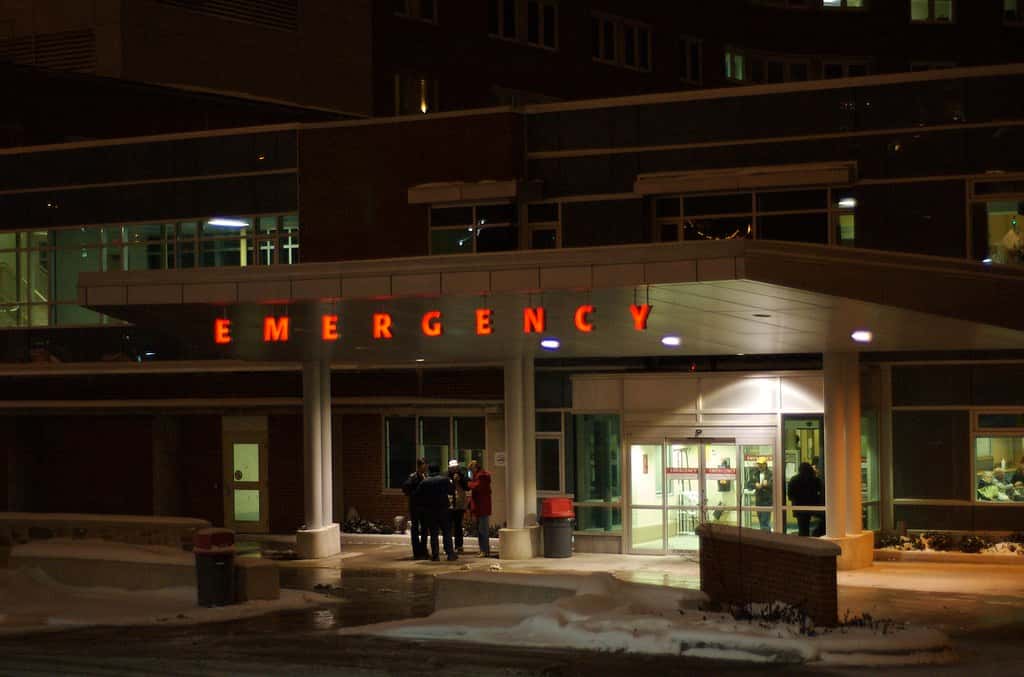
Hospital emergency departments are the backstop. Federal law requires them to screen and stabilize anyone who presents regardless of ability to pay, which makes them the highest cost and least appropriate setting for primary care needs that go unmet elsewhere.
Employers and the coverage question
Many of the people losing Medicaid eligibility are employed, often in sectors that do not provide health benefits. Agricultural work, hospitality, construction and home health care are among Florida's largest employers of recently arrived workers, and coverage rates in those industries are low.
Employer sponsored insurance is available to some but frequently unaffordable at the wage levels involved, since employee premium contributions for family coverage routinely exceed what a low wage household can absorb.
The Affordable Care Act's employer mandate applies to larger employers, but part time and seasonal workers fall outside it, and staffing arrangements common in these industries further limit its reach.
The net effect is that employment does not resolve the coverage question for most of the affected population, which is why the Medicaid eligibility change translates fairly directly into uninsured status.
What is next
The October 1 date is the operative deadline, and coverage terminations will be processed by the state agency administering eligibility. Notices to affected individuals are required, though notice delivery has been an issue during prior eligibility transitions.
Congressional action could modify the change, and members of Florida's delegation have constituencies directly affected. Whether any legislative remedy advances before or after the November election is unclear.
Litigation is possible. Eligibility changes of this scope have drawn legal challenges in the past, typically focused on notice adequacy and on administrative procedure rather than on the underlying policy.
For Florida, the measurable consequences will show up in uninsured rates, in emergency department utilization and in hospital uncompensated care reporting over the coming year. Those are the figures that will indicate the change's true scale.
Spotted an issue with this article?
Have something to say about this story?
Write a letter to the editor