Artemis II astronaut Christina Koch leaves flight status to become NASA's acting deputy chief engineer
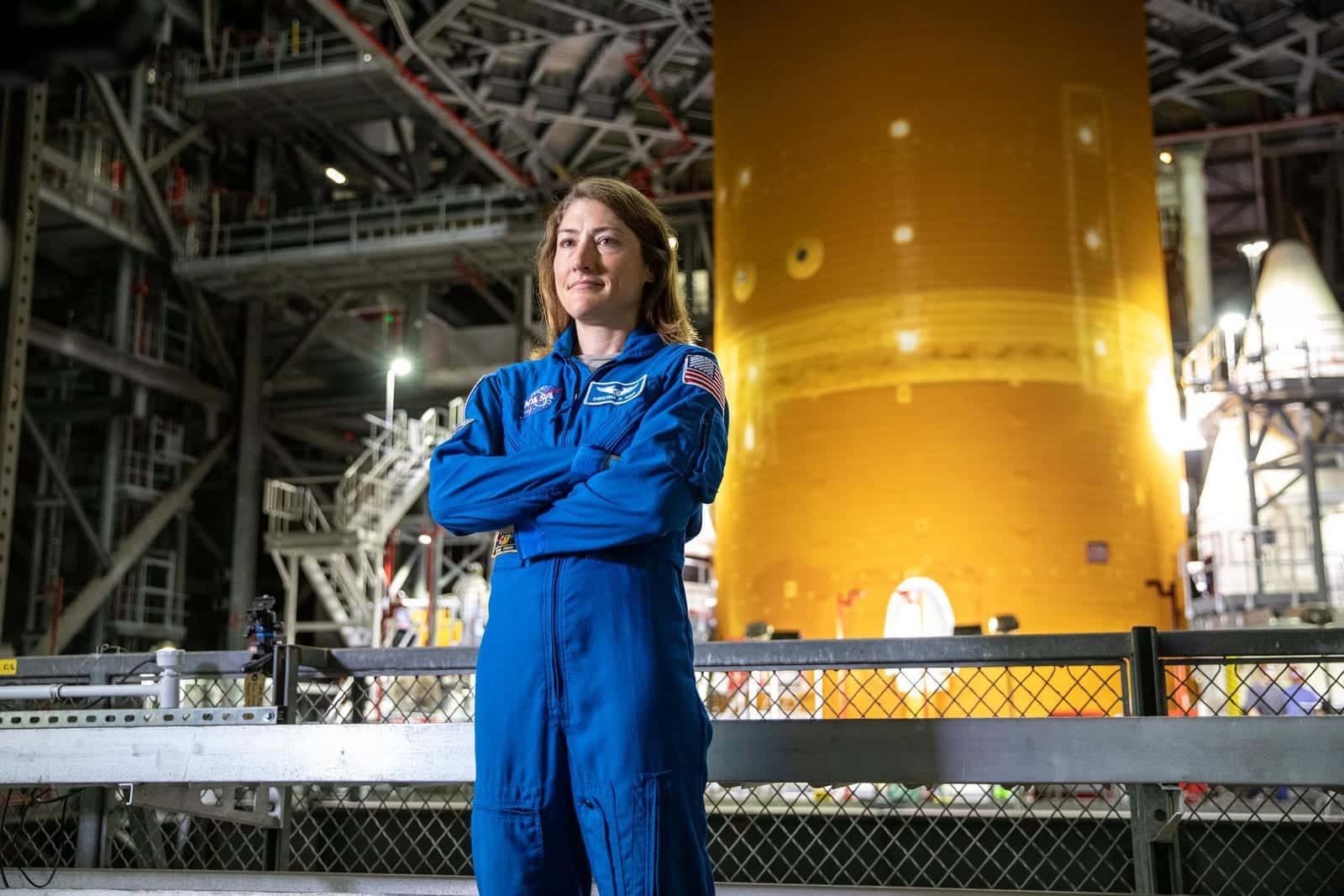
Christina Koch, the NASA astronaut who flew around the Moon on Artemis II after launching from Kennedy Space Center in April, is leaving flight status to become the agency's acting deputy chief engineer on Sunday, Nov. 1. NASA announced the move on Oct. 13. It ends Koch's eligibility for future spaceflight and puts one of the four people who rode the Space Launch System rocket off Florida's Space Coast into a senior role overseeing the engineering behind the next Artemis missions, which are being assembled at Kennedy now.
Koch replaces Katherine Van Hooser, who retires Wednesday, Oct. 21, after more than 35 years at NASA. With the appointment, Koch moves to management astronaut status, according to the agency's release.
What the new job involves
NASA said Koch will help lead the agency's engineering community, supporting technical oversight, mission readiness and engineering excellence across its programs and projects. The deputy chief engineer works under NASA's chief engineer, a role now held by Associate Administrator Amit Kshatriya.
NASA Administrator Jared Isaacman said Koch "has seen NASA engineering from both sides of the equation: developing complex systems on the ground and trusting them with her life in space." He said she brings "an extraordinary combination of technical expertise, operational experience, and judgment to this role" as the agency works to return Americans to the lunar surface, build a Moon base, pursue nuclear power in space and develop capabilities for Mars.
Kshatriya praised Van Hooser's career and said Koch "brings a unique combination of engineering expertise, operational experience, and proven leadership, both on the ground and in space."
From Goddard engineer to Moon flyer
Koch started her NASA career as an electrical engineer at Goddard Space Flight Center in Greenbelt, Maryland, developing scientific instruments for space missions. Before she was selected as an astronaut in 2013, her work also included scientific field engineering in Antarctica and the Arctic. She later held leadership positions in NASA's Astronaut Office and at Johnson Space Center in Houston.
On the International Space Station, she spent 328 consecutive days in space, setting the record for the longest single spaceflight by a woman, and took part in the first all-female spacewalks, alongside fellow NASA astronaut Jessica Meir.
On Artemis II, Koch served as a mission specialist with commander Reid Wiseman, pilot Victor Glover and Canadian Space Agency astronaut Jeremy Hansen. The crew launched aboard the Space Launch System rocket and Orion spacecraft from Launch Complex 39B at Kennedy on April 1, flew around the Moon and splashed down in the Pacific Ocean off California on April 10. It was the first crewed flight around the Moon in more than 50 years, and it made Koch the first woman to travel to the Moon. The crew flew 248,655 miles from Earth, farther than any humans had traveled, according to Central Florida Public Media.
Van Hooser's legacy in propulsion
Van Hooser joined NASA in 1991 at Marshall Space Flight Center in Huntsville, Alabama. She worked on liquid rocket engine turbomachinery before becoming chief engineer for the space shuttle main engine, leading engineering work through the final 21 shuttle flights, all of which launched from Kennedy. She later served as the first chief engineer for the Space Launch System's Liquid Engines Element, which oversees the RS-25 engines that power the rocket stacked and launched in Florida. She was Marshall's chief engineer before becoming NASA's deputy chief engineer in 2023.
A crew moving on
Koch is not the only Artemis II astronaut changing course. Wiseman and Glover have moved to emeritus status so they can mentor and train NASA's workforce, and Hansen has retired from the Canadian astronaut corps, Central Florida Public Media reported.
Don Platt, director of Florida Tech's Spaceport Education Center in Titusville, told the station that it is not uncommon for astronauts to take new roles after a flight. "Once they do fly a mission, then they're sort of at the bottom of the cycle again, and they've got to restart and work their way up to get another flight opportunity," Platt said.
He said Koch's mix of technical skill and flight experience is in demand. "She can apply that experience to make sure that future missions are safe, effective, and get the highest performance possible," Platt said.
The Florida connection: Artemis III takes shape at Kennedy
Koch takes the engineering post as hardware for the next crewed mission comes together at Kennedy. NASA reported in July that teams had begun stacking the twin solid rocket boosters for the Artemis III rocket on the mobile launcher inside the Vehicle Assembly Building, less than three months after the Artemis II crew returned. The mobile launcher had undergone repairs after the Artemis II launch.
In parallel, the SLS core stage was being processed in the Vehicle Assembly Building, where teams connected the main stage with its engine section in May. The first two RS-25 engines arrived in June, and launch teams began monthly countdown simulations in May inside the Rocco A. Petrone Launch Control Center. Across the center, technicians installed the heat shield on the Artemis III Orion crew module in the Neil A. Armstrong Operations and Checkout Building, with design upgrades made after unexpected behavior on the Artemis I heat shield.
NASA says Artemis III, planned for 2027, will launch astronauts to low Earth orbit aboard Orion on SLS to test rendezvous and docking with test versions of the commercial human landing systems that are to carry Artemis IV astronauts to the lunar surface in 2028. Platt called it "a very ambitious mission with brand new spacecraft and brand new capabilities that haven't been demonstrated previously."
Questions remain about whether the commercial landers being developed by SpaceX and Blue Origin will be ready on schedule, WFTV reported, though NASA's SLS resident office manager at Kennedy has said the team is on track.
What's next
Van Hooser's last day is Oct. 21, and Koch takes over as acting deputy chief engineer on Nov. 1. Before then, NASA leaders are scheduled to be at Kennedy on Oct. 23 to update the agency's plans to accelerate the Artemis campaign and its 2028 Moon landing goal, as The Florida Press has reported.
For the Space Coast, the appointment places an astronaut who has ridden SLS and Orion into NASA's engineering leadership as the agency prepares the next rockets and spacecraft to launch from Kennedy's Launch Complex 39B.
Spotted an issue with this article?
Have something to say about this story?
Write us a letterComments
No comments yet. Be the first to weigh in.
Related Coverage

After cutting 760,000 from ACA plans over fraud, Trump administration reinstates some as Florida braces for open enrollment
29m ago

Wholesale inflation jumps 1.3% in September as gas soars: what it means for Florida
14h ago

NASA leaders to update Artemis acceleration and 2028 Moon landing plan at Kennedy on Oct. 23
16h ago

Jacksonville woman gets 15 months in federal prison for punching trooper during ICE operation
17h ago