Artemis III Booster Stacking Begins at Kennedy Space Center
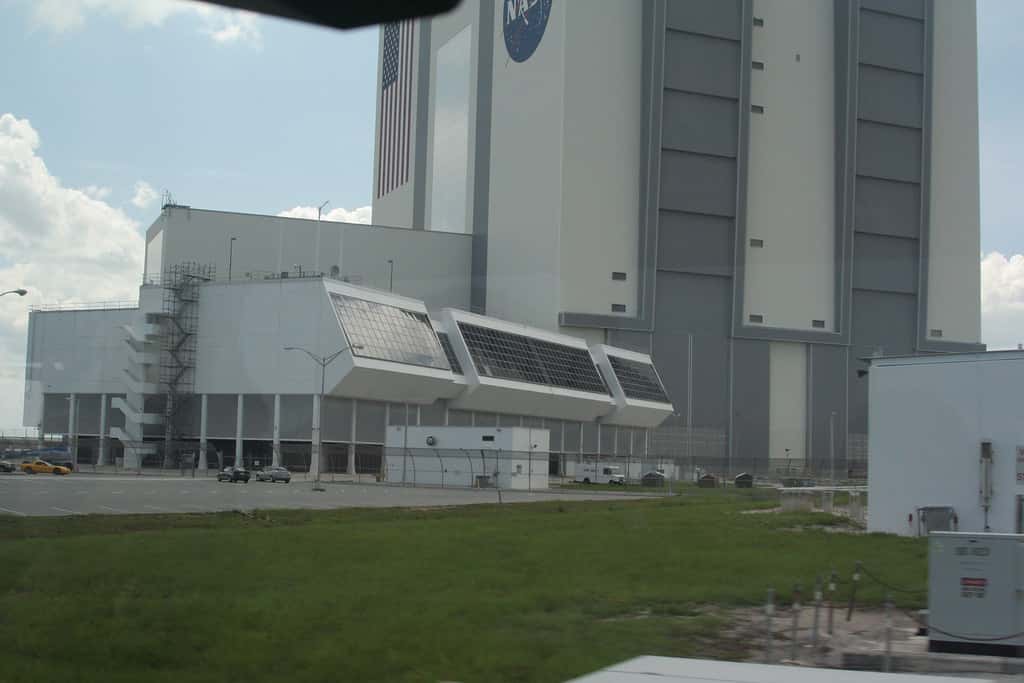
Teams at NASA's Kennedy Space Center have begun stacking the twin solid rocket booster segments for the Artemis III mission, a milestone that moves the agency's next crewed lunar program flight from component processing into vehicle assembly. The work is taking place inside the Vehicle Assembly Building on Merritt Island and represents the start of a months-long integration sequence that precedes any launch campaign.
Artemis III is planned as a crewed mission carrying four astronauts, with Orion designed to rendezvous and dock with a commercial lunar lander. NASA has indicated a launch date no earlier than the middle of 2027, which means the assembly work now underway at Kennedy is the front end of a long timeline rather than an imminent launch preparation.
For Florida's Space Coast, the significance is less about the schedule than about the workload. Booster stacking is labor-intensive, requires specialized skills and takes place entirely at Kennedy. Sustained Artemis assembly activity is one of the primary sources of stable technical employment in Brevard County.
What booster stacking involves
The Space Launch System uses two five-segment solid rocket boosters that provide the majority of thrust during the first two minutes of flight. The segments arrive at Kennedy separately and are stacked vertically on a mobile launcher platform inside the Vehicle Assembly Building, one of the largest single-story buildings in the world by volume.
Stacking is a precision operation. Each segment weighs many tons and must be lifted by overhead cranes and mated to the segment below within tight tolerances. The process is sequenced carefully, and once stacking begins, NASA operates under time constraints tied to how long a stacked booster can remain assembled before flight under its certification.
Those constraints have been a factor in previous Artemis planning. Stacking too early relative to a launch date can create certification questions that require analysis and, in some cases, extension approvals. NASA has managed that issue on prior missions, and the timing of stacking decisions reflects the agency's confidence in the broader schedule.
The rest of the Artemis III vehicle
The boosters are one element of a larger integration effort. The SLS core stage, the interim cryogenic propulsion stage, the launch vehicle stage adapter and the Orion spacecraft all have to be processed and mated before the vehicle is complete. Orion processing takes place at Kennedy's Neil Armstrong Operations and Checkout Building.
Artemis III also depends on a piece of hardware NASA does not build. The mission requires a commercial lunar lander to be ready and demonstrated, and the readiness of that system has been the pacing item for the mission's schedule rather than the SLS or Orion hardware. That dependency is why the launch date has moved multiple times.
NASA Kennedy teams have also been conducting monthly launch countdown simulations in the Launch Control Center, rehearsing and refining procedures well ahead of the mission. Countdown rehearsals of that kind build the operational muscle memory a launch team needs and surface procedural problems while there is time to fix them.
What it means for the Space Coast
Brevard County's economy is more directly tied to launch and spaceflight activity than any other county's in the United States. The combination of NASA programs, Space Force operations at Cape Canaveral Space Force Station and commercial launch activity supports tens of thousands of jobs across engineering, technician, logistics and support roles.
The commercial launch cadence from the Cape has grown dramatically in recent years, and that growth has changed the character of the local economy. Where the region once experienced boom and bust cycles tied to single government programs, the current mix of government and commercial activity provides more stability. Artemis assembly work adds a distinct category of high-skill employment on top of that base.
Local governments in Brevard County have built long-term planning assumptions around sustained space sector activity, including housing, transportation and workforce development investments. School districts and state colleges in the region have expanded technical training programs specifically oriented toward aerospace employers.
The broader Florida space economy
Space Florida, the state's aerospace economic development agency, has worked to expand the sector's footprint beyond Brevard County, and aerospace manufacturing and supply chain activity now extends into Central Florida and the Space Coast's surrounding counties. The state has treated the sector as a strategic priority across multiple administrations.
Launch activity also has secondary effects that are easy to overlook. Tourism tied to launches has become a meaningful driver for Brevard County hotels and restaurants, and the Kennedy Space Center Visitor Complex is among the most visited attractions in the state. Major crewed missions generate visitor volume comparable to significant event weekends.
The commercial launch rate from Cape Canaveral has continued to climb, with a Falcon 9 lifting off from Space Launch Complex 40 on July 21 carrying the U.S. Naval Research Laboratory's Robotic Servicing of Geosynchronous Satellites payload aboard a Northrop Grumman spacecraft. Missions of that kind fill the calendar between the milestone government flights.
How Artemis fits the national program
Artemis is the United States' program to return humans to the lunar surface and to establish a sustained presence there. Artemis I flew an uncrewed test of SLS and Orion around the Moon. Artemis II is planned as a crewed flight that does not land. Artemis III is intended to be the mission that puts astronauts on the surface, though NASA has described its current profile in terms that include a crewed low Earth orbit phase with lander rendezvous.
Program schedules of this scale routinely shift. Development of the lander, spacesuits and supporting systems all have to converge, and any one of them can move the date. NASA's practice of describing target dates as no earlier than a given point reflects that reality.
Congressional funding is the other variable. Artemis has enjoyed relatively consistent bipartisan support, in part because its industrial base spans many states, but annual appropriations cycles still shape how quickly work proceeds. Florida's congressional delegation has historically been among the program's most reliable advocates.
Inside the Vehicle Assembly Building
The Vehicle Assembly Building was constructed in the 1960s for Apollo and has since supported the Space Shuttle program and now Artemis. Its high bays are tall enough to accommodate a fully stacked launch vehicle, and its overhead crane systems handle the lifts required to mate stages weighing hundreds of thousands of pounds.
The building's scale creates its own operational challenges. Its interior volume is large enough that weather can form inside under certain conditions, and environmental control is a continuous engineering concern. Adapting a facility designed for one vehicle architecture to another has required substantial modification across each program transition.
Mobile launchers are the other critical piece of ground infrastructure. The stacked vehicle is assembled on a mobile launcher platform, which is then transported to the launch pad by crawler-transporter. Those crawlers, also dating to Apollo, have been refurbished and upgraded to handle the loads Artemis imposes.
Why the Space Coast workforce matters
Aerospace employment on Florida's Space Coast requires a specialized skill base that takes years to build and is difficult to rebuild once lost. The gap between the end of the Space Shuttle program and the maturation of commercial launch activity produced significant job losses in Brevard County, and the region's recovery from that period informs how local officials view program continuity today.
Technicians qualified to work on human-rated flight hardware require certifications and experience that cannot be improvised. Programs that pause and restart lose people to other industries and other regions, and the cost of rebuilding that capability exceeds the savings from any temporary reduction in activity.
State and local workforce development programs have responded by building pipelines through Eastern Florida State College, the Florida Institute of Technology and technical training partnerships with employers. Those programs treat aerospace employment as a durable regional asset rather than a program-dependent one, which is a lesson drawn directly from the post-Shuttle period.
The commercial launch surge alongside Artemis
Artemis assembly work proceeds against a backdrop of commercial launch activity that has transformed the Cape. Launch rates from Cape Canaveral Space Force Station and Kennedy Space Center have climbed to levels far above anything seen during the Shuttle era, driven principally by satellite constellation deployment.
That cadence has required substantial investment in range infrastructure and in the processes that govern launch scheduling. The Space Force has worked to automate range safety functions and to compress the turnaround time between launches, changes that were necessary to support the volume of activity now routine on the Space Coast.
The coexistence of high-tempo commercial operations with a deliberate, milestone-driven government program creates scheduling complexity. Range availability, airspace closures and maritime exclusion zones all have to be coordinated, and a government mission with a narrow launch window takes priority over commercial flights that can shift by days.
For Brevard County residents, the practical result is that launches have become a regular feature of daily life rather than an occasional event. Traffic patterns on launch days, particularly for high-profile missions, remain a genuine consideration for anyone traveling near the coast, and county emergency management publishes guidance ahead of major launches.
What's next
Booster stacking will continue through the coming months, followed by core stage integration and eventually Orion mating. Each of those steps is a publicly reported milestone, and NASA's Kennedy blogs are the primary source for updates.
The Artemis II mission remains ahead of Artemis III in the sequence, and its outcome will inform preparations for the landing flight. Space Coast residents and visitors should expect launch and test activity from both NASA and commercial operators to continue at a high rate through the remainder of 2026.
Launch schedules from Kennedy Space Center and Cape Canaveral Space Force Station change frequently based on weather, range availability and vehicle readiness. Anyone traveling to view a launch should confirm the schedule the day of.
Spotted an issue with this article?
Have something to say about this story?
Write us a letterComments
No comments yet. Be the first to weigh in.
Related Coverage
Blue Origin Seeks FAA Approval for Up to 50 New Glenn Launches a Year From Cape Canaveral
2h ago
Second Kennedy Space Center Contractor Plans Layoffs as NASA Brings Work In-House
21h ago

RFK Jr. Brings Medical School Nutrition Push to Orange Park as UF, LMU and Jacksonville Programs Sign On
21h ago

Nine Florida HIV Prevention Groups Lose Direct CDC Grants as Federal Money Shifts to State Health Department
23h ago