Board of Governors Chair Asks Florida Universities to Keep H-1B Hiring Freeze Past Jan. 5 While the State Reviews Data
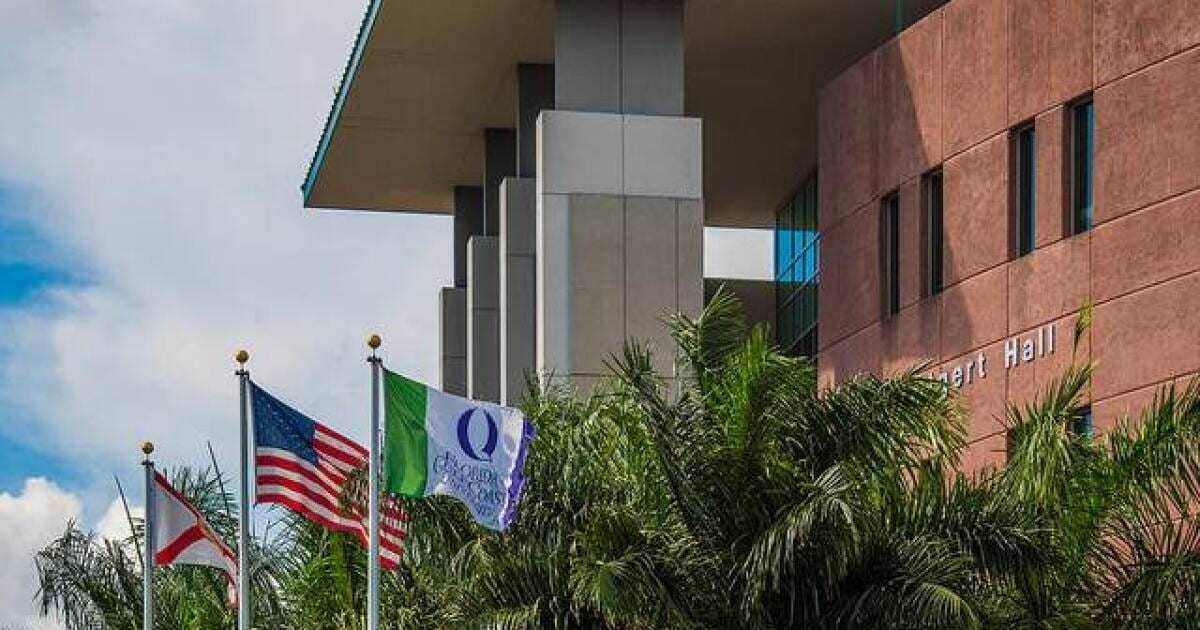
The chairman of the State University System Board of Governors has asked Florida's 12 public universities to keep honoring the freeze on hiring new faculty and staff through the federal H-1B visa program for at least a month after it is set to expire on Jan. 5, 2027, giving the board time to review data on the moratorium's effects before deciding whether to take more formal action.
Chairman Alan Levine made the request Friday, Nov. 13, during the board's meeting at Florida International University in Miami, the News Service of Florida reported in a story published by WUSF and WLRN. He asked universities to continue to comply with the moratorium as it is written until the board can consider next steps. The board's next scheduled meeting is Jan. 27 and 28 at the University of North Florida in Jacksonville, three weeks after the current freeze would lapse.
What Levine asked for
Levine's request is not a formal vote or a new regulation. It asks campus leaders to voluntarily treat the freeze as if it were still in place until the board has had a chance to study the data it requested from each school, according to the News Service of Florida. No new end date has been set, and the board has not voted on an extension.
Levine said there was palpable anger about the H-1B program displacing American workers, and that the goal is to make sure the visas are not used inappropriately and are used in the future only to fill needs that cannot otherwise be met, the News Service reported.
The freeze, approved in March, bars university boards of trustees from using the H-1B program to hire new employees through Jan. 5, 2027. It does not affect workers already employed on H-1B visas or the renewal of existing visas, according to reporting by WUSF and Central Florida Public Media at the time it passed.
The data the board is collecting
In mid-October, the Board of Governors sent each university a data request, and Chancellor Ray Rodrigues said at the Nov. 13 meeting that staff should be starting to compile the responses, the News Service reported. The request asks how many H-1B holders each university employs, whether they are faculty or staff, and how their salaries compare with those of people in similar positions, to determine whether visa holders are being paid market or below-market rates.
That question has been central to the policy since it was proposed. When the board advanced the freeze in January, Rodrigues told CBS Miami that the board would look at the salaries of employees on H-1B visas to determine whether their pay is comparable to market pay. Levine said at the time that the pause applied only to the H-1B program and not to other visa programs.
How many workers are involved
About 400 H-1B recipients worked at Florida's state universities in the past fiscal year, and more than 1,700 did so over the past three fiscal years combined, according to state and U.S. Citizenship and Immigration Services data cited by the News Service of Florida. By campus, the past year's totals were:
- University of Florida: 156
- University of South Florida: at least 68
- Florida State University: 67
- University of Central Florida: 28
- University of North Florida: 19
- Each of the other universities: 15 or fewer
Counts have varied with the data source. When the freeze passed in March, WUSF reported that federal data showed more than 600 H-1B holders employed at the public universities in the prior fiscal year, including 253 at UF and 107 at USF, while Central Florida Public Media reported the universities employed more than 1,000 faculty and staff on the visas, most of them at UF.
How the freeze came about
The moratorium grew out of Gov. Ron DeSantis' October 2025 directive to the board to crack down on what he called abuse of the H-1B program. DeSantis has described the federal program as a way for employers to save money through cheap labor. When he launched the effort, he questioned why universities employed staff on H-1B visas, citing a public policy professor from China, a psychologist and counselor from the United Kingdom, an athletics operations coordinator from Trinidad and Tobago and an assistant swimming coach from Spain.
The key steps so far are below.
| Date | What happened |
|---|---|
| October 2025 | DeSantis directs the board to crack down on H-1B use at universities |
| Jan. 29, 2026 | Board advances the proposed freeze for final approval |
| March 2, 2026 | Board approves the freeze on new H-1B hires through Jan. 5, 2027 |
| Mid-October 2026 | Board sends each university a request for H-1B headcount and salary data |
| Nov. 13, 2026 | Levine asks universities to keep complying past the expiration date |
| Jan. 5, 2027 | Current freeze expires |
| Jan. 27 and 28, 2027 | Next board meeting, at the University of North Florida |
Florida's move followed Texas, where Gov. Greg Abbott directed state universities and agencies to halt new H-1B petitions through May 31, 2027. Nationally, the Trump administration has imposed a $100,000 fee on new H-1B applications, a cost Rodrigues said in March the state would need to assess.
Opposition and concerns about medical care
The freeze drew dissent on the board itself. Student representative Carson Dale, the Florida State University student body president, and board member Kimberly Dunn, an accounting professor and Faculty Senate president at Florida Atlantic University, voted against it. Dale told the board in January that "top tier candidates are not going to pause their careers to wait on a single state," CBS Miami reported. Dunn warned the moratorium could hurt Florida's reputation and its access to global expertise.
Universities pushed back that the program fills hard-to-staff, high-demand science and engineering positions, and the United Faculty of Florida said engineering and other jobs would be difficult to fill without these workers, Central Florida Public Media reported. Connor O'Brien of the Institute for Progress, a research group, told the board the ban as written also applies to UF Health, which sponsors physicians and surgeons on H-1B visas, and urged exceptions for researchers, scientists and doctors.
In March, Levine asked universities to report whether the freeze affects Floridians' access to life-saving medical care, and Rodrigues said exceptions could be made if a critical worker shortage is identified, adding that the system could respond within 72 hours under its emergency regulation process, according to WUSF.
What's next
The salary and headcount data universities are now compiling is expected to shape whatever the board does next. If universities follow Levine's request, the freeze would effectively remain in place through at least early February 2027, past the Jan. 27 and 28 meeting in Jacksonville where the board could consider formal action.
For now, the practical effect for the state's universities is that new international hires who would need H-1B sponsorship remain off the table into early 2027, while employees already on the visas can continue to work and renew.
Spotted an issue with this article?
Have something to say about this story?
Write us a letterComments
No comments yet. Be the first to weigh in.
Related Coverage
Byron and Erika Donalds Pitch 'Accountability' for Public and Choice Schools Alike as Florida's Voucher Tracking Problems Linger
17m ago
Orange County School Board Imposes District Health Plan in 5-3 Vote; Unions Say $66.6 Million Shifts to 20,000 Workers
19h ago
Florida Universities Move Closer to Armed Guardians as Board Weighs Mass-Casualty Training After FAMU Shooting
20h ago
Board of Governors Approves New College's $47.5 Million Borrowing Tied to USF Sarasota-Manatee Takeover; Florida Poly Gets $101 Million Housing Deal
1d ago