Bradford County Woman Charged With Murder in Shooting of Live-In Boyfriend
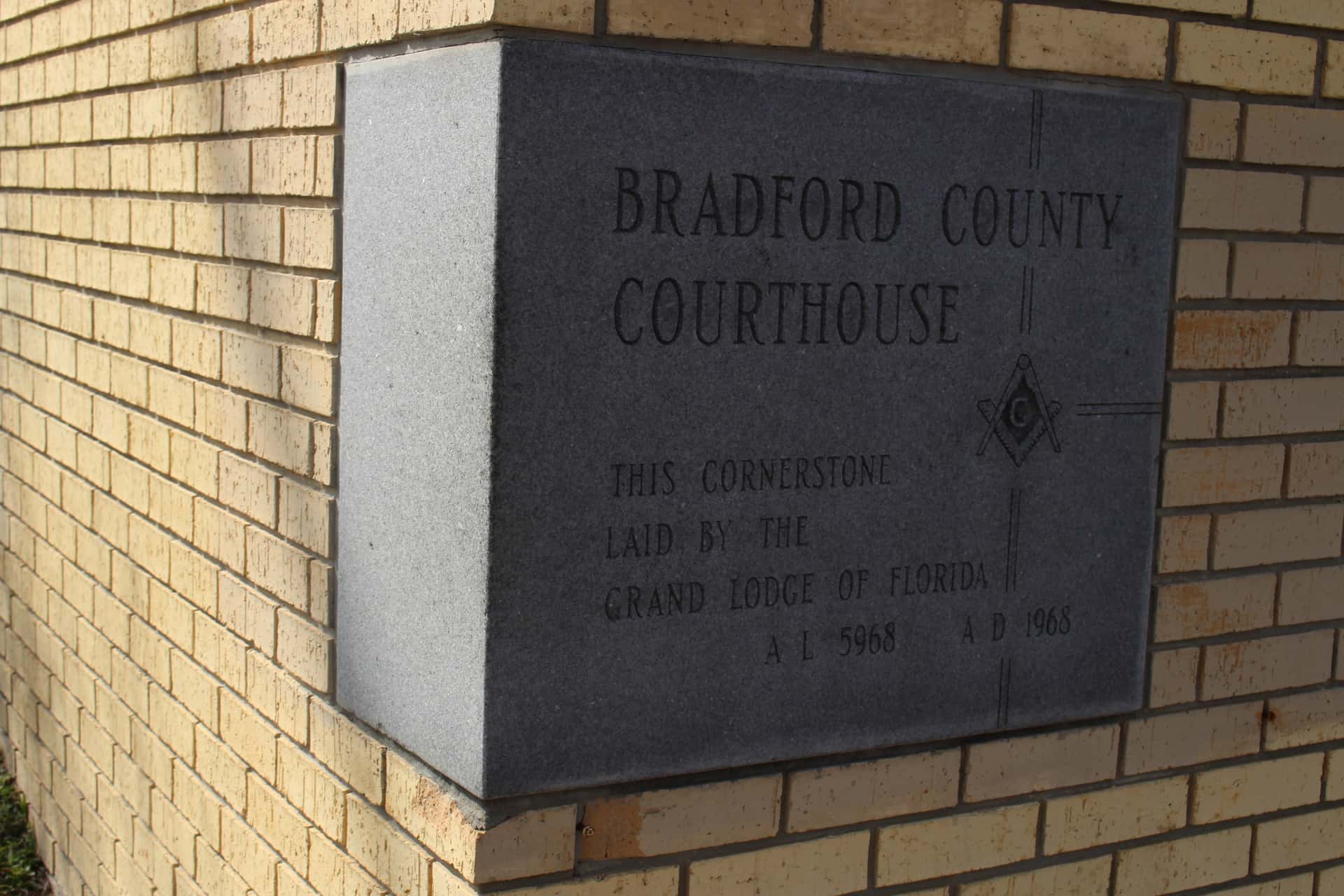
Bradford County Sheriff's deputies have charged a 42-year-old woman with murder in the shooting death of her live-in boyfriend, according to the sheriff's office. Stephanie Michelle Johnson was arrested Monday morning in connection with the death of David James Wroblewski, 41.
Deputies say the shooting followed an argument between the two. Johnson has been charged and is presumed innocent, and the account released by the sheriff's office reflects the investigation to date rather than facts established in court.
Homicide cases in Florida's smaller counties receive comparatively little attention, but they proceed through the same statutory and constitutional framework as cases in the state's largest cities. The process from arrest to resolution is identical. What differs is the scale of the agencies involved and the resources available to each side.
What deputies have released
The Bradford County Sheriff's Office reported that deputies arrested Johnson on a murder charge in connection with Wroblewski's death, which occurred Monday morning. The two lived together, and the sheriff's office indicated the shooting took place during an argument.
Agencies typically release limited detail in the first hours after a homicide arrest, and the account available reflects that. Investigators do not generally disclose specific evidence, statements, or the sequence of events in detail while a case is being prepared for prosecution.
Bradford County is a small, rural county in North Central Florida, with Starke as its county seat. The sheriff's office handles the full range of law enforcement functions across the county, and homicide investigations in agencies of that size often draw support from the Florida Department of Law Enforcement's regional operations center when specialized resources are needed.
Agencies also generally decline to characterize a motive in early releases, and readers should be careful not to treat the phrase describing an argument as an established account of what caused a death. That framing typically reflects what witnesses or the scene initially suggested, and investigations frequently develop a more complicated picture. It is a preliminary description, not a finding.
What the charge means at this stage
An arrest charge is a preliminary designation made by law enforcement. Florida's homicide statutes distinguish among first-degree murder, second-degree murder, and manslaughter, and those distinctions turn on premeditation, depraved-mind conduct, and culpable negligence respectively.
The State Attorney's Office for the Eighth Judicial Circuit, which covers Bradford County along with Alachua, Baker, Gilchrist, Levy, and Union counties, will make the formal charging decision. Prosecutors review the investigative file and file an information or seek a grand jury indictment, and the charge that results can differ from the arrest charge in either direction.
First-degree murder in Florida requires a grand jury indictment and is the only offense in the state that can carry a capital sentence. Whether this case proceeds on that theory is a decision that has not been made publicly and would follow prosecutorial review.
The distinction between the charging stages matters more in homicide cases than almost anywhere else in criminal law, because the difference between second-degree murder and manslaughter can mean decades of exposure. Second-degree murder in Florida is a first-degree felony punishable by up to life. Manslaughter is a second-degree felony with a substantially lower maximum. Which theory a prosecutor pursues depends on evidence that is rarely available in the first 24 hours.
Grand juries in Florida have a limited but important role in homicide cases. Only a grand jury can return an indictment for first-degree murder, which means that if prosecutors pursue that charge the case must go before one. For lesser homicide charges, the State Attorney can file directly by information without convening a grand jury, which is the far more common path.
Domestic violence context in Florida
Homicides between intimate partners represent a persistent share of Florida's overall homicide total. The Florida Department of Law Enforcement compiles domestic violence data statewide as part of its uniform crime reporting, and the category includes offenses between spouses, former spouses, people related by blood or marriage, people who live together or have lived together as a family, and people who share a child.
Cases in which a shooting follows an argument between people who live together fall within that framework as a statistical matter. That classification carries no implication about who initiated conduct or about any legal defense that may apply, and Florida law recognizes self-defense claims including those raised in domestic contexts.
Florida maintains a statewide domestic violence hotline and a network of certified domestic violence centers that provide emergency shelter, advocacy, and legal assistance in every judicial circuit. Those services are available regardless of whether a person has filed a police report or sought an injunction.
Florida's sentencing structure adds another layer through its criminal punishment code scoresheet, which calculates a minimum permissible sentence based on the offense and the defendant's prior record. Firearm enhancements can add mandatory minimum terms on top of that calculation. The practical consequence is that the charge filed largely determines the sentencing range long before any plea negotiation begins.
Whether the case involves the death penalty is a separate determination that follows a first-degree murder indictment. Florida requires the state to give notice of intent to seek a death sentence within a defined period after indictment, and capital cases proceed under substantially different procedural rules, including specialized appointed counsel requirements and a bifurcated trial structure. Nothing in the current record indicates this case is heading that direction.
How a case like this proceeds
The immediate steps are first appearance before a judge within 24 hours of arrest, at which a judge reviews probable cause and addresses pretrial detention. Murder charges in Florida frequently result in detention without bond, though that determination is made case by case and is subject to hearing.
Discovery follows the formal charging decision, and it is where the defense receives the state's evidence: reports, witness statements, forensic results, and any recorded interviews. Florida's discovery rules in criminal cases are relatively broad compared with many states.
Homicide cases in Florida typically take a year or more to reach trial, and most resolve by plea rather than by verdict. Forensic testing timelines, including firearms examination and any toxicology work, are frequently the limiting factor in early case scheduling.
Self-defense is also a possibility in any case arising from a confrontation, and Florida's framework is among the most defendant-favorable in the country. Nothing in the public account indicates that such a claim has been raised here. It is simply a reminder that an arrest reflects a law enforcement judgment about probable cause, and that the legal questions in a case like this are frequently more complex than an initial charge suggests.
Pretrial detention decisions in Florida homicide cases turn on a constitutional provision allowing detention without bond where the proof is evident or the presumption great. Establishing that standard requires a hearing at which the state presents evidence, and defendants can and do contest it. The outcome shapes the entire pretrial period, because a defendant held in custody faces different practical constraints on preparing a defense than one released.
Rural counties and criminal justice capacity
Bradford County's size shapes how a case like this is handled. Small counties operate with limited investigative staff, and major cases can consume a substantial share of an agency's resources for an extended period.
The Eighth Judicial Circuit's State Attorney and Public Defender offices serve six counties, which means prosecutors and defense attorneys handling a Bradford County homicide are also carrying caseloads from neighboring jurisdictions. Court scheduling across a multi-county circuit adds its own delays.
Forensic work in cases like this generally goes to FDLE laboratories, which serve agencies statewide. Turnaround times at state labs depend on statewide caseload, and firearms and DNA testing backlogs have been a recurring subject of legislative budget discussion in Florida.
Anyone in Florida experiencing domestic violence can reach the statewide hotline at 1-800-500-1119, which operates 24 hours a day and connects callers to a certified center in their area. Those centers provide emergency shelter, safety planning, and assistance with injunction petitions, and services are available at no cost regardless of immigration status or whether law enforcement has been involved.
Firearm access is a factor that domestic violence researchers have identified consistently as increasing the lethality of intimate partner conflicts. Florida law provides for firearm surrender in connection with certain domestic violence injunctions and risk protection orders, and those mechanisms depend on someone having sought an order in the first place. Whether any such history exists here is not part of the public record.
What's next
The immediate steps are first appearance and the State Attorney's charging decision. Whether the case proceeds as first-degree murder, second-degree murder, or on a reduced charge will emerge from that review, and the sheriff's office is likely to release additional detail as the investigation is completed.
Court records in Florida are generally public, and the Bradford County Clerk of Court maintains the docket once a case is filed. Members of the public following the case can track filings there as the matter proceeds.
Johnson is entitled to the presumption of innocence and to legal representation. The account available now comes entirely from law enforcement, has not been tested through the adversarial process, and should be read as an allegation rather than a finding.
Coverage of a case at this stage is necessarily limited, and that limitation is deliberate. What is known comes from a single source with an institutional interest in the outcome, has not been subject to challenge, and describes an investigation that is not complete. Everything that follows will be tested through a process specifically designed to determine whether the initial account holds.
Spotted an issue with this article?
Have something to say about this story?
Write us a letterComments
No comments yet. Be the first to weigh in.
Related Coverage

Ex-FSU cornerback accused of 150-mph Hillsborough chase while refusing to let woman out of SUV, FHP says
54m ago
Part-Time Pensacola Police Officer Arrested in Uniform After Alleged Hydrocodone Buy
21h ago

Operation Ice Breaker: 25 Charged in Palm Beach, Broward, St. Lucie Cocaine Trafficking Case
22h ago

Tamarac Man Held Without Bond on First-Degree Murder Charge in Stabbing Death of His Mother
3d ago