UCF-Led Team Wins $19.2 Million Army Award to Correct Light Distorted by Air and Tissue
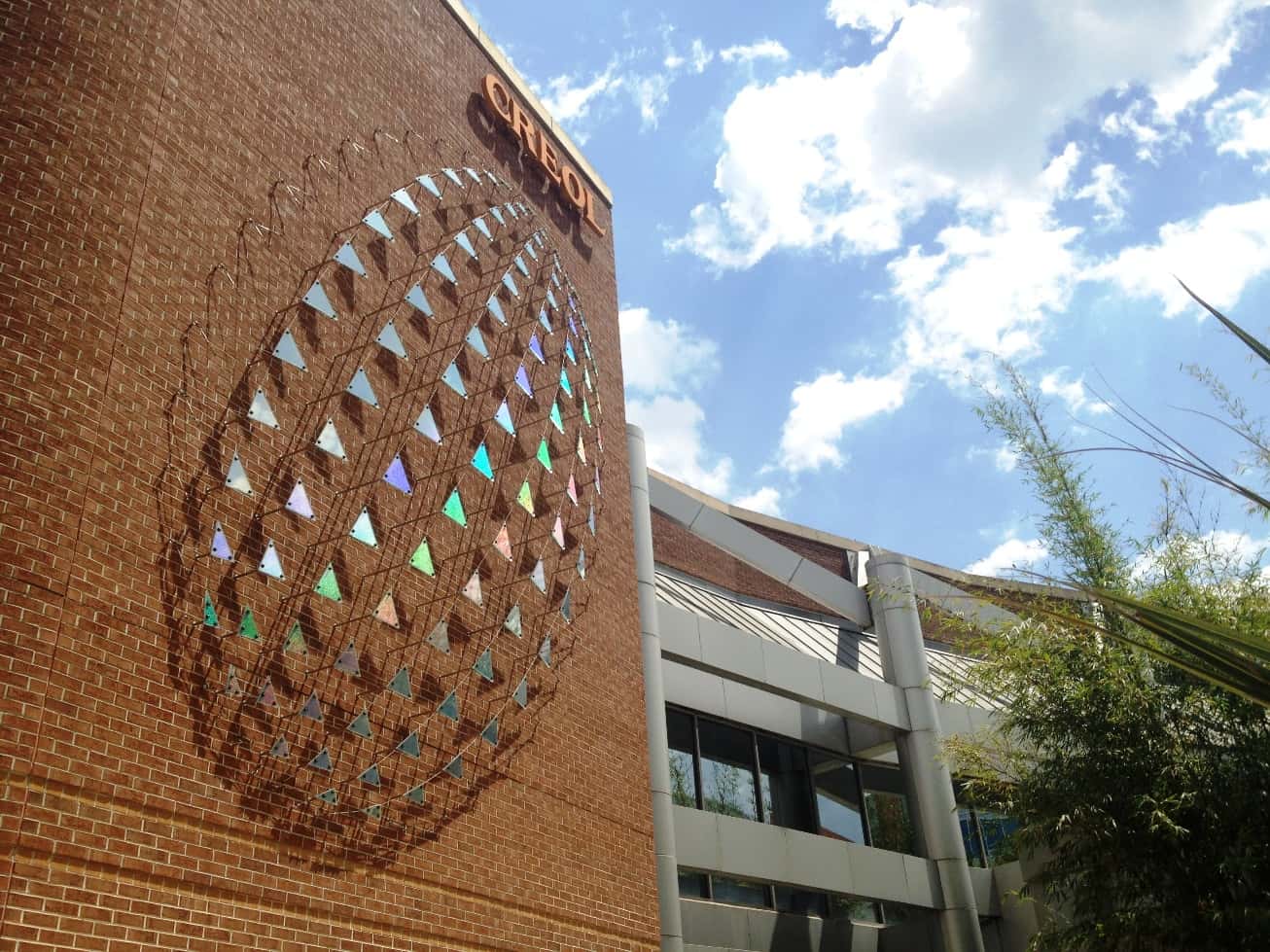
A research team led by the University of Central Florida has won a five-year, $19.2 million award from the U.S. Army Research Office to study how light travels through turbulent, changing environments such as the atmosphere and human tissue, and how scientists can correct the distortions that result, UCF announced Oct. 13.
The program is led by Guifang Li, a professor in UCF's College of Optics and Photonics, known as CREOL, and it will also launch a new chapter for CREOL's Townes Laser Institute under Li's leadership. The award adds a major federal defense research program to the Orlando campus, which already anchors one of Florida's best-known clusters of optics, lasers and military simulation work.
What the Army is funding
The multi-institutional team brings together researchers from CREOL and UCF's College of Engineering and Computer Science with partners at the University of Dayton and the University of California, Berkeley, plus several companies, according to the UCF release. The research is supported by the U.S. Army Combat Capabilities Development Command Army Research Laboratory through the Army Research Office.
The core problem is one familiar to anyone who has watched heat shimmer above a Florida highway. Atmospheric turbulence, scattering materials, biological tissue and other complex media can scramble an optical wave, degrade an image or keep a beam from landing precisely where it is aimed. The program seeks ways to measure those distortions remotely and correct them quickly, especially when a sensor, beacon or other device cannot be placed at the far end of the light's path, the university said.
"We are interested in a very fundamental problem: How do you understand and control light when the environment between you and where you want the light to go is unknown, changing and inaccessible?" Li said in the release. He added that the question shows up in many forms, from atmospheric propagation to looking through scattering tissue. "If we can develop new ways to measure the optical environment and adapt to it in real time, the underlying science could have an impact across many fields," he said.
Military and medical uses
UCF said the research is partly motivated by challenges involving directed-energy systems, a category of weapons that use focused energy such as lasers. Keeping a laser beam tight and on target across long distances of shifting air is a central technical hurdle for such systems.
The university said the same science could also inform imaging through biological tissue, laser-based medicine, remote sensing and free-space optical communications, which send data through the air on beams of light rather than through cables.
How the team plans to measure distorted light
One of the program's central questions is whether researchers can work out what happened to light along its journey without access to the other end of the path, according to the release.
One group of techniques will examine the tiny amount of light naturally scattered back toward the source as a wave travels through a medium. By pairing coherent optical measurements with advanced computing, the team will study whether those faint returning signals can reveal how conditions change along the path.
Other approaches will project carefully designed patterns of light and use mathematical inverse methods to learn about an unknown object and the medium hiding it at the same time. The team also plans to use artificial intelligence to analyze optical measurements and better understand complex environments.
Undoing the distortion
Measuring the damage is only half the job. To correct it, the team will investigate multi-plane light conversion, a technique that reshapes an optical wave across a series of controllable planes rather than relying on a single corrective element, UCF said.
In principle, the university said, the approach could give researchers greater control over both the amplitude and the phase of a light field, letting a system fix distortions that conventional single-plane methods cannot easily handle. For light moving through the atmosphere, it could offer new ways to compensate for rapidly changing turbulence. Related principles could help recover images obscured by tissue or sharpen how precisely lasers deliver light inside the body.
The program combines fields that are usually separate, including coherent optical sensing, computational imaging, inverse methods, artificial intelligence, adaptive optics and programmable photonics.
Industry partners and Texas Instruments prototypes
Three companies, Meadowlark Optics Inc., Caelight Inc. and Holodyne LLC, will help commercialize technologies that come out of the research, according to the release. Texas Instruments will supply the team with prototypes of microelectromechanical systems, or MEMS, before those devices are publicly available. MEMS are microscopic mechanical components built on chips, and in optics they are used to steer and shape light.
The program will also train students from UCF, the University of Dayton and UC Berkeley across optical physics, photonics, computation and engineering, with experience in optical sensing, wavefront control, computational imaging and advanced photonic systems.
"An award of this scale gives us an unusual opportunity not only to pursue ambitious scientific questions, but also to train students across institutions and disciplines," Li said. He said students will learn to think about optics as a complete system that combines physics, devices, computation and experiments. "That workforce development is an important part of the program," he said.
A new chapter for the Townes Laser Institute
The Townes Laser Institute was established at CREOL in 2007 and is named for Nobel laureate and laser pioneer Charles Townes. Li plans to broaden its focus toward multidisciplinary projects that apply advances in lasers and photonics to practical problems, according to UCF.
"Townes Laser Institute will translate multidisciplinary scientific advances into solutions that aspire to benefit society as profoundly as the laser itself, to honor the legacy of Charles Townes," Li said.
Li holds appointments in optics and in electrical and computer engineering at UCF, and his research has centered on high-capacity optical communication, RF photonics and all-optical signal processing, according to his CREOL faculty profile. He is a fellow of the IEEE Photonics Society, the Optical Society of America, SPIE and the National Academy of Inventors, and he founded Optium, which the profile describes as UCF's first venture-backed company. Optium went public in 2006 and is now part of II-VI.
The Central Florida connection
CREOL began in the 1980s as a state-backed research center meant to help diversify Florida's economy, and in 2004 UCF elevated it to a full College of Optics and Photonics, the first time a U.S. optics program became a full college at its host university, according to UCF. Its dean, David Hagan, was among the original researchers who came to Orlando in 1987 to build the center, according to CREOL's published history.
The university sits beside the Central Florida Research Park, home to the Army's Program Executive Office for Simulation, Training and Instrumentation and the Navy, Marine Corps and Air Force simulation offices that make up the cluster known as Team Orlando. The new award adds Army-funded basic research in optics to that defense presence.
"This award reflects UCF's growing leadership in optics and photonics and demonstrates the impact that fundamental university research can have on technologies of national importance," Hagan said. "Just as importantly, the program will educate the next generation of scientists and engineers needed to advance these technologies."
What's next
The five-year program now begins its work across UCF, Dayton and Berkeley, with industry partners positioned to carry promising results toward commercial products. UCF has not released a schedule for specific milestones, and the university did not say how the $19.2 million will be divided among participating institutions.
Spotted an issue with this article?
Have something to say about this story?
Write us a letterComments
No comments yet. Be the first to weigh in.
Related Coverage

St. Pete-Launched Ocean Drones Sailed Into Hurricane Isaias, Logging a 104 MPH Gust Near the Eyewall
4d ago

Uthmeier Asks Pasco Judge to Force Meta to Remove Florida Users Under 14 and Cap Teens at Two Hours a Day
6d ago

Florida Attorney General James Uthmeier Sues TP-Link, Saying Its Routers Left Florida Home Networks Exposed
Oct 7
FIU to install Florida's first on-campus trapped-ion quantum computer
Oct 6