Supreme Court won't shield Seminole County print examiner sued by freed death row inmate Clemente Aguirre-Jarquin
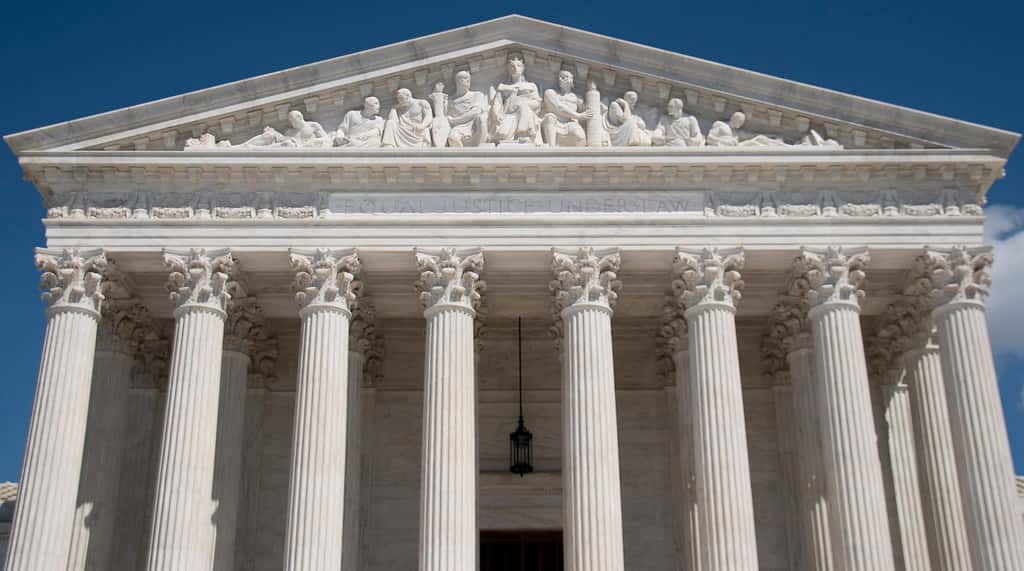
The U.S. Supreme Court on Tuesday declined to hear an appeal from Donna Birks, the Seminole County Sheriff's Office latent print examiner accused of fabricating the palm print match that helped send Clemente Javier Aguirre-Jarquin to Florida's death row. The order leaves in place a federal appeals court ruling that Birks is not entitled to qualified immunity on Aguirre-Jarquin's claim that she fabricated evidence, clearing the way for his civil rights lawsuit against her to move forward in federal court in Orlando.
The justices denied Birks' petition in case No. 25-1341, Donna Birks v. Clemente Javier Aguirre-Jarquin, on the Court's Oct. 13 order list without explanation. The decision ends Birks' bid to overturn the November 2025 ruling of the 11th U.S. Circuit Court of Appeals in Atlanta, which covers Florida.
A 2004 double murder in Altamonte Springs
The case began on June 17, 2004, when Cheryl Williams and her mother, Carol Bareis, were found stabbed to death in their home on Vagabond Way in Altamonte Springs, according to the 11th Circuit's opinion. Aguirre-Jarquin, a Honduran immigrant who lived next door, had told investigators he entered the home that morning, found the women dead and checked one of them for a pulse, getting blood on his clothes and shoes. A 10-inch chef's knife with suspected blood on it was found in the yard of his residence.
Birks, a certified latent print examiner with the sheriff's office, compared a photograph of a latent print on the knife's handle with Aguirre-Jarquin's prints and concluded it was a positive match to his left palm, the opinion says. A retired examiner, William McQuay, verified the identification. Aguirre-Jarquin was charged with two counts of first-degree murder the next day after investigators received the result.
At his February 2006 trial, Birks testified that the print matched. Aguirre-Jarquin testified in his own defense that he saw the knife near one of the victims, picked it up, walked through the house looking for someone and later dropped it in the yard. A jury convicted him of both murders and a burglary charge, and he was sentenced to death.
How the conviction unraveled
About a year after the trial, a trainee who had worked under Birks wrote a memorandum accusing her of improper print procedures, identifications and verifications, which led to an administrative investigation of the sheriff's office Latent Print Unit, according to the 11th Circuit. As part of that review, an analyst with the Florida Department of Law Enforcement concluded that the print on the knife was of no value for identification, and a private forensic consultant hired by the sheriff's office found that the positive identification in Aguirre-Jarquin's case was erroneous.
A Seminole County circuit judge denied Aguirre-Jarquin a new trial on that basis, finding the other evidence against him was strong, and the Florida Supreme Court affirmed in 2009. But later developments, including post-conviction DNA testing that did not find Aguirre-Jarquin's DNA and new evidence pointing to another person, led the Florida Supreme Court in 2016 to vacate his convictions and death sentence and order a new trial. On Nov. 5, 2018, the state dropped all charges. By the 11th Circuit's count, he spent 14 years incarcerated, 10 of them on death row.
The federal lawsuit
Aguirre-Jarquin sued in the U.S. District Court for the Middle District of Florida in January 2020. The Death Penalty Information Center reported at the time that the suit named Seminole County, the sheriff's office and the Florida Department of Law Enforcement. After several amendments, the operative complaint named Seminole County Sheriff Dennis Lemma in his official capacity and, individually, Birks, lead homicide investigator Robert Hemmert and crime scene analyst Jacqueline Grossi, according to the appeals court.
The central claim against Birks alleges she violated Aguirre-Jarquin's 14th Amendment right to a fair trial by intentionally or recklessly fabricating the palm print identification. The district court denied her qualified immunity, the legal doctrine that shields government employees from civil suits unless they violated clearly established law, and she appealed.
What the 11th Circuit held
In a Nov. 4, 2025 opinion written by Judge Gerald Tjoflat and joined by Judges Adalberto Jordan and Barbara Lagoa, the 11th Circuit affirmed the denial of qualified immunity to Birks on the fabrication claim. The panel rejected her argument that she was at most overconfident or wrong in expressing an expert opinion. It explained that a positive print identification requires two steps, a comparison and a verification by an independent, competent examiner, and that a purposeful failure to obtain a proper verification is not mere error but the absence of a required step.
The court pointed to evidence that, at the time, McQuay had officially retired and was in questionable health, and to statements in a 2007 sheriff's office report that Birks had previously called him incompetent and had sometimes sent identifications to him for verification after other examiners declined to verify them. Viewing that evidence in Aguirre-Jarquin's favor, as required at this stage, the panel said reasonable jurors could conclude Birks intentionally chose McQuay to avoid a competent examination. Whether she did is a factual question for a jury, the court said. Those remain allegations that have not been proven at trial.
The ruling was not a complete loss for the defendants. The panel found that investigators still had arguable probable cause to arrest Aguirre-Jarquin even without the palm print, and it granted qualified immunity to Birks and Hemmert on his malicious prosecution claim. It also granted immunity to Hemmert and Grossi on a claim that they conducted a defective investigation, while affirming the denial of state-law immunity to Hemmert and Grossi on an emotional distress claim. The appeals court denied rehearing on Jan. 22, 2026.
Birks' arguments to the Supreme Court
Birks, represented by Winter Park attorney Thomas Poulton of DeBevoise & Poulton, filed her petition on May 22 after receiving an extension from Justice Clarence Thomas. Her petition presented five questions. The first asked whether a due process claim based on her testimony is foreclosed by Aguirre-Jarquin's own trial testimony that he picked up the knife and removed it from the scene. Others asked whether submitting print evidence later found inaccurate is a due process violation when the analyst did not know at the time it was wrong, and whether the law was clearly established in the 2004 to 2006 period. Her petition also described the decision as an entirely novel form of liability founded on her personal opinions about a more experienced, equally credentialed colleague she asked to verify her work.
Aguirre-Jarquin, represented by Winter Park attorney Travis Hollifield, initially waived his right to respond. The justices requested a response on July 31, and his brief in opposition, filed Aug. 31, argued that the causation and materiality questions were fact-bound and remain to be litigated on remand, and that the 11th Circuit had applied settled law. Birks filed a reply on Sept. 10, and the case was considered at the justices' Oct. 9 conference before Tuesday's denial.
A denial of review does not mean the Supreme Court agreed with the 11th Circuit's reasoning; it means the justices chose not to take up the case.
What's next
The case now returns to U.S. District Court in Orlando, where the 11th Circuit sent it back for further proceedings in November 2025. The fabrication claim against Birks, which the 11th Circuit said presents a factual question for a jury, and the state-law emotional distress claim remain pending, and Birks' argument that Aguirre-Jarquin's own trial testimony about handling the knife breaks the link between the print and his conviction remains open for the trial court.
Spotted an issue with this article?
Have something to say about this story?
Write us a letterComments
No comments yet. Be the first to weigh in.
Related Coverage
Nearly 177,000 Florida immigrants flagged as federal Medicaid cutoff for refugees and asylees takes effect
2h ago
Inflation hits 3.7% as gasoline jumps 9.1% in September: what it means for Florida
4h ago
In Miami Gardens, McMahon says new federal school choice tax credit won't drain Florida public schools
5h ago
Coconut Grove art dealer Leslie Roberts gets 46 months for selling fake Warhols
6h ago