Buccaneers Build Their 2026 Roster Around the Trenches
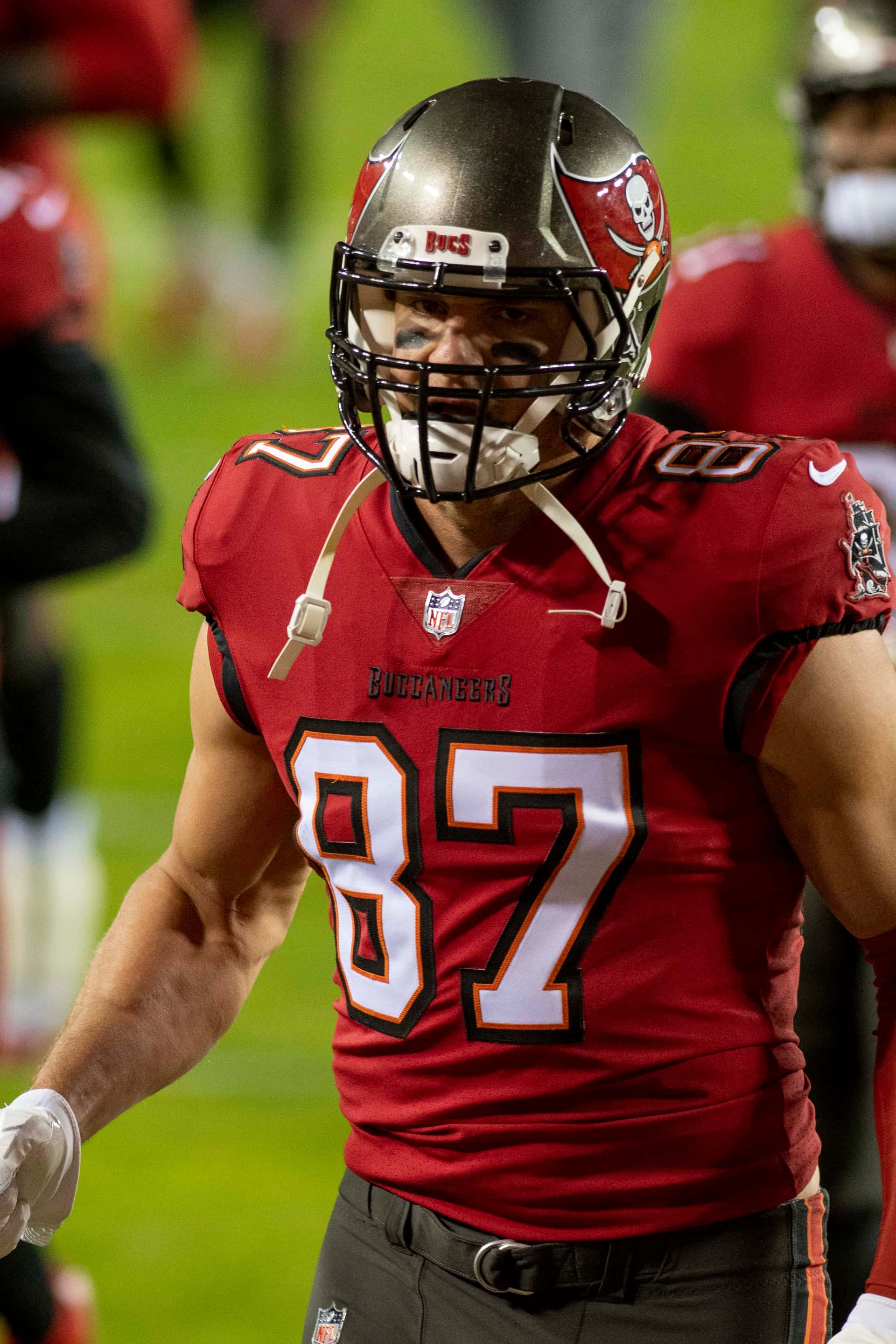
The Tampa Bay Buccaneers finalized their first 53-man roster of the 2026 season with a construction that says plainly what the organization values: 10 offensive linemen and seven interior defensive linemen, against only two quarterbacks and eight total defensive backs. The split between offense and defense is an even 25 and 25, with the remaining spots going to specialists. Tampa Bay made 38 roster moves to reach the limit, releasing veteran quarterback Jake Browning and waiving 2024 draft picks Chris Braswell, Devin Culp and Elijah Klein.
Reading the roster construction
Ten offensive linemen on an initial 53 is at the high end of league practice. Most teams carry eight or nine, using the extra spot elsewhere and relying on practice squad elevations when injuries hit. Carrying 10 reflects a judgment that the line is either central to the offense's identity or fragile enough to require insurance.
Seven interior defensive linemen is similarly heavy. Interior defensive line is a rotational position where fresh legs matter enormously in the fourth quarter, and teams that stop the run and generate interior pressure typically do it with depth rather than with two dominant players.
The counterweight is at defensive back. Eight is thin in a league where nickel personnel is the base defense and where teams routinely deploy five or six defensive backs on most snaps. A single injury in the secondary forces immediate roster moves, and Tampa Bay will almost certainly carry additional coverage players on its practice squad.
Two quarterbacks
Keeping only two quarterbacks on the initial 53 is a calculated risk that a meaningful number of teams take, generally with a third arm stashed on the practice squad. The rules allow a practice squad quarterback to be elevated for game days, which reduces the exposure without spending a roster spot.
Tampa Bay released Jake Browning to arrive at that number. Browning has NFL starting experience, and releasing an experienced backup while carrying only two quarterbacks total signals confidence in the top of the depth chart and a willingness to accept risk behind it.
The math is unforgiving if it goes wrong. A team with two quarterbacks that loses its starter is immediately dependent on a backup with limited preparation reps, and if the backup also goes down, the season can turn on a practice squad elevation. Most teams accept that risk because the alternative costs a roster spot that produces value every week.
The rookie class
Tampa Bay's roster includes 10 total rookies, among them all seven members of the team's most recent draft class. Keeping an entire draft class on the initial 53 is not automatic and reflects both the quality of the class and the front office's willingness to develop players in game-week environments.
Among the rookies is first-round pick Rueben Bain Jr., along with Josiah Trotter and Benjamin Morrison. Bain arrives from the University of Miami, which gives the pick a local dimension in a state where college and professional football fan bases overlap heavily.
Rookie contributions on defense tend to be uneven early and improve sharply in the second half of a season as the mental processing catches up to the physical ability. A defense with multiple rookies in the rotation should be evaluated on its December performance more than its September performance.
An older roster than last year
Tampa Bay carries 28 players who are 26 or younger, which sounds young until it is compared with last season's opening roster of 34 players in that age range. The Buccaneers got older, modestly, which runs counter to the direction most of the league drifts and counter to what fellow Florida franchise Miami did in constructing the NFL's youngest roster.
An aging roster is not inherently a problem. It generally indicates a team that believes it can compete now and has chosen experience over developmental upside at the margins. For a franchise that has remained competitive in its division, that is a defensible posture.
It does compress the timeline. A roster built on players in their prime years has a shorter window than one built on rookie contracts, and the cost of veteran retention rises each offseason. Tampa Bay has managed that balance for several years running.
What it means for Florida football fans
Line-heavy roster construction produces a specific kind of football: games decided at the point of attack, run defense as a foundation, and an offense that leans on protection rather than on scheme creativity to generate time. That is a more stable way to build than a roster dependent on explosive plays, and it is generally less entertaining to watch in September and more valuable in January.
For Tampa Bay fans specifically, the two-quarterback decision is the one to watch. It is the roster's clearest vulnerability, and a season that turns on quarterback health would make the reasoning look worse in hindsight than it does in a spreadsheet.
Across the state, the three Florida NFL franchises enter the season in different phases. Miami is executing a full teardown while absorbing an NFL-record dead cap charge. Jacksonville is developing young talent, including a quarterback it just acquired from the Dolphins. Tampa Bay is the one built to win now.
How this compares across the league
Position allocation on an initial 53 is one of the few genuinely revealing pieces of public information about how a coaching staff intends to play. Teams that carry extra tight ends run heavy personnel. Teams that carry six receivers spread the field. Teams that carry 10 offensive linemen intend to control the line of scrimmage and expect attrition there.
The seven interior defensive linemen point toward a defense that wants to stop the run without committing extra defenders to the box, which is the structural precondition for playing more coverage on early downs. Whether the eight defensive backs support that is a fair question.
The roster will not stay as constructed. Initial 53s change within days as waiver claims are processed and practice squads are assembled, and by midseason most teams have turned over several spots. What the initial roster reveals is intent, and Tampa Bay's intent is unambiguous.
Why line depth matters more than it looks
Carrying 10 offensive linemen looks like a conservative allocation until you examine injury data. Offensive line is among the highest-attrition position groups in football, and unlike most positions, the replacements cannot be evaluated in isolation because line play is fundamentally collective.
Five linemen operating as a coordinated unit produce better results than five individually superior players who have not worked together. Communication on stunts, twists and blitz pickups depends on shared reps and shared understanding. When a team loses a starter, it does not merely downgrade one position, it disrupts the continuity of the entire front.
That is the argument for depth. A team carrying 10 linemen has practiced combinations available rather than emergency arrangements, and it can absorb two injuries without resorting to a player signed off the street in October. Over a 17-game season, that resilience is worth more than the marginal value of an extra receiver.
The interior defensive line investment
Seven interior defensive linemen reflects a similar logic applied to the other side of the ball, with an additional consideration specific to the position: snap count management.
Interior defensive linemen play the most physically punishing role in football, engaging with 320-pound blockers on every snap. Effectiveness degrades sharply with fatigue, and teams that rotate liberally maintain pressure and run-stopping ability into the fourth quarter while teams relying on two or three players do not.
The strategic payoff is what it enables in the secondary. A defense that can stop the run with four down linemen and seven defenders behind them can play more coverage on early downs, which is the single most valuable structural advantage in modern defensive football. If Tampa Bay's interior can hold up without linebacker or safety help, its eight defensive backs will be adequate. If it cannot, the thin secondary becomes the exploitable weakness, and opponents will find it quickly.
What's next
The Buccaneers will build a practice squad that almost certainly includes a third quarterback and additional defensive backs, addressing the two thinnest areas without spending active roster spots. Practice squad construction is where the real depth chart gets completed.
Early-season run defense is the metric that will validate or undermine the construction. A team that invests seven roster spots in interior defensive linemen should be difficult to run against, and if it is not, the allocation was misjudged.
The rookie class, and Bain in particular, will be evaluated over the full season rather than the first month. Tampa Bay kept all seven drafted players for a reason, and whether that judgment holds up is the season-long subplot underneath whatever the win-loss record turns out to be.
One more variable deserves attention: how the coaching staff handles the first significant injury. A roster built with deliberate depth in two position groups and deliberate thinness in a third has essentially pre-decided where it can absorb a loss and where it cannot. The response to the first secondary injury will show whether the front office had a plan for that contingency or simply accepted the risk.
Tampa Bay has remained competitive through several roster cycles by making unglamorous choices well. Ten offensive linemen and seven interior defensive linemen is an unglamorous choice. Whether it is a good one gets settled between the tackles on Sunday afternoons, which is exactly where the front office decided it should be settled.
Practice squad moves in the first weeks of the season will fill in the rest of the picture. Teams reveal their real depth priorities not on cutdown day but in the quieter transactions that follow it, when the roster meets actual injury and actual opponents.
Spotted an issue with this article?
Have something to say about this story?
Write us a letterComments
No comments yet. Be the first to weigh in.
Related Coverage

ESPN Handshake Deal Moves College Football Closer to 24-Team Playoff as Miami, Florida Programs Watch
3h ago
Victor Hedman Scores in Overtime as Lightning Beat Kraken 4-3 for Fifth Win in Six Games
21h ago
Brady Tkachuk Completes Second Straight Natural Hat Trick in Overtime as Panthers Stun Canucks 3-2
1d ago
Messi Sets Up De Paul as Inter Miami Beats NYCFC 2-0 and Clinches an MLS Cup Playoff Berth
1d ago