Buccaneers Set Their 53 After a Shutout Loss in Jacksonville
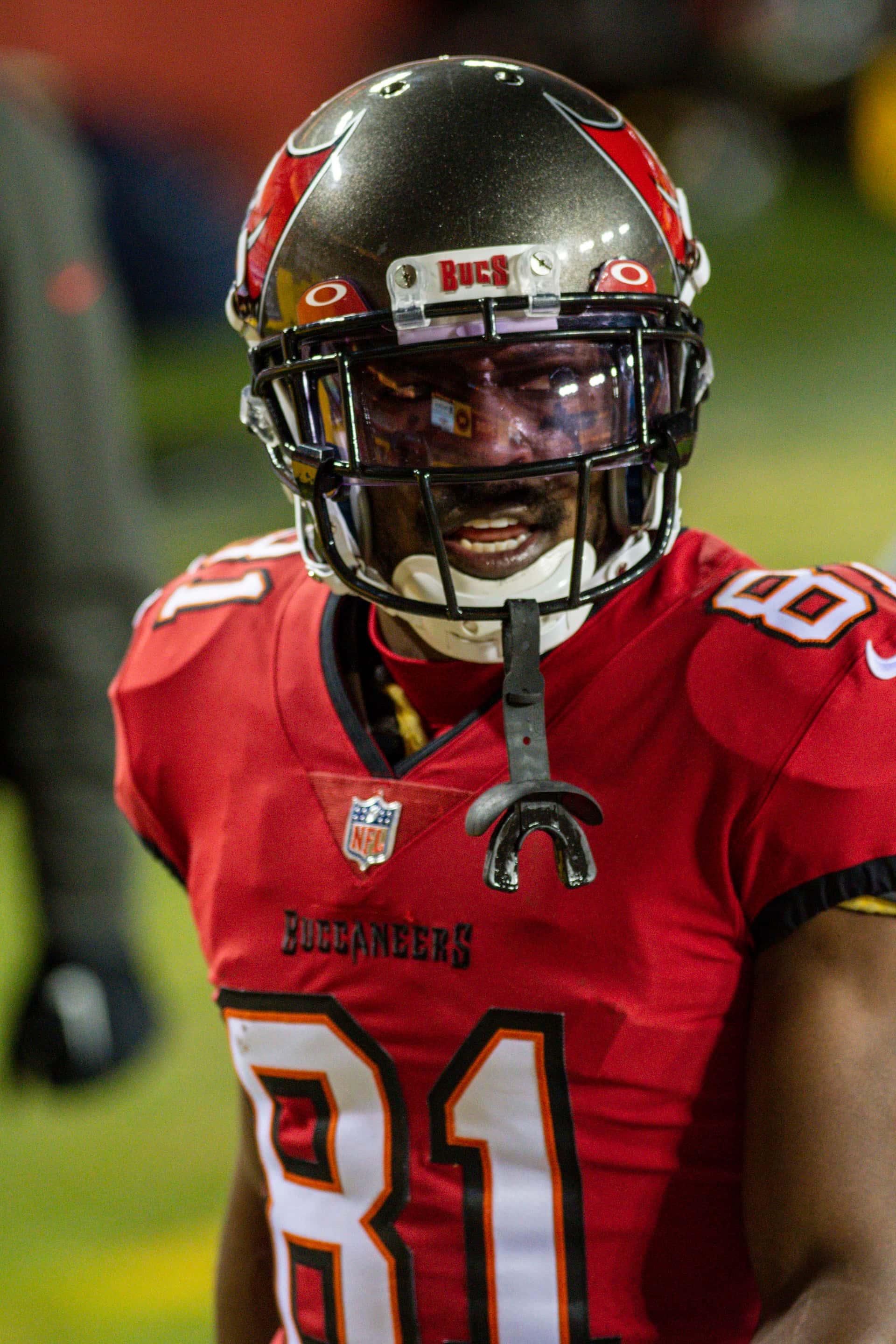
The Tampa Bay Buccaneers closed their preseason with a 19-0 loss to the Jacksonville Jaguars at EverBank Stadium, a shutout that carried little competitive weight but plenty of evaluative value, since preseason finales are played almost entirely by the players whose roster spots are in question. Tampa Bay now faces the NFL's deadline to reduce from 90 players to 53 by 6 p.m. Eastern on Sunday.
Preseason results are among the least predictive numbers in professional sports. Starters play sparingly or not at all in the final exhibition, play-calling is deliberately conservative, and coaching staffs prioritize evaluating individuals over scheming to win. A 19-0 final tells a coaching staff which of its fringe players handled the pressure and which did not, and very little about how the team will perform in September.
For Tampa Bay, the decisions ahead are unusually clustered. The staff faces choices at quarterback, running back, wide receiver and inside linebacker simultaneously, and several of those decisions carry salary implications that complicate what would otherwise be straightforward football judgments.
The quarterback decision
The most consequential question is whether Tampa Bay carries three quarterbacks or two. Teams that keep only two open a roster spot elsewhere but accept the risk that an injury during a game leaves them without a viable option, since a third quarterback can only be elevated from the practice squad under specific emergency provisions.
If the Buccaneers keep two, the choice comes down to veteran Jake Browning or rookie Jalon Daniels. That decision pits present reliability against developmental upside, which is the classic backup quarterback tension. A veteran backup is more likely to function competently if pressed into a game; a rookie carries the possibility of becoming something more over time.
The practice squad provides a partial hedge. A quarterback who clears waivers can be signed to the practice squad and elevated for game days under the league's standard elevation rules, which lets a team effectively carry a third quarterback without spending an active roster spot. The risk is that another team claims the player on waivers first.
Rookie quarterbacks are more likely to be claimed than veteran backups, which factors into the calculation. A team that wants to keep a developmental quarterback and believes another club might claim him faces pressure to use an active roster spot rather than risk waivers.
Running back and the cost question
At running back, the reported choice is between keeping Sean Tucker as the third back at a salary of roughly $3.52 million or going with the less expensive Josh Williams. Decisions of this kind, where a modest performance gap sits against a meaningful cost gap, are among the most common cutdown-day judgments in the modern NFL.
Third running backs occupy a specific role. They are insurance against injury at a position with a high injury rate, and they typically contribute significantly on special teams, which is often the deciding factor between two backs of similar offensive ability.
Salary cap arithmetic makes these choices more consequential than the raw numbers suggest. Money saved at the back of the roster is money available for in-season additions when injuries create needs, and teams that manage the margins well arrive at midseason with flexibility that teams committed at every spot do not have.
Releasing a player does not always produce the full cap savings, since guaranteed money already paid counts against the cap as dead money regardless. The net savings figure, rather than the salary figure, is what front offices actually weigh.
Wide receiver and the injury variable
Tampa Bay's wide receiver decision turns substantially on how many the team keeps given injuries at the position. Injury situations force teams to carry more bodies at a position than they otherwise would, which pulls spots away from other groups.
Teams commonly keep five or six receivers. Carrying an extra receiver because of injuries typically means carrying one fewer defensive back or one fewer offensive lineman, and each of those reductions creates its own risk if injuries subsequently hit that group.
The interaction with special teams shapes which receivers survive. A fifth or sixth receiver who cannot contribute on coverage or return units is difficult to justify on a game day inactive list that leaves roughly seven players unavailable.
Injured players designated for injured reserve after the initial roster is set can return during the season under league rules, which gives teams a mechanism to preserve a spot while a player recovers, provided the injury timeline fits within the required minimum absence.
Inside linebacker and the rookie question
At inside linebacker, the reported tension involves finding a way to keep rookie Caden Fordham, potentially at the cost of parting ways with SirVocea Dennis, who has moved from young player to established veteran within the roster structure.
Choosing a rookie over a veteran at the same position is a bet on trajectory. Rookies generally improve substantially between their first and second seasons, while veterans on modest contracts represent a known quantity. The decision often comes down to whether the staff believes the rookie's ceiling justifies the near-term drop.
Special teams again factors heavily. Inside linebackers are core special teams contributors on kickoff, kickoff return, punt and punt return units, and a rookie who has shown well in those phases becomes considerably easier to keep.
Two young players drew notice in the preseason finale. Cornerback Ayden Garnes and undrafted rookie outside linebacker Jack Pyburn both had strong showings, and undrafted rookies who force their way onto a roster through preseason performance are one of the more reliably compelling storylines of this week each year.
Building the practice squad
Beyond the 53-man roster, Tampa Bay will assemble a practice squad of 16 players, with a 17th slot available if the team retains offensive tackle Paul Rubelt under the league's international player pathway provision, which allows an additional practice squad spot for a qualifying international player.
Practice squad construction is genuinely strategic rather than an afterthought. Practice squad players run opposing looks in preparation each week, which means teams stock positions where scout team reps are most needed, and they serve as the first call when injuries create a roster need.
Elevation rules allow teams to promote practice squad players to the active roster for individual games a limited number of times per player per season without signing them to the active roster permanently. Those elevations are used heavily for special teams depth and for injury coverage.
Other teams can sign a player off a practice squad to their active roster at any time, which means a practice squad is not secure storage. Teams that particularly value a player sometimes keep him on the active roster specifically to prevent that.
The season ahead in Tampa
Tampa Bay opens the regular season in September, and the roster finalized this weekend represents the staff's assessment of how to balance immediate competitiveness against developing younger players. Teams in the middle of that spectrum face the hardest cutdown decisions, because neither pure win-now nor pure development logic resolves them.
Continuity matters in the NFC South, where divisional games account for six of seventeen contests and where familiarity with opponents accumulates across a season. Tampa Bay has competed for the division in recent years, and the margin between contending and missing the playoffs in that division has frequently come down to divisional records.
Injury management across a seventeen-game season is what makes roster depth consequential rather than academic. Teams routinely use 60 or more players over a season despite carrying 53 at any moment, drawing on the practice squad and on in-season signings, and organizations that build depth deliberately handle that attrition better.
Raymond James Stadium in Tampa hosts the team's home games, and the schedule release earlier in the year set the sequence of home and road games that shapes travel and rest across the season. Bye week placement, which the league assigns, is among the underappreciated variables in how a season unfolds.
What's next
Waivers process on Monday, with claims awarded in reverse order of last season's standings. Tampa Bay's position in that order determines its access to players released by other clubs, and the waiver wire routinely produces contributors who become significant by midseason.
Practice squad signings follow once players clear waivers. The players Tampa Bay brings back after releasing them indicate which developmental prospects the organization wants to retain, and those signings typically become public within a day or two of the deadline.
The regular season begins in September, with Tampa Bay playing home games at Raymond James Stadium. The roster set this weekend will change before the opener, as it does every year, through waiver claims, free agent signings and injury designations.
Official transactions are announced by the team and by the league, and those announcements are the authoritative record. Reports circulating before the deadline are often accurate but sometimes reflect decisions that shift in the final hours.
For the players released this weekend, the waiver period determines the immediate next step, and the practice squad offers a path back for those who clear. NFL rosters churn continuously through a season, and players cut in late August regularly find themselves signed and playing meaningful snaps by October.
Agents work the waiver period actively, and players with fewer than four accrued seasons have limited control over where they land if claimed. Veterans released outright can choose among offers, which is one of the few advantages accrued seasons confer at this stage of the calendar.
Tampa Bay's own practice squad will draw substantially from the players it releases, and those signings typically become public within a day or two once the waiver process concludes.
Spotted an issue with this article?
Have something to say about this story?
Write us a letterComments
No comments yet. Be the first to weigh in.
Related Coverage

Mike Norvell Says Florida State's Results Have Not Been Good Enough as Job Questions Mount Before Miami Trip
1h ago
Jeff Hafley Sticks With Malik Willis at Quarterback as 0-5 Dolphins Head Into Their Bye Week
1h ago
Orlando City Edges Columbus Crew 3-2 on Iván Angulo's Late Winner and Maxime Crépeau's Record 12 Saves
23h ago

Inter Miami Routs D.C. United 4-0 as Messi and Suárez Score Twice Each, Climbs to Second in the East
1d ago