DeSantis Announces $15.6 Million in Infrastructure Grants for 23 Small and Rural Florida Communities
Governor Ron DeSantis announced nearly $15.6 million in grant awards to 23 small and rural communities across Florida on August 27, money directed toward infrastructure repairs and community development projects in places that rarely have the tax base to fund them alone. The awards move through the Small Cities Community Development Block Grant program, which is funded by the U.S. Department of Housing and Urban Development and administered by FloridaCommerce.
The announcement came during a stop in Lake City, where the governor also unveiled a statue of Lady Columbia at Wilson Park on the shore of Lake DeSoto as part of a statewide tour tied to the nation's 250th anniversary. Columbia County is marking its own 250th year, and the governor described the statue as a tribute to the settlers who established communities across North Central Florida.
For residents of the receiving communities, the practical significance is straightforward. Small Cities CDBG money typically pays for water and sewer line replacement, drainage work, street improvements, and neighborhood revitalization in towns where a single utility failure can consume an entire annual budget.
What was announced
The $15.6 million total is distributed among 23 communities. The Small Cities Community Development Block Grant program serves local governments that do not receive CDBG funding directly from the federal government, which in practice means smaller cities and counties below the population thresholds that trigger direct entitlement allocations.
Because the program is federally funded, the awards carry federal requirements. Projects must principally benefit low and moderate income residents, address slum or blight conditions, or meet an urgent community development need. That structure is why the money tends to concentrate in water, sewer, drainage, and housing rehabilitation rather than in discretionary amenities.
FloridaCommerce, the state agency that absorbed the functions of the former Department of Economic Opportunity, administers the program on Florida's behalf. The agency runs competitive application cycles, scores proposals, and monitors compliance after awards are made.
The governor's office framed the awards as part of a continuing emphasis on rural Florida, a category that in state policy discussions has increasingly included inland counties experiencing rapid population growth alongside those with stagnant or declining populations.
Why small cities depend on this program
Florida's incorporated municipalities range from cities of hundreds of thousands to towns of a few hundred residents. For the smallest, capital infrastructure is the hardest category of spending to finance. A water treatment upgrade or a lift station replacement can cost more than a town collects in property taxes over several years.
Borrowing is often impractical at that scale. Bond issues carry fixed costs that make small placements inefficient, and small utilities frequently lack the ratepayer base to support debt service without steep rate increases. Grant funding fills that gap, and CDBG has been the primary federal vehicle for decades.
The consequences of deferred maintenance in these systems are not abstract. Aging sewer lines produce infiltration that overloads treatment plants during heavy rain, a chronic problem in a state with Florida's rainfall patterns. Undersized drainage produces street flooding that becomes a public safety issue during storm season. Water main breaks trigger boil water notices that close restaurants and schools.
Because the program is competitive, the awards also reflect which communities had the administrative capacity to prepare applications. Small towns without grant writing staff often depend on regional planning councils or consultants to compete, which is a persistent equity issue in the program's design.
The Lake City stop and the America 250 tour
The Lady Columbia statue unveiled in Lake City depicts a female personification of the United States that predates the widespread adoption of the Statue of Liberty as the country's dominant symbolic figure. Columbia appeared in American iconography from the colonial period through the early twentieth century, on currency, in political cartoons, and in public art, before Lady Liberty largely displaced her.
The choice of Lake City is not incidental. Columbia County takes its name from the same figure, and the county is observing its 250th anniversary. The governor's office has been staging a series of appearances tied to the national semiquincentennial in 2026, pairing commemorative events with funding announcements.
Wilson Park sits on Lake DeSoto in downtown Lake City, a location that serves as the community's central public space. Placing the statue there ties the commemoration to a site residents use rather than to a state facility.
The pairing of a commemorative unveiling with an infrastructure announcement is a common structure for gubernatorial travel in Florida, allowing a single stop to serve both a symbolic and a substantive purpose.
What it means for Floridians
For the 23 communities receiving awards, the money translates into specific projects that will move from planning to construction over the next one to three years. CDBG projects generally follow a sequence of engineering design, bidding, and construction, which means residents should not expect immediate visible work.
For Floridians outside those communities, the relevance is indirect but real. Small city water and sewer systems discharge into the same watersheds that serve larger populations, and failures upstream affect water quality downstream. Drainage improvements in inland towns influence how quickly floodwaters move through regional systems.
There is also a fiscal dimension. When small utilities fail, the cost of emergency response and eventual replacement often falls to state emergency management or to regional partners. Preventive capital investment is substantially cheaper than emergency repair, which is the core argument for programs like Small Cities CDBG.
The federal funding source matters as well. Because HUD provides the money, the program's future depends on congressional appropriations, and Florida's allocation fluctuates with national funding levels.
Rural Florida's changing profile
The definition of rural Florida has been shifting. Several inland counties that were agricultural through the twentieth century are now among the state's fastest growing, driven by housing costs and insurance pressures along the coast. Counties in the state's interior have absorbed population at rates that outpace their infrastructure.
That growth complicates the traditional framing of rural infrastructure funding. A town that qualifies for small cities assistance based on population may simultaneously be processing subdivision applications that will double its service demand within a decade. Grant funded systems sized for current needs can be inadequate before construction finishes.
State and regional planners have raised this tension repeatedly. The tools available for capacity expansion, including impact fees and developer agreements, work differently than grant programs designed for repair and replacement of existing systems.
Communities that are shrinking face the opposite problem. Fixed infrastructure costs spread across a declining ratepayer base produce rising per household costs, which is the underlying dynamic in much of rural North Florida and parts of the Panhandle.
How the grant program is structured
The Small Cities Community Development Block Grant program in Florida is organized into categories that determine what a community may apply for. Those categories have historically included neighborhood revitalization, commercial revitalization, housing rehabilitation, and economic development, each with its own scoring criteria.
Applications compete within category rather than against the entire pool, which allows a small town seeking a water line replacement to be evaluated against similar projects rather than against a larger community's economic development proposal.
Scoring weights factors including the severity of the documented need, the share of beneficiaries who are low and moderate income, the readiness of the project to proceed, and the applicant's track record administering prior awards. That last factor advantages communities with recent successful grants and disadvantages those that have struggled with compliance.
Award ceilings limit how much any single community can receive in a cycle, which spreads funding across more recipients but also means the largest infrastructure needs cannot be met through a single award. Communities facing a major treatment plant replacement typically assemble funding from multiple sources across several years.
Other funding paths for rural Florida
CDBG is one of several channels through which small Florida communities finance infrastructure, and understanding the others clarifies where this announcement fits.
The State Revolving Fund programs, administered by the Florida Department of Environmental Protection, provide low interest loans for drinking water and wastewater projects, with some principal forgiveness available to disadvantaged communities. Loans require repayment capacity, which is precisely what the smallest utilities lack, so grants and loans serve different communities.
The United States Department of Agriculture operates rural development programs offering both grants and loans for water and waste disposal in communities below population thresholds, and many Florida towns combine USDA funding with state and CDBG sources on a single project.
Legislative appropriations provide another path. Individual members file appropriations requests for specific local projects, and those that survive the budget process and the governor's line item review deliver funding outside any competitive formula. That route is less predictable but can move faster than grant cycles.
Water management districts also cost share on projects that advance regional water supply or water quality objectives, particularly where a local improvement reduces nutrient loading to a district priority water body.
What's next
Recipient communities will now move through the standard CDBG implementation process, which includes environmental review, procurement, and federal labor standards compliance before construction begins. FloridaCommerce monitors each award through completion.
The next competitive application cycle will open on FloridaCommerce's published schedule, and communities that did not receive awards this round can reapply. Local governments interested in applying typically begin preparing well in advance because the applications require engineering estimates and documentation of income eligibility.
The governor's America 250 tour is expected to continue with additional stops across the state through the anniversary year, and past practice suggests further funding announcements will accompany them.
For residents of the 23 communities, the most useful next step is to watch local commission and council agendas, where the specific project scopes and construction timelines will be adopted publicly over the coming months.
Spotted an issue with this article?
Have something to say about this story?
Write us a letterComments
No comments yet. Be the first to weigh in.
Related Coverage
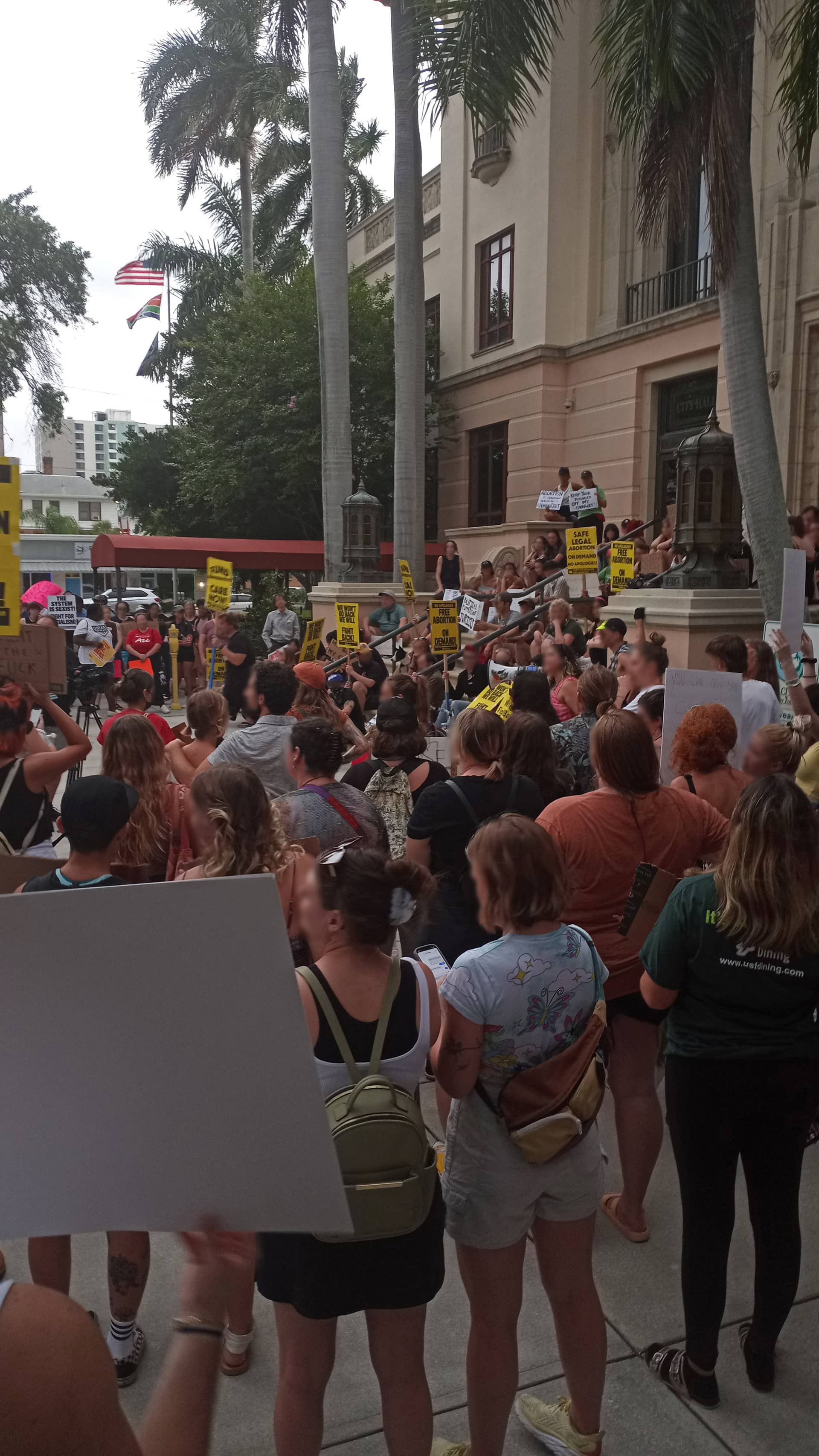
HUD Mapping Error Fixed: St. Petersburg Gets $173 Million in Hurricane Milton Recovery Money
2h ago
Bernie Sanders Brings Tour to Florida for Angie Nixon's Senate Bid Against Ashley Moody as Thune Readies Visit
2h ago
Annette Taddeo Ad Accuses CFO Blaise Ingoglia of Corruption as Polls Show Florida's CFO Race Tied
1d ago
Manatee County Freezes Data Center Applications for a Year as Commissioners Float a Permanent Ban
1d ago