Dolphins Set Initial 53-Man Roster After a Weekend of Trades and Veteran Cuts
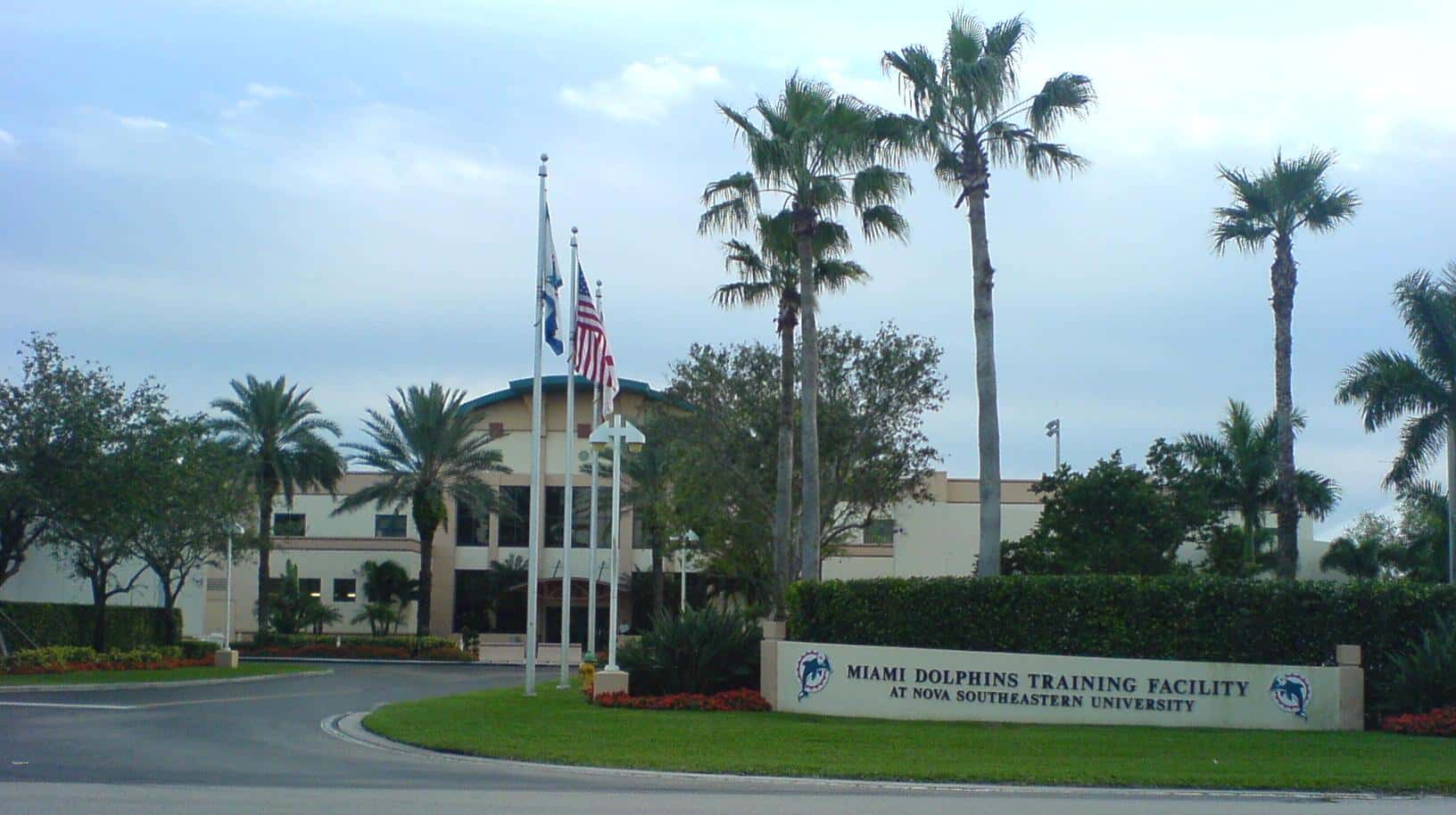
The Miami Dolphins reached the NFL's initial 53-man roster deadline on Sunday having reshaped the bottom half of their depth chart and, in a pair of trades, the quarterback room itself. The team cut from 91 players over roughly 48 hours to meet the 6 p.m. Eastern deadline on August 30.
The most notable release was veteran linebacker Tyrel Dodson, who had been in line for starting snaps. Miami also traded backup quarterback Quinn Ewers and acquired quarterback Kyle McCord from Green Bay in exchange for a 2028 sixth round pick.
A second trade sent wide receiver Tutu Atwell to the Los Angeles Rams for running back Jarquez Hunter, a swap that reallocated depth from a crowded receiver group to a backfield the team evidently wanted to reinforce.
The quarterback shuffle
Trading one backup quarterback and acquiring another on the same weekend is an unusual sequence, and it says something about how Miami evaluated the two players relative to the roles behind the starter. Ewers, a rookie class arrival, moved on. McCord came in from Green Bay for a late round pick two drafts out, a low cost of acquisition.
The price paid, a 2028 sixth rounder, is the kind of transaction that carries little downside for either club. For Miami, it is a bet that a quarterback who did not have a path in Green Bay fits better in this system.
Backup quarterback has been a live concern in Miami for several seasons given the injury history at the position. A team that has repeatedly needed its second quarterback has a rational reason to pursue an upgrade even late in the preseason.
Defensive turnover
Dodson's release was the headline defensive move. A veteran starting linebacker cut at the deadline is generally a signal that the coaching staff saw something in camp that changed its evaluation, or that the salary structure did not match the projected role.
Miami also parted with veteran cornerbacks Marco Wilson and Alex Austin following what were described as unimpressive preseason showings. Cornerback depth is among the positions most likely to see churn between the initial roster and Week 1, and teams routinely claim players at the position off waivers.
The broader waived list included cornerback Alex Austin, running back Coleman Bennett, tackle Kevin Cline, edge Seth Coleman-Lyles, tight end Ethan Conner, inside linebacker Stephen Dix Jr., running back Donovan Edwards, defensive lineman Alex Huntley, safety Louis Moore, defensive lineman Cam Rice and inside linebacker Jaheim Thomas.
The receiver room
Miami kept seven wide receivers on the initial roster, a number on the high end for the position. The group includes Malik Washington, Jalen Tolbert, Caleb Douglas, Chris Bell, Kevin Coleman Jr., A.J. Henning and Ryan Miller.
Keeping seven receivers while trading Atwell suggests the team valued the specific skill sets it retained over raw depth. Roster spots at receiver frequently overlap with special teams value, and returners and gunners often survive cuts that more accomplished pure receivers do not.
The composition also reflects where the Dolphins have invested elsewhere. A team carrying seven at one position is carrying fewer somewhere else, and the initial 53 is always a set of tradeoffs rather than a ranked list of the best available players.
How the deadline works
NFL teams must reduce to 53 players by the league mandated deadline. Players with fewer than four accrued seasons are subject to waivers, meaning other clubs can claim them in reverse order of the prior season's standings. Players with four or more accrued seasons become unrestricted free agents immediately upon release.
Waiver claims are processed the day after the deadline, which is when the roster churn genuinely peaks. Teams frequently claim two or three players and release an equivalent number of their own, meaning Sunday's 53 is rarely the 53 that takes the field in Week 1.
Practice squads are then assembled from players who cleared waivers. Practice squad rules allow standard elevations to the game day roster during the season, which makes the group functionally an extension of the roster rather than a separate developmental tier.
What it means for Dolphins fans
The immediate takeaway is that this roster is not final. Between waiver claims, practice squad signings and the injury designations that follow the first week of practice, the group that opens the season will differ from the one announced Sunday.
The quarterback trades are the most consequential development for the season ahead. A team's realistic ceiling in the modern NFL depends heavily on whether it can survive a stretch without its starter, and Miami spent the weekend addressing exactly that contingency.
The defensive cuts raise a different question. Releasing a projected starting linebacker in the final 48 hours means either that a younger player earned the job or that the staff decided the position would be handled differently. Early season snap counts will answer which.
Around the Florida NFL landscape
All three Florida NFL teams worked the same deadline. The Jacksonville Jaguars reduced to 53 by waiving 25 players, releasing nine, waiving two with injury designations and placing two on injured reserve with a designation to return, finishing with 25 offensive players, 26 defensive players and a punter.
The Tampa Bay Buccaneers came into the weekend with decisions still open following the preseason finale against Jacksonville. Roster construction questions along the offensive line and at linebacker had been the focus of preseason evaluation.
Florida's three teams collectively employ a substantial number of players who will now be looking for work elsewhere, and the waiver wire over the next 48 hours is where the sorting happens.
How the practice squad works now
Practice squads have grown from a developmental afterthought into a functional extension of the active roster. Current league rules permit teams to carry a substantial practice squad, including a defined number of veteran players who exceed the accrued season limits that historically governed eligibility.
Standard elevations are the mechanism that matters most in season. A team can elevate practice squad players to the game day roster a limited number of times per player per season without signing them to the active roster, which allows clubs to cover short term injuries without permanently cutting anyone.
Practice squad players can also be signed away by other teams to their active rosters at any time, with rules requiring the signing team to keep the player on the active roster for a minimum period. That means a valuable practice squad player is not securely retained.
For players released this weekend, the practice squad is often the realistic destination. Teams frequently re sign their own cuts within 48 hours, and the players who clear waivers without a claim are the pool from which those signings come.
The salary cap dimension
Roster decisions in the NFL are financial as often as they are competitive. Releasing a player with guaranteed money remaining creates dead cap charges, accounting for money already paid or guaranteed that continues to count against the team's cap after the player is gone.
That dynamic explains cuts that appear puzzling on football grounds. A veteran with a large cap number and limited guaranteed money remaining is a candidate for release because the savings are real. A veteran with heavy guarantees is difficult to cut regardless of performance.
Trades carry different cap mechanics than releases. Acquiring a player by trade means assuming the remaining contract, which is why teams frequently trade for players on rookie deals or on modest veteran contracts rather than for expensive veterans.
The trades Miami executed, acquiring a quarterback for a 2028 sixth round pick and swapping a receiver for a running back, are the kind of low cost transactions that reshape depth without meaningful cap consequences.
What to watch in September
The first meaningful evaluation of a roster comes in the opening weeks of the regular season, when snap counts reveal how the coaching staff actually intends to use the players it kept.
Snap distribution at linebacker will answer the question the Dodson release raised. If a young player takes the majority of defensive snaps at the position, the cut was a competitive decision. If the position is handled by committee or by a player acquired after the deadline, it was something else.
The receiver rotation is the second thing to watch. Keeping seven receivers means several will be inactive on game days or will play primarily on special teams, and the ordering of that group becomes clear only once games begin.
Quarterback is the third. The backup role rarely produces snaps early in a season, but the identity of the player holding it determines what a team can do if the starter misses time, and Miami spent the weekend addressing exactly that scenario.
Injury reports become the primary information source once regular season practice weeks begin, and participation designations across the first two weeks typically reveal issues that were managed quietly through camp.
How Florida's three NFL markets compare
Miami, Tampa Bay and Jacksonville each support an NFL franchise in a state whose population growth has outpaced the national rate for decades, but the three markets differ substantially in composition.
South Florida is the most crowded sports market in the state, with NFL, NBA, NHL, MLB and MLS franchises competing for attention alongside college programs and international soccer. Tampa Bay carries NFL, NHL and MLB, with a new ballpark now approved.
Jacksonville is the outlier, with the Jaguars as the unambiguous primary professional draw in Florida's largest city by population. That concentration gives the franchise a different relationship with its community than either of the other two enjoys.
All three compete for the same in state television audience during the season, and Florida's transplant population means that any given Sunday finds substantial numbers of residents watching teams from elsewhere.
What's next
Waiver claims are processed Monday, followed by practice squad signings. Teams can carry practice squads under current league rules and typically fill them within a day or two of the deadline.
From there, attention shifts to Week 1 preparation and the first injury report of the season. Practice participation designations, which begin in earnest once regular season practice weeks start, are the next meaningful information about the roster.
The regular season opens in the second week of September. Between now and then, expect at least a handful of additional moves as Miami works the margins of a roster it spent the weekend rebuilding.
Spotted an issue with this article?
Have something to say about this story?
Write us a letterComments
No comments yet. Be the first to weigh in.
Related Coverage
Florida Gators at No. 7 Texas: Aaron Philo Questionable, Vernell Brown III Could Return as Sumrall's Team Tries to Stop a Two-Game Skid
2h ago
Buccaneers Host Aaron Rodgers and the Steelers Sunday as Jalon Daniels Lines Up for a Third Start and Trump Drops Plans to Attend
5h ago

Mario Cristobal warns No. 3 Miami against entitlement as struggling Florida State visits Hard Rock Stadium
1d ago
Jaguars left tackle Anton Harrison headed for knee surgery and injured reserve; Walker Little steps in for Texans game in London
1d ago